The question most producers ask before buying Kleverb is whether $30 buys them anything they couldn't get from their DAW's stock reverb. It does. The built-in ducker alone is worth the price of entry, and the room algorithms are cleaner than anything Klevgränd's competitors ship at this tier.
Klevgränd produkter AB built this one for the practical end of the market. Not for the producer chasing a vintage plate sound or a specific hall signature. For the producer who needs a reverb that sits correctly in a dense mix without manual sidechaining every session.
We tested Kleverb across acoustic guitar, lead vocals, synth pads, and programmed drums. Here's what we found.
Does It Actually Deliver on the "Smart Reverb" Promise?
Klevgränd calls Kleverb "a smart reverb, designed to fit in any mix." That's a claim that usually means nothing. Here, it mostly holds up.
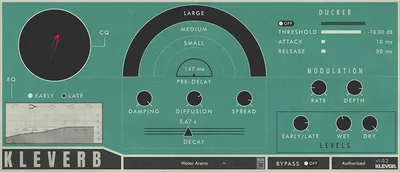
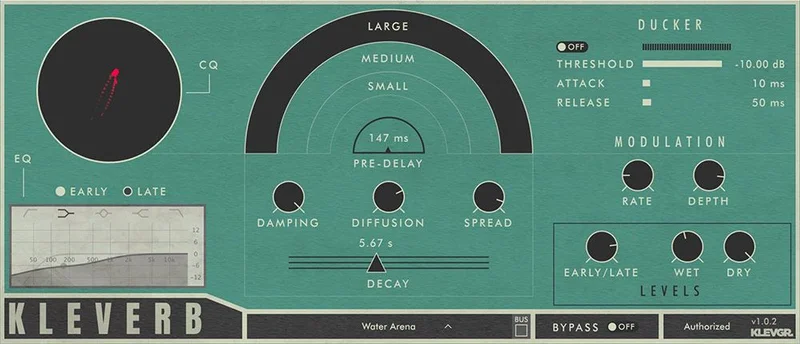
The three room size algorithms (small, medium, large) aren't just pre-delay tweaks. They change the early reflection structure. Small rooms feel tight and close. The large setting opens up convincingly for ambient pads and cinematic sounds.
The ducker is the genuinely clever part. It uses the dry signal as its own sidechain, pulling the wet signal down while audio is present and letting the tail breathe in the gaps. That's not a new idea, but it's almost never built directly into the reverb unit itself. Having it there saves a send, a compressor, and fifteen minutes of routing every session.
At 64 factory presets, the coverage is solid. They're organized well enough that you can find a working starting point in under a minute. We didn't love all of them, but that's true of every preset library ever shipped.
Where Kleverb Actually Shines
We put a dry lead vocal through Kleverb's medium room with the ducker engaged. Threshold set conservatively. The reverb pulled back cleanly while the phrases hit, then opened up in the silences between words. No pumping. No obvious compression artifacts. It sounded like a competent mix decision, not a plugin doing something weird.
That's satisfying in a way that's hard to explain until you've spent an afternoon manually sidechaining a reverb send to a duplicate vocal track. Kleverb just does it. You dial in the sensitivity and move on.
The decay range is another strength. Zero to 25 seconds is a serious spread. We ran a synth pad through the large room at 18 seconds with heavy modulation engaged. The result held together without turning into a washy blur. The modulation controls are subtle enough to add movement without making the tail obvious.
Diffusion and stereo spread give you real control over the density of the reverb cloud. We pulled diffusion down on a snare send and got a grainier, more textured early reflection that worked well for lo-fi drum processing. That kind of flexibility at $30 is underrated.
The selectable filter types on both early and late reflections let you shape the tonal character of the reverb independently. High-pass the late reflections to stop low-end buildup. Low-pass the early reflections for a darker, more intimate character. It's not surgical, but it's enough.
Where It Falls Short
Klevgränd hasn't published CPU load or latency figures anywhere we could find. That's annoying. We shouldn't have to stress-test a $30 plugin to find out whether it'll hurt a dense session. It didn't kill our CPU in testing, but we can't give you a number. That's a gap in their documentation.
The algorithm character is clean, but it's generic clean. There's no identifiable sonic personality here. If you're looking for the warmth of a hardware plate or the specific density of a convolution-based hall, you'll be frustrated. Kleverb doesn't chase those sounds. It's a transparent, functional algorithmic reverb. Useful, but not memorable.
No iPhone support is a real limitation for producers who work across devices. The iOS version runs on iPad and Mac, but not iPhone. That's a strange line to draw in 2026.
We also wish the ducker had more visible parameter feedback. Threshold and speed are there, but a gain reduction meter would make it easier to see what the ducking is actually doing in real time.
How It Stacks Up Against Real Alternatives
The obvious comparison is sonible's pure:verb, which sits at a higher price point but brings AI-assisted source detection into the equation. pure:verb analyzes the incoming signal and adjusts the reverb character accordingly. Kleverb doesn't do that. If your budget stretches, pure:verb wins on intelligence. If it doesn't, Kleverb holds its own on fundamentals.
Apogee
For understanding where Kleverb sits in the wider reverb plugin landscape, it's a mid-tier algorithmic tool. Not the most characterful option, but one of the most practically designed ones at this price.
Is $30 a Fair Price for Kleverb?
Yes. The ducker alone justifies the cost if you regularly mix vocals or leads with heavy reverb. That feature would cost you a separate plugin license anywhere else.
The iOS version at $19.99 is an even easier call for iPad producers. At that price, the only question is whether you need it. If you're mixing on an iPad and you want a reverb with a built-in ducker, there's nothing else at this price doing it as cleanly.
Desktop producers with an existing reverb collection might hesitate. The case for buying Kleverb gets stronger if your current reverb doesn't have ducking and you find yourself routing sidechain compressors manually every session.
Score Breakdown
| Category | Score | Notes |
|---|---|---|
| Sound Quality | 4.0/5 | Clean and functional; no distinctive character, which is a trade-off |
| Value for Money | 4.5/5 | Built-in ducker at $30 is a genuine bargain |
| Ease of Use | 4.5/5 | 64 presets and an intuitive layout mean fast results |
| Features | 4.0/5 | Ducker, modulation, selectable filters; CPU stats missing from documentation |
| CPU Efficiency | 3.5/5 | Felt light in testing but no published specs to verify |
| Overall | 4.2/5 | A practical, well-priced algorithmic reverb that earns its place in a lean plugin folder |
Alternatives to Consider
If you want more sonic character, look at Safari Audio's Hippie Elephant. It's weirder, more textured, and built for producers who want a reverb with a personality rather than a utility tool.
For a spring reverb comparison at a similar budget, Safari Audio's Rhino Reverb covers that specific character territory that Kleverb deliberately avoids.
If you're ready to spend more and want AI-assisted reverb placement, pure:verb from sonible is the step up. It's smarter, and it sounds like it knows what instrument it's processing.
Kleverb isn't trying to beat any of those. It's trying to be the reverb you reach for without thinking. For a lot of sessions, that's exactly what you need.
Buy Kleverb if you're mixing vocals or leads with heavy reverb and you're tired of routing sidechain compressors manually. Skip it if you're chasing a specific sonic signature or you need verified CPU data before committing to a plugin. At $30, it's an easy add to a working plugin folder. At $19.99 on iPad, it's almost a no-brainer.
The best thing about Kleverb is that you'll forget it's there. That's a compliment.
Related reviews: Lifeline Space Review 2026
Frequently Asked Questions
Does Kleverb work on iPhone?
No. The iOS version is iPad-only. It runs on iPad and Mac, but Klevgränd hasn't released an iPhone-compatible version. If you work primarily on iPhone, this isn't the plugin for you.
What does the Kleverb ducker actually do?
The ducker uses the dry signal as its own sidechain. When audio is present, it pulls the wet reverb signal down. When there's silence, it lets the reverb tail rise back up. This keeps vocals and leads distinct even when the reverb is set heavily. It's a practical alternative to routing a sidechain compressor on a separate reverb send.
How long can Kleverb's decay go?
Up to 25 seconds. That range covers everything from tight room ambience to long ambient pads and experimental sound design. Most users will spend most of their time below 4 seconds, but the headroom is there when you need it.
Is Kleverb worth buying if I already own a stock DAW reverb?
The algorithms in Kleverb are cleaner than most stock reverbs, and the built-in ducker is something stock reverbs don't offer. If you regularly mix heavily reverbed vocals or leads, the workflow improvement alone justifies the $30. If reverb is rarely a problem in your mixes, your DAW's stock reverb is probably enough.