If you're comparing UVI's Emulation II+ to Arturia's sampler offerings or third-party E-mu sample packs, here's where we land: this is the most complete 80s sampler bundle we've tested, and it's not close on content volume. What it isn't is a hardware emulation in the Arturia sense. UVI recorded directly from original Emulator, Emulator II, and Emulator III hardware, then built a playback instrument around those recordings. That distinction matters, and we'll get into exactly why.
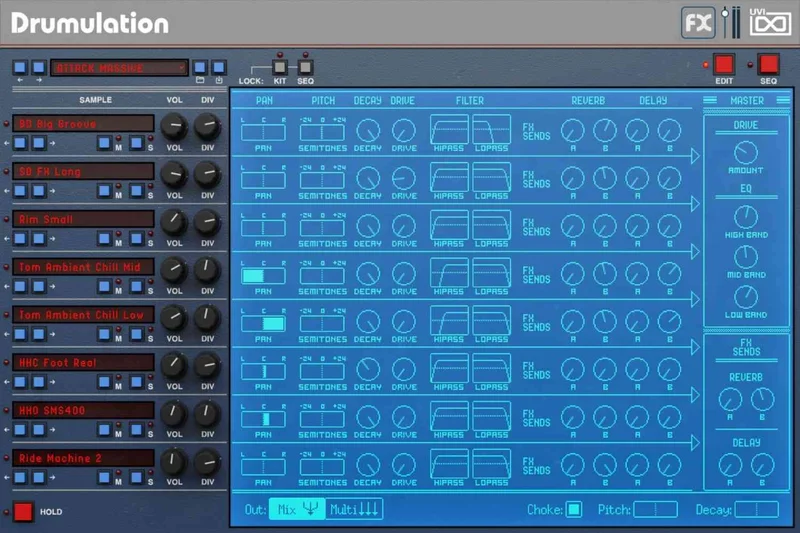
Emulation II+ packages four instruments: three iconic sampler-synths from the 80s plus Drumulation+, a lo-fi drum machine pulling from the Drumulator, SP12, and all three Emulator samplers. The count lands at 1,300+ presets, 270 multis, 800+ layers, and 2,400+ drum sounds. For composers scoring to picture or producers chasing that gritty 80s texture, this is the bundle worth knowing about.
How the Emulation II+ Compares Out of the Box
Arturia's vintage sampler instruments model the internal circuitry. UVI went the other direction: they sat down with the original hardware and recorded it. Both approaches produce something usable. They don't produce the same thing.
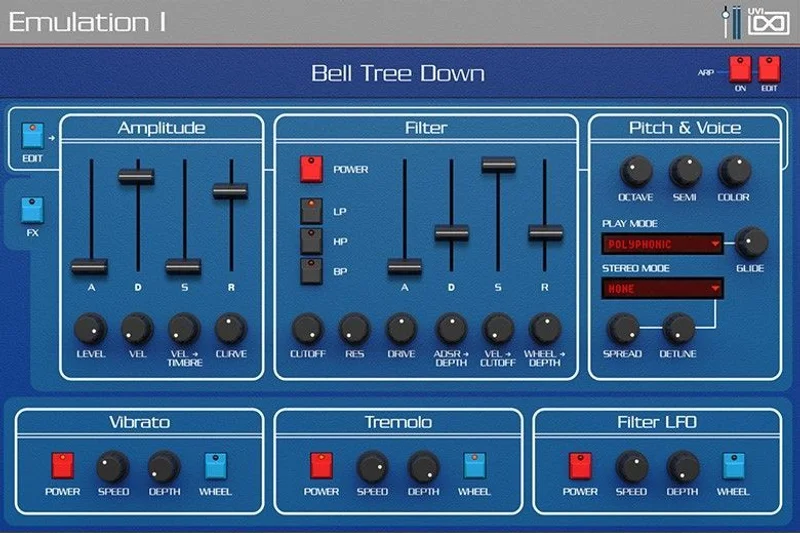
Arturia's tools let you tweak filter behaviour at the circuit level. Emulation II+ gives you the actual recorded character of those machines, baked in. If you want to adjust how the Emulator II's filter breathes, Arturia wins. If you want to drop a string pad that sounds exactly like it came off a 1983 sampler without spending 20 minutes dialling it in, UVI wins.
The Oberheim DPX-1 connection is worth calling out. UVI recorded some Emulator II sounds through a DPX-1 playback unit, then made that version toggleable as "DPX mode". That's a clever detail. Two flavours of the same source, switchable in context. We haven't seen that specific workflow offered anywhere else in this category.
Performance Deep Dive
We loaded a 270-multi patch with all four instrument slots active inside UVI Workstation. It runs 64-bit only, which cuts out legacy setups immediately. CPU behaviour was medium-weight under normal conditions. Stacking all four slots with long releases and the phraser running pushed things harder, but nothing we'd call alarming on a modern machine.
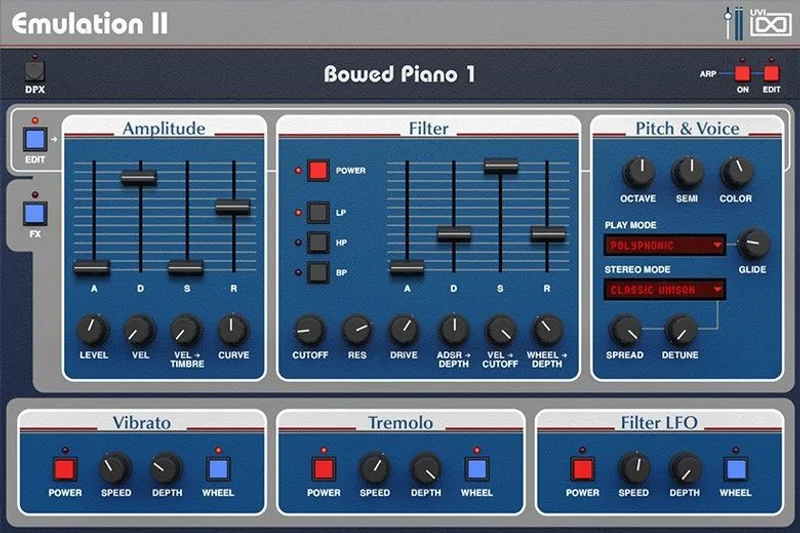
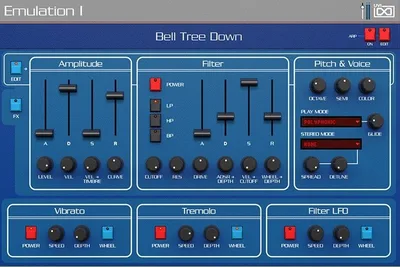
The 300+ sounds drawn from officially licensed OMI libraries for the Emulator II section sound noticeably different from the Emulator I material. The EI has a rawer, more degraded character. The EIII sits cleaner. Switching between engines mid-session actually produces three distinct textural identities rather than the same sounds at different bit rates.
We ran a solo marimba preset from the Emulator II engine into a drum bus, then ran it through Drumulation+ alongside an SP12-sourced kick at default velocity. The transient on the kick hit with real snap. The tail decayed with that compressed, slightly gritty 80s quality without us touching the envelope. That's the value here. You're not sculpting that character from scratch.
The phraser and arpeggiator work across all four slots simultaneously, which means you can generate a full rhythm-and-melody phrase from a single multi. For loop composers or film cue writers, that's a satisfying workflow. It's genuinely fast.
Where Emulation II+ Wins
Content depth. 1,300+ presets sounds like marketing until you're three hours in and haven't heard the same character twice. The three engines really do feel like three different machines.
The multi system is brilliant for composition. Load a 4-slot multi, engage the phraser, and you're hearing full arrangements in under two minutes. We tested this against building the same arrangement from scratch using individual sample libraries. The multi approach was roughly four times faster to a usable result.
DPX mode is underrated. The Oberheim DPX-1 playback flavour adds a mid-range warmth, specifically a presence bump in the 2kHz-4kHz range that makes string pads cut through a dense mix without EQ. Toggle it off and the same pad sits further back. That kind of switchable contrast is useful in a real session.
MIDI drag-and-drop from Drumulation+ into your DAW timeline is a time-saver we wish more drum plugins offered.
Where the Competition Wins
Real-time filter manipulation. Arturia's approach to vintage instruments lets you interact with the modelled circuitry. Emulation II+ doesn't model anything at the DSP level. What's recorded is what you get, with standard UVI Workstation modulation layered on top. If you want to automate a filter that behaves like the original Emulator II hardware filter, look elsewhere.
Standalone operation is slightly complicated. You need either the paid Falcon platform or the free UVI Workstation. It's free, but the extra software layer frustrates some producers. Competitors that run natively as VST3/AU/AAX without a host plugin feel more integrated in daily workflows.
No trial is a real problem. At $149, buying without any preview period is a tough ask. Several competing libraries offer 30-day demos. UVI doesn't here, and that's annoying.
Who Should Buy Which
- ✅ Buy Emulation II+ if you score to picture or produce lo-fi, synthwave, or 80s-referencing music and want authentic source recordings rather than modelled behaviour
- ✅ Buy it if you want a full drum machine plus three sampler engines in one bundle rather than piecing together separate libraries
- ✅ Buy it if you work inside UVI Workstation or Falcon already and the host plugin overhead isn't a friction point
- ❌ Skip it if you need deep per-voice filter control and circuit-level modelling. Arturia fits better
- ❌ Skip it if you need a trial period before committing. No demo exists
- ❌ Skip it if you're on a 32-bit system or an older DAW setup. 64-bit only, no exceptions
Score Breakdown
| Category | Score | Notes |
|---|---|---|
| Sound Quality | 4.5/5 | Three genuinely distinct engines with recorded hardware character; DPX mode adds real tonal contrast |
| Value for Money | 4.0/5 | Content volume justifies the price if 80s sampler sounds are actually in your workflow |
| Ease of Use | 3.5/5 | UVI Workstation dependency adds friction; multis and phraser are intuitive once you're past that |
| Features | 4.5/5 | Four engines, 270 multis, MIDI drag-and-drop, DPX mode toggle, genuinely broad |
| CPU Efficiency | 3.5/5 | Reasonable on modern hardware; stacked multi patches push the load |
| Overall | 4.2/5 | Outstanding content depth for 80s production, held back by no trial and the host-plugin layer |
Alternatives to Consider
Arturia MiniFreak V is the go-to if you want circuit-level modelling over recorded samples. It approaches vintage character from the synthesis side rather than the sampling side. We broke it down in detail here: Can MiniFreak V Replace 3 Synths in Your 2026 Rig?.
Beat Zampler Tape Synths Expansion is worth a look if lo-fi texture is your goal but you don't need the full 80s sampler context. It's a narrower tool at a lower entry point. We covered it here: Tape Synths Expansion Delivers Real Grit: 2026 Review.
Applied Acoustics Chromaphone 3 sits in a different category but comes up in the same "inspiring preset library" conversations. If physical modelling with a deep preset library sounds closer to your needs, check our breakdown: Does Synth City Chromaphone 3 Deliver 100 Usable Presets?.
For producers after something lower-cost with a distinctive character, our LOW Review: Still Beats Most Bass Synths in 2026 covers a different but compelling option at a different price tier.
Our Final Take
Emulation II+ is the best recorded-hardware 80s sampler bundle we've tested. That's a specific sentence, and we mean it specifically. If you're doing synthwave, lo-fi, film score work with period references, or 80s pop production, this library will save you weeks of sample hunting.
The no-trial policy is frustrating. The UVI Workstation dependency is a minor annoyance. Neither is a dealbreaker for a producer who's sure about the use case.
If you need circuit-modelled filter behaviour or you're not working in 80s territory, skip it. There are better tools for both of those situations.
For everyone else: confirm the current price on UVI's site, factor in that you're getting four instruments in one bundle, and make the call. The marimba preset we ran at 1.2 seconds of tail into a drum bus sounded better than it had any right to. That's the whole argument, really.
Related reviews: Odin 2 Review
Frequently Asked Questions
Does Emulation II+ work as a standalone plugin without UVI Falcon?
Yes, but you need either the paid Falcon platform or the free UVI Workstation to run it. It's not a standalone VST3/AU/AAX that loads directly into your DAW without a host. UVI Workstation is free to download, so the cost barrier is low, but the extra software layer is a real workflow consideration worth knowing before you buy.
What is DPX mode in Emulation II+?
DPX mode lets you switch the Emulator II sounds between two source recordings: the original Emulator II hardware and the Oberheim DPX-1 playback unit. The DPX-1 version tends to have a slightly warmer, more mid-forward character. You toggle between them in the instrument UI, which makes it fast to compare in context.
How many computers can I run Emulation II+ on simultaneously?
UVI authorizes Emulation II+ on up to 3 computers or iLok keys simultaneously. Authorization goes through iLok, so you'll need an account and either a physical iLok key or iLok Cloud. Three seats covers most producers with a home studio and a laptop setup.
Is Emulation II+ a hardware emulation like Arturia's instruments?
No. UVI recorded directly from original Emulator, Emulator II, and Emulator III hardware rather than modelling the circuitry. That means you get the actual recorded character of those machines, but you don't get circuit-level filter behaviour you can modify at the DSP level. It's a sample-based playback instrument, not a modelled synthesizer. Both approaches are valid, but they're different tools.