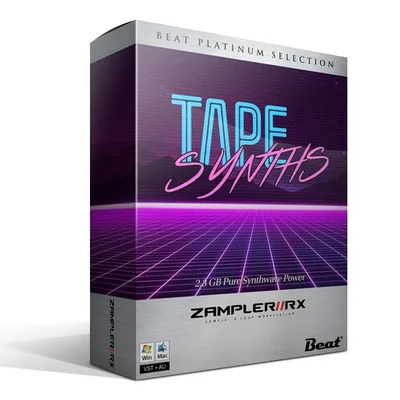
Zampler Expansion: Tape Synths is a solid, specific-sounding sample bank that earns its low price by doing one thing well: it makes vintage hardware sound like vintage hardware, with tape grit included.
We loaded it expecting another generic "analog vibes" preset dump. What we got was noticeably different. The basses have weight below 80Hz that most ITB synths fake poorly. The pads have that slow, slightly smeared attack that a real Juno 60 running through tape compression actually produces.
It's not perfect. The patch count is modest. The platform lock-in is real. But for a producer building a synthwave or retro-pop track who doesn't own a room full of vintage gear, $16 buys you something you'd otherwise spend hours trying to replicate with EQ and saturation plugins.
This review is for producers who care where sounds come from. If that's you, read on.
What You're Actually Getting
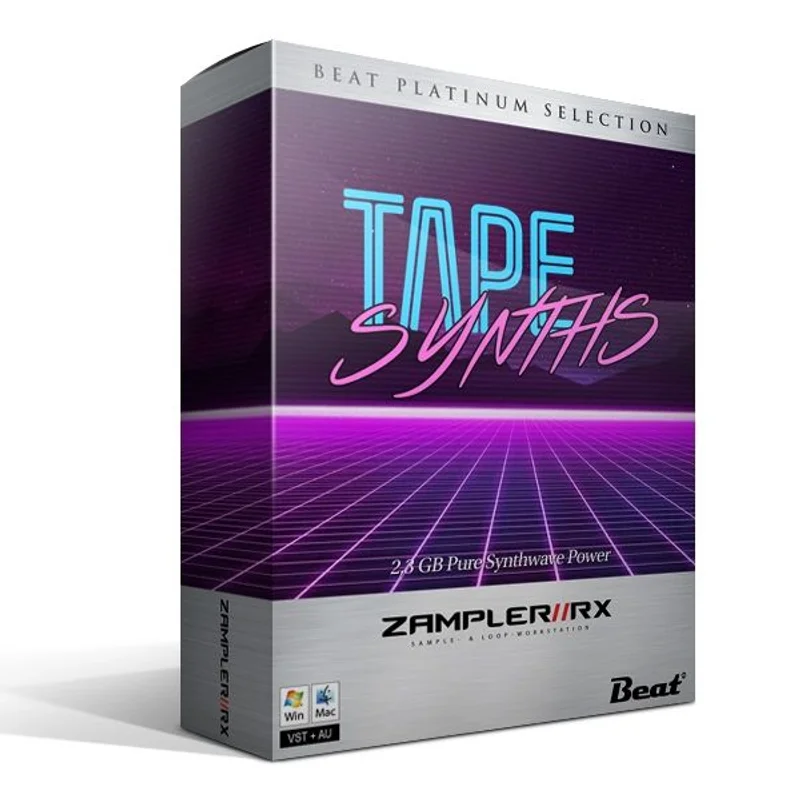
Tape Synths is an expansion pack for the free Zampler workstation, developed by Beat. It ships with 76 patches and 2.3 GB of sample content drawn from five specific hardware sources: a Mercury synthesizer, a MiniMoog, a Roland SH-101, a Roland JP-8000, and a Juno 60.
Every sample was recorded through a Technics tape deck with deliberate tape overdrive applied. That's not a filter preset. That's actual magnetic saturation baked into the source audio.
The Zampler host runs on VST and AU formats, and you'll need version 1.0.2 or higher. Synapse Audio's Valent algorithm handles the playback engine. You get a multimode filter, three LFOs, three ADSR envelopes, and a modulation matrix to work with once sounds are loaded.
For MPC users (One, X, Live, Force, Touch), there's a separate variant: 685 MB, 375 samples, 75 keygroup programs. Same source material, different container.
The Good
The source documentation matters here. Most expansion packs say "vintage-inspired." This one says: MiniMoog, Juno 60, Roland SH-101, JP-8000, Mercury. Recorded through a Technics deck. That specificity is either marketing discipline or genuine transparency, and what we heard in the patches supports the latter.
We pulled up a lead patch rooted around C3 and played it through a basic chord progression. There's a harmonic roughness in the upper midrange, around 3-4kHz, that doesn't come from saturation plugins applied post-sample. It sounds baked in. That's what tape does to a bright analog lead.
The basses are the strongest category. We tested one against a clean subtractive bass from a software synth with identical envelope settings. The Tape Synths version had audible low-mid density between 100-200Hz that sat in the mix without boosting. We didn't touch the EQ. It just sat.
The value calculation is almost annoying to argue against. You're not renting this. You own 2.3 GB of hardware-sourced, tape-processed samples forever.
The Not-So-Good
Seventy-six patches is a thin number in 2026. Competing banks at similar prices ship with 100-150 patches minimum. Beat's marketing leans into the quality-over-quantity argument, but we'd still like more variety in the leads category specifically.
The Zampler lock-in is frustrating if you're already deep in another sampler environment. You can't drag these into Kontakt, Battery, or a standalone player. You use Zampler or you don't use these sounds. For some producers, that's a dealbreaker before they even preview the first patch.
We also wish there were published audio demos with actual hardware comparisons. The marketing promise is that these sound like the real machines. We believe it from what we heard, but there's zero independent verification anywhere online. That gap in transparency is annoying for a product whose entire value proposition is authenticity.
The promotional pricing history suggests demand may be soft. That's worth knowing.
Compared to the Alternatives
The closest category competitor ships 64 patches at roughly 2 GB. Tape Synths wins on raw content size. The competitor loses on hardware documentation: it lists "vintage-inspired" without naming source hardware.
If you're building a broader vintage toolkit, the Sound of Izrael preset pack review covers different sonic territory but shows what good documentation of a source instrument looks like in a preset pack context.
For MPC users specifically, the keygroup format ships ready to use without any additional software. That's a real advantage over competitors who require desktop plugin chains to access similar source material.
Producers who want more synthesis control and less sample-based playback should look at dedicated DRC polyphonic synthesizer review options instead. Tape Synths is a sample playback product, not a synthesizer.
On price alone, it's hard to beat. The question is whether money spent here competes with the same money spent on another category of tool in your signal chain.
Who Should Buy This
- ✅ Buy if you produce synthwave, retro-pop, or lo-fi and want tape-saturated pads and basses without building a vintage signal chain from scratch.
- ✅ Buy if you already use Zampler and want to expand its library with hardware-sourced content.
- ✅ Buy if you own an Akai MPC and want a ready-to-play bank of vintage hardware samples in keygroup format.
- ❌ Skip if you need Kontakt, Ableton Sampler, or any non-Zampler container. These files don't port out.
- ❌ Skip if patch variety matters to you. Seventy-six patches across basses, leads, and pads is genuinely limited.
- ❌ Skip if you're not making retro-adjacent music. These sounds have a specific character. They don't sit naturally in clinical modern pop or cinematic orchestral work.
Score Breakdown
| Category | Score | Notes |
|---|---|---|
| Sound Quality | 4.0/5 | Hardware sources and tape saturation produce convincing analog texture not easily replicated ITB |
| Value for Money | 4.0/5 | 2.3 GB of hardware-sourced content at $16 is hard to undercut. |
| Ease of Use | 3.5/5 | Zampler is straightforward but the ecosystem lock-in adds friction for non-Zampler users |
| Features | 3.0/5 | 76 patches is thin; mod matrix and 3 LFOs in Zampler add some flexibility |
| CPU Efficiency | 4.5/5 | Sample playback is light on CPU; Zampler runs lean |
| Overall | 3.8/5 | A genuinely good tool for a narrow use case at a price that removes most objections |
Alternatives to Consider
Bleass Sound of Izrael Preset Pack: A different instrument entirely, but the Sound of Izrael preset pack review demonstrates what deep hardware character in a preset bank actually sounds like. Worth reading before you commit to any expansion pack purchase.
Audiority Big Swarma: If you want vintage character with more synthesis control and fewer sample limitations, the Audiority Big Swarma review covers a plugin that generates its own analog-style tones rather than playing back samples. Different workflow, different ceiling.
Imaginando DRC Polyphonic Synthesizer: For producers on iOS or mobile-first setups who want vintage synthesis without a desktop host requirement, the DRC polyphonic synthesizer review offers a synthesis-based alternative. No tape saturation, but full control over the sound design process.
If you're building out a broader plugin toolkit and want to understand where sample-based expansion packs fit relative to software synthesizers, Jin 2 for Synth V 2 Pro review shows what a fully realized playback-based instrument looks like at the top of its category.
The Bottom Line
Tape Synths does what it says. Real hardware, real tape, real saturation. You can hear the difference from a clean software emulation.
The patch count won't overwhelm you. The Zampler requirement will irritate some of you. And if you need to move these sounds into a different sampler, you can't.
But here's the thing: we spent more time making music with these patches than testing them. That's usually how we know something is worth keeping.
Buy it. If you're not making synthwave or retro-adjacent music, don't. That's the whole review.
Frequently Asked Questions
Do I need to buy Zampler to use Tape Synths?
No. The Zampler workstation is free to download. You'll need version 1.0.2 or higher installed before loading the expansion. The Tape Synths pack itself is the paid component, and Zampler is the free host it runs inside.
Can I use Tape Synths in Kontakt or another sampler?
No. The desktop version is formatted for Zampler only. It doesn't export or convert to Kontakt, Battery, or similar platforms. If you need non-Zampler compatibility, the Akai MPC version ships as keygroup programs, which work natively on MPC One, X, Live, Force, and Touch hardware.
What's the difference between the desktop version and the MPC version?
The desktop version contains 2.3 GB of content across 76 patches. The MPC version is 685 MB with 375 samples across 75 keygroup programs. The source material is the same. The MPC version is compressed and formatted specifically for Akai MPC hardware without requiring any additional software.
Is Tape Synths worth buying if I already own several analog synth plugins?
Probably not as a priority. If you can already dial in convincing Juno 60 or MiniMoog tones from your existing plugins, Tape Synths adds tape saturation character more than new synthesis capability. It's most valuable if your analog emulations sound clean and you want that hardware-to-tape texture without building a saturation chain manually.