If you're after a pixel-perfect digital copy of a hardware Rhodes or Wurlitzer, Lounge Lizard EP-5 is not that thing, and knowing this upfront will save you a frustrating week of refund requests. What it is, at $249, is a physical modeling instrument with its own character: expressive, organic, and genuinely satisfying to push through its onboard effects rack. It's built for producers who want an electric piano voice they can shape, not a museum-quality recording of one. If that trade-off works for your sessions, the EP-5 and its three available preset packs make a strong case.
The Catch Up Front
The blunt truth from people who own this: load a default tine or reed preset and play it dry, and it sounds artificial. Side-by-side with a hardware Rhodes, there's a gap you can't argue away.
The amp distortion effect compounds this. Sound designers who've tried to use it for grit and drive report it's not reliably usable. That's annoying when distortion is one of the main ways you'd push an electric piano into overdrive territory.
EP-5 is also moderately CPU-heavy compared to basic VST alternatives. It won't crater a modern session, but if you're stacking six instances on a keyboard arrangement, you'll feel it. EP-5 uses less than 256 MB RAM per instance and requires 33 MB disk space for installation, so the CPU draw is the main resource concern.
System requirements ask for macOS 10.13 or later with an Intel Core i5 from around 2015 or Apple M1, or Windows 10 64-bit with an equivalent processor. You need a 64-bit DAW on both platforms. The plugin ships in VST2, VST3, AU, AAX Native, NKS, and Standalone formats, so format coverage is wide.
None of this is a reason to walk away. It's a reason to know what you're buying.
What You Get If You Clear It
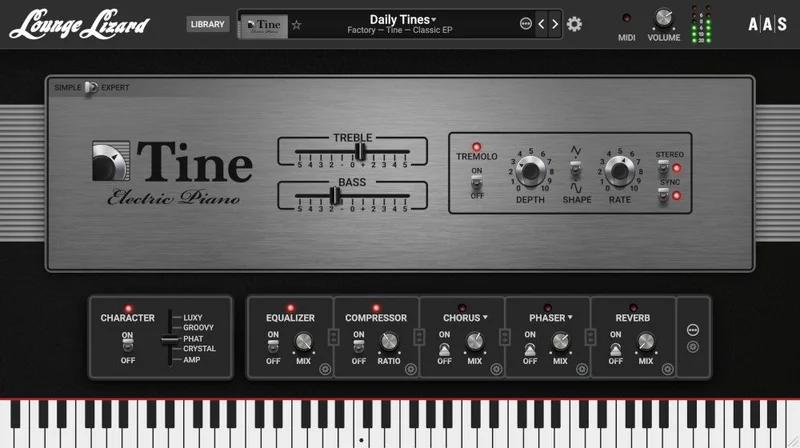
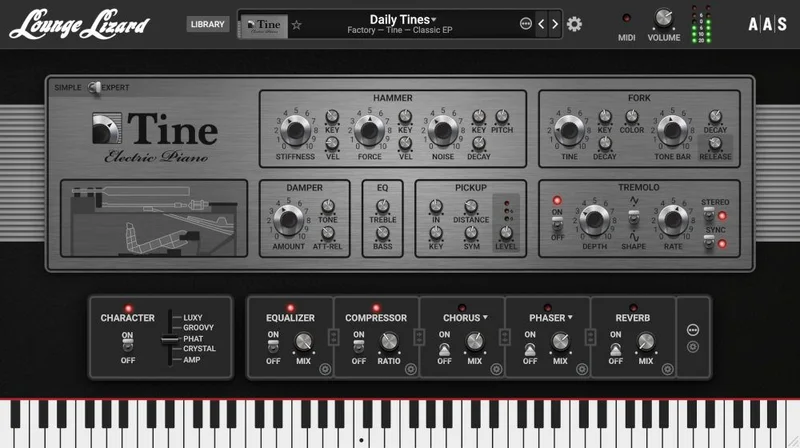
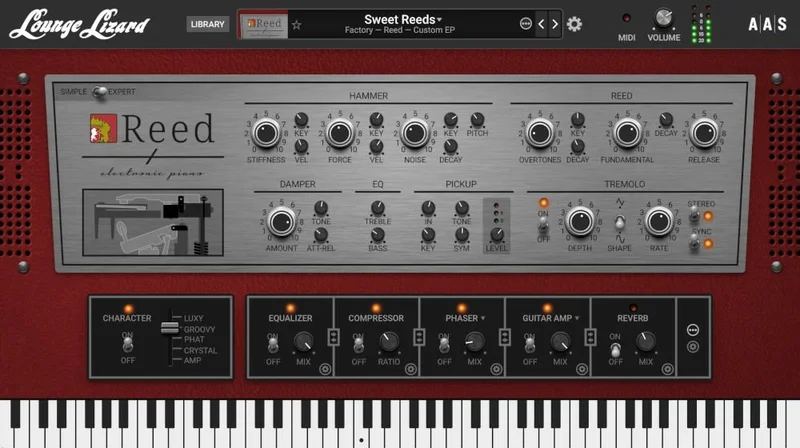
EP-5 runs a dual synthesis engine: one side models tine-based electric pianos, the other handles reed-based instruments. Each engine has its own separate GUI, which keeps the workflow clean when you're focused on one character.
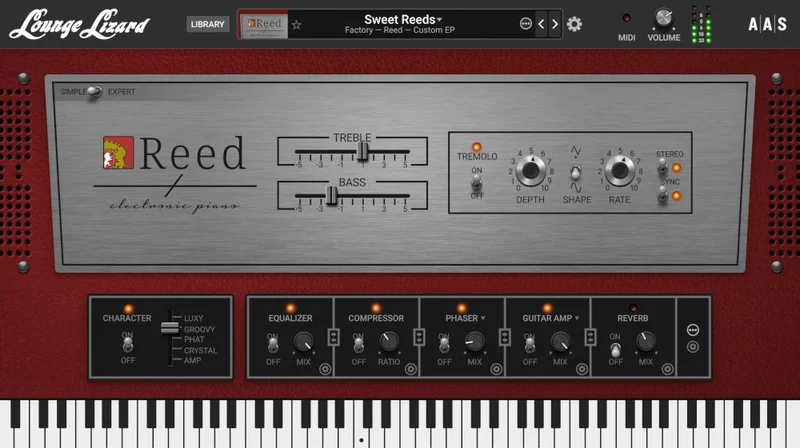
The redesigned physical modeling core is the heart of it. Owners describe the response as organic, with warm bell harmonics, a soulful bark in the midrange, and natural note-to-note variation that reacts to how hard you play. That expressiveness is the instrument's real selling point.
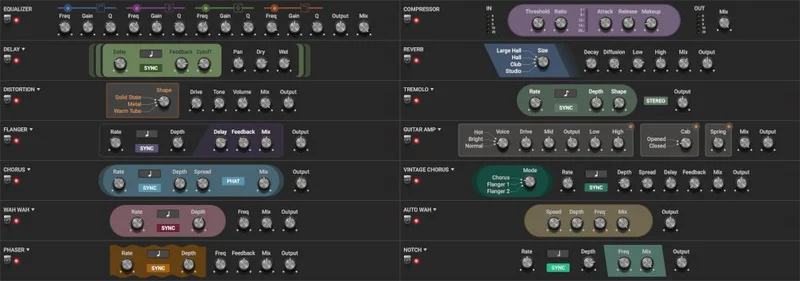
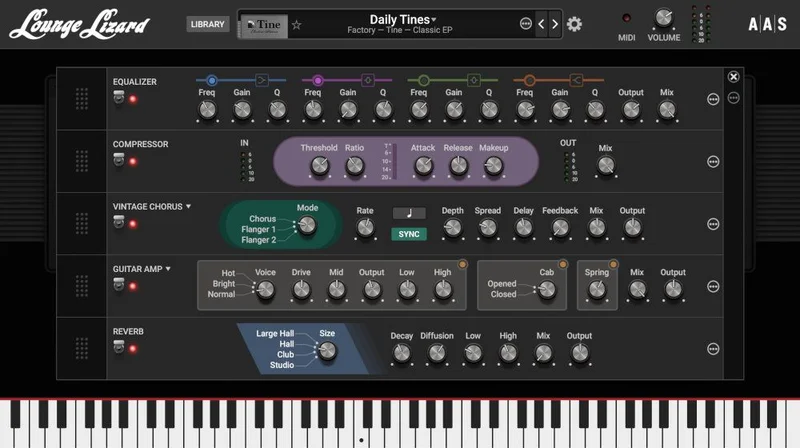
The onboard effects rack carries 13 processors: Auto-Wah, Chorus, Compressor, Delay, Distortion, Flanger, Guitar Amplifier, Multi-band Equalizer, Notch, Phaser, Reverb, Tremolo, and Wah-Wah. Effects sync to DAW tempo. The browser is redesigned with a search function and a scalable GUI, and the factory library ships with over 150 electric piano sounds. The instrument also supports microtuning and 32 voices of polyphony.
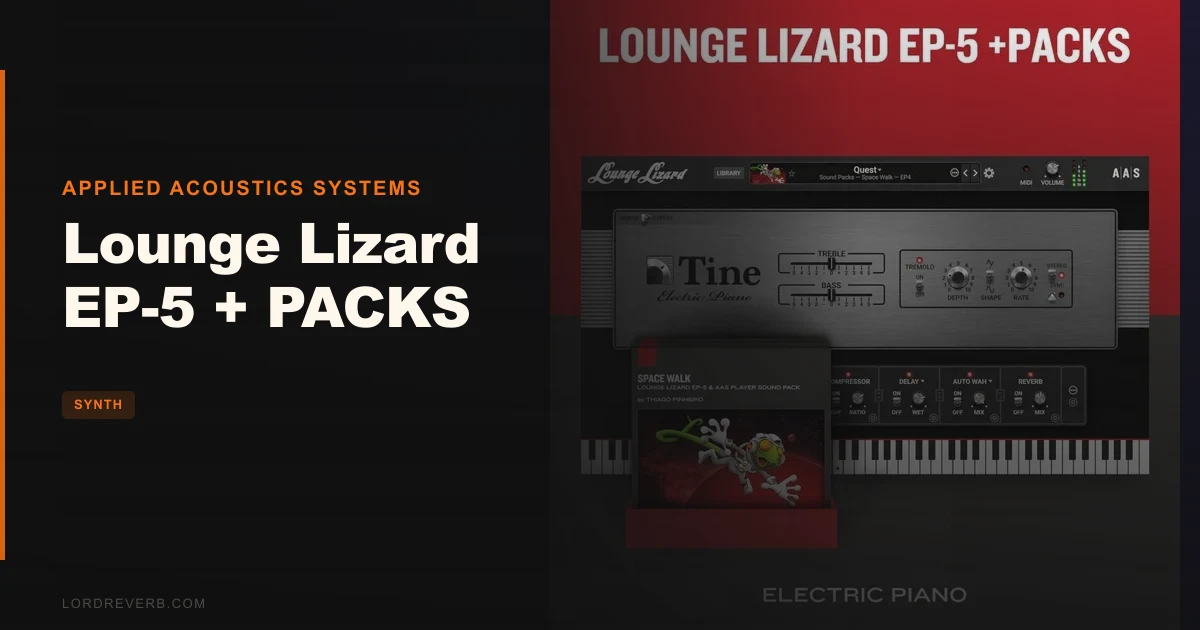
The three available packs add serious range. Space Walk (100 presets by Thiago Pinheiro) goes cosmic: pads, pulsing bells, soaring leads that have little to do with vintage electric piano. Insomnia (128 presets by Daniel Stawczyk) covers synths, organs, basses, and leads alongside traditional electric piano voices. Caffeine (105 presets, also Stawczyk) pushes into outlandish territory: splits, pulses, leads, and synths. Combined, that's 333 additional sounds on top of the factory library.
Where It Shines
EP-5's modeling approach means every note breathes differently depending on your velocity and touch. That's not marketing language. Owners specifically describe the note-to-note variation as the instrument's strongest trait.
Push it into a dense arrangement and that variation keeps the part alive in a way static samples often don't. You'll notice it most on sustained chords where the shimmer shifts slightly between notes. It sits in a mix without fighting for space.
The 13-effect rack is genuinely well-stocked for a bundled solution. Twelve of the thirteen are reliable tools for shaping the character of a part. The Tremolo and Phaser together get you into classic electric piano territory quickly, and the Multi-band EQ lets you dial specific frequencies without leaving the instrument. Effects sync to DAW tempo, which matters when you're building rhythmic tremolo or delay patterns against a grid.
The Space Walk pack is the standout among the three add-ons. If you're doing anything cinematic, ambient, or lo-fi adjacent, Thiago Pinheiro's 100 presets give you sounds that wouldn't obviously read as electric piano at all: pads with long, filtered tails, bells that pulse with internal movement, leads with real weight. EP-5's less than 256 MB RAM per instance means you can run this alongside heavier instruments without watching your memory meter climb significantly.
The scalable GUI and redesigned browser with search also deserve mention. Finding presets by name rather than scrolling a flat list saves real time when you're auditioning patches mid-session.
Against the Field
Three products come up consistently in comparisons.
Keyscape uses actual hardware recordings, which is why it wins every direct realism test. If you put Keyscape's Rhodes against EP-5's tine engine on headphones, you'll hear the difference immediately. For producers who need that exact sound and have the disk space and budget for it, Keyscape is the cleaner answer.
Acousticsamples V-tines and V-reeds take a hybrid approach, mixing physical modeling with sampling. That middle path closes some of the realism gap that pure modeling leaves. If authentic Rhodes or Wurlitzer reproduction is your priority and you want the flexibility of a modeling layer, V-tines and V-reeds sit closer to the hardware than EP-5 does.
Korg EP-1 is another hybrid modeler-sampler. Same principle: sampling grounds the tone, modeling handles the expressiveness. It competes in the same space as V-tines for buyers who want realistic reproduction alongside playability.
Where EP-5 wins is in the sound design territory opened by its modeling architecture and the three packs. Neither Keyscape nor the hybrid alternatives push as far into synthesized, ambient, and experimental electric piano territory. If you want one instrument that covers classic electric piano and also generates the pads in Space Walk, EP-5 is the broader toolkit.
Who Should Buy This
- ✅ Buy if you want an expressive physical modeling engine you can push into sound design territory beyond classic vintage tones
- ✅ Buy if the Space Walk or Insomnia packs match your production style and you want the instrument and those presets in one place
- ✅ Buy if you work across genres and need electric piano sounds that sit in dense arrangements without clashing
- ❌ Skip if you need a sample-accurate recreation of a hardware Rhodes or Wurlitzer for direct comparison use
- ❌ Skip if amp distortion is a core part of your electric piano workflow and you're counting on that effect being reliable
- ❌ Skip if you're already stretched on CPU and need to run multiple instances without overhead concerns
Specs & Technical Details
| Developer | Applied Acoustics Systems |
| Price | $249 |
| Plugin Format | VST2 / VST3 / AU / AAX Native / NKS / Standalone |
| OS Support | macOS 10.13 or later / Windows 10 64-bit |
| Activation | N/A |
| CPU Usage | Moderate (heavier than basic VST alternatives per owner reports) |
| Trial Available | N/A |
| Version Reviewed | EP-5 |
Score Breakdown
| Category | Score | Notes |
|---|---|---|
| Sound Quality | 3.5/5 | Expressive and organic in context, but dry presets don't hold up against hardware in direct comparison |
| Value for Money | 3.5/5 | At $249 with over 333 pack presets, the value depends heavily on whether the packs match your style |
| Ease of Use | 4.0/5 | Separate engine GUIs, searchable browser, and scalable interface make navigation quick |
| Features | 3.5/5 | 13-effect rack and dual engine are strong; amp distortion being unreliable is a real gap |
| CPU Efficiency | 3.0/5 | Moderate overhead reported by owners; fine for one or two instances, noticeable when stacking |
| Overall | 3.5/5 | A strong modeling instrument for producers who want expressiveness and range, not sample accuracy |
Alternatives to Consider
Keyscape (Spectrasonics) is the sample-based benchmark for electric piano realism. It wins the hardware authenticity test with no contest. If you're recording a session where someone will listen for whether the Rhodes sounds like a Rhodes, Keyscape is the safer call. The trade-off is a much larger install and no modeling flexibility. No price comparison here, but it's a different category of investment.
Acousticsamples V-tines and V-reeds split the difference between sampling and modeling. The hybrid architecture closes the realism gap that EP-5's pure modeling leaves, while keeping some of the expressive feel that makes modeling instruments rewarding to play. If convincing vintage reproduction is your first requirement and you don't want to pay for Keyscape, V-tines is the more direct comparison winner for that specific use case.
Korg EP-1 works from the same hybrid philosophy: sampling for the foundation, modeling for the feel. It sits in the same competitive space as V-tines for buyers who want realistic tone. Neither EP-1 nor the Acousticsamples instruments push as far into sound design territory as EP-5's modeling engine and pack library do, so the choice comes down to what you need more: authenticity or range.
The Honest Verdict
EP-5 is a frustrating instrument to score simply because it depends so completely on what you're asking it to do.
Ask it to sound exactly like a hardware Rhodes in a direct A/B and it will lose. Owners say so plainly, and it would be dishonest to frame that differently. The dry tine and reed presets need processing to get convincing, and the one effect you'd reach for first (amp distortion) is the one that doesn't hold up.
But ask it to give you an electric piano voice with real expression and note-to-note personality that you can push through eleven other effects and shape into something the Space Walk pack already hints at, and it performs. The organic feel owners describe is real. The warm bell harmonics and the shimmer on sustained notes are what make it worth stacking in an arrangement. Buried in a mix, it works. Played in real time with velocity sensitivity, it responds in a way that flat samples often don't.
The three packs are genuinely interesting extensions of the instrument, not filler. If you're doing cinematic work, ambient production, or lo-fi material, Space Walk alone changes the proposition at $249 from "electric piano plugin" to "sound design starting point."
If you're a session player who needs a producer to hear a classic Rhodes and believe it, skip this and look at Keyscape or the hybrid alternatives. If you're a producer who wants an expressive, shapeable electric piano engine with a wide preset library and doesn't care about winning an authenticity contest, EP-5 earns its place in the signal chain.
Frequently Asked Questions
Does Lounge Lizard EP-5 sound exactly like a hardware Rhodes?
No, and owners are upfront about this. EP-5 uses physical modeling rather than hardware recordings, so a direct side-by-side comparison with a real Rhodes will show a gap. It works well buried in arrangements and responds expressively to touch, but it's not a sample-accurate reproduction. If hardware authenticity is your priority, a sample-based instrument like Keyscape is the more direct answer.
What's the difference between the three preset packs?
Space Walk (100 presets by Thiago Pinheiro) features otherworldly pads, pulsing bells, and soaring leads. Insomnia (128 presets by Daniel Stawczyk) covers a broad palette including synths, organs, pads, bells, basses, and leads. Caffeine (105 presets, also Stawczyk) includes outlandish keys, leads, synths, organs, pads, splits, and pulses. All three go significantly beyond what the factory library covers.
How CPU-intensive is EP-5 compared to other electric piano plugins?
Owners report it runs moderately heavier than basic VST alternatives. The RAM footprint is light at under 256 MB per instance, and the install is only 33 MB. The CPU draw is where you'll notice a difference, particularly if you're running multiple instances.
Is the onboard amp distortion usable for sound design?
Sound designers who've tested it report the amp distortion effect is not reliably usable. That's one of the 13 effects in the rack, and it's a real gap if gritty drive is part of how you work with electric piano. The other twelve effects, including the Phaser, Tremolo, Delay, and Multi-band EQ, draw no similar complaints. You'd likely route the instrument to an external distortion plugin if you need that texture.
What DAWs and formats does EP-5 support?
EP-5 ships in VST2, VST3, AU, AAX Native, NKS, and Standalone formats. That covers Pro Tools, Logic, Ableton, Cubase, and most other major DAWs. Both Mac and Windows versions require a 64-bit DAW. macOS support starts at 10.13, and Windows requires version 10 64-bit with an Intel Core i5 from around 2015 or later, or Apple M1 on Mac.
Does EP-5 support microtuning?
Yes. EP-5 includes microtuning support, which is useful if you're working in alternative tuning systems or want to pitch individual notes outside standard equal temperament. It's not a feature the standard electric piano workflow uses often, but it extends the instrument's range for experimental and compositional work. The 32-voice polyphony limit applies regardless of tuning mode.