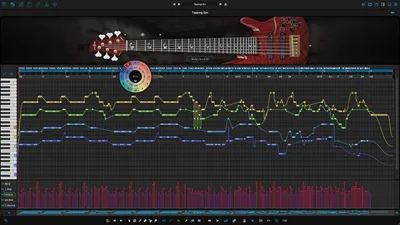
Finding a virtual 6-string bass that doesn't sound like a keyboard player guessing what a bassist does is genuinely difficult. Most bass plugins nail the open-string sustain, then fall apart the moment you ask for a slide into a dead note, or a popped harmonic on the B string. The Ample Bass TR6, based on the Yamaha TRBJP2 John Patitucci signature model, is Ample Sound's answer to that specific frustration. It's built for producers, composers, and beatmakers who need fingerstyle, slap, and extended techniques to sound like a real player sat down and tracked them. At $119, it's priced like a working tool, not a luxury.
The Problem It Actually Exists to Solve
Most virtual bass instruments stop at sustain and mute. You get two velocities, a round-robin cycle, and a pitch-bend hack that's supposed to sound like a slide. It doesn't.
When you're writing a jazz-fusion track and need a low B string to glide up into a harmonised chord, then snap back with a dead note, a two-articulation bass sample library makes you feel like you're drawing a portrait with a potato stamp.
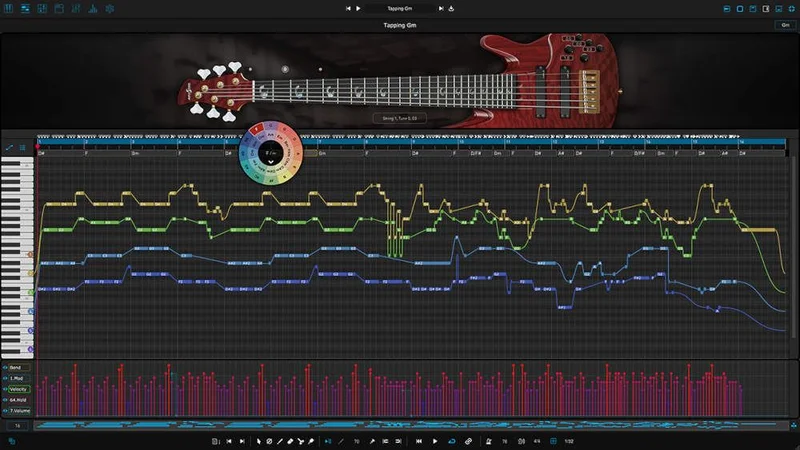
The TR6 ships with 14 articulations: Sustain, Palm Mute, Natural Harmonic, Artificial Harmonic, Tap, Slap, Pop, Dead Note, Slides, Slide Turn, Mordent, Hammer-On/Pull-Off, Arpeggio, and Strum. That's not a marketing list. Those are the exact techniques that separate a convincing bass line from a MIDI approximation.
If you've been using a generic bass VI and spending 45 minutes velocity-editing to fake articulation, this is the plugin that stops that habit.
How It Performs in Practice
We loaded the TR6 into a session running at 44.1kHz / 64-sample buffer. First test: a fingerstyle jazz walking line across all six strings, including the low B.
The low B stayed defined without becoming muddy. We weren't pulling frequencies out at 80Hz post-track. The sample depth handles the natural string tension of a 34-inch scale instrument, and it shows.
Then we tried the slap and pop combination. We built a quick funk groove: thumb hits on the E and A strings, pop on the G. The attack transients were tight, somewhere around 5-8ms of natural snap before the sustain body arrived. We've heard slap samples that sound like someone hitting a cardboard box. These don't. The pop had genuine bite in the 2-4kHz range without needing a separate exciter in the signal chain.
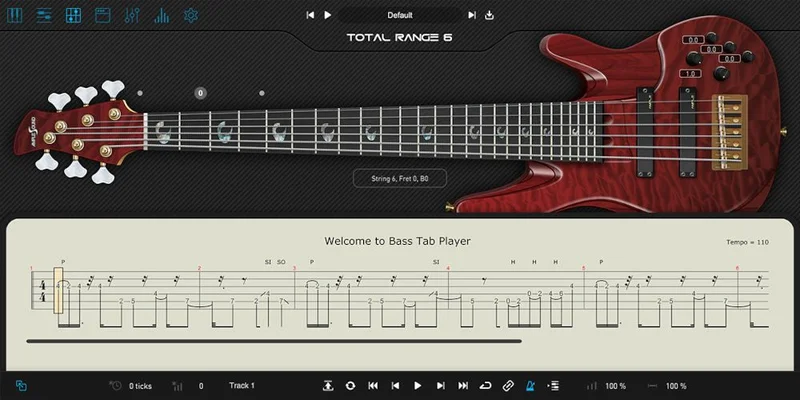
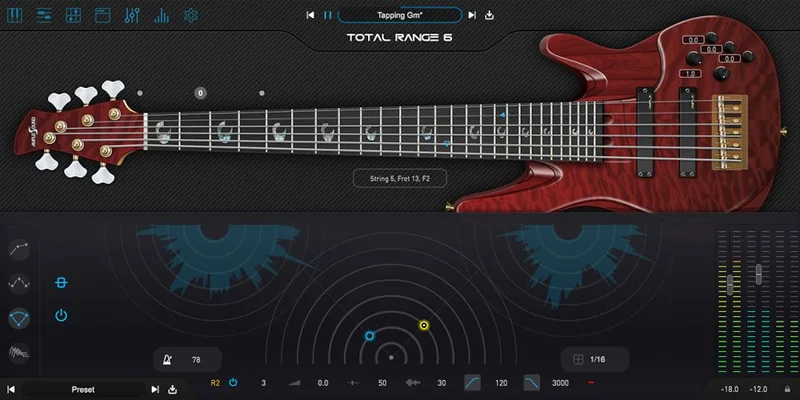
The Tab Player is the feature we didn't know we wanted. Load a Guitar Pro file, and the TR6 displays the tab inside the plugin interface, then plays it back with the correct articulations automatically applied. We imported a tab for a Jaco Pastorius-style run and it mapped the hammer-ons and pull-offs correctly without manual keyswitch programming. That alone saved us 20 minutes of MIDI editing in a real session.
The Polyphonic Legato and Slide system deserves a mention. Slide into a chord on a standard bass plugin and you get one string sliding while the rest jump. The TR6 slides all active notes simultaneously with independent velocity and timing. We played a two-finger chord slide from the 5th to the 7th position on the D and G strings. It tracked both. Satisfying isn't a strong enough word for that moment.
CPU load was moderate. In our test rig (Apple M2, Logic Pro 11), the TR6 idled around 4-6% CPU with the default patch loaded. Under heavy MIDI triggering with articulation changes every two to four notes, it pushed to 9-11%. Not light, but manageable. For a 7.5 GB library, we'd call that fair.
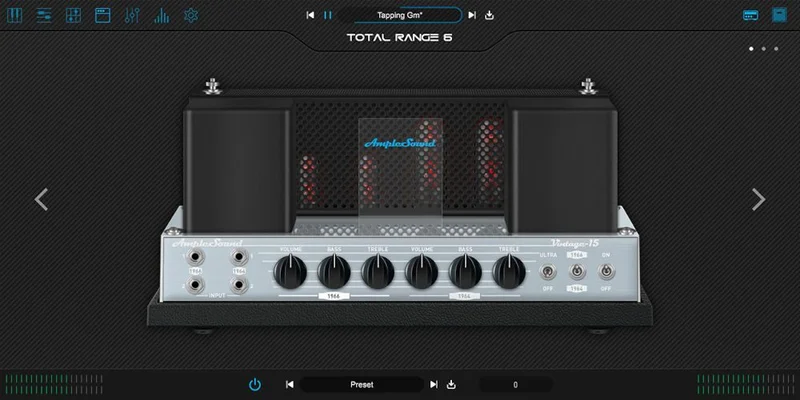
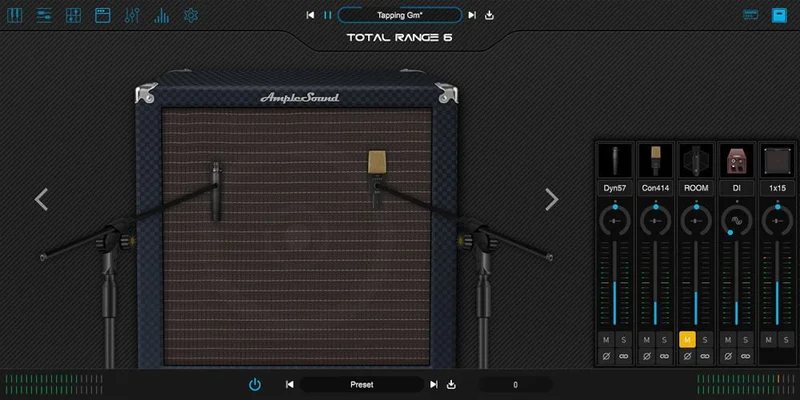
The three onboard amp models (Vintage-15, Bass-500, Bass-Pro) are usable. They're not replacing a dedicated amp sim in a serious mix, but they let you preview tones without leaving the plugin. For demo work and sketch sessions, that's genuinely useful.
Strengths and Weaknesses
The articulation system is the TR6's clearest strength. Fourteen options sounds like feature-bloat until you're writing a track that needs all of them. Jazz, soul, fusion, and progressive rock compositions will pull from most of that list regularly.
The Tab Player is underrated as a workflow tool. Import a bass arrangement from Guitar Pro and the plugin does the articulation mapping for you. We wish more virtual instruments did this. It's clever in a way that makes you wonder why nobody built it sooner.
On the weakness side: the genre ceiling is real. We tried building a modern metal drop-A line and the tone felt polite. The attack lacked the aggression you'd want for an 8-string tuning context. Trap 808-style bass is completely off the menu; this is a sampled acoustic instrument, not a synth bass.
The 7.5 GB library size is annoying if storage is tight. This isn't a plugin you install and forget. You're committing drive space. On the positive side, load times are reasonable, around 8-12 seconds for a cold start in our tests.
We also noticed the amp models clip slightly when you push gain hard without watching your input level. Gain stage before the amp section and you won't hear it. Ignore that step and you will.
Value for the Price
At its current price, the TR6 is straightforward to recommend for any producer regularly writing jazz, fusion, soul, or progressive material. You're getting a 7.5 GB instrument with 14 articulations, a tab importer, amp modelling, and a slide engine that works on chords. The hourly rate you'd pay a session bassist to track a full arrangement makes this look very cheap.
At $119, it's still justified if bass is central to your sound. If you drop a bass line on two tracks per year, spend that money elsewhere. The current price is shown in the buy box on this page.
For context on Ample Sound's broader catalogue, we've also looked at whether the Ample Bass J
can replace a real jazz bass. The TR6 targets a different player and a different string count, but the build quality is consistent across both.
Who Should (and Shouldn't) Buy This
- ✅ Buy if you're scoring jazz, fusion, or soul tracks and need 6-string range with extended techniques.
- ✅ Buy if you work with Guitar Pro files and want articulations auto-mapped from tabs.
- ✅ Buy if you want slap and pop that doesn't need heavy post-processing to sit in the mix.
- ❌ Skip if your productions are primarily metal, djent, or anything needing aggressive low-end attack.
- ❌ Skip if you have less than 10 GB of free drive space. You'll regret it.
- ❌ Skip if you only write the occasional bass line. A simpler 4-string library will serve you better at lower cost.
Score Breakdown
| Category | Score | Notes |
|---|---|---|
| Sound Quality | 4.5/5 | Low B string stays defined; slap transients are tight without EQ fixes |
| Value for Money | 4.0/5 | At its current price, fair for 14 articulations and a tab engine; occasional users should weigh how often they'll use it |
| Ease of Use | 3.5/5 | Tab Player cuts workflow time significantly; articulation keyswitch mapping has a learning curve |
| Features | 4.5/5 | 14 articulations, Tab Player, polyphonic slides, and three amp models cover most real-world bass programming needs |
| CPU Efficiency | 3.5/5 | 9-11% under heavy articulation switching is manageable but not lightweight for a single instrument |
| Overall | 4.2/5 | Best 6-string virtual bass we've tested for jazz and fusion; genre limitations keep it from universal recommendation |
Alternatives to Consider
If the TR6's jazz focus doesn't match your genre, you have real options.
Ample Bass J is the 4-string sibling built around a Jazz Bass model. If you write funk, R&B, or classic rock and don't need the extended low range, our Ample Bass J review walks through how it performs compared to a real session instrument. Narrower range, lighter install.
Modo Bass 2 (IK Multimedia) uses physical modelling instead of sampling. It's more CPU-hungry and the tonal character is different, but you can customise the instrument itself: scale length, pickup position, string material. Better choice if you want tone flexibility across genres. Check current pricing on IK's site.
Scarbee Pre-Bass (Native Instruments) is a Fender Precision-focused sampler. Narrower articulation set than the TR6, but the Precision tone is very specific and very convincing for rock and pop. If you want that one sound done brilliantly, it competes.
For a look at how Ample Sound handles acoustic instruments with the same attention to articulation detail, our Ample Guitar SJ review covers their acoustic guitar approach. The workflow logic is consistent across their range. And if you're building out a full virtual instrument toolkit, our Ample Ethno Ukulele review shows how the platform handles more unusual instruments.
The TR6 sits in a narrow lane and owns it. If that lane is yours, nothing in this list beats it. If it's not, don't buy it hoping the tone will stretch to fit.
Get it at the current price. Use the Tab Player on your first session. You'll understand immediately why the feature list matters. If you're producing anything adjacent to jazz or fusion and you're still programming bass with a two-articulation preset, this is the plugin that makes that embarrassing in retrospect.
Frequently Asked Questions
What bass guitar is the Ample Bass TR6 modelled on?
The TR6 is sampled from the Yamaha TRBJP2, the John Patitucci signature model. It's a 6-string bass with a 34-inch scale, which explains why the low B string samples carry genuine string tension in the recordings. Patitucci is one of the most recorded jazz bassists working, so the source instrument is appropriate for the plugin's jazz and fusion target market.
How does the Tab Player actually work in practice?
You import a Guitar Pro file (.gp, .gp5, etc.) directly into the TR6 interface. The plugin reads the tablature, maps the positions to its internal sample library, and applies the correct articulations based on what the tab notation indicates. Hammer-ons, pull-offs, slides, and harmonics all map automatically. It's not flawless on every file, but it works cleanly on properly formatted tabs and cuts articulation programming time significantly.
Is 7.5 GB too large for a single virtual instrument?
It depends on your setup. For a dedicated production machine with 1TB or more of fast SSD storage, 7.5 GB is a non-issue. For a laptop with a smaller drive shared across multiple libraries, it's a real consideration. Load times in our tests were 8-12 seconds, which is acceptable. We'd recommend keeping the library on an SSD rather than a spinning drive for best performance.
Does the Ample Bass TR6 work for genres outside jazz and fusion?
Fingerstyle rock, soul, R&B, and progressive music all sit comfortably within what the TR6 handles well. Modern metal and djent-style low-end aggression is where it struggles: the tone is detailed and nuanced rather than punchy and aggressive. Trap, hip-hop 808 bass, and EDM sub-bass are completely outside its scope since it's an acoustic instrument sampler, not a synth bass. If those are your primary genres, look at Modo Bass 2 or a dedicated synth bass plugin instead.