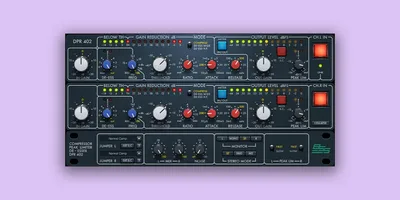
The Waves BSS DPR-402 plugin is a competent emulation of a beloved 1980s hardware unit, worth picking up at its current sale price of $34.99, but not a plugin we'd call essential for most modern producers.
The original BSS DPR-402 was a two-channel dynamics processor that showed up on rock, dance, and hip-hop records through the 80s and 90s. Waves partnered with BSS Audio to model it, added features the hardware never had, and launched it in 2016 for $149. It now regularly sells for well under its original launch price. That price shift is the most important thing to know before we get into the detail.
This review is for producers who've heard the name, seen it on gear lists, and want to know whether it's worth adding to their signal chain. Short answer: yes, conditionally. Keep reading for the full picture.
What You're Actually Getting
The DPR-402 plugin models a hardware processor that originally sold for well over a thousand pounds new. You can find the hardware secondhand now for a few hundred pounds in the UK, or a bit more in Europe. The plugin does more than the hardware ever did.
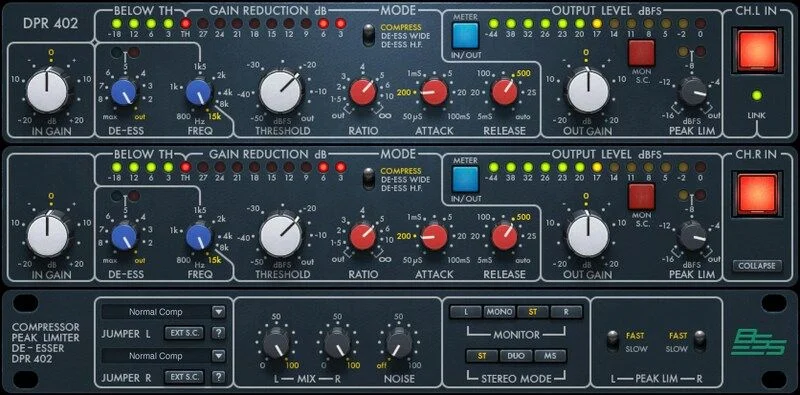
You get 12 processing modes covering compression, limiting, de-essing, frequency-selective compression, low-frequency expansion, and dynamic EQ territory. Each channel carries 2 independent sidechains. There's an MS matrix built in, which the hardware never offered.
Plugin formats covered are VST3, AU, AAX Native, AudioSuite, and SoundGrid. It runs on both Mac and Windows. The hardware had full LED metering and auto attack/release mode. The plugin carries those over faithfully.
What you're buying is primarily a character processor, not a transparent utility compressor. The DPR-402 has a sound. Whether that sound serves your session depends entirely on what you're compressing.
The Good
The de-essing mode is where this plugin earns its keep. We ran a vocal through it with the frequency-selective compression set around 6-8kHz, threshold pulled down until the sibilance just triggered compression, and the result was cleaner than anything we got from a standard wideband compressor in the same position. The harshness dropped without the lispy, over-processed artifact you get from cheaper de-essers.
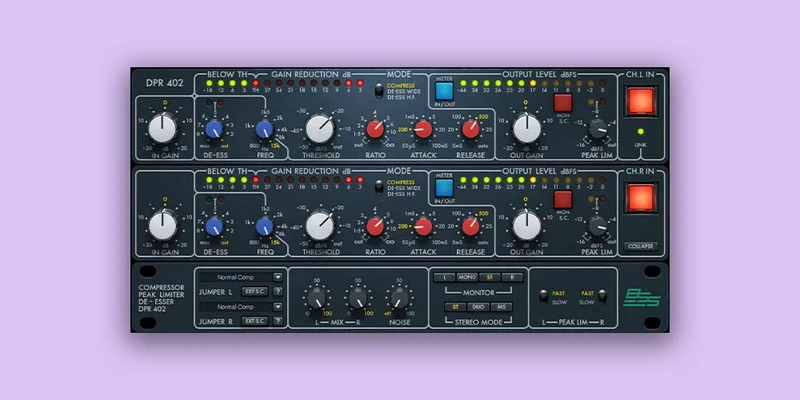
On rock drums, the limiting mode genuinely surprised us. We put it across a drum bus, set fast attack, and pushed the input until the snare was hitting the limiter ceiling hard. The transient stayed snappy. The body got denser. That's the character people have chased for 40 years on this unit, and Waves captured it without obvious flattery.
The 12 processing modes are genuinely useful, not just list padding. Switching from broadband compression to low-frequency expansion on a bass guitar took about 15 seconds and opened up exactly the kind of sub tightness that usually requires a dedicated dynamic EQ. The dual independent sidechains per channel let you do things the original hardware physically couldn't, and the MS matrix adds real-world mastering utility at a price point where nothing else in this category offers it.
At $34.99, we'd buy it ourselves. That's the honest version of the value case.
The Not-So-Good
Push the gain reduction past about 8-10dB and the plugin gets ugly in the wrong way. Not vintage-warm ugly. Brittle. Distorted. We tested it on a lead vocal with 15dB of gain reduction and the high-mids developed a harsh crunch that no amount of release adjustment fixed.
The hardware had the same problem, to be fair. But the hardware cost serious money and came with other reasons to overlook it. A plugin in a market full of transparent, surgical alternatives has less excuse.
CPU load is annoying. Running four instances across a session, we saw roughly 2.5x the CPU draw of four instances of FabFilter Pro-C 2 alternatives. For a character plugin you might want on multiple channels, that adds up fast on smaller systems.
The UI hasn't aged well. On a modern 4K display it looks cramped, and the metering scale is harder to read at a glance than it should be. Functional, but frustrating when you're deep in a session.
Compared to the Alternatives
FabFilter Pro-C 2 costs more (check current pricing on their site), sounds cleaner at all gain reduction settings, and offers a modern, resizable interface. It doesn't sound like the DPR-402. That's the trade.
Waves' own C6 multiband compressor covers similar frequency-selective compression territory for roughly the same price. The C6 is more precise and less characterful. If you need a tool for surgical bus work, C6 wins. If you want the DPR-402's specific coloration, the C6 won't scratch that itch.
For de-essing specifically, Waves Sibilance does one job with less complexity. The DPR-402 de-esser is brilliant for producers who want that function wrapped inside a broader dynamics processor, but overkill if de-essing alone is the goal.
The Bettermaker Mastering Compressor is the right
comparison for mastering use: cleaner at high gain reduction, better metering, higher price. Pick based on whether character or transparency serves your master.
Who Should Buy This
- ✅ Buy if you record rock or hip-hop and want that 80s-90s drum bus density without sourcing hardware
- ✅ Buy if you need de-essing, compression, and dynamic EQ coverage from one plugin slot at a low price
- ✅ Buy if you work in MS and want a character processor with a native mid-sides matrix built in
- ❌ Skip if you need a clean, transparent compressor for mastering or surgical mix work
- ❌ Skip if your sessions already run near CPU capacity, this isn't a lightweight plugin
- ❌ Skip if you're a beginner looking for your first compressor: the 12 modes and dual sidechains reward experience, not patience
Score Breakdown
| Category | Score | Notes |
|---|---|---|
| Sound Quality | 3.5/5 | Excellent character at moderate gain reduction; falls apart past 10dB |
| Value for Money | 4.0/5 | At $34.99, 12 modes and MS matrix is a strong package |
| Ease of Use | 3.0/5 | Steep learning curve; UI hasn't kept pace with 2026 standards |
| Features | 4.0/5 | Dual sidechains, MS matrix, and 12 modes beat most rivals at this price |
| CPU Efficiency | 2.5/5 | Noticeably heavy; a problem if you want it on 4+ channels |
| Overall | 3.8/5 | Underrated at sale price for the right producer; overrated as a daily driver |
Alternatives to Consider
Kiive Audio Complexx: A modern bus compressor emulation with cleaner headroom and a more intuitive interface. Better choice if you want analog character without the DPR-402's distortion ceiling. Read our Complexx review
Bettermaker Mastering Compressor: Costs more, but the analog-accurate performance at high gain reduction settings is in a different league. Worth the investment if mastering is your primary use case. Read our Bettermaker Mastering Compressor review
MeldaProduction MWaveShaperMB: Six bands of dynamic shaping with surgical precision. No character, all control. If the DPR-402's coloration is a bug for you rather than a feature, this does the frequency-selective dynamics work more cleanly. Read our MWaveShaperMB review
The BSS DPR-402 plugin is a love letter to a specific era of dynamic processing. We love what it does at moderate compression depths. We hate what it does past 10dB of gain reduction, and we wish Waves had rebuilt the UI at some point in the last decade.
At $34.99, the love outweighs the hate. At $149, we'd spend the money elsewhere. Catch it on sale, use it for de-essing and drum bus glue, and keep a cleaner compressor in your toolkit for everything else. If you're a hip-hop or rock producer and you've never owned a character compressor, this is a satisfying first one. If you mix pop and electronic music where transparency wins, skip it entirely and look at the alternatives above.
Frequently Asked Questions
Is the Waves BSS DPR-402 plugin a faithful emulation of the hardware?
It's close at moderate gain reduction settings, where the character and punch of the original come through clearly. The plugin actually exceeds the hardware in flexibility, adding 12 processing modes, dual independent sidechains per channel, and an MS matrix that the original unit never had. At heavy gain reduction, both the hardware and the plugin get distorted, so that limitation is faithful too.
What's the difference between the DPR-402 plugin and the Waves C6 multiband compressor?
The C6 is a precision multiband tool built for transparent, surgical frequency-specific control. The DPR-402 adds color and has a specific hardware character baked into its compression curves. They overlap in function but not in sound. Use the C6 for clean mix bus work and the DPR-402 when you want that 80s dynamics character.
Can the Waves DPR-402 replace a hardware de-esser?
For many sessions, yes. The frequency-selective compression mode handles de-essing well at moderate depths, and the dual sidechains give you control that most dedicated hardware de-essers don't offer. The limit is the distortion behavior at high gain reduction: if a vocalist has very heavy sibilance requiring deep compression, you may need a cleaner tool.
What's the best price to buy the Waves BSS DPR-402?
Waves runs frequent sales and the plugin has dropped to $34.99. At that price, it's a reasonable buy for the feature set. At its $149 regular price, it faces stiffer competition from more modern alternatives. Check the Waves site and wait for a sale if you're not in a hurry.