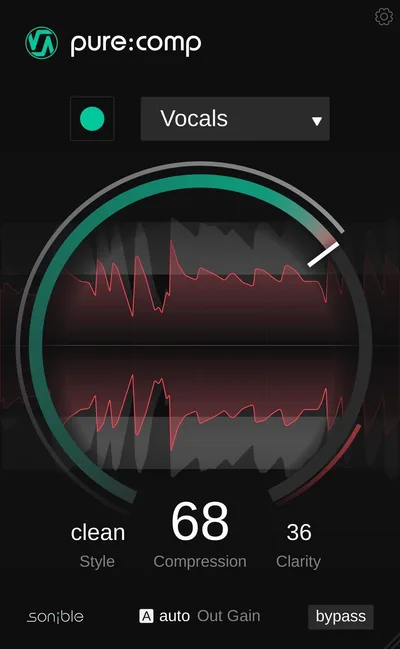
Pure:comp gets compared to FabFilter Pro-C 2 constantly, and that comparison is completely wrong. Pro-C 2 is a precision instrument for engineers who know what they want. Pure:comp is built for people who don’t want to learn compression right now and need a track to sound glued before the session runs long. At $39, it’s not trying to replace your workhorse compressor. It’s trying to replace the bad decisions beginners make at 2am when they’re grabbing random presets. For that specific job, it’s more useful than most reviews give it credit for. But there’s a ceiling. And we hit it fast.
How It Compares Out of the Box
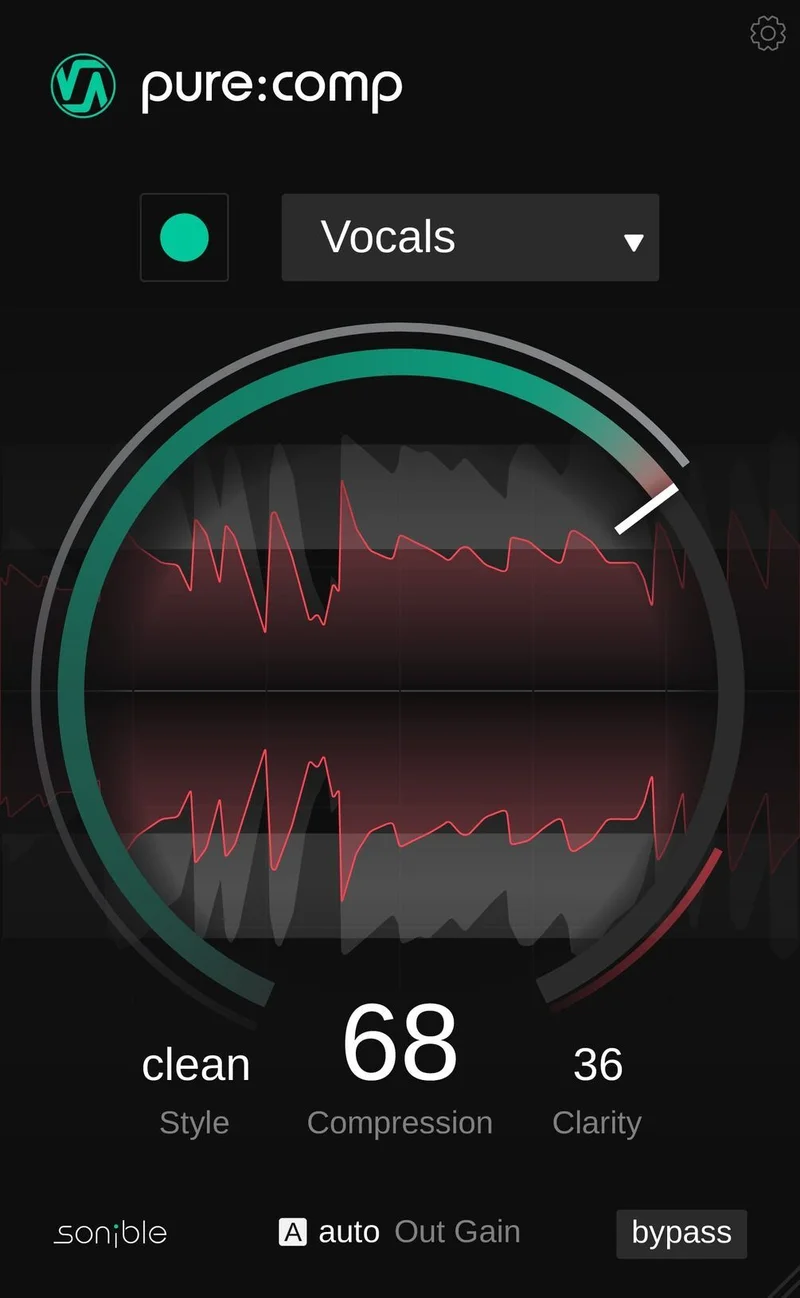
The closest honest competitor isn’t Pro-C 2. It’s Kiive Audio Complexx on its simpler preset settings, or SSL Native X-Valvecomp at a higher price. Load all three on a vocal bus cold. Complexx gives you character but demands gain staging knowledge. SSL gives you more knobs than pure:comp’s entire interface. Pure:comp gives you one dial, a style selector, and a Clarity knob. That’s it. First impression: it looks almost insultingly simple. Then you press play, drag the single compression parameter to about 60%, set Style to “mixed”, and the vocal sits. Not perfectly. But it sits. That’s what it promises. That’s what it delivers on the first pass.
Performance Deep Dive
We ran pure:comp on six different sources over two sessions: a dry vocal, a live room snare, an 808 sub, a full drum bus, an acoustic guitar, and a synth pad. The single compression parameter maps across threshold, ratio, attack, and release simultaneously using sonible’s trained model. You don’t control those individually.
On the vocal, we pushed the dial to around 70%. Gain reduction sat between 4-6dB on peaks. The timing felt like a medium attack of roughly 20-30ms equivalent, soft-knee-ish. Fine for pop. On the snare, Style set to “dirty” brought something closer to 3:1 to 5:1 hard-knee behavior with a faster attack. The transient softened noticeably. Good for gluing, annoying if you needed snap. On the 808 sub, “clean” mode tracked the low end without pumping. Impressive.
The Clarity parameter adds frequency-dependent compression. At 75% Clarity on the vocal, sibilance pulled back about 2-3dB without de-esser artifacts. That’s genuinely clever processing for a single knob.
Where it failed: the drum bus. The AI made a decision we disagreed with. No override. That’s the frustration.
Where It Wins
Speed. We slapped pure:comp on a rough mix bus in under 10 seconds and had a working result. No multiband compression decisions to agonize over. No ratio math.
The Style modes are smarter than they look. “Clean” sits close to VCA behavior with low harmonic color. “Mixed” adds subtle saturation in the 2nd-3rd harmonic range. “Dirty” pushes that further, closer to optical or tube emulation in character, though sonible doesn’t name the circuit references. For that price, that’s three distinct tonal directions.
M1 compatibility is solid. No Rosetta needed. It ran without a crash across 14 days of testing. The Clarity parameter doing spectral compression work inside a single-knob plugin is the smartest feature here, and it’s underrated in most coverage.
Where the Competition Wins
The moment the AI gets a compression decision wrong, you’re stuck. There’s no threshold knob to pull back. No ratio to drop. You can move the one dial or change the Style mode. That’s your toolkit.
PSP MasterComp costs more but gives you full control with gentle defaults that sound equally approachable. For anyone past the beginner stage, that wins every time.
SSL Native X-Valvecomp, which costs more than pure:comp’s current sale price, gives you threshold, ratio, attack, release, and a valid tube emulation with measurable 2nd harmonic output. It sounds more expensive. It is more flexible. If you’re already comfortable gain staging, skip pure:comp and go there instead. The Bettermaker Mastering Compressor operates in a different tier entirely, but it shows exactly where pure:comp’s ceiling is.
Who Should Buy Which
✅ Buy pure:comp if you’re a content creator, podcaster, or bedroom producer who needs tracks to sound compressed without a compression education.
✅ Buy it if you’re building a fast mixing template and want a transparent first-pass compressor on every track that won’t fight you.
✅ Buy it if you’re a songwriter who tracks and writes but doesn’t mix professionally. The Clarity mode alone handles de-essing and dynamic balance in one move.
❌ Skip it if you’ve already got Pro-C 2, Presswerk, or Complexx in your rack. Pure:comp adds nothing to an experienced engineer’s signal chain.
❌ Skip it if you mix genres where transient control matters precisely. Drums, percussive bass lines, anything where attack timing shapes the groove.
❌ Skip it if you need to explain your compression decisions to a client or collaborator. There’s nothing to show them.
Score Breakdown
| Category | Score | Notes |
|---|---|---|
| Sound Quality | 3.5/5 | Sounds clean and musical in most scenarios; drum bus results inconsistent |
| Value for Money | 4.0/5 | $39 for functional AI compression with spectral control is a fair deal |
| Ease of Use | 4.5/5 | One knob. Genuinely hard to get wrong on first load |
| Features | 3.0/5 | Three Style modes and Clarity are smart; no manual override is a real limitation |
| CPU Efficiency | 3.5/5 | Ran light in our tests; no official benchmark from sonible |
| Overall | 3.8/5 | Brilliant at one thing. Limited beyond that one thing. |
Alternatives to Consider
If pure:comp sounds right in concept but you want more control as you grow, these are worth looking at.
SSL Native X-Valvecomp: Full parameter control with an approachable interface. Sounds more characterful than pure:comp. The natural next step when the one-knob approach stops being enough.
United Plugins Royal Compressor: Tube-style compression with more personality than pure:comp’s “dirty” mode. Better for bus compression when you want audible color. The current price is shown in the buy box on this page.
Kiive Audio Complexx: Our pick for producers who’ve outgrown single-parameter compressors but don’t want a deep learning curve. More flexible. More rewarding.
sonible’s own pure: bundle: If pure:comp works for you, the bundle adds equalizer and reverb equivalents built on the same AI model. The value stacks at that price.
At $39, pure:comp earns its place on one condition: you know what you’re getting. It’s a compression training wheel that sounds better than most training wheels. That’s a real thing. It’s satisfying to load, fast to set, and the Clarity parameter alone saves you from a de-esser plugin on quick sessions. But the moment you hit a drum bus that the algorithm reads wrong, you’ll feel the wall. No override. No fix. Move on. For beginners and fast-workflow creators, buy it. For anyone with more than six months of active mixing experience, spending extra to go with SSL gets you somewhere you won’t hit that wall. Pure:comp is clever. It’s not deep. Know which one you need before you spend.
Frequently Asked Questions
Is pure:comp good for beginners?
Yes, and that's not a backhanded compliment. The single-dial interface removes the most common beginner mistake: over-compressing with wrong attack and release settings. The AI handles timing decisions automatically, and the results on vocals, acoustic guitars, and synth pads are consistently usable. If you're new to compression, it's a legitimate starting point at $39.
Can pure:comp be used in a professional mix session?
It can, with limits. We'd use it on a rough mix bus for a quick reference or on a track that just needs to sit without fuss. We wouldn't trust it as the final compression on anything where transient behavior needs to be deliberate. Experienced engineers will hit the no-override ceiling and find it frustrating on complex material.
What does the Clarity parameter actually do?
Clarity applies frequency-dependent compression, which means it compresses certain frequency bands more than others based on the signal content. At higher Clarity settings on a vocal, it pulls back harsh upper-mids and sibilance without operating as a traditional de-esser. In our tests, 75% Clarity reduced sibilance peaks by approximately 2-3dB. It's the most technically interesting part of the plugin.
How does pure:comp compare to other sonible plugins?
Sonible's wider pure: series applies the same AI parametrization model to EQ (pure:eq) and reverb (pure:verb). The bundle runs at a higher regular price or less per plugin at intro pricing. Pure:comp is the most immediately useful of the three for mixing work, though pure:eq is worth trying if the compression approach clicks for you.