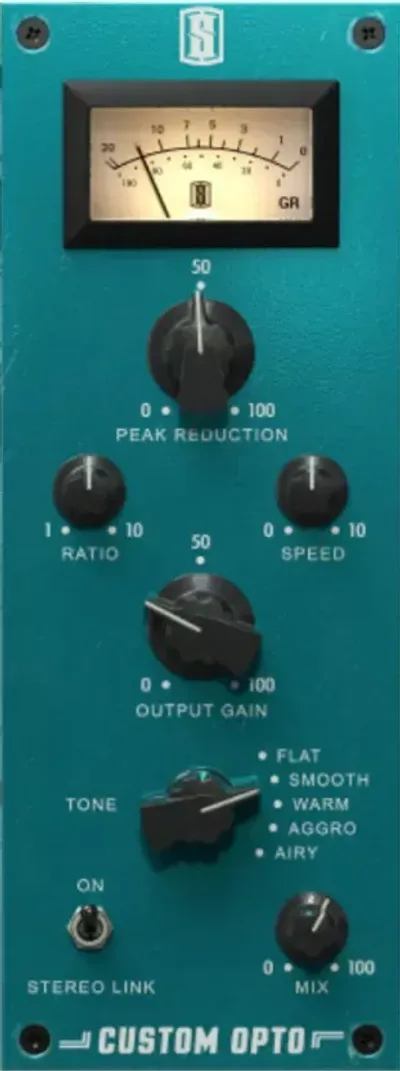
The LA-2A is one of the best-sounding compressors ever made, and one of the least useful if your session requires anything beyond slow, gentle leveling. That's the real frustration. You load an emulation, it sounds brilliant on a smooth jazz vocal, and then you need it on a punchy hip-hop hook or a drum bus with actual transients, and it just... sits there, barely doing anything, because the hardware it's based on doesn't have a ratio knob. Slate Digital's Custom Opto is their answer to that problem. It keeps the tube-optical character of their FG-2A model and adds Speed and Ratio controls that genuinely expand what opto compression can do in a modern ITB session. At $99 for a perpetual license, it is aimed at producers and mix engineers who want the warmth without the restrictions.
The Specific Problem Custom Opto Exists to Solve
Standard LA-2A emulations give you two controls that matter: Peak Reduction and Output Gain. That's it. No ratio adjustment. No attack speed control. The hardware's program-dependent behavior does everything else.
That's charming on the right source. It's frustrating everywhere else.
We've all had that session where the LA-2A sounds perfect on the verse vocal but completely loses the chorus because the compression ratio isn't high enough to catch the peaks. Or you're on a bass guitar that needs faster attack to tighten up the low-end transients, and the hardware-faithful emulation just rolls over them softly because that's what an LA-2A does.
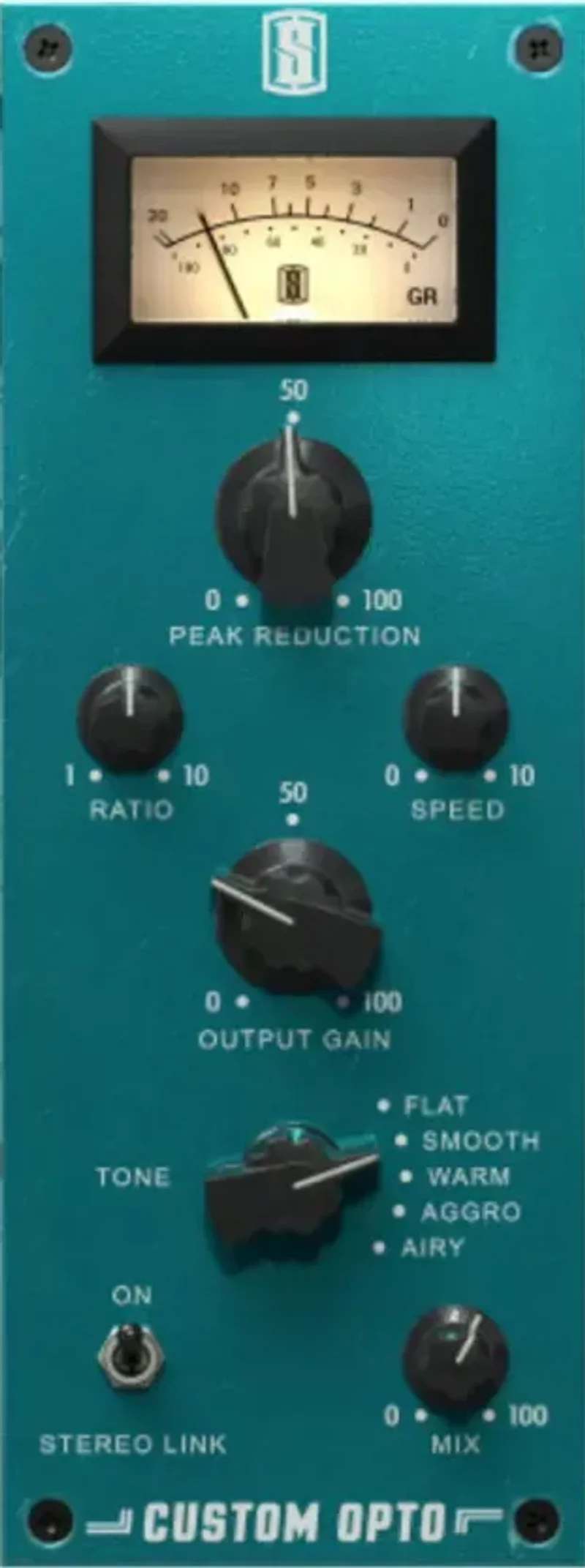
Custom Opto's Speed control lets you push the compression response from that classic slow opto feel into faster territory that competes with 1176-style behavior. The Ratio control goes from 1:1 (no compression) up past 10:1 into limiting territory. Together, they take one of the most beloved compressor topologies and make it actually session-flexible.
How Custom Opto Performs in a Real Session
We put Custom Opto on six different sources over two sessions: lead vocal, backing vocals, acoustic guitar, electric bass, drum bus, and a full mix bus.
On lead vocal, we set Ratio to 3:1, Speed at about 40% (leaning toward the slower opto feel), with the Tone switch on Smooth. We dialed Peak Reduction until the gain reduction meter was catching 4-6dB on the louder phrases. The vocal sat in the mix immediately. No pumping. No over-compression artifacts on the consonants. That part felt satisfying in a way that makes you trust a plugin.
On the drum bus is where Custom Opto surprised us. We pushed Ratio to 8:1, moved Speed up to around 70%, switched Tone to Aggro, and set Peak Reduction to catch the snare peaks at around 6-8dB. The result wasn't what you'd call clean. It had that slightly saturated, excited edge that you normally don't associate with opto compression. It worked. The snare got punchier. The kick had more weight. We'd never have gotten there with a standard LA-2A plugin.
The Aggro Tone setting adds harmonic emphasis in the upper mids. We compared it briefly to the Smooth setting on the same source: Smooth rolled off around 8kHz with a subtle dip, while Aggro brought a presence push around 4-6kHz that added bite without sounding harsh. These aren't drastic EQ shifts, but they're clearly audible.
On the mix bus, we kept things conservative: Ratio at 2:1, Speed at 25%, Tone on Flat, catching no more than 2dB of gain reduction. It added a cohesion you only notice when you bypass it. The Flat tone setting really is flat. No coloration agenda. That's a good thing on a mix bus where you don't want a plugin imposing character you didn't choose.
How does it compare to competing LA-2A emulations? Softube's version sounds excellent and is arguably more hardware-accurate. Universal Audio's UAD version is the benchmark many engineers still use. But neither adds Ratio or Speed controls. Custom Opto wins on flexibility. If you want strict hardware accuracy, the Native Instruments Vintage Compressors R2 review might be a closer fit.
Strengths and Weaknesses
The Speed control is the most underrated thing about this plugin. Slow opto compression has always been a limitation dressed up as a feature. Custom Opto lets you keep the optical response curve while compressing it into a faster window. It's clever engineering, not a gimmick.
The 5-way Tone switch is genuinely useful. Warm adds low-mid body in the 200-400Hz range, which is brilliant for bass guitar or a thin-sounding room mic. Airy opens up the top end above 10kHz, which works on acoustic instruments and bright vocals. The Tone values can be set anywhere from 0 to 200 within each mode, giving you a range of intensity rather than just five binary options.
On the weakness side: the iLok requirement is annoying. iLok Cloud works without the physical dongle, but it's one more dependency. If iLok's servers have a bad day, you have a bad day. That's a real concern for touring engineers or anyone working without reliable internet.
We also wish there was more documentation on CPU load. We ran 12 instances across a dense mix without obvious issues on an M2 Mac, but we don't know the headroom. On older Intel systems or Windows rigs with tight buffer settings, that uncertainty matters. The Kiive Audio Complexx review handles similar compression territory with better-documented CPU specs.
Is the Price Justified?
Yes. Straightforwardly yes.
UA's UAD LA-2A costs more and requires DSP hardware. Softube's version is in the same price range but d oesn't add ratio or speed controls. Custom Opto at $99 perpetual gives you something none of those do: an LA-2A character that is actually adaptable.
The bundle with the FG-2A is worth considering if you don't own the FG-2A. But if you already have it via the All-Access Pass, the standalone license makes more sense than paying for a duplicate. Check the Slate Digital site for current bundle pricing and promotions, as these shift regularly.
For comparison, the Mellowmuse CP2V compressor review covers vintage compression territory at a lower price point if budget is tighter.
Who Should and Shouldn't Buy Custom Opto
✅ Buy if you already love LA-2A character but need ratio flexibility for modern sources like punchy rap vocals or dense drum buses.
✅ Buy if you want one optical compressor that can handle everything from 2:1 leveling to 10:1 limiting without switching to a completely different plugin.
Buy if you're on Slate's All-Access Pass and want to try it at the subscription rate before committing to the perpetual license.
❌ Skip if you need strict, hardware-accurate LA-2A emulation for analog comparison work. Custom Opto's expanded controls take it away from pure hardware fidelity.
❌ Skip if you hate iLok in any form and don't want another activation dependency in your studio.
❌ Skip if you're already covered for optical compression and mastering-grade leveling. The Bettermaker Mastering Compressor review covers that high-end mastering territory more thoroughly.
Score Breakdown
| Category | Score | Notes |
|---|---|---|
| Sound Quality | 4.5/5 | Tube opto character is musical and translates well from soft leveling to aggressive limiting |
| Value for Money | 4.0/5 | $99 undercuts competing LA-2A emulations that offer far less control |
| Ease of Use | 4.0/5 | Clean interface, but the Tone parameter 0-200 range lacks visual reference points for new users |
| Features | 4.5/5 | Speed, Ratio, and 5-way Tone switch genuinely extend what opto compression can do |
| CPU Efficiency | 3.5/5 | Ran 12 instances without issue on M2 Mac, but no official CPU specs creates uncertainty for older systems |
| Overall | 4.2/5 | A well-engineered, musically honest compressor that earns its price by solving a real problem |
Alternatives to Consider
Softube CL 1B Opto Compressor: Excellent hardware-accurate optical emulation with a more traditional control set. Worth it if you want strict fidelity over flexibility. Check current pricing on the Softube site.
Native Instruments Vintage Compressors R2: Covers optical, FET, and VCA compression in one bundle. We've reviewed it in detail at Vintage Compressors R2 review. Better for producers who want multiple compressor types without buying three separate plugins.
PSP MasterComp: Not an LA-2A emulation, but it covers the transparent leveling and mastering compression territory that Custom Opto's conservative settings approach. Our PSP MasterComp review has the full breakdown. More technical, less characterful.
Custom Opto is one of those rare plugins where the added controls aren't a compromise of the original character. They're an extension of it. The moment we pushed the Ratio to 8:1 on a drum bus and heard opto compression behaving like a fast limiter without losing its warmth was the moment this plugin earned its place in our template sessions. That's not something we say about many compressors. Buy the perpetual license. Just know it's wrong for you if strict hardware accuracy is the goal.
Frequently Asked Questions
Is Custom Opto a faithful LA-2A emulation or something new?
It's based on Slate Digital's FG-2A model, which took over a year to develop and uses tube-optical response curves from the original hardware. The Speed and Ratio controls are additions that don't exist on the hardware. So the character is LA-2A. The flexibility isn't. If you need strict hardware emulation for analog comparison work, look at the Softube CL 1B instead.
Does Custom Opto require a physical iLok dongle?
No. It works with iLok Cloud, which means no physical dongle needed. You do need an iLok account and an internet connection for Cloud authentication. If you're working offline regularly, you'll want to check iLok's machine license options before purchasing.
What's the difference between the Aggro and Warm Tone settings?
Aggro adds harmonic emphasis in the upper mids, roughly in the 4-6kHz region. It works best on drums, electric guitars, or sources that need presence and edge. Warm adds body in the low-mids around 200-400Hz, which suits bass guitar, male vocals, or any source that sounds thin in the mix. Both settings have a 0-200 intensity range, so you're not stuck with a fixed amount of character.
How does Custom Opto compare to the Slate Digital FG-2A?
The FG-2A is the hardware-faithful version with just Peak Reduction and Output Gain controls, matching the original LA-2A's two-knob simplicity. Custom Opto adds Ratio (1:1 to 10:1+), Speed, and the 5-way Tone switch on top of the same core model. The bundle includes both. If you're starting fresh, the bundle makes more sense than buying them separately.