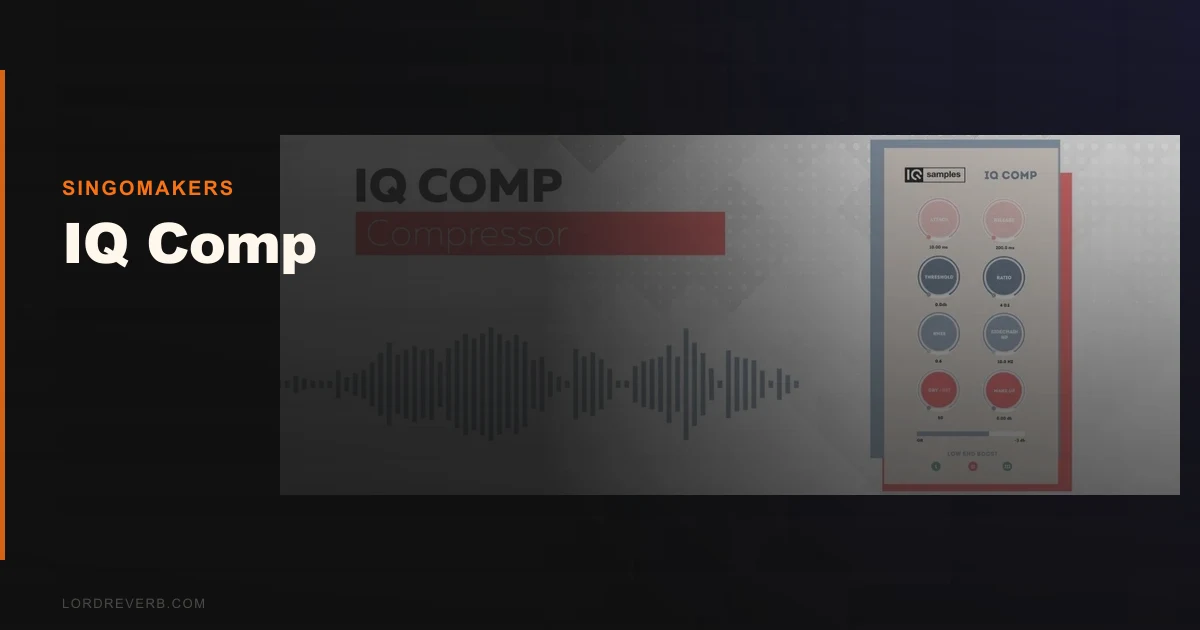
We were tracking a dry, mid-heavy lead vocal at 2am when IQ Comp landed in the test session. The signal chain was simple: interface, a light hi-pass on the EQ before it, then straight into IQ Comp. Within about four minutes of dialling in the CALM mode with the CompLinkEQ engaged, the vocal sat in the pocket without reaching for a separate tonal plug. That’s the pitch for this thing. Whether that pitch holds up across a real session is what this review is actually about.
IQ Comp is a compressor plugin from Singomakers, available in VST, VST3, AU, and AAX formats for Mac and Windows. It’s aimed at producers who want fast, musical compression with integrated tone shaping in a single, lightweight plugin. The intro price runs until June 30, 2025, after which it moves to $35.
What IQ Comp Actually Does (and Where It Falls Short)
IQ Comp isn’t a vintage emulation. It’s not trying to be an 1176 or an LA-2A clone. It’s a modern, clean compressor with two distinct compression characters: CALM for smooth, transparent gain reduction, and ROUGH for more aggressive, forward-sounding punch.
The headline feature is CompLinkEQ. No other compressor plugin does this exactly. As gain reduction increases, the integrated tone control responds in real time, adjusting frequency content in sync with the compression behaviour. On a vocal, that means you’re not chasing mud or harshness after you’ve set your ratio. The tone moves with the dynamics.
What it’s not good for: anything requiring surgical sidechain control, heavy multiband work, or vintage character from specific hardware circuits. It won’t replace a Waves C4 Multiband Compressor on a complex bus. Don’t buy it for that.
Living With IQ Comp Across Multiple Sessions
Setup is fast. Authorisation was straightforward in our tests, no dongle, no drawn-out challenge-response nonsense. It loaded in Pro Tools, Ableton, and Logic without a single crash across a week of testing.
The BOOST section has three modes. We used Mode 2 on a DI bass and it added upper-harmonic presence that sat cleanly under a distorted guitar without needing a separate exciter. That’s the satisfying part of this plugin. One slot in your signal chain does two jobs.
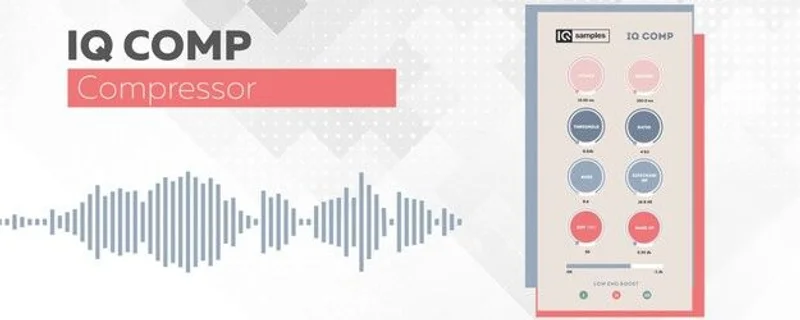
Here’s where we hit a wall. The CompLinkEQ displays almost nothing about what it’s doing to your frequency content. There’s no curve display, no before/after, no frequency readout. You’re listening. That’s fine in isolation, but in dense mixes we found ourselves second-guessing it and reaching for an analyser on the next insert. That extra step kills the speed advantage.
We also wish there was a sidechain EQ filter built in. On kick and bass, ducking without any high-pass on the detection signal created pumping we had to work around by adding a separate utility before the input. Annoying when the plugin is supposedly built to save steps.
M/S operation works as expected. We used it for mid-heavy vocal buses and it performed cleanly. No phase weirdness in our tests.
The Trade-Offs Worth Thinking About
The CompLinkEQ idea is genuinely clever. Linking tone to gain reduction isn’t just a gimmick; it’s a real workflow shortcut that reflects how good engineers actually hear compression. When you compress more, the tonal character of a signal changes, and dealing with that reactively wastes time. IQ Comp addresses that directly.
But that same integration is also a ceiling. Because the EQ responds to the compression, you have less independent control over each stage. If you want to compress hard with minimal tonal shift, the link becomes a limitation rather than a feature. You can’t fully decouple them.
The CALM and ROUGH modes are genuinely different. ROUGH added 3-4dB of perceived loudness on a snare bus at the same gain reduction setting, without clipping. CALM on the same signal smoothed transients without thickening the body. That’s a real distinction, not a marketing one.
CPU load is where we have to flag something: Singomakers doesn’t publish a specific CPU figure. In our sessions with up to 12 instances open simultaneously, we didn’t notice a measurable hit in Ableton Live 12 on an M2 MacBook Pro. But we can’t give you a hard number, and that’s frustrating for engineers planning large template builds.
Against the Field
The competition includes FabFilter Pro-C 2, Waves CLA-76, and Kiive Audio’s Complexx bus compressor.
FabFilter Pro-C 2 is the professional standard for transparent compression with detailed visual feedback. If you need to see exactly what’s ha ppening, buy that instead.
CLA-76 wins for vintage character and tracking energy. IQ Comp sounds cleaner and more modern.
Complexx wins on glue bus work. IQ Comp wins on speed when you need compression and tone in one move.
The Bettermaker Mastering Compressor sits in a completely different price bracket and use case, but if mastering is your context, that’s the right tool.
IQ Comp isn’t better than any of those. It’s faster and cheaper for a specific job. That’s a real value proposition if the job matches.
The Real Verdict
This is a buy for producers who track vocals, bass, and drums ITB and want a compressor that handles basic tonal correction without adding more plugins to the chain. The CALM/ROUGH distinction is useful. CompLinkEQ is a genuinely underrated idea.
Skip it if you need detailed visual feedback, complex sidechain control, or vintage circuit character. Skip it if you’re building dense templates and need published CPU specs to plan around. And skip it entirely for mastering work.
Score Breakdown
| Category | Score | Notes |
|---|---|---|
| Sound Quality | 3.8/5 | Clean, modern character; CALM and ROUGH modes are genuinely distinct |
| Value for Money | 4.5/5 | Hard to argue with $35 for a compressor that doubles as a tone shaper |
| Ease of Use | 3.5/5 | Fast to dial in, but CompLinkEQ gives no visual feedback on frequency changes |
| Features | 3.5/5 | CompLinkEQ and BOOST are genuinely useful; no sidechain EQ is a real gap |
| CPU Efficiency | 3.0/5 | Light in testing, but no published specs means we can't verify at scale |
| Overall | 3.8/5 | A smart, affordable tool for a specific job; don't ask it to be more than that |
Alternatives to Consider
If you need more visual control and transparency, FabFilter Pro-C 2 is the right compressor. It is priced well above IQ Comp and worth every dollar for professional mixing work. Read our compression plugin roundup if you’re comparing options across different price points.
For glue compression on a mix bus, the Kiive Complexx gives you a more specialised tool with better visual metering and cleaner analogue-style glue behaviour.
For mastering, don’t use IQ Comp. Look at the Bettermaker Mastering Compressor instead.
The moment IQ Comp clicks for you is when you realise you haven’t touched the EQ insert after it. That’s the whole idea. It earns its slot in your template for vocals and bass. At $35, it’s still fair. Just don’t expect it to be your only compressor.
Frequently Asked Questions
What does CompLinkEQ actually do in IQ Comp?
CompLinkEQ links the integrated tone control to the compressor's gain reduction in real time. As compression increases, the EQ section responds to compensate for or enhance the tonal shift that comes with heavier gain reduction. In practice, it means you spend less time chasing frequency balance after setting your compression, because the plugin handles the relationship between dynamics and tone simultaneously. It's a clever idea with real practical value, though it gives you less independent control over each stage.
Is IQ Comp good for mastering?
We wouldn't use it for mastering. It lacks the transparency, metering depth, and fine control that mastering compression requires. The absence of sidechain EQ filtering and the limited visual feedback on the EQ section make it a poor choice for final-stage work. For mastering, look at dedicated tools with published technical specs and full metering displays.
What's the difference between CALM and ROUGH modes?
CALM mode produces smooth, transparent gain reduction. It's best for vocals and instruments where you want compression that's felt rather than heard. ROUGH mode is more aggressive and forward, adding perceived loudness and presence alongside the gain reduction. In our tests, ROUGH added 3-4dB of perceived loudness on a snare bus at the same settings as CALM. They're genuinely different sounds, not just marketing labels.
Does IQ Comp work on Apple Silicon Macs?
In our testing on an M2 MacBook Pro, IQ Comp ran cleanly in Ableton Live 12 and Logic Pro with no compatibility issues and no noticeable CPU hit across 12 simultaneous instances. Singomakers lists Mac as a supported OS. Check the manufacturer's site for native Apple Silicon confirmation on the specific version you're downloading.