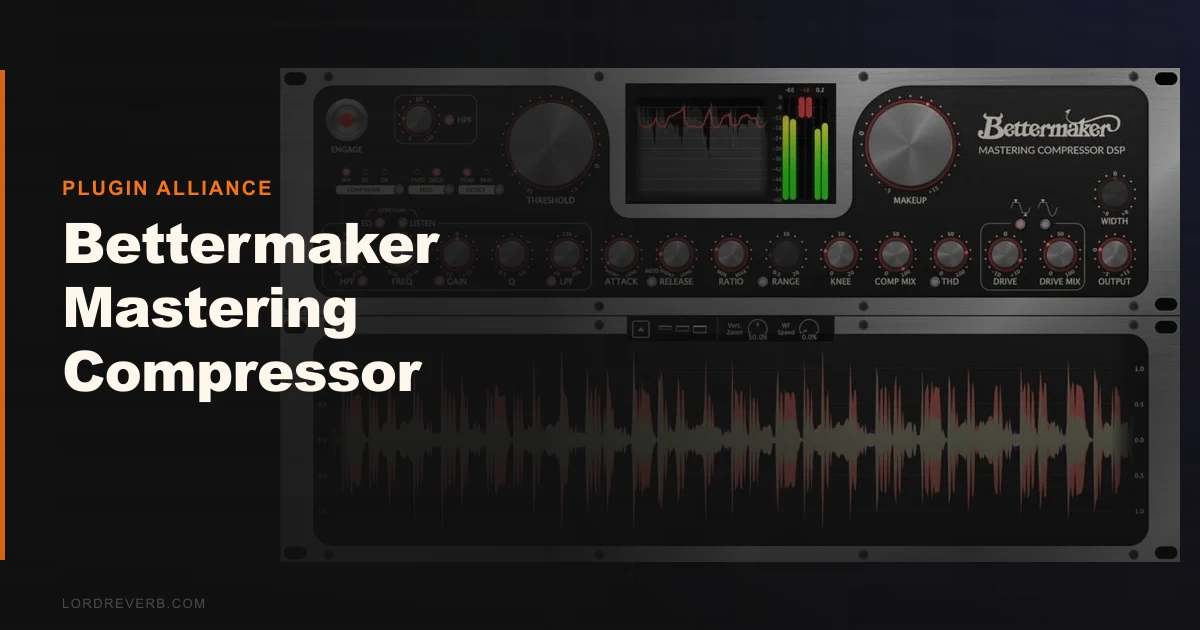
The Bettermaker Mastering Compressor plugin is the most convincing software translation of a serious analog mastering compressor we've tested in 2026, and at $49 it's almost embarrassingly good value for what it actually does to a stereo bus.
We'd buy this ourselves. We have. But we also need to tell you exactly where it earns that money and where it quietly disappoints, because at this price point you deserve the full picture before you click anything.
This is for mastering engineers, mix engineers doing their own finishes, and producers who've outgrown the bus compressor bundled with their DAW. If you're still learning the basics of compression, start somewhere cheaper and come back.
What You're Actually Getting
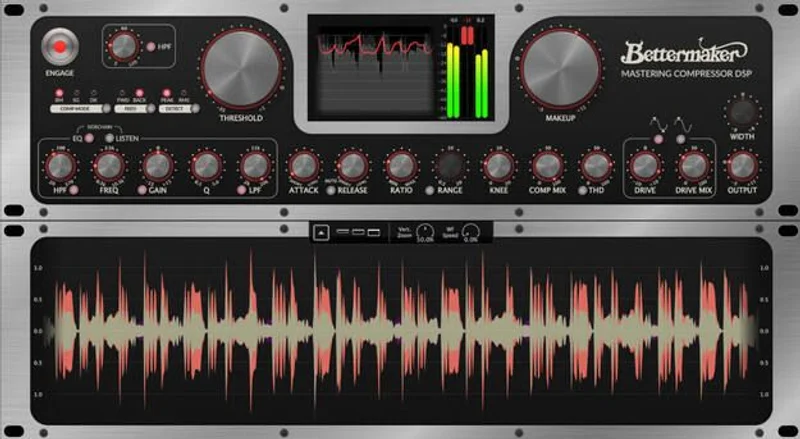
The Bettermaker Mastering Compressor plugin is a software model of Bettermaker's hardware unit. The hardware runs a 100% analog signal path with digitally controlled parameters via a 5-inch capacitive touchscreen. This plugin captures that control architecture in software.
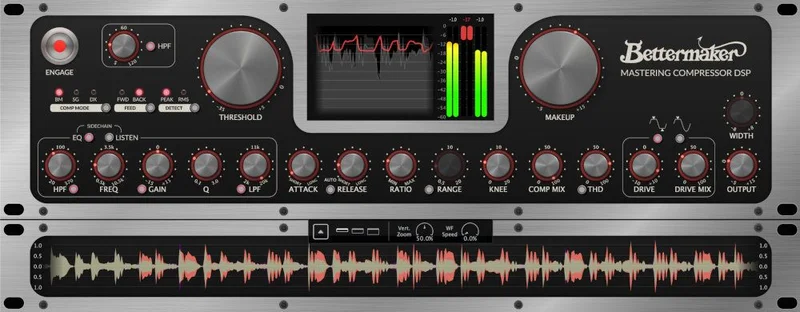
You get three compression circuit modes: BM (Bettermaker's own design), SG (a vintage-style feed-backward circuit), and DX (a modern feed-forward topology). Each mode has switchable feed-forward and feed-backward detection. That's not marketing fluff. It changes how the compressor breathes on transients.
Threshold sweeps from -35dB to +5dB. Attack runs from 0.1ms to 250ms. Release covers 10ms to 2000ms. Ratios go from a subtle 0.7:1 up to 10:1. Drive and THD controls add 2nd-order harmonics below 0.06% and 3rd-order below 0.01% when pushed. These are real numbers, not estimated character.
The Good
We put a full mix through BM mode with threshold at -12dB, attack at 18ms, release at 200ms, ratio at 2:1. The stereo bus tightened without the mix losing its top end. No harsh edge on the high hats. No bloom on the low mids. That's transparent compression doing its actual job.
Then we switched to SG mode, same settings, and the feed-backward detection started shaping the attack differently. Drums got slightly more forward. The master felt pushed rather than squeezed. We loved that distinction. Two modes, two different mixes.
The DX mode is where we'd go for something modern and aggressive. Feed-forward detection at 3:1, attack at 0.5ms, and suddenly you're catching transients before they breathe. Works brilliantly on electronic music where the punch needs to be controlled and upfront.
400 presets with DAW automation support is a satisfying feature set for this plugin. You can automate threshold changes across a mastering session without touching the mouse twice. That workflow efficiency is the whole pitch here.
The Not-So-Good
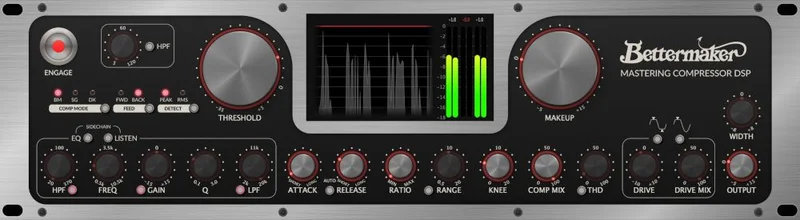
The GUI is ugly. We're not going to soften that. It looks like a digital interface from 2008 that someone never updated. The original hardware's 5-inch touchscreen looks clean by comparison. Using the plugin version feels like a step backward every time you open it.
One instance? Fine. Two on a mastering session with parallel processing? We noticed the CPU overhead stack awkwardly. Plugin Alliance hasn't addressed multiple-instance efficiency in any recent update we've seen. For a plugin positioned at professional mastering workflows, that's a frustrating oversight.
The S/N ratio of 87dB A-weighted is the spec that bothers us most. Manley hardware runs quieter. For material that's headed to streaming at -14 LUFS with noise floors that get forensically examined, 87dB isn't embarrassing, but it's not where we'd expect a mastering-grade tool to land. The plugin model may handle this differently than the hardware, but it's worth monitoring your noise floor on quieter passages.
Compared to the Alternatives
Against the Waves C4, there's no real comparison because they're doing different jobs. The Waves C4 Multiband Compressor splits your signal into four bands. Bettermaker works the full stereo bus. Use C4 when you need surgical frequency-dependent control. Use Bettermaker when the mix is already balanced and you need glue or character.
Against the Slate Digital FG-Grey or FG-Comp, Bettermaker wins on parameter depth. The ratio at 0.7:1 alone is something most bus compressors don't offer. That's expansion territory on a compressor, which is a clever design choice that opens up dynamic shaping options you won't find on a standard SSL-style emulation.
Against Weiss DS1-MK3 plugin or IK Multimedia's mastering suite, Bettermaker is less clinical but more musical. If you're running a streaming-prep mastering house where transparency is everything, the Weiss wins. If you want a compressor that sounds like something, Bettermaker is where we'd go.
Hardware alternatives like best hardware mastering compressors from Manley or Thermionic start at five figures. This plugin isn't competing on the same terms as those hardware units. It's doing something more interesting: offering a credible analog-inspired signal path at a price point that makes hardware feel ridiculous for anyone working entirely in the box.
Who Should Buy This
✅ Buy if you do your own mastering and want a single compressor that can go from subtle bus glue to audible character without switching plugins.
✅ Buy if you're working ITB on electronic music, pop, or anything with a defined stereo mix that just needs finishing compression with real personality opti ons.
✅ Buy if you want to understand feed-forward vs feed-backward compression through practical use. Switching between BM, SG, and DX with identical settings is a masterclass in detection topology.
❌ Skip if your primary need is multiband compression. This isn't built for that.
❌ Skip if a polished, modern GUI matters to you day to day. The interface will annoy you every single session.
❌ Skip if you're running a DAW session heavy with parallel mastering chains. The multi-instance overhead will cost you headroom in your CPU budget.
Score Breakdown
| Category | Score | Notes |
|---|---|---|
| Sound Quality | 4.5/5 | BM mode is genuinely transparent; SG and DX modes add measurable, musical character |
| Value for Money | 4.5/5 | $49 for three distinct mastering compressor voicings with automation support is hard to argue with. |
| Ease of Use | 3.5/5 | Parameter logic is intuitive; the GUI fights you visually every session |
| Features | 4.0/5 | 400 presets, DAW automation, stereo linking, Drive and THD controls cover serious ground |
| CPU Efficiency | 3.5/5 | Single instance is fine; multiple instances on complex mastering sessions create noticeable overhead |
| Overall | 4.3/5 | Brilliant sound engine in a frustrating shell; the right compressor for the right engineer |
Alternatives to Consider
Waves C4 Multiband Compressor, if your problem is frequency-specific dynamics rather than full-bus shaping, read our C4 review before buying Bettermaker. They're solving different problems.
Slate Digital FG-Grey, the SSL-style bus compressor most mix engineers already know. Less parameter depth than Bettermaker, faster to dial in, lighter on CPU. A better starting point if you're new to stereo bus compression and want something that sounds good without a learning curve.
Weiss DS1-MK3 Plugin, for broadcast and streaming mastering where noise floor and clinical accuracy matter above character. It's the cold precision tool. see our best mastering plugins roundup if you're still deciding which direction fits your workflow.
If you ever want to understand where this plugin's hardware version sits against the real-iron competition, check our hardware vs plugin mastering compressor breakdown for context on when to go physical.
At $49, the Bettermaker Mastering Compressor plugin does something most compressors at this price can't: it gives you genuine decision points, not just knobs. Three circuit modes, five decades of threshold, harmonic saturation you can measure. The ugly GUI and multi-instance CPU behavior are real problems. But the sound isn't one of them.
Buy it if your stereo bus is your final creative decision. Skip it if you're looking for a surgical multiband tool or you can't live with an interface that looks like it was designed before iPhone existed.
Frequently Asked Questions
Is the Bettermaker Mastering Compressor plugin the same as the hardware unit?
It models the hardware but doesn't replace it. The hardware runs a fully analog signal path with a dynamic range of 106dB and a 5-inch capacitive touchscreen for hands-on control. The plugin captures the compression circuit behavior and parameter architecture, but the noise floor and analog path characteristics of the hardware are things software can only approximate. The plugin costs a fraction of the hardware, and the plugin is the obvious starting point for most producers.
What's the difference between BM, SG, and DX modes?
BM is Bettermaker's own circuit design, optimized for transparent, non-hyped compression. SG uses a feed-backward detection topology modeled on vintage-style circuits, which tends to feel more relaxed on transients and adds a slight vintage character. DX is a modern feed-forward design that catches transients faster and sounds more forward and controlled. Each mode also lets you switch between feed-forward and feed-backward detection independently, which compounds the sonic variety significantly.
Can I use Bettermaker Mastering Compressor on individual tracks or just the master bus?
You can drop it anywhere in your signal chain. It's designed with the master bus in mind, and its stereo imaging and broad parameter range suit that job best. On individual tracks it works fine, though the multiple-instance CPU overhead means you'll want to be selective. We'd keep it on buses and the master rather than spreading it across every channel.
Does the Drive control actually add audible harmonic saturation or is it subtle?
It's subtle by design. The THD spec keeps 2nd-order harmonics below 0.06% and 3rd-order below 0.01% even when pushed. You won't hear obvious tape-style distortion. What you hear is a slight density and warmth that A/B testing can confirm, specifically an increase in perceived loudness and body without obvious coloration. If you want heavy saturation, this isn't the right tool. If you want "more together" without knowing exactly why, the Drive knob is where that comes from.