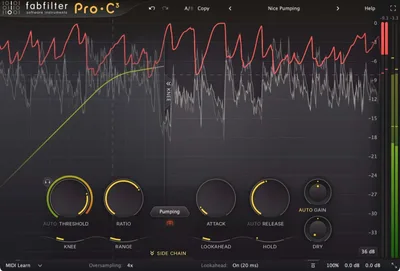
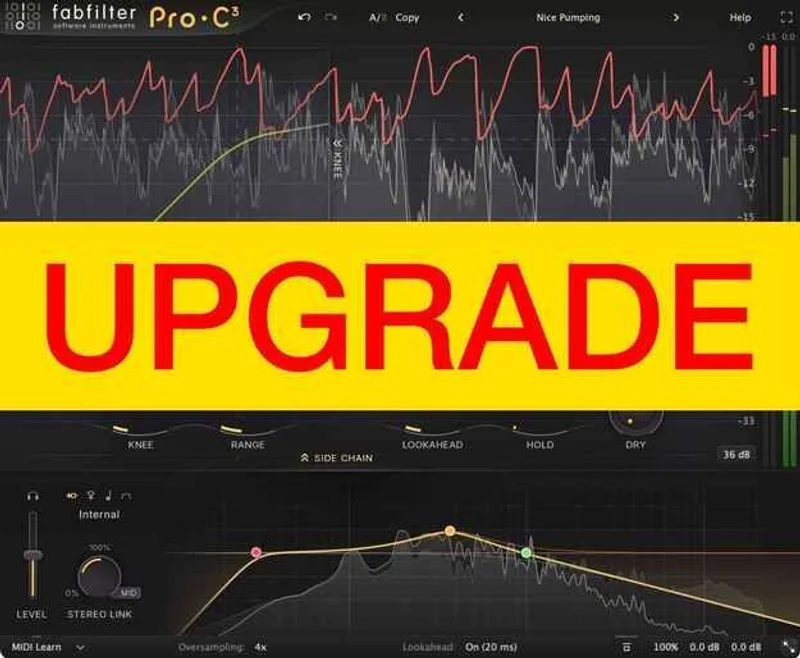
The Pro-C 3 upgrade is worth buying if you’re doing post-production, Atmos work, or you’ve been frustrated that Pro-C 2 only got you clean and controlled. If you only ever reach for the Clean or Classic style and your sessions never leave stereo, save your money.
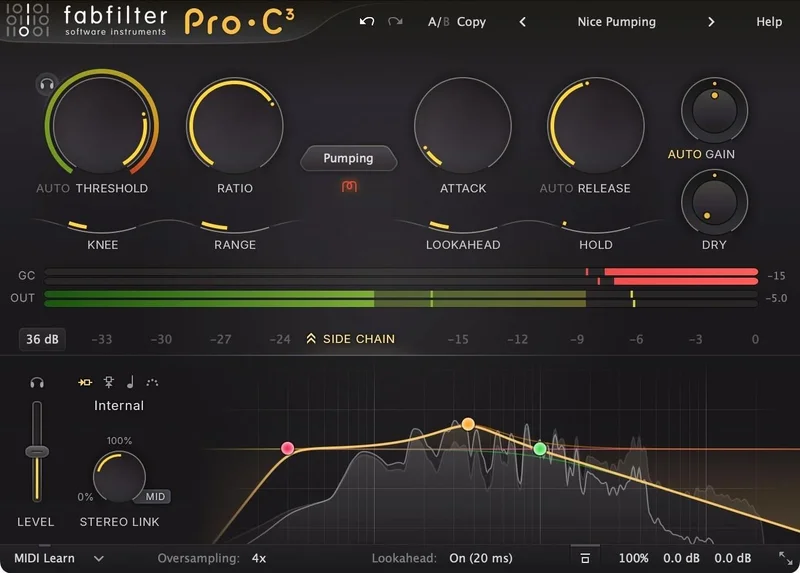
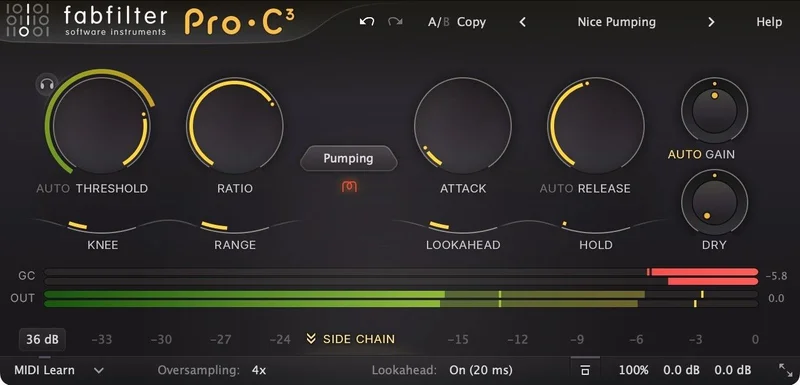
FabFilter released Pro-C 3 in January 2026. The upgrade is priced for Pro-C 2 owners at a similar rate across regions. The full license costs more than the upgrade price. What changed isn’t the interface, which still looks like a high-end piece of hardware rendered in software. What changed is the range. Pro-C 2 gave you 8 compression styles. Pro-C 3 gives you 14, adds an analogue saturation Character panel, doubles the sidechain EQ to 6 bands with M/S support, and delivers full immersive audio up to 9.1.6. It’s a bigger jump than the name suggests.
What You're Actually Getting
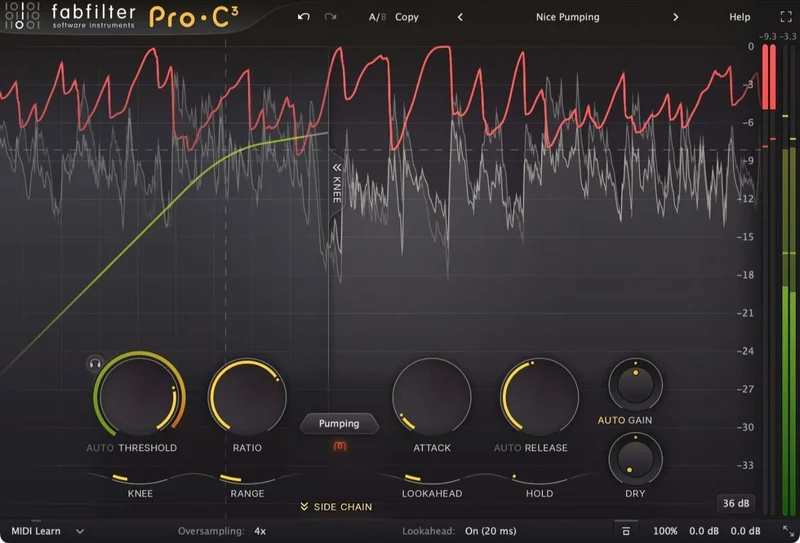
The core compressor is the same Pro-C engine you know. What’s new sits around it.
Six new compression styles: Versatile, Smooth, Upward, TTM, Op-El, and Vari-Mu. Three analogue saturation flavours in the new Character panel. Sidechain EQ expanded from 3 bands to 6, now with flexible filter shapes and full mid/side processing capability. Host sync so your compression release can lock to tempo. MIDI note triggering for rhythmic pumping effects without a sidechain signal. And oversampling pushed from 16x to 32x maximum.
The immersive audio support is the headline nobody expected. Load Pro-C 3 on a 9.1.6 Atmos bus and it handles all channels natively. That’s not a feature FabFilter added to fill a bullet point. It reflects where the professional market is.
The Good
The new compression styles are where we spent most of our testing time, and some of them are genuinely satisfying in ways the original eight weren’t.
We loaded the Vari-Mu style on a full mix bus with 4dB of gain reduction, attack at 80ms, release synced to the tempo at one bar. The compression breathed. Not in a vague, marketing-copy way. The low-frequency content of the kick and bass swelled naturally between hits, and the gain reduction meter moved like a physical needle, not a digital indicator that updates every 5ms. We’ve not heard Pro-C do that before.
The TTM style (inspired by the Neve 33609 topology) sits nicely on drum buses. We compared it directly against a Neve emulation we use regularly. The TTM style isn’t identical, but it adds harmonic content in the 2nd and 3rd order range that thickens the overhead room without EQ.
The Op-El style (optical-electrical) handles vocal rides brilliantly. Slower attack, musical release. We set 3:1 ratio, threshold at -18dBFS, and let it sit. The vocal didn’t feel compressed. It just sat in the mix.
The 6-band sidechain EQ with M/S is clever. You can now filter out low-mid content from triggering compression in the mid channel independently from the sides. That’s a proper mastering-grade tool.
The Not-So-Good
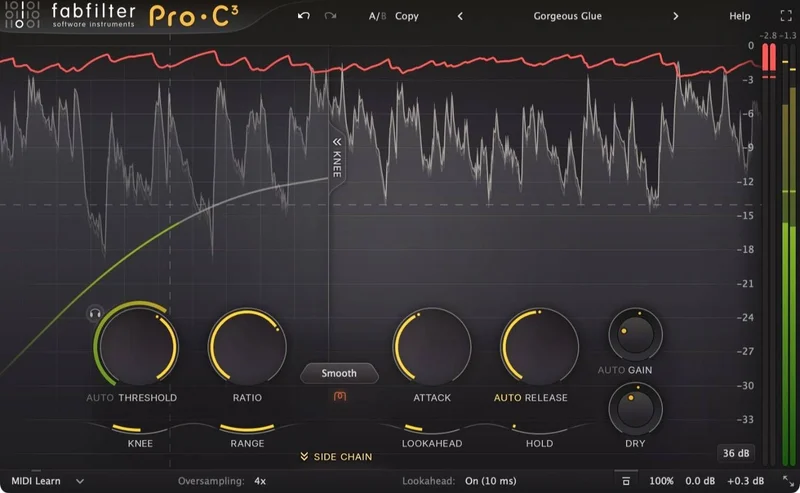
The Character panel is the feature we wish had more teeth.
Three saturation flavours sounds exciting. In practice, the differences between them are subtle enough that we had to A/B them at high drive levels on a solo’d signal to hear the distinction clearly. On a full mix at sensible gain staging, you’re choosing between three flavours of “slightly warmer.” We love the idea. We wanted more.
The upgrade also adds complexity that slows down the decision-making process on fast-turnaround sessions. Opening Pro-C 3 and choosing between 14 compression styles, 3 saturation characters, 6 sidechain bands with M/S options, MIDI triggering, and host sync is a lot of cognitive load when you need a compressor on a vocal at 11pm before a 9am deadline. Pro-C 2’s 8 styles felt like enough options. 14 feels like it needs its own workflow.
The upgrade price is fair for what’s here. But it’s not cheap for anyone whose workflow is: load Pro-C, pick Clean, set 4:1, done.
Compared to the Alternatives
In the compressor plugin market in 2026, Pro-C 3 is competing against tools that specialise rather than generalise.
For bus compression, Complexx does one thing and does it with more character than Pro-C 3’s Character panel. If bus work is your main focus, Complexx earns its spot.
For mastering, the Bettermaker Mastering Compressor sounds more convincingly analogue at the mastering stage. The Pro-C 3 Vari-Mu style is good. The Bettermaker is better.
For anyone who wants tube-style warmth on mix elements, Royal Compressor delivers a focused FG-MU alternative at a lower price.
What Pro-C 3 does that none of those do: Dolby Atmos native support, MIDI triggering, 32x oversampling, and a single interface covering 14 compression behaviours. If you want one compressor that works everywhere, Pro-C 3 is the answer. If you want the best compressor for one job, it might not be.
Who Should Buy T
his
- ✅ Buy if you're doing Dolby Atmos or immersive audio mixing professionally.
- ✅ Buy if you regularly need both transparent control and hardware-flavoured character without switching plugins.
- ✅ Buy if you're a Pro-C 2 owner doing post-production or film work where multichannel support is now table stakes.
- ❌ Skip if you only ever use Pro-C in Clean or Classic mode and never touch the character settings.
- ❌ Skip if you work exclusively in stereo music production with no multichannel or sync-based compression needs.
- ❌ Skip if your primary need is a dedicated bus compressor with maximum analogue character. Buy something purpose-built instead.
Score Breakdown
| Category | Score | Notes |
|---|---|---|
| Sound Quality | 4.5/5 | Vari-Mu and Op-El styles are genuinely musical; Character panel is the weak link |
| Value for Money | 3.5/5 | The price is fair for post-production users but frustrating for stereo-only clean compression workflows |
| Ease of Use | 3.5/5 | 14 styles plus Character panel adds decision fatigue on fast sessions |
| Features | 4.5/5 | Atmos support, MIDI trigger, 6-band M/S sidechain EQ, 32x oversampling |
| CPU Efficiency | 4.0/5 | Runs light at standard settings; 32x oversampling on multiple instances costs real CPU |
| Overall | 4.2/5 | A meaningful upgrade for the right user; the wrong user won't hear the difference |
Alternatives to Consider
If Pro-C 3 isn’t the right fit, these are worth your time.
Complexx Bus Compressor Review is our pick if you want a dedicated bus compressor with more consistent analogue flavour. It doesn’t do Atmos or MIDI sync. It does one thing brilliantly.
Bettermaker Mastering Compressor is the better choice for mastering engineers who want hardware-accurate compression behaviour and aren’t sold on Pro-C 3’s Character panel.
FabFilter Saturn 2 is worth considering alongside Pro-C 3 if saturation and harmonic content are what you’re actually after. The Character panel in Pro-C 3 does light saturation. Saturn 2 does heavy saturation properly.
The honest answer: if your sessions are stereo music production and you’re happy with Pro-C 2, spend the upgrade money on something that fills a gap, not something that replicates what you already have with minor additions.
Pro-C 3 is a brilliant compressor for post-production engineers and Atmos mixers. For everyone else: try the 30-day trial first, be ruthlessly honest about how many of those 14 styles you actually reach for, and buy it only if you come back to the new ones daily.
Frequently Asked Questions
Is the Pro-C 3 upgrade worth it for Pro-C 2 owners who only use transparent compression?
Probably not. If your workflow is Clean or Classic style at 4:1 in a stereo session, Pro-C 3 adds features you won't use daily. The upgrade makes sense for users who need immersive audio support, the new hardware-inspired styles, or the expanded sidechain EQ. For transparent-only work, Pro-C 2 still does the job. Run the 30-day trial and see how many of the six new styles make it into your sessions before committing.
Does Pro-C 3 work natively with Dolby Atmos sessions?
Yes. Pro-C 3 supports multichannel audio up to 9.1.6, which covers the full Dolby Atmos bed format. You can load it directly on Atmos buses in compatible DAWs. This is one of the strongest reasons to upgrade if you're doing post-production or immersive mixing work, since most compressors require workarounds or multiple instances for multichannel busses.
What are the six new compression styles in Pro-C 3?
The six additions are Versatile, Smooth, Upward, TTM, Op-El, and Vari-Mu. TTM is inspired by Neve bus compressor topology. Op-El uses an optical-electrical detection model that's particularly musical on vocals. Vari-Mu replicates tube variable-mu behaviour and works well on full mix buses. Versatile and Smooth are more general-purpose. Upward compression is a different technique entirely, adding gain to signals below the threshold rather than reducing gain above it.
How much CPU does Pro-C 3 use at 32x oversampling?
At standard oversampling settings, Pro-C 3 runs light, comparable to Pro-C 2. Push it to 32x oversampling and CPU load increases noticeably, particularly if you're running multiple instances across a large session. For most music mixing workflows, 4x or 8x oversampling is the practical sweet spot. Reserve 32x for mastering or critical solo passes where you need maximum alias suppression and can afford the CPU cost.