
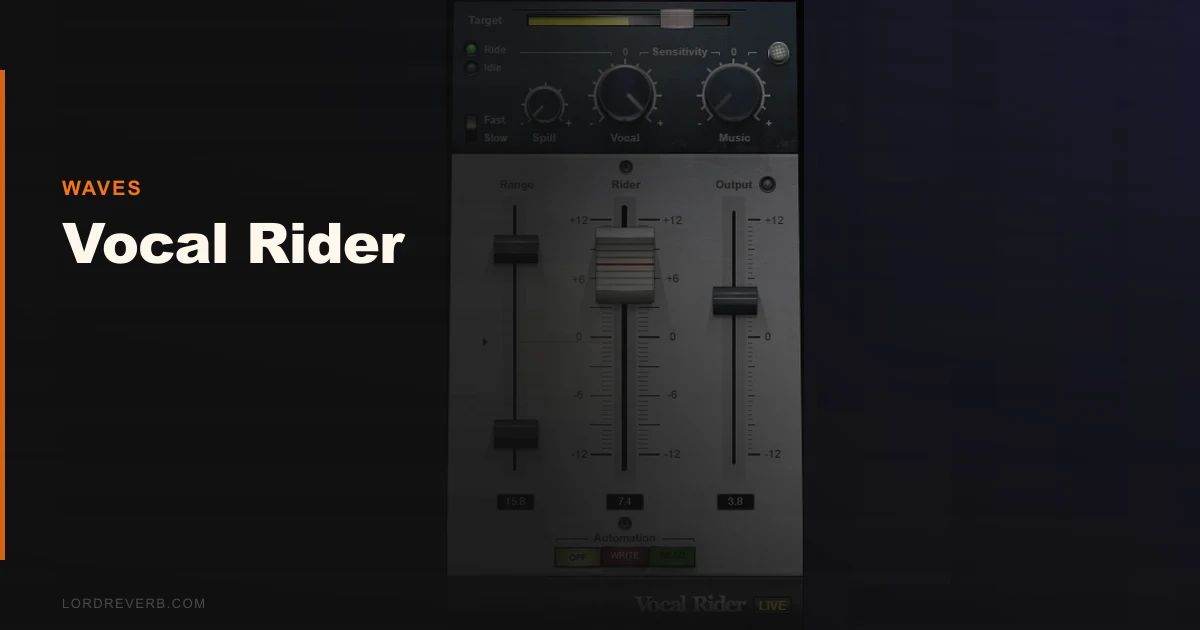
Vocal Rider still does its core job well in 2026, but whether it deserves your money depends entirely on how you feel about Waves' licensing and whether you've met any of the newer competitors eating into its territory.
It's been the go-to automatic vocal leveler for over a decade. Studio engineers, broadcast mixers, and live sound operators have leaned on it because the concept is genuinely clever: instead of squashing dynamics with a compressor, it rides the fader. The vocal breathes. The mix doesn't feel strangled.
We've run it on a lot of sessions. Here's what we'd actually tell you before you click buy.
What You're Actually Getting
Vocal Rider is a gain-riding plugin, not a compressor. That distinction matters more than it sounds.
A compressor reduces gain after a signal crosses a threshold. Vocal Rider predicts level and adjusts gain before you'd even notice the problem. The result: a more natural-sounding vocal that hasn't had its transients bitten.
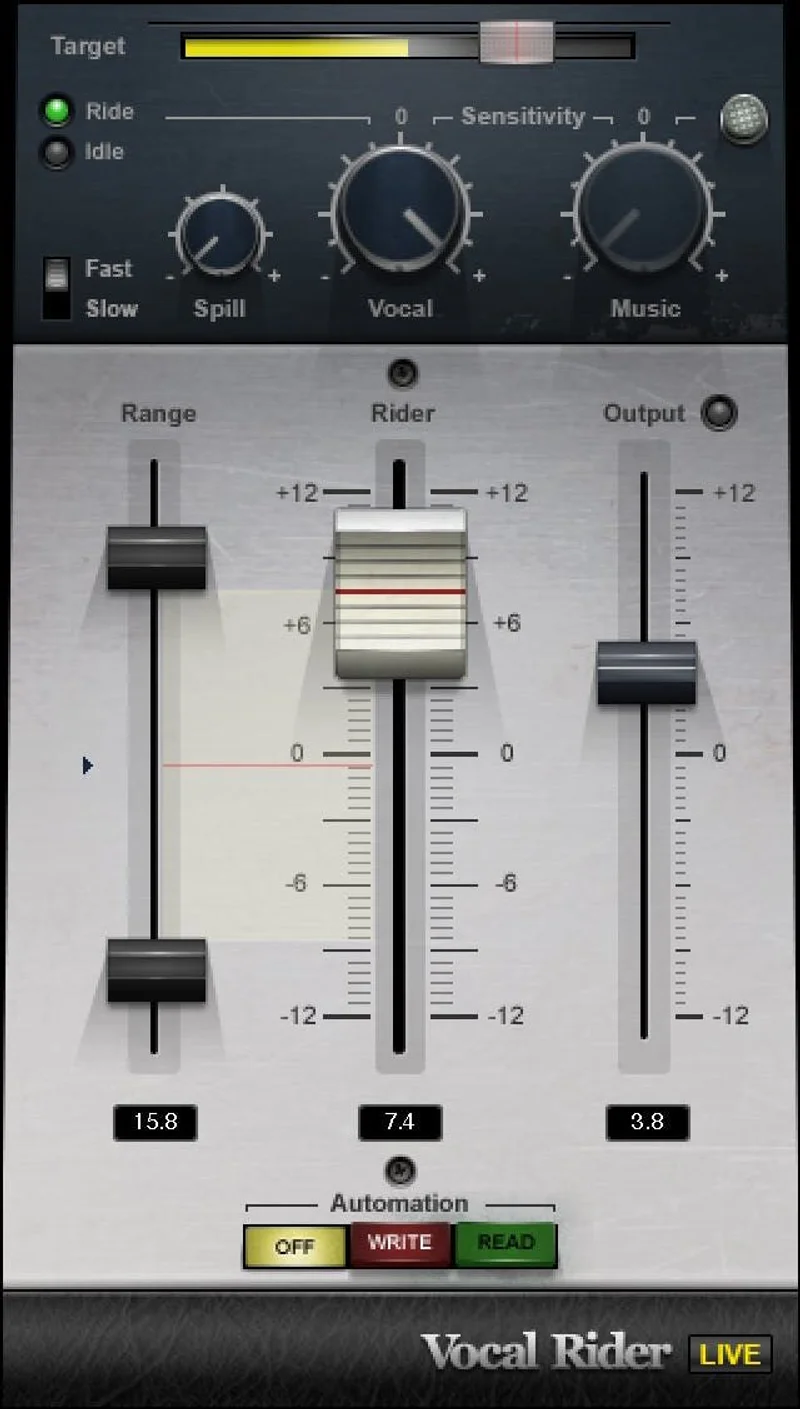
The plugin has two modes: Fast and Slow. Fast reacts to short transient peaks in a syllable-by-syllable way. Slow tracks longer-term level trends, useful for a vocalist who starts the verse quietly and builds into the chorus.
The breath-detection algorithm is the other headline feature. It watches for the characteristic frequency signature of inhale and exhale sounds and avoids riding those up when the overall gain increases. It's not magic, but it works well enough on most clean-recorded vocals.
You also get Vocal Rider Live, a separate plugin version optimized for zero-latency stage use. Both are included in the one purchase. Formats covered: AAX Native, AudioSuite, AU, VST3, and SoundGrid. Compatible with Mac and Windows.
The Good
The automation write mode is what we love most about Vocal Rider. You hit play, the plugin rides the fader in real time, and when you stop, it hands that gain curve back to your DAW as automation data. One pass. Done.
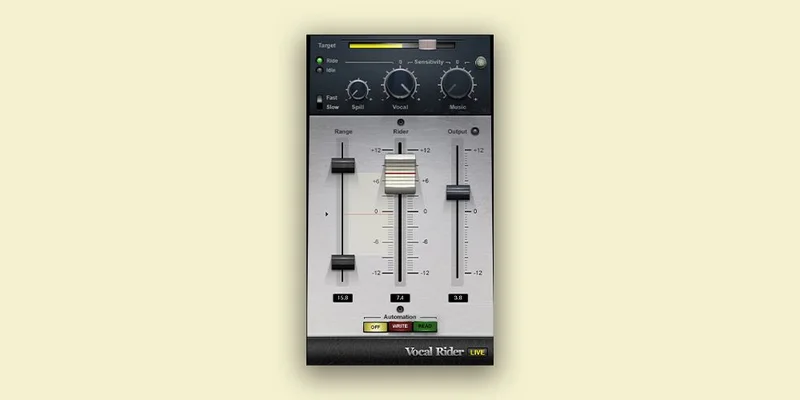
We ran a session with a vocalist who had serious level inconsistency between her chest voice and head voice. The range was roughly 14dB across the same phrase. Without riding, the compressor was working overtime at a 6:1 ratio and still sounding clamped. We dropped Vocal Rider in before the compressor, set the target range to a 6dB window with Slow mode, and let it make one pass. The compressor dropped to 2:1. The vocal sounded open. That's the use case Vocal Rider was built for, and it nails it.
The breath detection held up well on that session too. We had a close-mic'd vocalist with audible inhales between phrases. With no tuning of the sensitivity, Vocal Rider left those breaths alone on about 80% of passes. The other 20% needed a quick manual trim on the automation, which is still faster than riding manually from scratch.
The value calculation is hard to argue with, even if the pricing has moved around over the years. It's not a complex plugin. It does one thing, and it does it better than a compressor does it.
The Not-So-Good
Waves' licensing model is the elephant in the room. It's gotten better, but it's still a conversation you have to have before buying anything from them. If you're committed to perpetual ownership with no strings attached, that concern is real.
The bigger technical frustration is that Vocal Rider has no frequency awareness. It doesn't know the difference between a level change and a tonal shift. A vocalist who goes bright and present in the upper mids during a loud phrase will get pulled down in level, and the ride might fight what a dynamic EQ would handle better.
We've also hit moments where the response modes feel binary. There's nothing between Fast and Slow. A vocal that lives in that middle ground, short phrases with moderate dynamic swing, can confuse the plugin into pumping slightly. It's not offensive, but it's annoying enough that you notice it on a quiet mix.
The UI hasn't meaningfully changed in years. That's not a dealbreaker. But next to plugins like iZotope's RX suite or newer gain-riding tools, it looks its age.
Compared to the Alternatives
The clearest competitor right now is RaiderPro (RPro2). It offers perpetual ownership as a selling point Waves can't match cleanly, and its interface is more modern. If licensing concerns are your reason to hesitate on Vocal Rider, RaiderPro is where we'd send you.
Magic.RIDE takes a different approach. It's more surgical, with frequency-aware riding that can target presence ranges without dragging the whole signal down. For detailed production work where the vocal tone shifts as much as the volume, it's a better tool. It costs more, though.
DynaRide sits closer to Vocal Rider in philosophy and price. It adds multiband gain riding, which solves the frequency-awareness problem. We'd call it a more modern version of the same concept.
None of those alternatives match Vocal Rider's track record in live sound. The Live version is genuinely trusted at front-of-house for a reason. If that's your world, this is still the safe call.
For a different take on taming vocal dynamics with character, the
VCL-515 Vari Mu Limiter is worth considering as a post-rider color stage.
Who Should Buy This
- ✅ Buy if you mix vocalists with wide dynamic range and want to reduce compressor strain without over-processing.
- ✅ Buy if you do live sound and need a trusted, zero-latency gain rider with a live-specific version included.
- ✅ Buy if you want automation exported directly to your DAW in one pass and you're already in the Waves ecosystem.
- ❌ Skip if perpetual ownership with no licensing complications is non-negotiable for you.
- ❌ Skip if your vocalist's dynamics are tied to tonal shifts as much as raw level. You need a frequency-aware tool.
- ❌ Skip if you're new to gain riding and want a modern UI with clear visual feedback. Vocal Rider will frustrate you before it helps you.
Score Breakdown
| Category | Score | Notes |
|---|---|---|
| Sound Quality | 4.0/5 | Transparent gain riding with no coloration, which is exactly the point |
| Value for Money | 3.5/5 | $34.99 is fair, but newer competitors offer more features at similar prices |
| Ease of Use | 3.5/5 | Simple interface, but Fast/Slow binary is limiting on complex material |
| Features | 3.0/5 | No frequency-aware riding, no mid-speed response option, no multiband |
| CPU Efficiency | 4.5/5 | Light footprint, runs on multiple vocal tracks without concern |
| Overall | 3.8/5 | Proven tool with a specific use case, but showing its age against modern alternatives |
Alternatives to Consider
RaiderPro RPro2 is the most direct modern alternative. Perpetual license, updated interface, and comparable gain-riding logic. If Waves' licensing is your concern, start here.
Magic.RIDE handles frequency-aware riding that Vocal Rider can't do. Works best for polished production work where the vocal's tonal balance shifts alongside its volume. The current price is shown in the buy box on this page.
iZotope VocalSynth 2 + RX combo won't ride gain automatically, but for producers already in that ecosystem, vocal processing workflows can be handled more holistically without adding another single-purpose plugin to the chain.
If you're building out your vocal chain from scratch, our breakdown of vocal plugins worth buying in 2026 covers where Vocal Rider fits in a full signal chain alongside limiting and saturation options.
And if you're sourcing sounds for your vocal productions beyond processing, our KHORDS Cloud Waves review covers one of the more underrated pad and texture tools available right now.
Vocal Rider earns its place in a studio rack because it solves a real problem cleanly. But it's not the only solution anymore, and at this price you should know exactly what you're not getting: no multiband riding, no frequency awareness, and a licensing model that still generates friction in 2026. If you're already Waves-committed and need a fast, trusted gain rider for live or studio work, buy it. If you're starting fresh and the alternatives are on the table, spend a week with the trials first.
The plugin that made automatic vocal riding mainstream hasn't kept pace with its own influence.
Frequently Asked Questions
Is Vocal Rider a compressor?
No. It's a gain rider. A compressor reacts to a signal crossing a threshold and reduces gain after the fact. Vocal Rider predicts level trends and adjusts gain in real time using an algorithm rather than compression. The result is that the vocal's transients stay intact and the dynamic feel stays more natural than heavy compression would allow.
Does Vocal Rider work with any DAW?
It supports VST3, AU, AAX Native, AudioSuite, and SoundGrid formats, covering Pro Tools, Logic Pro, Ableton Live, Cubase, Studio One, and most other major DAWs. The automation write feature exports the gain ride as standard automation data, so whatever DAW you're in can read and edit it after the fact.
What's the difference between Vocal Rider and Vocal Rider Live?
Both are included in the one purchase. The standard version is optimized for studio mixdown and includes the automation write feature. Vocal Rider Live is built for zero-latency use on stage or in broadcast, where writing automation isn't relevant but real-time responsiveness is everything. You pick the right version for the context.
How does the breath detection actually work?
The algorithm identifies the frequency signature of inhale and exhale sounds, typically a broadband rush of air energy in the 2kHz to 8kHz range without the pitched content of a sung or spoken sound. When it detects that signature, it holds the gain steady instead of riding up with the ambient floor. It's not perfect on every vocal, but it saves significant cleanup time on close-mic'd performances where breaths are loud relative to the signal.