You’re finishing a master, the mix sounds great, and then you slam a limiter across the stereo bus and the whole thing starts sounding like a compressed brick. Too loud, too colored, the transients rounded off in a way that doesn’t sound intentional. Every producer who’s chased loudness without losing feel knows that frustration.
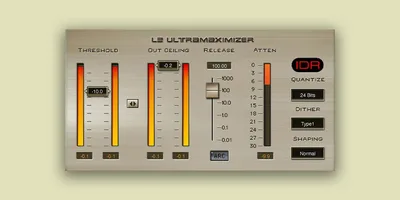
The Waves L2 Ultramaximizer is the plugin that an entire generation reached for when that happened. It’s a look-ahead brickwall peak limiter with IDR dithering built in, and it’s been sitting in mastering chains since the late 1990s. This is our full L2 Ultramaximizer review: what it still does well in 2026, where it shows its age, and whether you should actually spend money on it.
The Specific Problem the L2 Was Built to Solve
In 1999, getting a loud master without digital clipping required expensive hardware or a lot of patience. The L2 put brickwall peak limiting and proper dithering in one plugin, at a time when most producers had neither.
The output ceiling locks at exactly 0dBFS. Nothing passes above it. That’s the core promise. You pull the threshold down, the limiter catches the peaks, and the output stays controlled.
For producers delivering to CD (16-bit), the IDR dithering stage mattered enormously. Truncating from 24-bit to 16-bit without dithering introduces quantization distortion. The L2’s ninth-order noise-shaping pushes that distortion above 16kHz where it’s less audible. That was genuinely useful then. It’s still useful now if you’re delivering 16-bit files and don’t have a separate dithering plugin in your chain.
The problem is that “solving the 1999 problem” and “solving the 2026 problem” are two different jobs.
How It Actually Performs in a Real Session
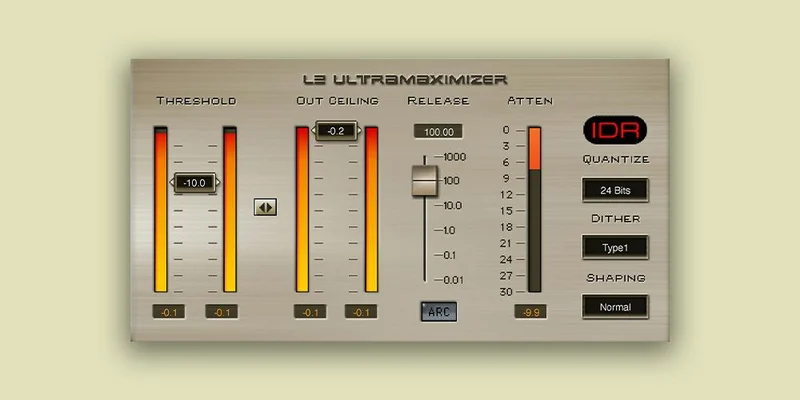
We ran an indie pop mix through the L2 with a threshold set to -6dB and the output ceiling at -0.3dBFS. The gain reduction meter moved smoothly. The look-ahead algorithm caught transient peaks cleanly, and we weren’t getting any inter-sample overs in our meter.
But here’s the thing: the coloration is real and it’s significant.
We pulled up FabFilter Pro-L 2 on the same session, matched loudness using a reference track at -14 LUFS, and A/B’d them blind. The L2 version had a subtle but clear low-mid density added around 200-350Hz. Not ugly, not broken. Just present. The top end also compressed slightly, with high-frequency transients around 8-12kHz softening by roughly 1-2dB on peaks above -6dB gain reduction. On a rock or hip-hop master where that density is welcome, it works. On an acoustic folk record or a mix with delicate high-frequency detail, it’s frustrating.
We also tested the release control. The auto-release mode tracks program material well enough for general use. Set it manually and you get a single knob with a range that goes from 1ms to 1000ms. That’s it. No program-dependent release curves, no transient-shaping options, no attack control whatsoever. What you see is what you get.
CPU load was light. We ran four instances on separate buses simultaneously on a 2021 M1 MacBook Pro with a 128-sample buffer and had zero issues.
Strengths and Weaknesses
The IDR dithering is the strongest argument for keeping the L2 in 2026. The ninth-order noise-shaping sounds clean. We bounced a 24-bit session to 16-bit with the L2’s dither versus a flat truncation and the difference was audible: quantization noise dropped perceptibly into the ultrasonic range. If you’re delivering CD masters, that’s a real, functional benefit.
The simplicity is also satisfying. Three controls. You can be up and running in under a minute. For producers who hate menu-diving, that matters.
The weaknesses are harder to ignore. The coloration is not a small thing. Compared to Pro-L 2 at transparent mode, the L2 changes the character of your mix in ways you may not have signed off on. If you’re mastering for a client, that’s a problem. There’s also no mid/side mode, no inter-sample peak detection beyond the basic output ceiling, no oversampling control, and no limiting algorithm options. You get one mode.
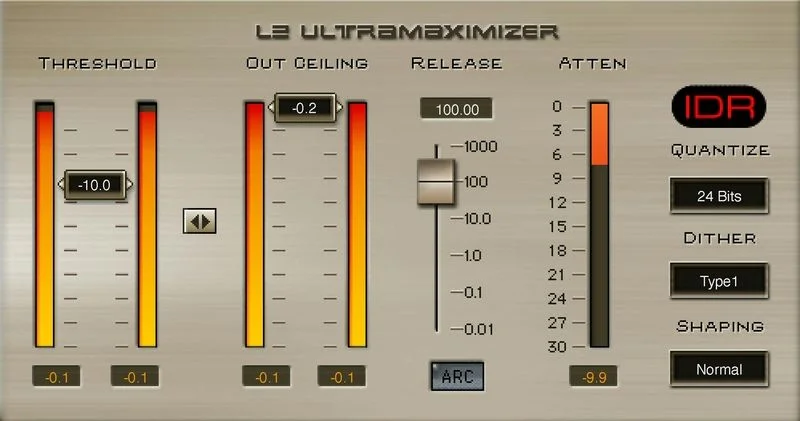
The interface also hasn’t been redesigned in years. It looks dated at any screen resolution above 1080p.
Is the Price Actually Justified?
At the MSRP of $129, no. Hard pass. There’s no world where the L2 competes with FabFilter Pro-L 2 or even limiter plugins worth buying in 2026 at full price.
At the sale price, which Waves hits regularly, the math changes. At $34.99 you get a historically important limiter with working IDR dithering that costs less than most dinner tabs. If you specifically want that character or you need the dither stage and don’t own a dedicated dithering plugin, $34.99 is defensible.
Never buy it at $129. Check Waves’ site before purchasing, because sales happen often enough that waiting a week is almost always worth it.
Who Should
Buy This (and Who Should Skip It)
✅ Buy if you need a working IDR dithering stage for 16-bit exports and don’t own a dedicated dithering tool.
✅ Buy if you love the thick, dense loudness character of 2000s-era masters and want to replicate it intentionally.
✅ Buy if you’re on a strict budget at sale price and need a functional brickwall limiter with zero learning curve.
❌ Skip if you’re mastering for clients who expect transparent, modern limiting. The coloration will show up.
❌ Skip if you already own FabFilter Pro-L 2, Sonnox Oxford, or iZotope Ozone’s limiter module. The L2 adds nothing they don’t already cover.
❌ Skip if you need advanced controls like mid/side processing, multiple algorithm modes, or inter-sample peak management beyond a basic ceiling.
Score Breakdown
| Category | Score | Notes |
|---|---|---|
| Sound Quality | 3.3/5 | Colored, character-driven sound that's useful for specific genres but not transparent enough for modern mastering |
| Value for Money | 4.0/5 | At sale price it's reasonable; at MSRP it's overpriced relative to the competition |
| Ease of Use | 4.5/5 | Three main controls. Can't get much simpler. |
| Features | 2.5/5 | No mid/side, no algorithm choices, no oversampling, no attack control |
| CPU Efficiency | 4.5/5 | Light load even with multiple instances running simultaneously |
| Overall | 3.8/5 | A historically important limiter that still earns its spot in specific workflows at sale price |
Alternatives Worth Considering
FabFilter Pro-L 2 is the clearest upgrade from the L2. It has 8 limiting algorithms, true peak limiting, mid/side mode, and full LUFS metering built in. It costs more, but it replaces the L2 completely and then some. If you’re serious about mastering, buy Pro-L 2 instead and don’t look back.
iZotope Ozone Maximizer sits inside the Ozone suite and adds IRC algorithm options with modern loudness management. If you’re working on Ozone already, you already have a better limiter than the L2.
For a different kind of peak control in your mix chain, the VCL-515 Vari Mu Limiter review handles vocal buses with a different sonic fingerprint worth knowing. And if you’re building out your signal chain with other Waves tools, our MWaveShaperMB review covers multiband waveshaping that pairs well with a limiter at the end of your chain.
For a broader look at where the L2 fits against current options, the best limiter plugins in 2026 is where we rank the full field.
The Waves L2 Ultramaximizer is a time capsule that still works. Buy it on sale during a Waves promotion if you need IDR dithering or want that specific 2000s density. Pay full price for it and you have overpaid by a wide margin relative to what it delivers in 2026. If you already own a modern transparent limiter, the L2 is a collection piece, not a tool upgrade.
Frequently Asked Questions
Is the Waves L2 Ultramaximizer still worth buying in 2026?
At sale price, yes, for specific use cases. The IDR dithering stage is functional and the coloration suits certain genres well. At MSRP ($129), we'd skip it and spend the money on FabFilter Pro-L 2 instead. The L2 hasn't kept pace with modern limiters in terms of features or transparency.
What is IDR dithering and why does it matter?
IDR stands for Increased Digital Resolution. When you convert audio from 24-bit to 16-bit for CD delivery, truncating the word length without dithering adds quantization distortion that shows up as low-level digital noise. The L2's ninth-order noise-shaping pushes that distortion above 16kHz where it's far less audible. If you're delivering 16-bit masters and don't have a separate dithering plugin, the L2's built-in IDR stage solves that problem cleanly.
How does the L2 Ultramaximizer compare to FabFilter Pro-L 2?
The Pro-L 2 wins on every technical metric: more limiting algorithms, true peak limiting, mid/side processing, built-in LUFS metering, and greater transparency across all modes. The L2 wins on simplicity and cost at sale price. If you want to dial in a sound fast with minimal controls, the L2 is quicker. If you want precision and transparency, Pro-L 2 isn't even close.
What formats does the L2 Ultramaximizer support?
The L2 runs in VST, VST3, AU, and AAX formats, covering Ableton Live, Logic Pro, Pro Tools, Cubase, Studio One, and most other major DAWs. Activation goes through Waves License Center and supports both online activation and USB iLok-style dongles. Check the Waves site for the most current compatibility list before purchasing.