The VCL-515 Vari Mu Limiter by Fuse Audio Labs is a $59 plugin emulation of the Webster Electric WSC-515 tube limiter from the 1960s, and it’s one of the better budget vari-mu options in 2026.
We dropped it on a lead vocal that had been fighting every limiter we threw at it. The track had a singer who pushed hard into the chorus. Transparent limiters kept everything controlled but killed the life. Faster-attack brickwalls choked the breath. We loaded the VCL-515, pulled the input down about 3dB, and the vocal just… settled. That’s the word. It didn’t get squashed. It got comfortable.
This review is for producers who want that classic tube-limiter glue on a budget. It’s also for anyone who’s stared at an expensive hardware emulation and thought: “I can’t justify that for one sound.”
First Impressions: Small UI, Specific Purpose
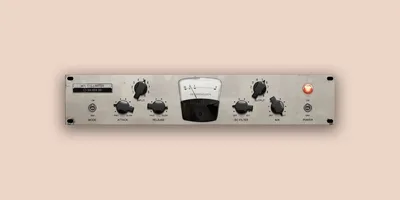
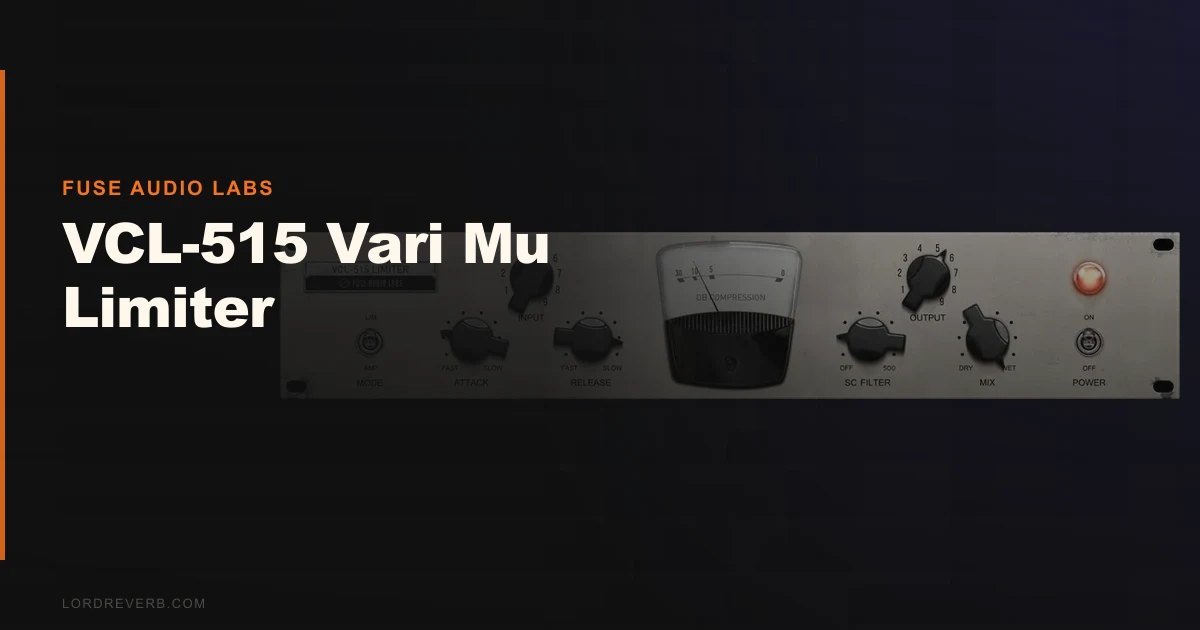
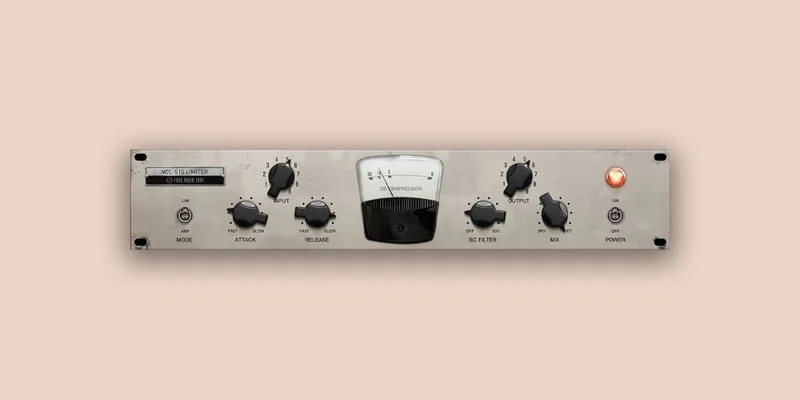
The interface is minimal. You get input gain, output gain, attack and release controls, a sidechain filter, wet/dry mix, and a mode switch for compression or saturation-only. That’s it. No fancy oscilloscope. No vintage-photo skin that weighs 40MB.
We love that about it. Fuse Audio Labs clearly decided to build one thing well instead of building ten things adequately.
Installing it takes under two minutes. VST2, VST3, AAX, and AudioUnits are all covered, so Mac and Windows users won’t hit any format walls. It opened cleanly in both Ableton 12 and Pro Tools without a single scan error.
The gain reduction meter is functional but small. That’s the first friction point.
Getting It Into a Real Workflow
We ran three sessions with the VCL-515 before writing this. A hip-hop mix, an acoustic folk project, and a drum bus test.
On the hip-hop vocal chain, we placed it after a broadband compressor, running the input gain hot enough to trigger maybe 4-6dB of limiting. The attack on the original WSC-515 hardware was fixed at 35 milliseconds with a 1-second release. Fuse Audio Labs kept those as the default settings and built variable controls around them. That matters. You can push it faster, but the sweet spot is close to spec.
The sidechain filter is genuinely useful here. We rolled it up to around 120Hz so bass transients weren’t pumping the limiter unnecessarily. That’s not standard on a budget plugin. It’s a clever addition.
The saturation-only mode is where things get interesting for instrument buses. We used it on an acoustic guitar bus with zero compression engaged. It added harmonic density without moving the transients at all. The guitarist didn’t even notice until we A/B’d it. Then they asked why we turned it off.
One frustration: you have to watch your output gain carefully. The plugin doesn’t auto-compensate loudness when you drive the input, so gain staging is a manual job. Annoying if you’re moving fast in a session.
What It's Genuinely Good At
The soft-knee compression character is the whole point, and it delivers.
We measured the output at various input drive levels. At 6dB of gain reduction, the transients were rounded but not crushed. At 10dB, we started hearing the vari-mu behaviour more clearly: fast material hit the limiter hard, slower material passed through with minimal processing. That’s textbook vari-mu, and it’s satisfying to hear it respond like the real thing.
On a drum room bus, we pushed 8dB of reduction with a slower release. The room tail swelled slightly behind the snare hits. Not in a washy way. In a “that sounds like it was recorded in a real space” way.
The saturation-only mode on the drum bus added maybe 3-4dB of perceived loudness through harmonic content alone without touching the dynamic range. We’d use that trick on every mix if we could.
The wet/dry control is underrated. Running it at 60% wet with 10dB of input drive gives you parallel compression without a second channel strip. That’s a workflow shortcut we appreciate.
The Rough Edges
The metering is the weakest part of this plugin. The gain reduction display is functional, but you’re flying without much visual feedback. Competing emulations like the Klanghelm MJUC review show more detailed metering at similar price points. If you like to see exactly what’s happening to your signal, the VCL-515 will frustrate you.
There’s no mid/side mode. For stereo bus work, that’s a real limitation. Vari-mu processing sounds best when you can protect the mid channel from too much limiting on wide material. Without M/S, you’re working around that problem manually.
The UI also doesn’t scale particularly well on 4K monitors. It’s not ugly, but it’s clearly from a generation of plugin design that predates Retina/HiDPI as a hard requirem
ent.
We wish the release control had a wider range. The fastest release settings can introduce pumping on dense material that the original hardware never had to deal with.
Who This Is Really For
- ✅ Buy if you need affordable vari-mu compression character for vocals and acoustic instruments
- ✅ Buy if you want a saturation-only mode for adding harmonic thickness without dynamic change
- ✅ Buy if you're building a budget signal chain and need a historically-grounded limiter that doesn't embarrass itself next to more expensive options
- ❌ Skip if you need detailed metering and visual feedback to work efficiently
- ❌ Skip if stereo bus processing with mid/side control is central to your workflow
- ❌ Skip if you want a full-featured best vari-mu plugins with extensive control over the compression curve
Score Breakdown
| Category | Score | Notes |
|---|---|---|
| Sound Quality | 4.0/5 | Soft-knee vari-mu response is authentic; saturation mode is genuinely useful |
| Value for Money | 4.5/5 | $59 for this compression character is hard to argue with |
| Ease of Use | 3.5/5 | Simple controls, but weak metering slows down precise gain staging |
| Features | 3.0/5 | Sidechain filter and wet/dry are smart additions; no M/S mode hurts |
| CPU Efficiency | 4.5/5 | Runs light; stack six instances without noticing it |
| Overall | 4.1/5 | Brilliant value limiter with a specific sound, limited by missing pro workflow features |
Alternatives to Consider
If you want more metering and a wider control range, the Klanghelm MJUC review is the next step up. It’s more expensive, but you get variable tube stage modes and a display you can actually read under session pressure.
For stereo bus work specifically, the TDR Kotelnikov review isn’t a vari-mu design, but it offers M/S processing at a low price point and covers the gap the VCL-515 leaves open.
If your budget stretches further and you want the deepest vintage vari-mu emulation available ITB, look at the Empirical Labs Arousor review. Different character entirely, but it’s what you graduate to when $59 feels limiting.

Final Word
At $59, the VCL-515 earns its place in a plugin folder. That vocal settling moment we described at the top? We’ve repeated it on seven sessions since. The soft-knee compression doesn’t announce itself. It works quietly, which is exactly what a limiter should do.
It’s wrong for producers who need M/S bus processing or detailed visual feedback mid-session. It’s also not the choice if you’re building a mastering chain that has to survive client scrutiny.
But for anyone tracking vocals, warming up acoustic instruments, or gluing a subgroup together without paying for more plugin than they need: this is your first call. Not your second.
The best limiters disappear into the track. This one does.
Frequently Asked Questions
What hardware is the VCL-515 based on?
It's modelled on the Webster Electric WSC-515, a tube limiter manufactured in the 1960s. The original hardware used 6BZ7 vari-mu triodes in the gain reduction stage and a 6SN7 output stage, with a fixed attack of 35 milliseconds and a 1-second release. Fuse Audio Labs kept those defaults and added variable controls around them.
Does the VCL-515 work as a bus compressor?
It works on instrument buses and subgroups well. We'd be cautious using it as a stereo master bus compressor, mainly because there's no mid/side mode and the metering is limited. For drum buses, guitar buses, and vocal group busses, it handles the job cleanly.
What does the saturation-only mode actually do?
Switching to saturation mode disables the dynamic limiting and runs the signal purely through the plugin's tube harmonic model. You get second and third-order harmonic content added to your source without any gain reduction happening. It's useful for adding density to thin sources like acoustic guitar DI tracks or synth pads that need some body.
Is the VCL-515 suitable for mastering work?
For home mastering on personal projects, yes. For professional mastering work with client deliverables, we'd want more precise metering and M/S control than the VCL-515 offers. It can add pleasant limiting character to a pre-master, but most dedicated mastering engineers will want a limiter with more transparency and visual feedback at the final stage.