The 4040 Retro Limiter Native v7 gets compared to the McDSP 4030 compressor more than anything else, and we think that’s the wrong fight. The 4030 is the wild one. This is the sensible one. For $79, the 4040 is a limiter you reach for when the master needs to be loud and still sound like music. It’s for mix engineers who want fast results and don’t want to read a manual.
If you want fireworks, you’ll want the 4030. If you want a limiter that stays out of trouble, keep reading.
How Does It Compare Out of the Box?
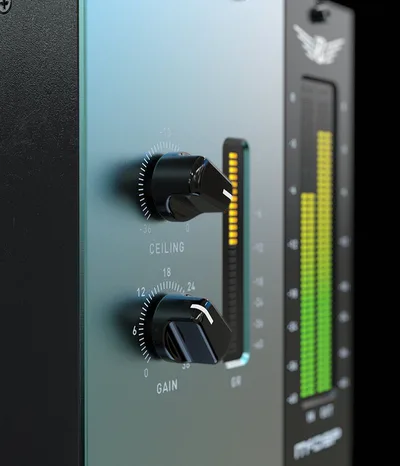
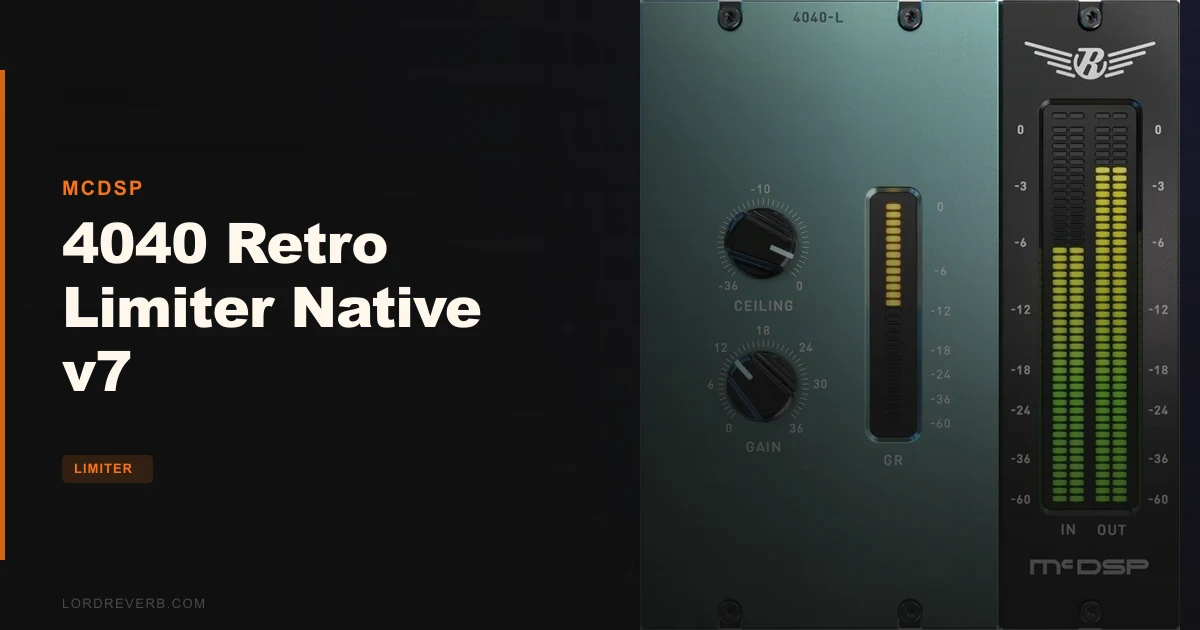
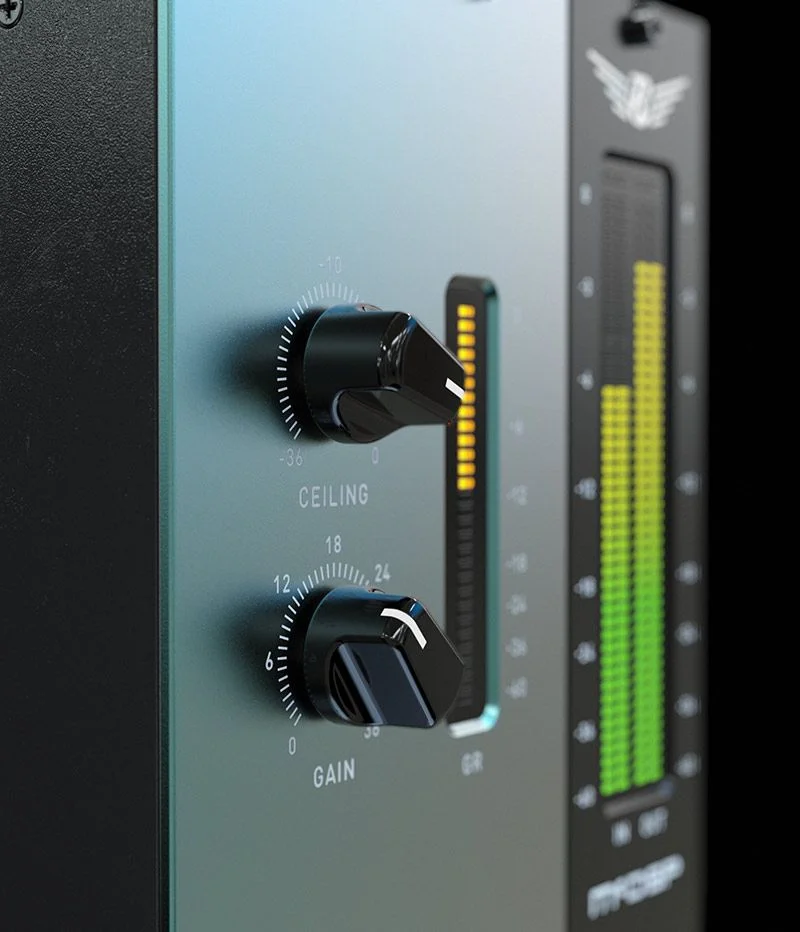
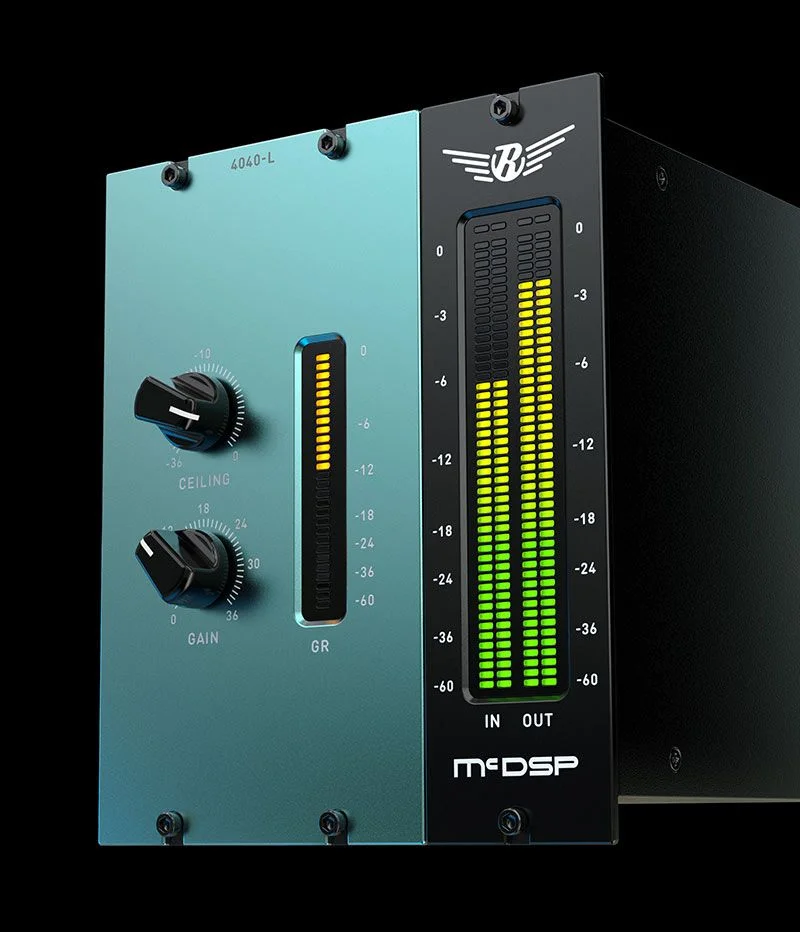
Open it and you’re greeted by two knobs. Gain and Ceiling. That’s it.
Compare that to the 4030, which McDSP built for variety and extreme effects on individual tracks. The 4040 isn’t chasing that. It combines a look-ahead brick wall limiter with vintage limiting treatments, and it keeps the interface out of your way.
Gain drives the sidechain. Ceiling works as gain trim. Simple.
First impression? Almost suspiciously easy. No menus of release shapes, no maze of tabs. You push Gain, watch the level climb, and set Ceiling where you want it. Owners call the sound musical and very smooth, and that matches what the design promises.
What's the Performance Like Under Load?
Picture a finished mix with a loud chorus and a quiet verse. You slap the 4040 on the master and pull Gain up. The output stage is the interesting part: McDSP designed an anti-clip topology meant to eliminate digital clipping at any output level, and it aims for a smoother distortion character than standard digital limiting.
Owners report that no distortion is ever audible across the mix when it’s used as a loudness maximizer. That’s the headline claim, and it’s a bold one.
Under the hood you get zero-latency algorithms, double precision processing, and up to 36 dB of signal gain. Analog saturation modeling sits in there too. CPU usage is low enough that owners say it can replace standard plugins on the chain.
Native runs on Intel and M1 Apple Silicon, with AAX Native, AU, and VST3 formats.
Where Does It Win?
Speed. You’ll have a loud, clean master before the coffee cools.
The two-knob layout isn’t a gimmick. It cuts out the fiddling that eats an hour of a mixing session and leaves you with nothing to show. Owners say the interface helps them move fast, and we’d love more limiters to copy that.
The saturation modeling gives you vintage flavour without turning the mix to mush. It’s a smooth push, not a crunchy one.
And the CPU footprint matters. Stack a dozen instances on a big session and you’ll be glad it’s light. Compared with the 4030’s extreme effects, the 4040 is the one you can leave on every bus without a second thought.
Where Does the Competition Win?
Push it hard on a lead vocal and you’ll hear it. One reviewer reports the pumping is more audible than on rival plugins when the limiter is driven. That’s annoying, and it’s the honest weak spot.
The 4030 gives you more variety and more extreme effects on individual tracks. If you’re sculpting a drum bus or mangling a bass for character, the 4040’s restraint will frustrate you. It’s a finisher, not a shape-shifter.
Then there’s the iLok requirement. You need an iLok2 or iLok3 USB Smart Key, or an iLok License Manager account with iLok Cloud. That limits offline use. Each v7 license includes two activations, which helps, but the dongle culture won’t be everyone’s cup of tea.
And VST is gone as of v7.0. If your host only speaks VST, hard pass.
Who Should Buy Which?
- ✅ Buy if you want a fast, clean loudness maximizer on the master or a mix bus.
- ✅ Buy if you work in Pro Tools, Logic Pro, Cubase, Nuendo, Ableton Live, LUNA, Reaper, Sonar, or Studio One and want light CPU load.
- ✅ Buy if two knobs sound like a feature, not a limitation.
- ❌ Skip if you need heavy, characterful effects on single tracks. Look at the 4030.
- ❌ Skip if you hate iLok or need to work fully offline without a key.
- ❌ Skip if your host needs VST and can't load VST3, AU, or AAX.
Specs & Technical Details
| Spec | Detail |
|---|---|
| Developer | McDSP |
| Price | $79 |
| Plugin Format | VST3 / AU / AAX Native |
| OS Support | macOS 10.13 or higher (64-bit); Windows 7, 8, or 10 (64-bit) |
| Activation | iLok2 or iLok3 USB Smart Key, or iLok License Manager account with iLok Cloud; two activations per v7 license |
| CPU Usage | Light |
| Trial Available | N/A |
| Version Reviewed | v7 |
Score Breakdown
| Category | Score | Notes |
|---|---|---|
| Sound Quality | 4.5/5 | Owners call it smooth and musical, with no audible distortion on the mix. |
| Value for Money | 4.0/5 | A focused tool at $79, but you need an iLok on top. |
| Ease of Use | 4.5/5 | Two knobs, fast workflow, almost nothing to learn. |
| Features | 3.5/5 | Anti-clip stage and saturation, but little else to tweak. |
| CPU Efficiency | 4.5/5 | Low enough that owners swap it in for standard plugins. |
| Overall | 4.2/5 | A clean, fast finisher held back by vocal pumping and iLok. |
What Are the Alternatives?
Here’s how the 4040 stacks up against what else is on the table.
| Product | Strongest Point | Weakest Point |
|---|---|---|
| 4040 Retro Limiter Native v7 | Fast two-knob loudness with an anti-clip output stage | Pumping on vocals under extreme gain |
| McDSP 4030 compressor | More variety and extreme effects for individual tracks | Not a master limiter, so a different job |
The 4030 wins when you’re shaping single tracks and want character. The 4040 wins when you want a loud, tidy master without drama. They don’t really compete. Plenty of producers will want both.
Should You Buy It?
Yes, if you want a limiter that makes loud masters easy. At $79, the 4040 Retro Limiter Native v7 is a smooth, light, fast finisher, and we like it.
Don’t buy it if you push vocals to the edge, hate iLok, or need VST. It’s the wrong tool for any of those.
For a clean master with two knobs and no fuss, it’s worth it.
Frequently Asked Questions
Does the 4040 Retro Limiter Native v7 support VST?
No. VST is no longer supported as of v7.0. You get AAX Native, Audio Units (AU), and VST3. If your host only loads older VST, this plugin won't work there.
Do I need an iLok to use it?
Yes. It requires an iLok2 or iLok3 USB Smart Key, or an iLok License Manager account with iLok Cloud. Cloud use needs an internet connection. Each v7 license includes two activations.
Does it run on Apple Silicon?
Yes. It runs natively on Intel and M1 Apple Silicon processors. It requires macOS 10.13 or higher and is 64-bit only. On Windows you need 7, 8, or 10, also 64-bit.
Is it good for limiting vocals?
One reviewer reports that pumping on vocals is more audible than on rival plugins when the limiter is pushed.