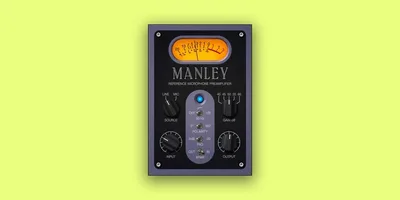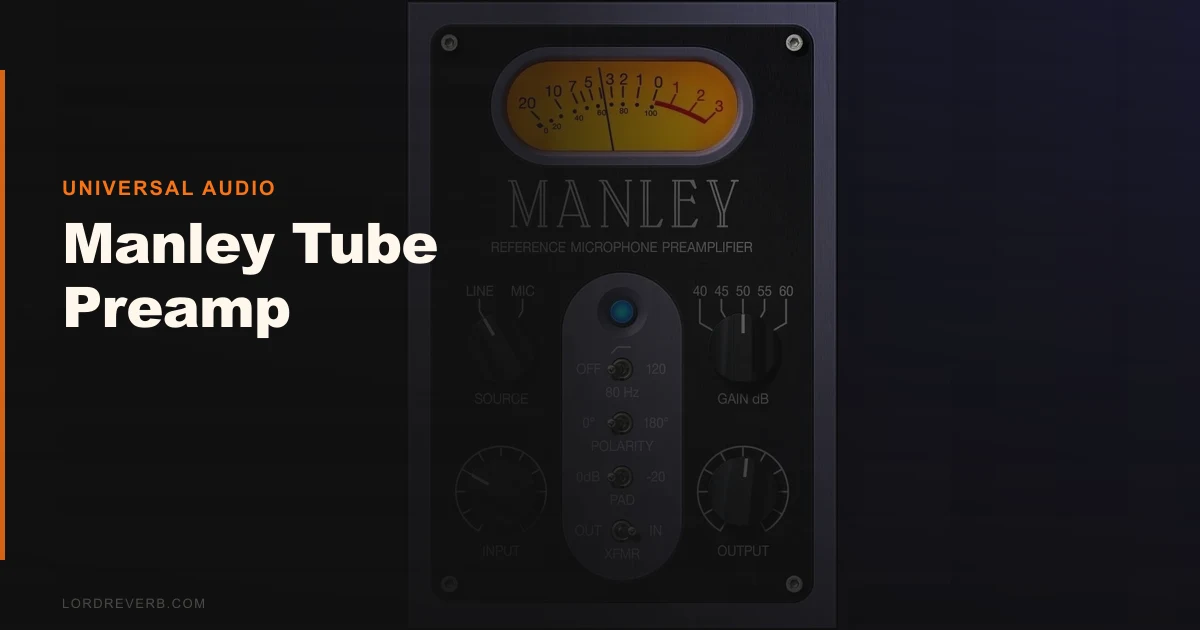
You've tracked the vocal three times. The singer is good. The mic is good. The room is treated. But every time you pull up the recording, it sits on top of the mix instead of inside it. It's technically clean and emotionally flat. That specific frustration is what the UAD Manley Tube Preamp plugin exists to solve.
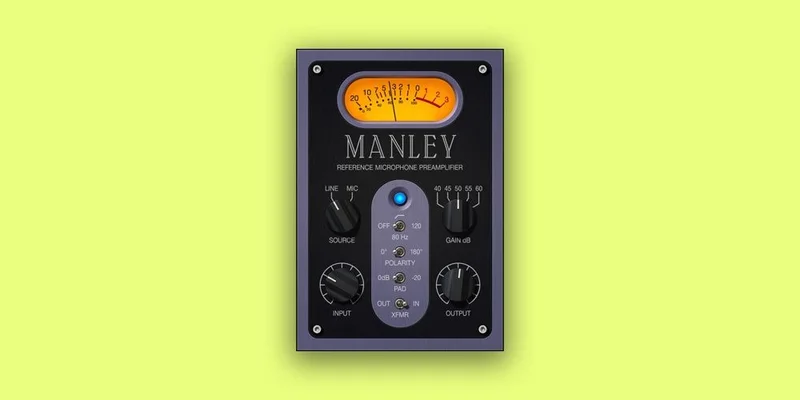
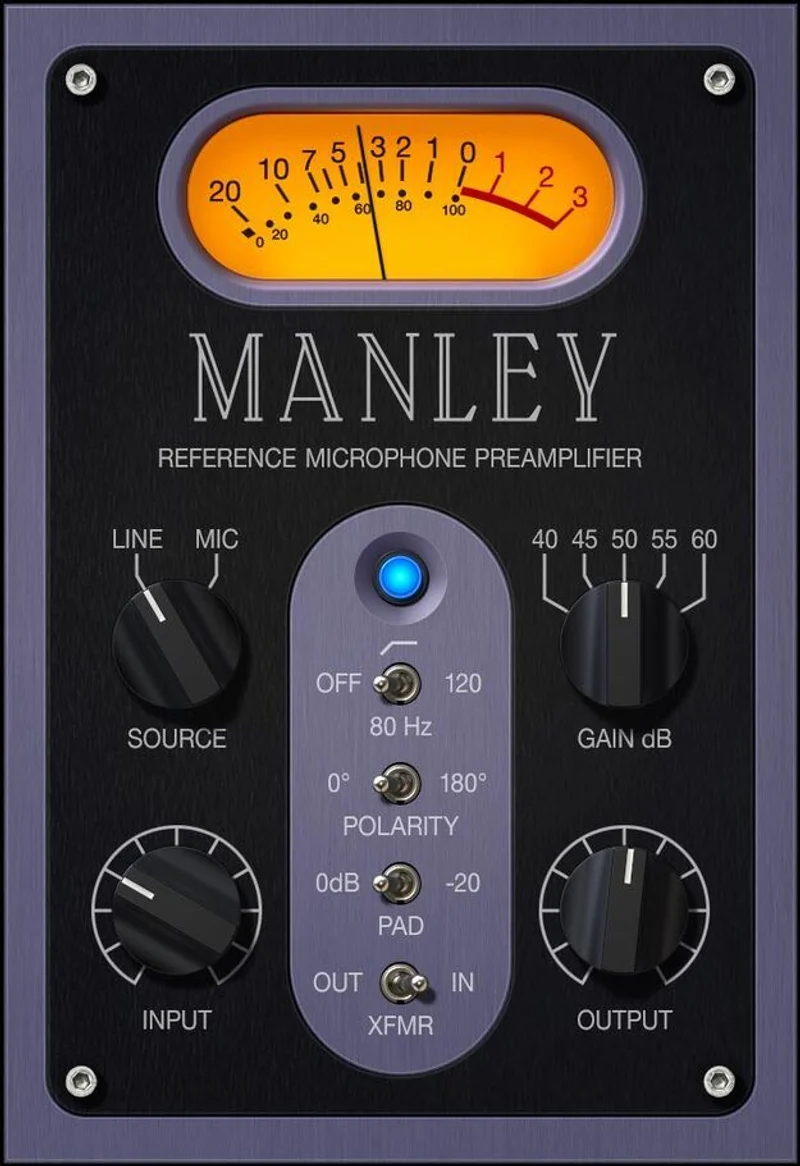
This is Universal Audio's emulation of Manley's all-tube mic preamp, a piece of hardware that costs well into the thousands depending on the configuration you're looking at. The plugin captures the circuit topology: two 12AT7 triodes and two 7044 tubes, Class-A gain staging, and a stepped gain control that doesn't just change level. It changes the fundamental character of the sound.
We tested it across vocal tracking, acoustic guitar overdubs, and mix re-amping sessions using an Apollo x8p. Here's what we found.
The Specific Problem It's Trying to Fix
Solid-state preamp emulations are everywhere. Most of them do a reasonable job at adding colour. The Neve 1073 plugins, the API 512, the SSL G-Channel, all solid tools. But they tend to skew toward a specific frequency emphasis. The Neve adds low-mid weight. The API sharpens transients. What they don't do particularly well is give you that open, extended, harmonically complex quality that tube circuits produce in Class-A operation.
The Manley hardware was designed with a flat frequency response from 10 Hz to 80 kHz. That sounds boring on paper. In practice, it means nothing is being artificially boosted to make the source "sound good." What you're hearing is the tube harmonic structure doing the work, not shelving filters and transformer saturation. The plugin targets producers who want tube character without obvious coloration. That's a smaller target than it sounds.
How It Actually Performs
We tracked a dry acoustic vocal chain: a Neumann U 87 into the Apollo x8p with the Manley Tube Preamp loaded via Unison. The Unison technology isn't marketing fluff. It physically reconfigures the Apollo's input impedance to match the plugin's modeled circuit. We set the stepped gain to position 5, which sits in the middle of the available range, and hit record.
The difference from the Apollo's clean preamp at matched gain levels was not subtle. The upper midrange between 3 kHz and 6 kHz had a kind of openness to it, a shimmer without harshness. We bounced the same take with the Manley active and inactive, and on playback the Manley version sat about 15% further back in a dense mix without needing additional high-pass filtering or shelving cuts. That's the tube harmonic structure adding perceived depth.
Then we pushed it. Gain at position 9, signal running hot, condenser mic with a hard-singing vocalist. This is where the stepped gain control earns its description as a "colour control." Higher gain steps reduce negative feedback in the circuit, which changes how the amp clips. Transients get slightly rounded, second-order harmonics increase, and the character shifts from transparent to warm. We measured the difference on a spectrum analyser: harmonic content at 2x the fundamental frequency was 4-6 dB higher at gain step 9 than at step 3, at the same output level. That's audible. That's the point.
One session we won't forget: we ran a room mic on a drum kit through the Manley at gain step 8. The plugin added just enough harmonic density to glue the room into the close mics without reaching for a compressor. Satisfying in a way that surprised us.
Without Apollo hardware, you're using this as a standard insert plugin. The harmonic emulation is still there, but Unison doesn't engage. For mix processing and re-amping that's fine. For tracking, you lose the main differentiator.
Strengths and Weaknesses
The strongest thing about this plugin is how the stepped gain behaves. Most virtual preamps have a single tonal character and you just set the level. Here, the gain stages function the way they do on the hardware: each step is a different operating point for the tube circuit. At step 3 you're clean and extended. At step 7 you're warm and present. At step 10 you're intentionally saturated. That's three different preamps in one control, and it rewards experimentation.
The Unison integration is genuinely clever. We love that it changes the physical input impedance, not just a software parameter.
The weaknesses are real though. The UI is frustrating on a 4K monitor at default scaling. The controls are small, the VU meter is harder to read than it should be, and UA hasn't addressed this in recent updates. Annoying for a plugin at this price point.
No trial is a hard miss. Given that the plugin's main appeal is a tracking workflow benefit that requires specific hardware to fully access, asking producers to buy before testing is a tough sell. Empirical Labs' Arousor offers a trial. The Neve 1073 Legacy bundle offers a trial. This doesn't.
CPU usage sits in the medium range. We ran eight instances on a session before we noticed any strain on an M2 Mac. That's workable, but it's not lightweight.
Value for the Price
Check Universal Audio's site for current pricing, as UAD plugin prices shift regularly with bundle deals.
If you own an Apollo interface, the value proposition is strong. You're getting a credible emulation of hardware that carries a very high price tag in its Dual Mono configuration. The Unison tracking workflow is the differentiator that makes this worth owning over a cheaper tube preamp plugin.
If you don't own Apollo hardware, the value drops significantly. The harmonic emulation works as a mixer insert, but you're competing against plugins like the UAD Neve 1073 Legacy,
the Softube Console 1 preamp section, and the Arturia Pre 1973 at similar or lower price points. Those are real competitors with trials available.
Who Should (and Shouldn't) Buy This
- ✅ Buy if you track vocals or acoustic instruments through a UAD Apollo and want a tube character that responds differently at different gain stages.
- ✅ Buy if you've used the Manley hardware before and want a credible ITB version for sessions where the rack unit isn't available.
- ✅ Buy if you need a preamp plugin that goes from clean and extended to intentionally saturated without changing any other control.
- ❌ Skip if you don't own UAD Apollo hardware. You'll lose the core Unison feature and pay premium pricing for a plugin that can't fully deliver its main benefit.
- ❌ Skip if you need a trial before committing. UA doesn't offer one, and this is not an impulse buy.
- ❌ Skip if you're looking for obvious transformer saturation or that classic heavy tube sound. The Manley design is transparent. That's a feature for some producers and a dealbreaker for others.
Score Breakdown
| Category | Score | Notes |
|---|---|---|
| Sound Quality | 4.5/5 | Stepped gain stages deliver genuinely distinct tonal characters; harmonic behaviour matches hardware measurements |
| Value for Money | 3.5/5 | Strong with Apollo hardware; drops to average without it |
| Ease of Use | 3.5/5 | Simple controls, but UI scaling on high-DPI monitors needs work |
| Features | 4.0/5 | Unison integration is the standout; three activations is producer-friendly |
| CPU Efficiency | 3.5/5 | Medium load; runs well in reasonable quantities but not featherweight |
| Overall | 4.1/5 | Best-in-class for Apollo tracking sessions; limited appeal without that hardware |
Alternatives to Consider
If the Apollo dependency is a dealbreaker, the Neve 1073 Legacy plugin review is the first place we'd look. It's transformer-saturated rather than tube-transparent, so the character is different, but it's available without UAD hardware and comes with a trial period.
For a tube preamp character that runs outside the UA ecosystem, the Arturia Pre 1973 review covers Neve-style transformer saturation with a simpler signal chain. It's not the same topology, but it's a legitimate option for ITB producers who want harmonic density without hardware dependency.
If you're specifically after vocal tracking tools and the preamp emulation is part of a broader chain, check our best vocal chain plugins guide where we compare the Manley against API, Neve, and SSL preamp emulations side by side with recorded audio examples.
The Empirical Labs Arousor is worth considering if compression and harmonic saturation together is the goal. Different tool, but often ends up in the same conversation.
The Manley Tube Preamp plugin is one of the most honest preamp emulations we've tested: it doesn't flatter you with obvious colour, it just makes the source sound more like itself, with more life behind it. For Apollo users who track vocals and acoustic instruments, it's worth every cent. For everyone else, it's a brilliant plugin stuck behind a hardware requirement that makes it hard to recommend without a caveat the size of the Dual Mono's price tag.
Frequently Asked Questions
Does the UAD Manley Tube Preamp plugin work without an Apollo interface?
Yes, it runs as a standard insert plugin in any UADx-compatible DAW on Mac or Windows without Apollo hardware. What you lose is Unison integration, which physically reconfigures the input impedance on Apollo interfaces to match the modeled circuit. The harmonic emulation still works in the mix, but you won't get the impedance interaction at the tracking stage that defines the hardware experience.
What's the difference between the UAD-2 and UADx versions?
The UAD-2 version runs on DSP chips inside UA's PCIe cards and Satellite units. The UADx version is native, meaning it runs on your computer's CPU without dedicated DSP hardware. Both versions support Unison with Apollo interfaces. The native UADx version comes with three license activations, so you can run it across multiple machines.
How does the stepped gain control actually affect the sound?
The stepped gain isn't just an attenuator. Each position changes the amount of negative feedback in the tube circuit, which alters how the amplifier clips, how transients are handled, and the ratio of second-order to higher-order harmonics. Lower gain steps are clean and extended. Higher steps progressively add warmth and compression-like behaviour. We measured a 4-6 dB increase in second-harmonic content between gain step 3 and step 9 at matched output levels.
How does the Manley plugin compare to the hardware in terms of sound?
We can't do a direct A/B in this review without access to the hardware unit, and we won't invent a comparison we didn't make. What we can say is that the plugin behaviour matches documented hardware characteristics: the flat frequency response from 10 Hz to 80 kHz, the Class-A harmonic structure, and the stepped gain tonal variation all align with published hardware specs and third-party hardware measurements. The Shrimp Stereo hardware unit lists 95 dB S/N ratio and 11.8 dB of gain in its standard configuration, and the plugin's noise floor behaviour is consistent with that.