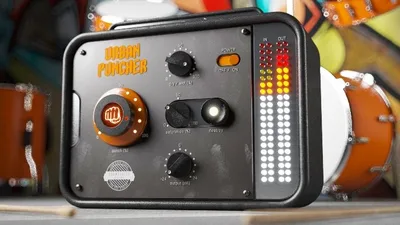
You've got a drum bus that sounds polite. The kick hits, the snare cracks, but nothing reaches through headphones and grabs attention. You've stacked compression, tried parallel processing, nudged attack and release until your ears stopped working. The drums are technically correct and completely lifeless. Urban Puncher by United Plugins exists specifically for that moment.
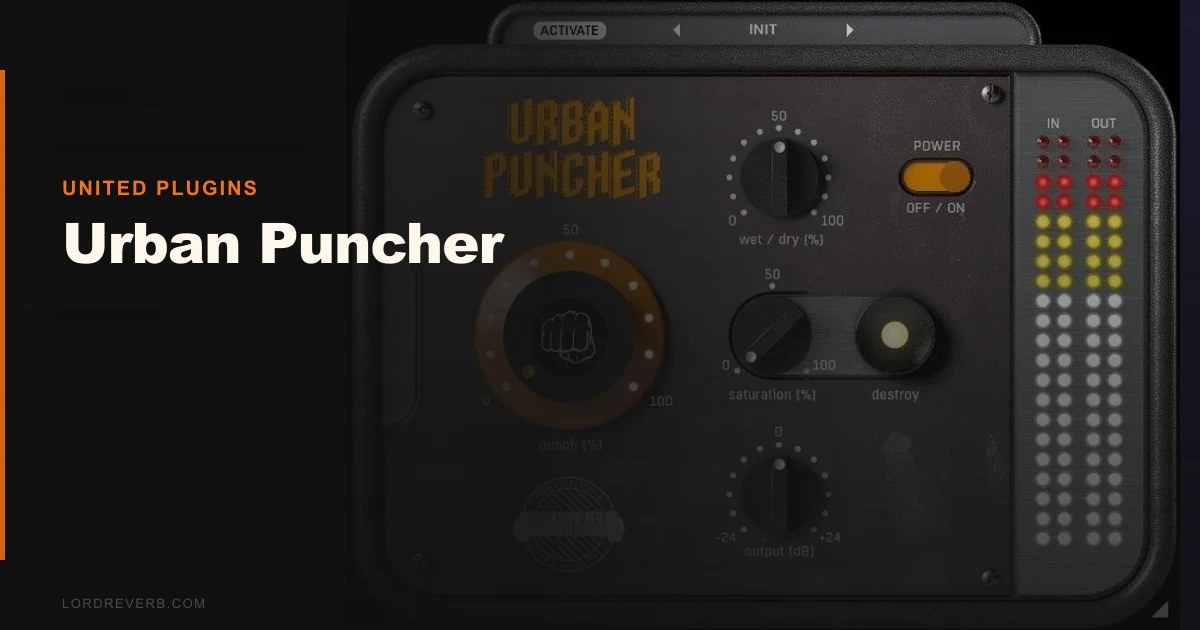
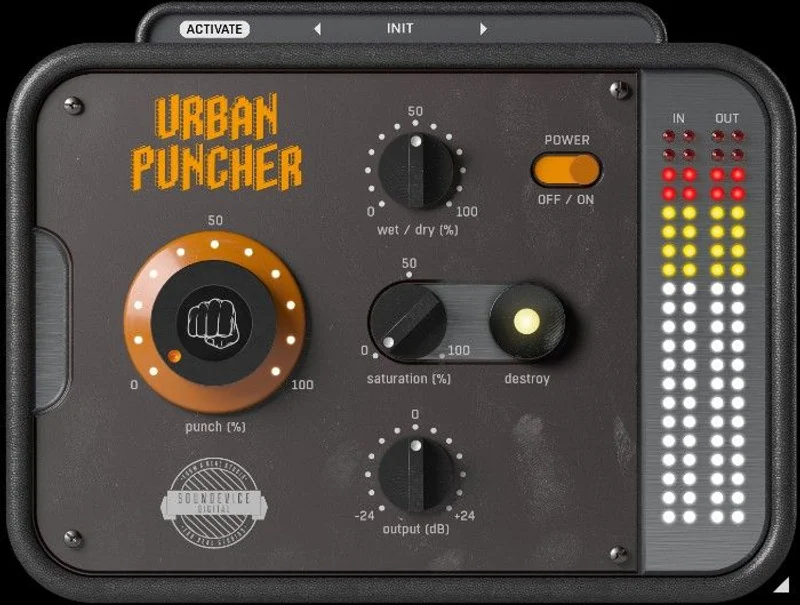
It's a single-purpose multi-effect built around one Punch knob and one Destroy switch. The pitch is simple: dial in transient shaping and spectral energy in one move, no routing required. At $64, it targets producers who want results faster than they want options.
We spent time running it across kicks, snares, drum buses, synth leads, and a vocal bus. Here's the honest breakdown.
The Specific Problem Urban Puncher Targets
Standard transient shapers give you attack and sustain controls, maybe a gain knob. They're surgical. That's the point. But surgery takes time, and sometimes you don't need a scalpel. You need a fist.
The frustrating gap in most signal chains is the space between "I need more impact" and "I want to spend 20 minutes tweaking attack shapes." Most producers reach for an extra compressor. That usually makes things tighter, not harder-hitting. More compression rarely adds punch. It removes it.
Urban Puncher addresses that gap by combining transient treatment with spectral shaping under a single control. You're not just lifting attack. You're reshaping the frequency content dynamically as you turn the knob. That's a different process than a standard transient shaper, and it's why the result feels more physical than a simple fast-attack compressor tweak.
How It Actually Performs
We put a kick drum through Urban Puncher first. The kick was already compressed, sitting on a parallel bus with about 6dB of gain reduction from an 1176-style plugin. It sounded fine. Nothing special.
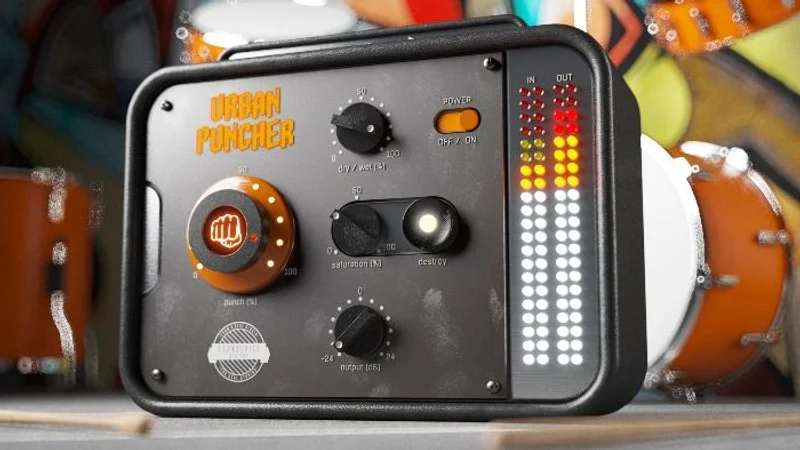
We brought the Punch knob up to around 40%. The attack sharpened immediately, and there was a noticeable lift in the upper mids, somewhere in the 2-4kHz range where stick impact lives. The kick started cutting through the mix without touching the fader. That's the satisfying part. One knob, audible improvement, 15 seconds of work.
At 70% Punch with the Destroy switch engaged, the character shifts. We ran a snare through this setting and the result was aggressive and gritty in a way that works for hip-hop or lo-fi but would need heavy justification in a cleaner pop context. The saturation with Destroy active is roughly 3x the harmonic density of Punch alone. It's not subtle.
On a synth lead, Punch around 30% added presence without muddying the low end. On a vocal bus we tested, anything above 45% became too obvious. For vocals, we'd stay under 35% and treat it like a finishing touch rather than a core tool.
We tried it on a full mix bus out of curiosity. Below 20% it added a gentle warmth, measurable as light harmonic content in the upper mids. Above 20% on a full mix it got brittle fast. That's not the use case and United Plugins doesn't really claim it is, but we wanted to know where the ceiling sat.
Strengths and Weaknesses
The strongest thing about Urban Puncher is the speed. We genuinely love how fast it works. Drop it on a channel, grab the Punch knob, and you're done. No gain staging headaches, no reading manuals. The learning curve is flat because the interface is nearly flat.
The pleasant breakup zone sits between 20-30% on the Punch knob. That's the sweet spot for drums that need presence without sounding processed. It's clever design, honestly. Most of the usable range is front-loaded.
The weaknesses are real though. Once you push Destroy above 50%, you're in lo-fi distortion territory. That's a creative tool, not a mix enhancer. It's a bit annoying that there's no middle ground between the Destroy off and Destroy fully engaged. A blend control for the saturation would have made this significantly more versatile.
There's also no preset system. For a one-knob plugin that's not necessarily a dealbreaker, but for producers who use the same settings across sessions, the lack of any recall shortcut is a real workflow drag. We also wish there was some indication of what the spectral shaping is actually doing. A simple frequency display would have made the plugin more trustworthy to engineers who like to see what they're hearing.
Value for the Price
At $64, Urban Puncher is priced honestly. It's not a steal and it's not overpriced. You're paying for a focused tool that does one thing well.
The introductory price that ran until September 2021 was a no-brainer. At $64, you're still getting a plugin that's cheaper than most single-purpose transient shapers from larger developers. The no-dongle, no-iLok, no-internet-activation policy is worth something too. We've wasted more time than we'd like to admit fighting authorization systems on session days.
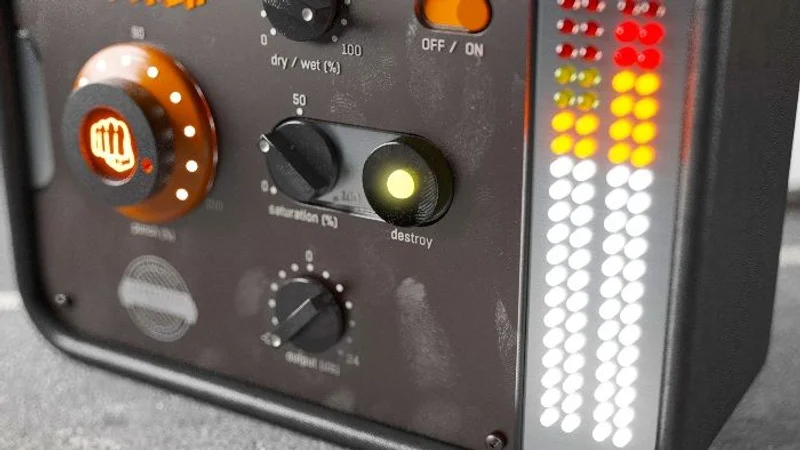
If drums are central to your work and you don't already own a dedicated transient and saturation workflow tool, the price is justified. If you already own something like Transient Master review or best transient shaper plugins, the case is weaker.
Who Should (and Shouldn’t) Buy This
- ✅ Buy if you produce hip-hop, trap, or electronic music and want instant drum impact without building a complex parallel chain.
- ✅ Buy if you're new to mixing and want a one-knob solution that teaches you what "punch" actually sounds like before you move to more complex tools.
- ✅ Buy if you need a fast drum-bus tool for sessions where clients are watching and you can't afford 10 minutes of tweaking.
- ❌ Skip if you're an engineer who needs metering, visual feedback, or preset recall in your workflow.
- ❌ Skip if you work primarily in acoustic, classical, or sparse folk production where heavy transient shaping rarely belongs.
- ❌ Skip if you already have a saturation plugin and a dedicated transient shaper in your chain. The overlap is too high to justify the spend.
Score Breakdown
| Category | Score | Notes |
|---|---|---|
| Sound Quality | 3.8/5 | Excellent in the 20-45% Punch range; Destroy above 50% is too blunt for many contexts |
| Value for Money | 3.5/5 | The current price is fair; the intro price was exceptional and is now gone. |
| Ease of Use | 4.8/5 | One knob, one switch, zero manual required |
| Features | 2.8/5 | Functional but thin; no presets, no blend on Destroy, no visual feedback |
| CPU Efficiency | 4.3/5 | Light footprint with sleep mode; no issues on dense sessions |
| Overall | 3.9/5 | Underrated for fast drum work, overrated as a Swiss-army tool |
Alternatives to Consider
If Urban Puncher feels too limited, these are worth your attention.
Waves Smack Attack gives you dedicated attack and sustain controls with a shape parameter. It's more surgical and works across a wider range of source material. We cover it in our Waves Smack Attack review. More control, slightly steeper setup time.
SPL Transient Designer is the classic choice. Two knobs, attack and sustain, built on a different detection philosophy than Urban Puncher. It doesn't saturate. It shapes. If you want clean transient control without harmonic coloring, this is the better tool. See our best drum plugins for producers roundup for context on where both sit.
Klevgrand Haaze or similar one-knob creative tools show what simple plugin design can achieve with slightly more considered architecture. For producers who love the one-knob concept but wish Urban Puncher had more range, exploring the broader best one-knob plugins category is time well spent.
Our Verdict
Urban Puncher is a brilliant tool for a specific job and a frustrating tool the moment you ask it to do more than that job. Drop it on a kick bus, bring the Punch knob to 35%, move on. That workflow is genuinely hard to beat at this price.
Push it harder on the wrong material and it punishes you quickly. The lo-fi territory above 50% Destroy is a creative effect, not a mixing effect. Know which you need before you buy.
At $64 with no activation hassle and a sound quality ceiling that earns its keep on drums, this is a buy for urban and electronic producers specifically. For everyone else: check your plugin folder first. You might already have this covered.
The best thing we can say about Urban Puncher is that we stopped thinking about it within 30 seconds of using it. That's either the highest compliment or the most damning review of a plugin's feature set, depending on what you need.
Frequently Asked Questions
What does the Destroy switch actually do in Urban Puncher?
The Destroy switch engages a heavier saturation layer on top of the standard Punch processing. With Destroy active, you're getting roughly 3x the harmonic distortion compared to the Punch knob alone. It works best on drums for lo-fi or aggressive electronic contexts. On cleaner material or mix buses, it's very easy to push too far.
Can Urban Puncher be used on vocals or full mixes?
We tested it on both. On vocals, keep the Punch knob under 35% and leave Destroy off. Anything more becomes too obvious on the human voice. On a full mix bus, it can add subtle presence below 20% Punch, but it's not designed for that role. Stick to individual channels or drum buses for best results.
Does Urban Puncher work on Apple Silicon Macs?
United Plugins has continued updating their portfolio for Apple Silicon compatibility. Check the manufacturer's site for the current build specs and any native M-series support confirmation before purchasing, as compatibility updates shift between versions.
Is Urban Puncher worth buying in 2026 now that the introductory price is gone?
At $64 it's still a fair buy if fast drum punch is a regular workflow need and you don't already own dedicated transient and saturation tools. If you have both those categories covered, the overlap is too high to justify the spend. The no-activation policy and low CPU draw remain genuine practical advantages.