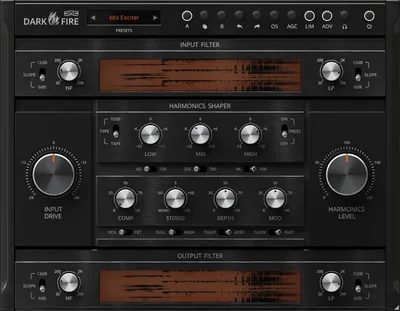
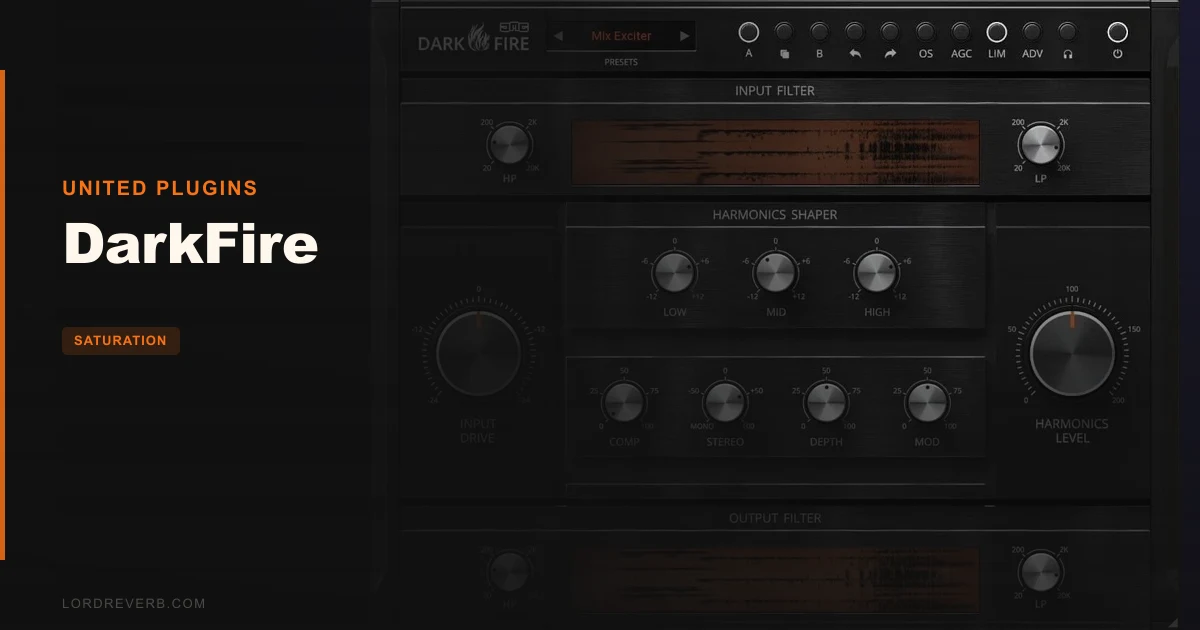
DarkFire by United Plugins does something no other single saturation plugin does: it lets you pull the harmonics it generates off the dry signal, EQ and compress them independently, then blend them back in. That’s the whole pitch, and it’s a real one.
At the intro price (well below the regular $73), it’s almost silly not to try it. The 15-day fully functional trial means you can run it hard before spending a cent. If you produce anything with guitars, bass, or layered synths where standard saturation either does too much or muddies your low-mids, DarkFire has a specific answer to your specific problem.
This review is for producers who already know what saturation does and want to know whether this harmonic-separation workflow is actually better than a two-plugin chain.
What You're Actually Getting
DarkFire is a saturation plugin built around one core idea: separate control over the harmonics you add, not just the signal you started with.
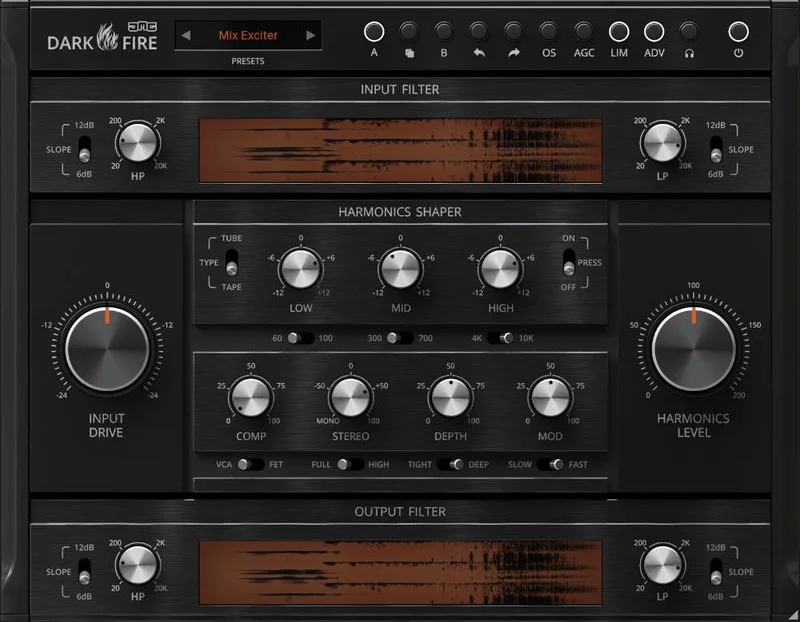
The signal chain runs through analogue-modeled saturation options including FET and VCA compressor emulations, vintage passive EQ modeling, tube saturation, and tape emulation. That’s four distinct flavors, not just one “warm” mode.
After saturation, a dedicated harmonic layer gives you a three-band EQ, compression, stereo width, and a chorus-style modulation control. These affect only the generated harmonics. The dry signal stays untouched.
It runs as VST3, AU, and AAX across macOS 10.10 and newer and Windows 8, 10, and 11. United Plugins ships free updates for life, which matters at the regular price point.
The Good
The harmonic separation workflow is the thing, and it actually works.
We ran a DI bass guitar through the tube saturation mode, got the grit we wanted, then pulled the harmonic EQ back around 400Hz by about 3dB with a Q of 1.2. The low-mid boominess that normally makes saturated bass compete with the kick disappeared. The grit stayed. That’s not something you can do with a single Waves plugin, and doing it with two separate plugins means routing, gain staging twice, and hoping your blend is right.
Doing it inside one interface takes about 20 seconds.
The stereo width control on the harmonic layer is a clever trick for synths. We pushed a mono pad through, added subtle even harmonics, then widened only those harmonics to about 60% stereo. The fundamental stayed mono and centered. The shimmer spread. It was satisfying in a way that felt like finding a shortcut you didn’t know existed.
The four saturation models sound distinct enough to matter. FET is fast and aggressive. Tape is the softest. Tube adds the most second-harmonic content. VCA sits between FET and Tube. At the intro price, we’d buy it just for those four models.
The Not-So-Good
The learning curve is real. This isn’t a one-knob plugin. If you’re not already comfortable thinking about harmonic content as a separate object from your dry signal, DarkFire will confuse you before it helps you.
There aren’t enough presets to shortcut that process. Competitors like Softube Saturation Knob (free) or JST Heat ship with enough starting points that you can reverse-engineer the logic. DarkFire doesn’t give you that safety net.
The absence of mid/side processing on the harmonic layer is frustrating. The stereo width control is useful but blunt. We’d love to compress only the side harmonics on a stereo bus, or cut mud from the mid harmonics without touching the sides. That granularity isn’t here yet.
At the regular price of $73, this competes directly with Soundtoys Decapitator and Fabfilter Saturn 2. Those are tougher comparisons than the intro price makes it feel. Worth knowing before January 12th passes.
Compared to the Alternatives
Fabfilter Saturn 2 is the benchmark for multiband saturation. It’s more powerful overall, but its harmonic shaping happens inside each band, not on a separated harmonic layer. Different workflow, higher price, bigger CPU footprint.
Soundtoys Decapitator gives you five analogue models and sounds brilliant on guitars and drums, but you get one wet/dry knob for harmonic control. That’s it.
JST Heat is closer in price and aimed at a similar “add warmth without mud” promise. It doesn’t separate harmonics. It’s a cleaner UI with less creative ceiling.
Acustica Audio’s saturation plugins model specific hardware deeply but are notoriously CPU-hungry and require cloud activation.
DarkFire’s harmonic separation genuinely fills a gap none of those plugins address. The question is whether you need that gap filled. If you mix in a single style and your saturation workflow already works, it’s a nice-to-have. If you fight muddy low-mids or clashing stereo saturation regularly, it’s a fix.
Who Should Buy This
✅ Buy if you regularly fight mud in the 200-500Hz range on saturated bass or guitars and want to EQ only the harmonics without touching the dry signal.
✅ Buy if you’re in the intro window before January 12th. At that price, the risk is nearly zero with the free trial.
✅ Buy if you produce layered synth music (EDM, cinematic, lo-fi) where separating harmonic width from fundamental mono positioning would save your mix.
❌ Skip if you want a simple “make it warmer” plugin with presets you can browse and forget.
❌ Skip if you’re on Windows 7 or macOS below 10.10. Not supported.
❌ Skip if you’re comparing at the regular price and already own Saturn 2 or Decapitator. The harmonic-layer concept is clever, but it doesn’t outperform those tools across the board.
Score Breakdown
| Category | Score | Notes |
|---|---|---|
| Sound Quality | 4.0/5 | Four distinct saturation models that sound different from each other; tube and tape modes are the strongest |
| Value for Money | 4.5/5 | The intro price with free updates for life is hard to argue with |
| Ease of Use | 3.5/5 | Harmonic-layer concept takes time to internalize; sparse presets don't help beginners |
| Features | 4.0/5 | Harmonic separation plus three-band EQ, compression, stereo width, and chorus on the harmonic layer is a strong set |
| CPU Efficiency | 4.0/5 | Runs light enough to use across multiple tracks without session panic |
| Overall | 4.1/5 | Unique concept that works; held back by learning curve and no mid/side harmonic control |
Alternatives to Consider
If the harmonic-separation concept doesn’t appeal and you want proven analogue saturation, see our roundup of the 5 saturation types every producer needs before spending anything.
For a closer comparison in the “affordable and musical” saturation bracket, Technocolor by Karanyi Sounds is worth checking. It handles colour differently but sits in a similar price bracket at intro pricing.
If you’re already invested in the United Plugins ecosystem, our United Plugins Bass Bundle review covers how their tools stack up when combined, which is relevant if you’re thinking about DarkFire on bass-heavy sessions.
Fabfilter Saturn 2 is the ceiling of what multiband saturation can do ITB. If budget isn’t the constraint, that’s the long-term answer. Soundtoys Decapitator is the emotional choice for guitarists and drum mixers. Neither replaces what DarkFire does specifically, but both are more proven over time.
The Bottom Line
At the intro price before January 12th, DarkFire is worth buying even if you only use it on bass. The harmonic separation isn’t a marketing trick. It solves a real workflow problem with a precision that multi-plugin chains can approximate but never replicate cleanly inside a single interface.
We’d hesitate at $73 without more presets and mid/side capability on the harmonic layer. That version needs to prove itself harder against Saturn 2.
But right now? Grab the trial. Run it on your muddiest bass track. If that three-band harmonic EQ doesn’t fix something your current chain hasn’t, uninstall it and walk away.
If it does, you’ll be annoyed you waited.
Related reviews: Red Bass Review
Frequently Asked Questions
What makes DarkFire different from other saturation plugins?
DarkFire generates harmonics through its saturation engine, then routes those harmonics to a separate processing layer with its own three-band EQ, compressor, stereo width control, and chorus modulation. You shape the harmonics independently before blending them back with the dry signal. No other single plugin does this in the same integrated workflow.
Is the 15-day trial actually fully functional?
Yes. United Plugins' trial for DarkFire has no saving restrictions and no watermarking, which is less common than it should be. You can run a full session with it and bounce stems before committing. We tested this and had no issues.
Does DarkFire work on Apple Silicon Macs?
United Plugins lists macOS 10.10 and newer as supported. For Apple Silicon native compatibility, check the manufacturer's site directly, as AU and VST3 builds can vary between Intel and ARM builds. Running under Rosetta 2 is typically fine for most United Plugins titles.
Is DarkFire worth buying at the regular $73 once the intro ends?
$73, it competes against Soundtoys Decapitator and Fabfilter Saturn 2. The harmonic separation feature is genuinely unique, but the lack of mid/side processing on the harmonic layer and limited presets make it harder to recommend at that tier without hesitation. If the intro price is gone, grab the trial first and decide based on your specific workflow before paying full price.