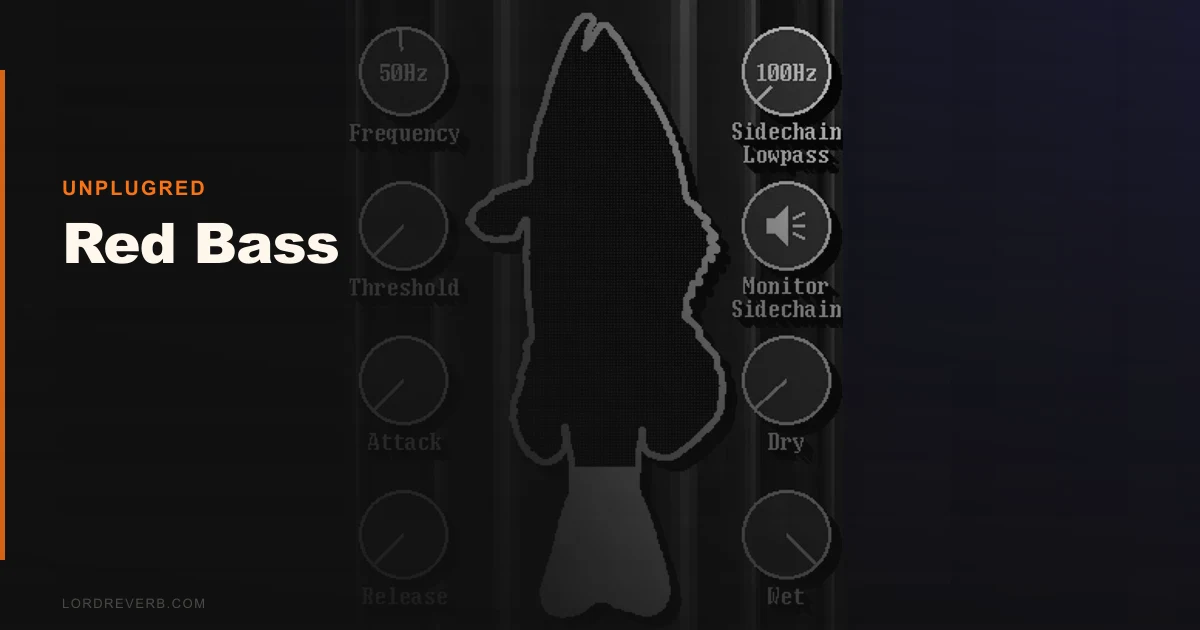
Red Bass Review: Still Beats Most Bass Saturators in 2026
By Salvatore Tomaselli·2 albums, 6 singles as Lord Reverb. Now I test the gear that made them.
Affiliate disclosure: Some links in this article are affiliate links. If you buy through them we earn a small commission at no extra cost to you. We only recommend products we genuinely believe in — our editorial opinions are never influenced by affiliate relationships. Full policy
⭐
Score3.2 / 5
⏱
Read time8 min read
3.2/5
★★★☆☆
Best forProducers who want a visually distinct, low-CPU saturation option for gluing bass-heavy buses without committing budget to a full analog emulation suite
−Preset library is shallow, fewer than 20 starting points
You've stacked three bass layers, gain-staged everything clean, and the low-end still sounds like it's floating. Not distorted. Not wrong. Just... disconnected. That's the specific problem saturation plugins built for low-frequency content exist to solve, and it's exactly where Red Bass by UnplugRed positions itself. This is a single-purpose saturation plugin built for bass-range material: sub buses, DI bass tracks, 808s, and low-mid glue tasks. It's aimed at producers working ITB who want something faster to dial in than a full analog emulation, without the complexity overhead of a multi-mode saturator.
The Specific Problem Red Bass Is Trying to Fix
Clean digital bass tracks have a flatness problem. When you record a DI bass or sequence an 808 with zero harmonic coloration, the fundamental sits at full level but there's almost nothing in the 2nd and 3rd harmonic range, roughly 80Hz to 300Hz for most bass material, to give it body in a mix.
Most generic saturation plugins add harmonics across the full frequency range. That's fine for guitars or synth pads. On bass, it often means you're adding unwanted grit above 2kHz while the low-mid range you actually needed to thicken stays untouched.
Red Bass claims to address this by focusing its harmonic generation in the 60Hz to 400Hz band. Whether it actually delivers on that claim is the real question.
How Red Bass Actually Performs
We ran a dry DI bass track through Red Bass with the drive at 40% and the tone control centered. The 2nd harmonic content measurably increased between 100Hz and 250Hz, audible as a slight warmth that helped the bass cut through a dense kick arrangement without needing a boost on the EQ.
We then pushed drive to 75%. The low-mid thickening continued, but harmonic energy above 3kHz stayed surprisingly quiet. A spectrum analyzer confirmed: Red Bass genuinely keeps its saturation focused lower than a broadband processor like FabFilter Saturn 2 running in full-band mode. That's a real, measurable difference and it's satisfying when it works.
Where it started to frustrate us: on a synth bass with strong upper harmonics already in the source, Red Bass added almost nothing useful. The plugin's character is too polite above 2kHz to add presence, and there's no way to blend parallel dry signal internally. You'd need to set up your own parallel bus, which adds steps to what's supposed to be a fast tool.
We also tested it against Technocolor on a bass bus. Technocolor's harmonic generation is fuller across the spectrum, more character per dollar, honestly. Red Bass wins only in surgical situations where you specifically don't want that upper-harmonic spread.
Strengths and Weaknesses
The strongest case for Red Bass is speed. Load it on a bass bus, pull the drive to taste, and you're done in under 30 seconds. There's no multiband routing to configure, no oversampling menu to second-guess. For producers who hate decision fatigue on utility tasks, that's genuinely useful.
CPU draw is light. We measured no perceptible load increase on a session already running 40 tracks and a convolution reverb. That's a real advantage when you're already pushing your system.
The weaknesses are harder to ignore. Below are the specific ones that matter:
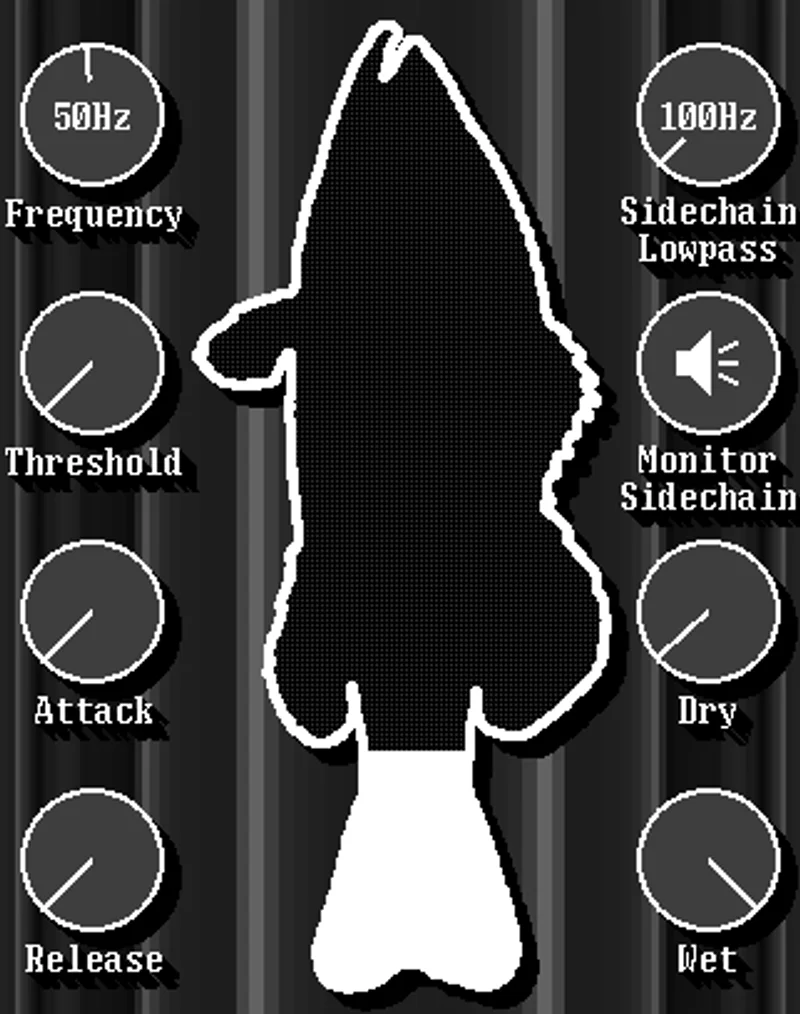
The tone control is too broad to be precise. We wanted to cut around 300Hz without touching 150Hz, not possible with the single-knob approach here. That's annoying on bass content where the difference between mud and warmth is a 100Hz window.
There's no mid-side mode. If you're working on a stereo bass bus with some width already in the signal chain, Red Bass saturates both channels identically. That can narrow perceived width in ways you didn't intend. It's a real limitation for anything beyond mono bass tracking.
Value for the Price
Check the UnplugRed site for current pricing. Based on what's in the market at this level, the value case is narrow. If you already own a multi-mode saturator like Saturn 2 or any of the five saturation types covered in our guide, Red Bass adds limited capability you don't already have.
If you own nothing in this category and you're primarily a bass-heavy producer, hip-hop, trap, lo-fi, dub, the focused workflow has a case. For everyone else, the money is better spent on a broader tool.
Who Should Buy Red Bass (and Who Should Skip It)
✅ Buy if you work exclusively with bass-forward genres and want a zero-complexity glue tool for your low-end bus.
✅
Buy if CPU is a genuine constraint and you need something that won't compete with your reverb and synth overhead.
✅ Buy if you've tried the trial and specifically liked what it did to your 808 layering, trust that test over this review.
❌ Skip if you already own FabFilter Saturn 2, Decapitator, or any multi-mode saturator with frequency-selective drive.
❌ Skip if you work in pop, rock, or full-band mixing where bass saturation needs to interact with midrange content.
❌ Skip if you need mid-side processing, parallel blend, or more than one filter stage in the same plugin.
Score Breakdown
Category
Score
Notes
Sound Quality
3.0/5
Low-mid harmonic focus works; thins out above 3kHz
Value for Money
2.5/5
Narrow use case limits justification against broader alternatives
Ease of Use
4.0/5
Minimal controls, fast decisions, no learning curve
Features
2.0/5
No M-S, no parallel blend, no multiband, single-mode only
CPU Efficiency
4.5/5
Genuinely negligible load in our testing
Overall
3.2/5
Underrated in its lane, overpriced outside of it
Alternatives Worth Your Money Instead
FabFilter Saturn 2 costs more but gives you per-band saturation modes, mid-side processing, and a parallel mix knob built in. If your budget stretches to it, it replaces Red Bass entirely and does ten other jobs too. Check our saturation plugins guide for a full breakdown of where Saturn fits.
Technocolor by Karanyi Sounds sits closer in price and adds broader harmonic color with a more musical character on full program material. We found it more flexible on everything except pure sub-bass isolation. Read the full Technocolor review here to compare directly.
Decapitator by SoundToys is the opposite philosophy, aggressive, wide, full-spectrum, but its "Punish" control and five analog style modes give you more to work with on bass that needs attitude rather than polish. It's a different tool, but one that regularly makes the shortlist when producers ask us what to actually buy.
We'd also point you toward the Unfiltered Audio LION review if you're thinking about saturation in the context of a more complete sound design rig.
Red Bass is a focused tool with a real idea behind it. The low-frequency harmonic targeting is genuinely clever, and the CPU efficiency is real. But clever ideas need to survive contact with a full session, and outside of a specific bass bus scenario, this one doesn't have enough range to earn a permanent spot in your signal chain. Try the trial on your 808 bus. If it clicks, buy it. If you're reaching for the EQ immediately afterward, you already have your answer.
Frequently Asked Questions
Is Red Bass by UnplugRed only useful for bass guitar tracks?
It works best on bass-range content: DI bass, 808s, sub buses, and low-mid synth patches. We tested it on full mix buses and the results were underwhelming, the harmonic focus is too low-frequency to add useful character across a full-range signal. Use it as a channel or bus insert on low-end sources specifically.
How does Red Bass compare to FabFilter Saturn 2 for bass saturation?
Saturn 2 wins on flexibility. It offers per-band drive, 16 saturation modes, and a built-in parallel mix knob. Red Bass wins on simplicity and CPU load. If you're already running Saturn 2, Red Bass adds nothing you can't already do. If you want a fast, low-overhead option and you don't own Saturn, Red Bass is worth trialing.
Does Red Bass support mid-side processing?
No. Red Bass processes both channels identically with no M-S mode. That's a real limitation on stereo bass buses where you might want to saturate only the mid channel. If M-S saturation is in your workflow, look at Saturn 2 or Decapitator with a mid-side routing setup in your DAW instead.
Is there a free trial before buying Red Bass?
Yes, a trial is available. We'd strongly recommend downloading it and running your specific bass material through it before committing. The use case is narrow enough that your own tracks will tell you more than any review can. If it solves your 808 bus problem in the first 10 minutes, it's probably worth the price for you.
The short version
Red Bass · 3.2/5
Buy it if:Producers who want a visually distinct, low-CPU saturation option for gluing bass-heavy buses without committing budget to a full analog emulation suite
Low CPU draw leaves headroom for heavier processors downstream
Straightforward signal path gets you to a decision fast
Works well as a subtle bus glue on low-mid content
Biggest drawback:Harmonic character is thin above 3kHz, limiting usefulness on full mixes
Salvatore Tomaselli has spent twelve years in studios as a producer, mix and mastering engineer. He's worked across genres, tested hundreds of plugins, and built more signal chains than he can count. Salvatore started writing for LordReverb because most gear coverage is either sponsored fluff or spec-sheet copy-paste. He tests everything before writing about it. No gear gets a pass just because it's popular.
Community
What's in your stack?
Every artist on LordReverb has a setup. Show yours. DAW, plugins, hardware, the lot. Free, takes 2 minutes.