Tawus gets compared to Splice Sounds and Capsule-style samplers most often, and here's where this review lands: it beats both for layered improvisation, but it can't replace either for serious session work. At $79.50, it's a four-layer inspiration machine from Thenatan Audio built for trap, hip-hop, and lo-fi producers who want textured, ready-to-drop sounds without a long signal chain. It's not a professional sound-design workstation. It doesn't pretend to be. The question is whether what it actually does is worth the money for your workflow specifically.
We'd call it a sketch pad with surprising depth in the right hands and a frustrating ceiling in the wrong ones.
How It Compares Out of the Box
Stack Tawus next to something like Output Arcade or Native Instruments' Noire and the difference hits immediately. Arcade is subscription-based and stream-first. Noire is a single-instrument deep-dive. Tawus is neither.
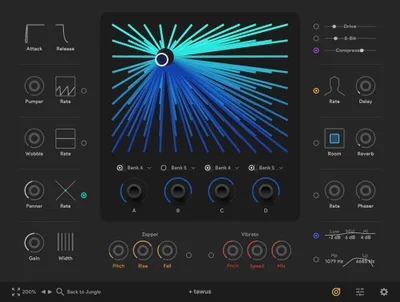
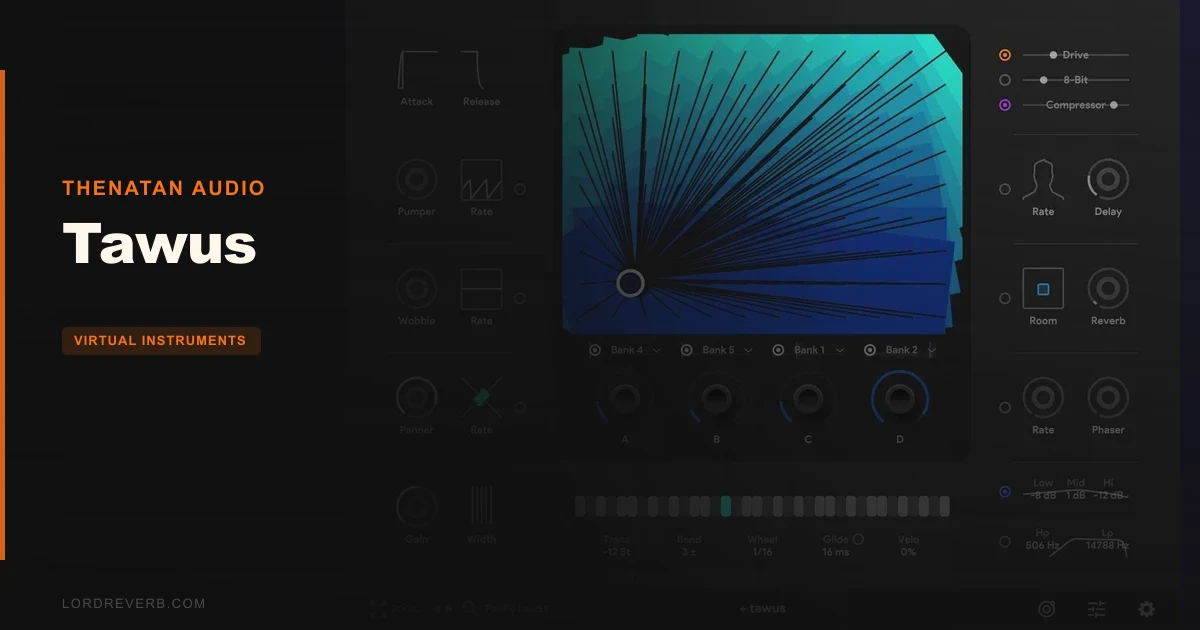
What you get is four independent samplers running simultaneously, each pulling from a pool of 600 samples spread across 6 banks. The XY pad sits in the center and lets you drag between layers in real time. It's closer to Heterodyne or a simplified version of iZotope Iris 2 than it is to your standard ROMpler.
First impression: the interface loads fast and looks clean. The animations are genuinely satisfying, not just decorative. We had sound playing within 90 seconds of installation, which puts it ahead of half the instruments at this price point for sheer immediacy.
Where it trails competitors out of the box is depth of control. Each sampler has filters, reverse, pan, gain, and tuning. That's the list. No multi-stage envelopes, no per-layer LFO routing beyond vibrato. Arcade and Iris 2 go much further for manipulation.
Performance Deep Dive
The sample library sits at 400MB on disk. That's light. Four layers running simultaneously with 14 effects active didn't push our session into red territory, which puts Tawus well below CPU-hungry instruments like Omnisphere or even Arturia's Pigments on a dense patch.
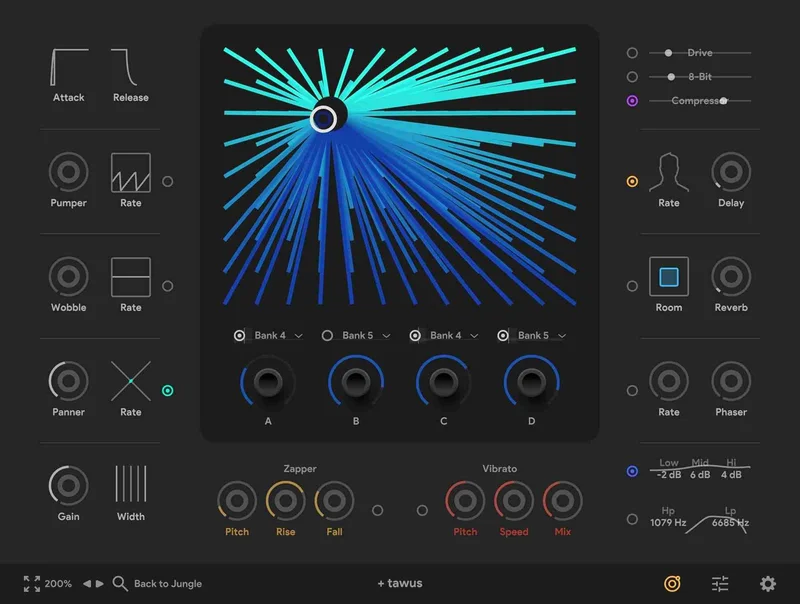
We loaded a preset labeled "0047" (more on the naming problem later), which stacked a pitched 808, a degraded vocal chop, an organic percussion hit, and a filtered pad. We dragged the XY circle toward the pad layer and watched the vocal chop fade back while the pad bloomed forward. The transition was smooth. No artifacts, no clicks.
We then ran the built-in Bit Crusher into the Saturation module on that stack. One knob each. The result was a lo-fi crunch that would take four plugin instances in a standard chain. Not bad for two clicks.
The 3-Band EQ is basic: low, mid, high, no frequency control. You're not dialing in 2dB cuts at 300Hz with a Q of 1.4 here. It's more "take off some mud, add some air." Works for sketching. Useless for mastering-chain work.
The Pitch Designer with vibrato and pitch envelopes adds expressive range. We pushed a bell layer through a slow vibrato at around 5Hz depth and got something usable on a lo-fi lead. Genuinely useful. Not deep, but functional.
Version 1.0.2 was stable throughout our session. No crashes on Mac or PC testing.
Where It Wins
Speed. This is Tawus's strongest argument. We built three distinct textures in under 20 minutes, all usable, all layered in ways that would take much longer to assemble in a DAW manually.
The XY pad is the star. Dragging the circle toward a layer doesn't just adjust volume. It blends timbre, spatial feel, and tonal balance in a way that makes every position feel intentional. The "happy accident" framing is accurate, but undersells it. Some of those accidents are brilliant.
The effects chain is smarter than it looks. Fourteen modules with one-knob control means you can build a complete sound treatment without leaving the instrument. Tremolo, Pumper, Stereo Widener, Reverb, and Delay cover all the territory a trap producer actually needs on a pad or 808.
570+ royalty-free presets is a real number. The 808 content especially sits in the mix without fighting the low end, which is harder to get right than most preset packs make it look.
Where the Competition Wins
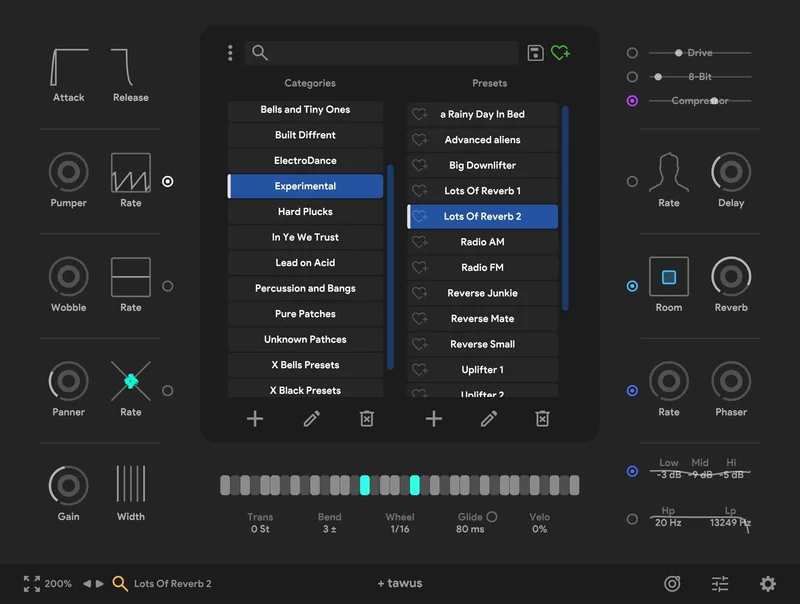
Preset naming is a genuine problem. Every preset in Tawus is labeled numerically. "0047." "0312." No descriptive names, no mood tags, no genre categories. Reviewers keep running into this, and we'd call it annoying rather than just inconvenient.
Finding a patch you used three sessions ago is a real friction point. Output Arcade, Pigments, and even basic ROMplers like Spitfire LABS solve this. Tawus doesn't, and it makes the 570+ preset library feel less useful than the number suggests.
The effects ceiling is also real. One-knob simplicity is a feature for beginners. For producers who want to notch a resonance, set a reverb pre-delay, or shape a compressor's attack time, it's a wall. Rival instruments give you the option to expand controls. Tawus doesn't.
There's also no DAW automation mapping visible in the interface, which limits live performance and advanced mixing scenarios.
Who Should Buy Which
- ✅ Buy if you produce trap, hip-hop, or lo-fi and want layered textures fast without building a complex rig
- ✅ Buy if you're in an early-sketch workflow and need an instrument that generates ideas, not a finisher
- ✅ Buy if 808 content, pads, and pitched percussives make up most of your palette
- ❌ Skip if you need searchable, named presets and an organized library for fast session recall
- ❌ Skip if you need deep effects control, per-parameter automation, or professional mixing tools inside the instrument
- ❌ Skip if you work primarily in orchestral, acoustic, or cinematic genres. This is built for electronic production, full stop
Specs & Technical Details
| Developer | Thenatan Audio |
| Price | $79.50 |
| Plugin Format | VST3 / AU / AAX |
| OS Support | Mac / Windows |
| Activation | N/A |
| CPU Usage | Light |
| Trial Available | N/A |
| Version Reviewed | 1.0.2 |
Score Breakdown
| Category | Score | Notes |
|---|---|---|
| Sound Quality | 3.5/5 | Layered textures punch above the price point, but no single sound is reference-grade |
| Value for Money | 3.5/5 | 600 samples and 14 effects for $79.50 is competitive, but rivals give more control |
| Ease of Use | 4.0/5 | XY pad and one-knob effects make entry fast; preset numbering drags it back |
| Features | 3.0/5 | Four-layer engine and effects are clever, but automation and preset management are weak |
| CPU Efficiency | 4.5/5 | 400MB footprint, four layers active with effects barely registers in a busy session |
| Overall | 3.5/5 | Solid inspiration tool for electronic producers; not a workhorse for professional finishing |
Alternatives to Consider
Output Arcade is the subscription model comparison. It gets regular content drops and has named, searchable loops and one-shot libraries. If you want catalogue depth and organization, Arcade wins. It's a different use-case entirely, but producers who hate digging through numbered presets will be happier there.
Spitfire LABS is free and covers pads, keys, and textures with more expressiveness per instrument. No layering engine, no XY pad. But the sound quality per patch is higher.
Arturia Pigments costs more, runs heavier on CPU, and asks more from you technically. But it gives you complete control over every parameter, full automation mapping, and a preset browser that actually works. If you're producing at a level where Tawus's ceiling is already frustrating you, Pigments is the step up.
We'd also point anyone serious about hip-hop sound design toward dedicated 808 samplers before committing to Tawus as their only bass source.
The Verdict
Tawus at $79.50 does one thing well: it gets you from blank session to layered, textured idea faster than most instruments in this category. The XY pad genuinely earns its place. The effects chain is clever for a producer who doesn't want to build a long signal chain just to sketch a beat.
But it's frustrating in ways that feel avoidable. Numerical preset names in 2026 is a choice, and it's the wrong one. The effects are powerful enough to make you wish they went deeper. There's real potential here that Thenatan hasn't finished unlocking.
If you produce trap or lo-fi and you want an idea generator that won't hog your CPU, Tawus earns its spot in your toolkit. If you're buying this expecting a professional sound-design environment, you'll be disappointed before the first session ends.
Tawus is the plugin you open to start the track. Someone else finishes it.
Frequently Asked Questions
Is Tawus good for beginners?
Yes, with a caveat. The XY pad and one-knob effects make it easy to get sounds quickly without deep technical knowledge. The frustration is preset navigation: everything is numbered, so beginners won't know what they're loading until they hear it. That's a feature for some, annoying for most.
What genres is Tawus built for?
Trap, hip-hop, and lo-fi are the clear sweet spots. The 808 content, pitched vocal chops, pads, and percussive organics fit those genres well. Producers working in orchestral, jazz, or live-band genres will find limited overlap with what the sample library covers.
How does Tawus handle CPU load?
Light. The entire library is 400MB compressed, and running all four sampler layers simultaneously with multiple effects active didn't create issues in our testing. It's one of the few instruments at this price where you don't need to freeze tracks to keep a session moving.
Can Tawus samples be used in commercial releases?
Yes. All 570+ presets and the underlying sample content are fully royalty-free. You can release tracks using Tawus sounds commercially without licensing fees or clearance issues. That's a standard expectation at this price point, but it's confirmed.