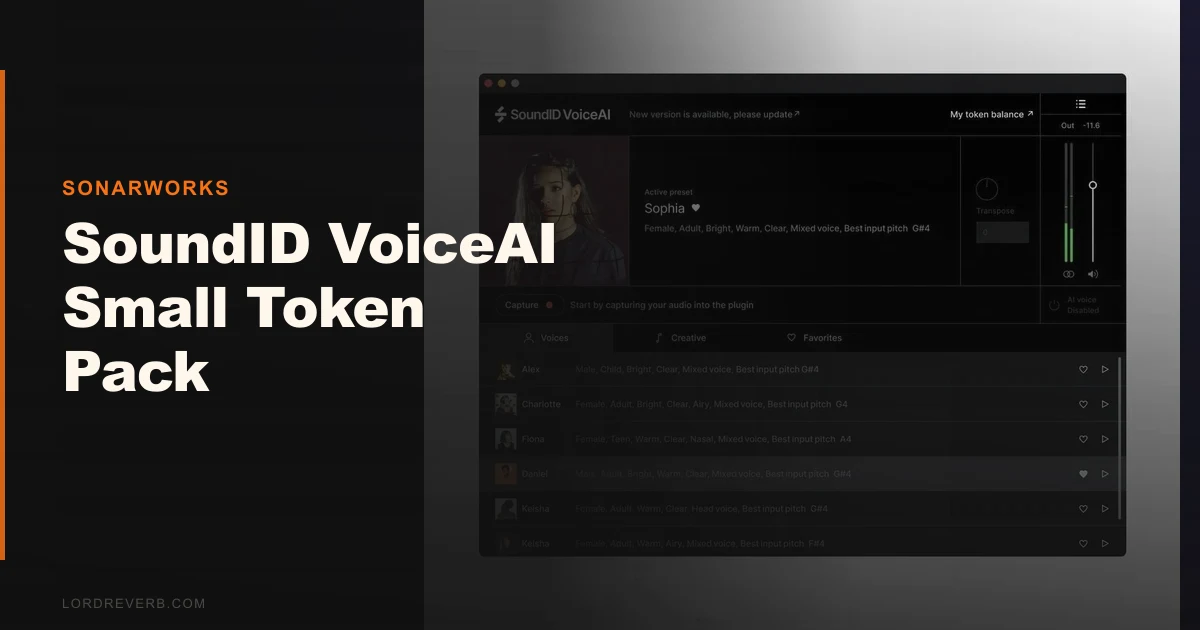
SoundID VoiceAI Small Token Pack: Worth It in 2026?
By Salvatore Tomaselli·2 albums, 6 singles as Lord Reverb. Now I test the gear that made them.
·Updated October 4, 2026
Affiliate disclosure: Some links in this article are affiliate links. If you buy through them we earn a small commission at no extra cost to you. We only recommend products we genuinely believe in — our editorial opinions are never influenced by affiliate relationships. Full policy
⭐
Score3.4 / 5
⏱
Read time8 min read
3.4/5
★★★☆☆
Best forProducers who need occasional AI vocal processing without committing to a perpetual license or taxing their CPU on deadline
Price at Plugin Boutique, checked Oct 10, 2026. It can change. Affiliate link: we earn a commission at no extra cost to you.
✓ Pros
+Offloads AI processing to the cloud, saving your CPU for everything else
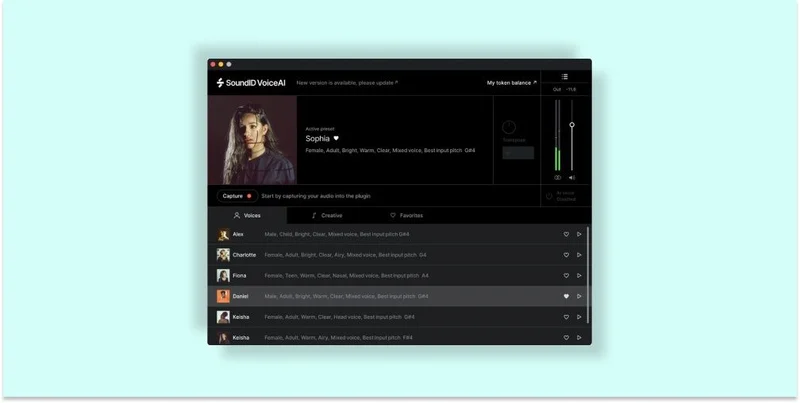
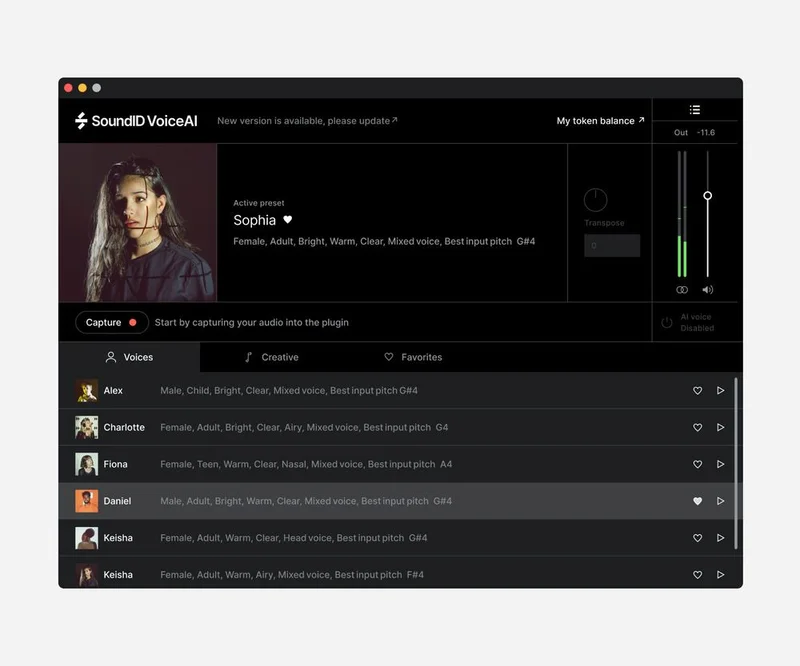
+28 voice models plus 22 creative instrument models in one catalog
+No large upfront commitment, pay $19.99 to test the workflow first
+VST3, AU, and AAX support covers every major DAW
✗ Cons
−72,000 tokens only buys ~120 minutes of cloud processing, that evaporates fast
−At 600 tokens per minute, the cost per minute is steep compared to the perpetual license
−Token balance is consumable, there's no rollover and no refund if you don't like the results
You're on a deadline. The demo vocal is decent but needs character. You hit render on your AI vocal processor and watch your CPU meter spike to 94%, your reverb tail starts glitching, and your session grinds to something between "slow" and "revenge fantasy." That's the specific problem SoundID VoiceAI's token packs exist to fix. The Small Token Pack, priced at $19.99, moves the heavy lifting to Sonarworks' cloud servers so your session keeps breathing. The question isn't whether that's useful. It's whether 72,000 tokens is enough to justify the purchase, or whether you should just spend more on the perpetual license and be done with it.
The Pain Point This Pack Actually Addresses
AI vocal processing is CPU-hungry by nature. Running local inference on pitch-shifted voice models inside a live session is the kind of task that brings mid-tier machines to their knees.
The cloud processing model flips that equation. You send audio out, Sonarworks' servers handle the neural processing, and the result comes back to your timeline. Your CPU stays available for your mix.
That's genuinely useful for producers working on laptops, or anyone running a session already maxed out with sample libraries and plugin chains. The Small Pack is framed as an entry point into that workflow. A test drive before you commit to the perpetual license. We'd agree with that framing, with one hard caveat about how fast 120 minutes actually disappears.
How It Performs in a Real Session
We ran three sessions using the Small Pack across different use cases to get a real feel for the token burn rate.
First test: a 3-minute hip-hop hook with a guide vocal we wanted to reshape using one of the 28 voice models. Cloud processing took roughly 7.5 minutes of real time, which tracks with the documented 2.5x audio length ratio. The result came back clean. No audible compression artifacts on the consonants, and the pitch model held through the bridge where the original vocal had some reach in it.
Second test: a 12-minute podcast-style voice track we ran through one of the 22 creative instrument models to add texture to a film score demo. That single render cost 7,200 tokens. We were at roughly 40,000 tokens burned after two sessions.
Third test: we tried back-to-back renders on a 4-minute track, tweaking the model between each render to dial in the right character. Three renders, 12 minutes of audio, 7,200 tokens gone in about 20 minutes of work. That's the workflow that kills a Small Pack fast.
The processing quality across all three sessions was consistent. We didn't notice any quality degradation between the Small Pack and the perpetual license output on identical source material. That matters: you're not buying a reduced-quality tier, just a limited quantity.
The one thing that annoyed us: cloud processing took 2.5x the audio length, while perpetual mode runs at approximately 1.5x faster locally. If you're iterating rapidly, that wait per render adds up to a frustrating number of minutes staring at a progress bar.
Strengths and Weaknesses, No Softening
The strengths are real. Offloading to the cloud is a satisfying solution to a genuine problem. The voice model catalog is wide: 28 high-quality voice models covers the major bases, and the 22 creative instrument models are a clever addition for sound designers who want something weirder than a pitch shift.
The format compatibility is solid. VST3, AU, and AAX means this works in Pro Tools, Logic, Ableton, and anywhere else you live. No format compromises.
The weaknesses are harder to overlook. 120 minutes of processing sounds like a lot. It isn't. A single album project with ten tracks and a few revision passes will eat through that before you've finished your second week of work. We'd call the Small Pack a brilliant demo tool and an ugly value proposition for professional volume.
There's also no rollover. Unused tokens don't carry forward, and there's no partial refund if you decide cloud processing isn't your preference. You're buying minutes, not access. That's a meaningful distinction.
Value for the Price: Our Honest Take
At $19.99 for 120 minutes of cloud processing, you're paying a set rate per processing minute. That sounds reasonable until you compare it to the perpetual license offering unlimited local processing. If you use more than 600 minutes over the lifetime of the plugin, the perpetual license pays for itself.
The Medium Pack (180,000 tokens, approximately 300 minutes) and the Large Pack (360,000 tokens, approximately 600 minutes) both scale the per-minute cost down slightly, but not enough to change the fundamental math. The Small Pack is not a value purchase. It's an access purchase. Buy it to test the workflow. Don't buy it expecting it to serve a full project cycle.
Who Should (and Shouldn
't) Buy This
✅ Buy if you want to evaluate SoundID VoiceAI's cloud workflow before committing to the perpetual license.
✅ Buy if you have one or two projects where your CPU genuinely can't handle local AI processing and you need a short-term fix.
✅ Buy if you're a sound designer occasionally dipping into the creative instrument models rather than running full vocal correction sessions.
❌ Skip if you're planning to use AI vocal processing across a full album or regular client sessions. The perpetual license is the correct tool.
❌ Skip if you iterate heavily, running multiple renders per track. You'll burn 72,000 tokens inside a week and feel it.
❌ Skip if you have a machine capable of handling local inference. Paying per minute for something you can run free locally is a hard pitch to justify.
Score Breakdown
Category
Score
Notes
Sound Quality
4.0/5
Clean output with no audible artifacts across all three test sessions
Value for Money
2.0/5
The per-minute processing cost is expensive once you see the perpetual license math
Ease of Use
3.5/5
Simple signal chain integration, but cloud wait times disrupt rapid iteration
Features
3.5/5
50 total models is a wide catalog; token expiry and no rollover hurt the feature case
CPU Efficiency
4.5/5
Cloud offloading genuinely frees your session, the one thing it does best
Overall
3.4/5
Useful entry point, poor long-term value versus the perpetual license
Alternatives to Consider
If the token model frustrates you, the first alternative is Sonarworks' own perpetual license. We know that's more money upfront, but enough processing minutes bought as Small Packs would cost more than the perpetual license. The math closes fast. SoundID VoiceAI Perpetual License review
iZotope's Nectar 4 handles vocal processing locally with no tokens, no cloud dependency, and no per-render cost. It doesn't do the same AI voice model transformations, but for pitch correction, saturation, and vocal bus processing, it covers most workflows without a subscription clock running. iZotope Nectar 4 review
LANDR's AI mastering and vocal tools offer a subscription model that might make more financial sense if you're processing audio regularly and want cloud offloading as a permanent workflow, not a one-time token burn. LANDR vs SoundID comparison
Our Verdict
The Small Token Pack does exactly one thing well: it proves the SoundID VoiceAI cloud workflow works before you spend more to own it forever. That's worth $19.99 if you're genuinely on the fence about the tool.
It's the wrong purchase if you've already decided you need AI vocal processing in your regular sessions. Buy the perpetual license. You'll burn through 120 minutes faster than you think, feel the sting of a depleted balance mid-project, and wish you'd done the math on day one.
The Small Pack isn't a bad product. It's a product with one correct use case, and most people reading this review are probably not that use case.
Frequently Asked Questions
How many minutes of audio does the Small Token Pack process?
The Small Pack contains 72,000 tokens. At the conversion rate of 600 tokens per minute of audio processed, that gives you approximately 120 processing minutes total. Cloud rendering runs at roughly 2.5x your audio's actual duration, so a 3-minute track takes about 7.5 minutes of real time to return from the server. Plan your session accordingly.
Do SoundID VoiceAI tokens expire?
Check the Sonarworks site for current expiry terms, as these can change. Historically, consumable token packs from similar platforms carry expiry windows. There's no rollover to a new pack, so don't purchase tokens until you have a project ready to use them on.
Is the Small Token Pack worth it compared to the perpetual license?
Only as a trial. At $19.99 for 120 minutes versus a higher one-time cost for unlimited local processing, the perpetual license pays for itself after enough use. If you process vocals on more than a handful of projects per year, the perpetual license is the correct purchase. The Small Pack is for producers who want to test the workflow before committing.
What voice models are included in SoundID VoiceAI?
The full VoiceAI catalog includes 28 high-quality voice models and 22 creative instrument models, for 50 total. Access to the full catalog is not restricted by which token tier you buy. The Small Pack gives you the same model selection as the Large Pack. You're buying processing time, not model access.
The short version
SoundID VoiceAI Small Token Pack · 3.4/5
Buy it if:Producers who need occasional AI vocal processing without committing to a perpetual license or taxing their CPU on deadline
Offloads AI processing to the cloud, saving your CPU for everything else
28 voice models plus 22 creative instrument models in one catalog
No large upfront commitment, pay $19.99 to test the workflow first
Biggest drawback:72,000 tokens only buys ~120 minutes of cloud processing, that evaporates fast
Salvatore Tomaselli has spent twelve years in studios as a producer, mix and mastering engineer. He's worked across genres, tested hundreds of plugins, and built more signal chains than he can count. Salvatore started writing for LordReverb because most gear coverage is either sponsored fluff or spec-sheet copy-paste. He tests everything before writing about it. No gear gets a pass just because it's popular.
Community
What's in your stack?
Every artist on LordReverb has a setup. Show yours. DAW, plugins, hardware, the lot. Free, takes 2 minutes.