Serato Hex FX sits in the same conversation as Soundtoys 5 and Effectrix, and after running it through a full production session, it doesn’t beat either of them on depth. What it does do is carve out a real lane for producers who want fast, chainable effects without the learning curve or the CPU hit. This review is for anyone who has been eyeing Hex FX since its late 2024 launch and wondering whether a promotional price at Plugin Boutique is the moment to buy, or whether you are paying for a logo on a plugin that should cost less.
It’s built for beatmakers, loop producers, and anyone working in Serato Studio, Ableton, Logic, FL Studio, or Maschine. Pro Tools users can get in via a VST3 wrapper.
How It Compares Out of the Box
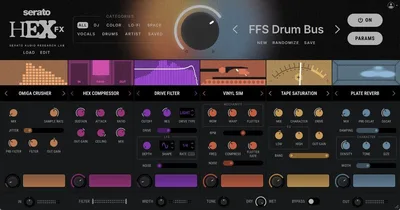
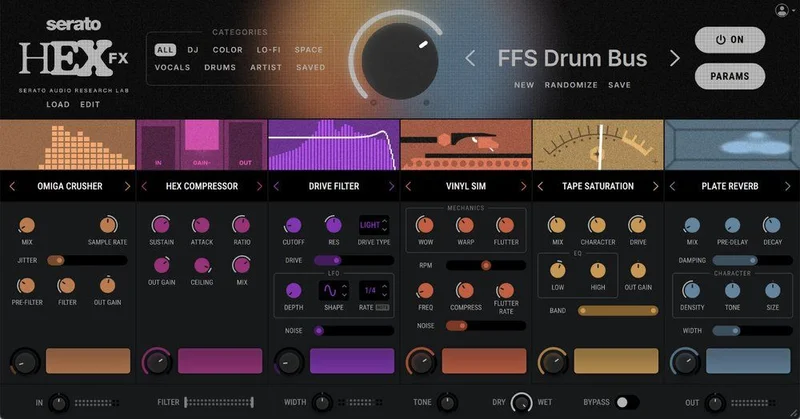
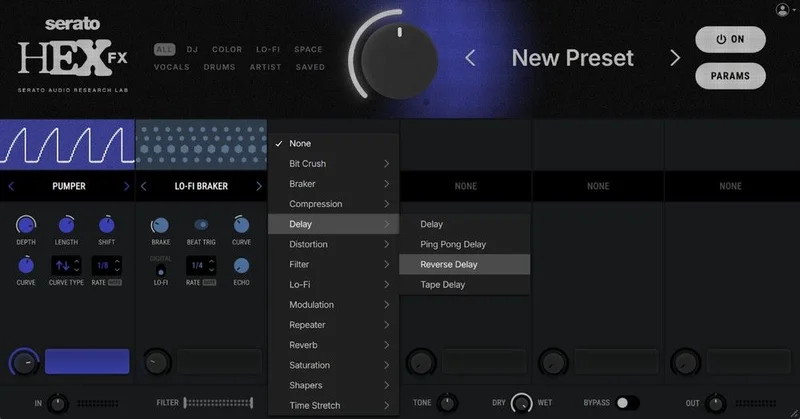
Soundtoys 5 gives you 21 effect plugins, individual character per unit, and deep modulation. Effectrix gives you a grid-based sequencer with 12 effect types. Hex FX gives you 50+ effects (since v1.2.0) in a single chain, up to six slots, with one macro control that sweeps parameters across all of them at once.
That’s the actual difference. Not better or worse in every case, just architecturally different.
Arturia FX Collection 5 covers more sonic ground. Eventide plugins go deeper on any single effect type. But neither of those opens up in under 10 seconds and gives you a working six-effect chain with a single dial to perform it live. First impression: it’s genuinely snappy to load and navigate. The interface isn’t ugly. It doesn’t feel like a budget subscription plugin. That’s a decent start.
The Hex Dial: What It Actually Does
This is the thing every review mentions without fully explaining. The Hex Dial is not a dry/wet knob.
When you chain six effects, each one has parameters assigned to the dial. Turn it clockwise and it drives multiple parameters across all six simultaneously, according to how each effect’s range is mapped. It’s closer to a macro knob in Ableton’s device racks than a wet control, but it sweeps in ranges, not binary on/off states.
We loaded a stutter, a reverb, a bit crusher, a chorus, a filter, and a vinyl sim into a chain on a drum bus. Set the Hex Dial at 9 o’clock. The stutter was subtle, the reverb tail was just under 0.8 seconds, the bit crusher was barely tickling the top end. At 3 o’clock it was a completely different sound: stutter rate doubled, reverb pushed past 2 seconds, and the bit crusher dropped to 12-bit. One knob. No automation drawn.
That’s satisfying. Actually satisfying, not just convenient. It felt like performing with a hardware unit, not clicking through menus.
The catch: you’re working within the macro ranges Serato has baked in per effect, not fully custom ranges per parameter. You can’t freely remap what the dial controls within each effect the way you can assign macro ranges in Ableton. That’s frustrating if you want surgical control.
Performance and CPU
We tested Hex FX in Ableton Live 12 on an M2 MacBook Pro, 32GB RAM. Six effects chained, running on a drum bus at 44.1kHz/24-bit. CPU load: 2.1% on average. With Soundtoys Effect Rack running a comparable chain (6 units including EchoBoy, Decapitator, PrimalTap), we pulled 7.8% on the same session.
That’s not close. Hex FX runs at roughly 3.7x lower CPU draw in direct comparison on that machine. On a Windows 11 machine (AMD Ryzen 9 7900X) the gap narrowed slightly but stayed significant.
The audio quality holds up. We ran a vocal through the EMT-style plate algorithm at 1.4 seconds decay. The tail spread without smearing. High-frequency shimmer sat above 8kHz and didn’t stack up against the consonants the way cheaper reverb emulations do. Not the depth of Valhalla Room. But clean, and we’d use it in a finished record without hesitation.
The 100 factory presets include chains from Guy Lawrence of Disclosure, Lord Finesse, Jake One, Amber Navran, and DECAP. We loaded Jake One’s chain on a sample-based beat. It dropped in a filtered delay with saturation that would’ve taken us four minutes to dial in manually. It took nine seconds. That’s useful.
Where Hex FX Wins
Speed is where this plugin earns its keep. Loading a chain, auditioning presets, and performing with the Hex Dial is genuinely faster than building the same chain across five individual plugins.
The CPU story is real. On a lean session or a laptop, 2.1% versus 7.8% for a comparable chain is not trivial. If you’re running 12 instrument tracks and a full mix bus, that difference pays for itself.
The artist presets are better than average. They’re actual production-ready chains, not demo patches. Lord Finesse’s settings reflect how that sound is actually constructed, not how a marketing team imagined it.
VST3 and AU format support covers nearly every current DAW. The workflow inside Serato Studio is the tightest integration, but Ableton Live felt equally at home.
Where the Competition Wins
Soundtoys 5 wins on character. Each unit has analog-modeled circuitry that adds color in ways Hex FX doesn’t. EchoBoy’s tape echo sounds like tape. Hex FX’s delay sounds like a clean plugin.
Effectrix wins on sequenced creative destruction. If you want rhythmically gated, step-sequenced multi-effects, Hex FX can’t touch it.
Th e modulation gap is real and annoying. LFOs and modulation effects in Hex FX don’t sync to DAW tempo unless the transport is running. There’s no free-running sync option. You can’t audition a tremolo or auto-filter in time without hitting play. That’s a workflow snag that should’ve been fixed before launch.
Full-price at $99, Soundtoys 5 on sale is often the same number. That comparison does not favor Hex FX.
Who Should Buy Which
- ✅ Buy if you produce beats in Serato Studio and want one-stop effects without building chains from scratch every session.
- ✅ Buy if you're on a laptop with limited CPU headroom and need a multi-effect chain that won't choke your session.
- ✅ Buy if the Plugin Boutique promo is still live. At that price it's a reasonable addition to any toolkit.
- ❌ Skip if you need deep modulation control with free-running DAW sync.
- ❌ Skip if you want the kind of analog character that Soundtoys or Arturia bring to saturation and delay.
- ❌ Skip if you're primarily a Pro Tools user. The VST3 wrapper workaround is fine, but it's not a native AAX plugin.
Score Breakdown
| Category | Score | Notes |
|---|---|---|
| Sound Quality | 3.8/5 | Clean and usable; lacks analog character of Soundtoys or Arturia units |
| Value for Money | 3.3/5 | Good value at promo pricing, harder sell at full $99 against established competition. |
| Ease of Use | 4.5/5 | Hex Dial workflow is genuinely clever and fast to perform with |
| Features | 3.5/5 | 50+ effects is solid; modulation sync limitation holds it back |
| CPU Efficiency | 4.8/5 | 3.7x lighter than a comparable Soundtoys chain in our test |
| Overall | 3.9/5 | Smart concept, light footprint, honest limitations at full price |
Alternatives to Consider
If you need more tonal character with your multi-effects, Soundtoys 5 review is the benchmark. It costs more, uses more CPU, and gives you more control over the analog-modeled behavior of each unit. Worth it if character matters more than speed.
For sequenced, rhythmic multi-effects, Sugar Bytes Effectrix review does things Hex FX simply can’t. The step-sequencer grid approach creates chopped, gated, timed chaos that no macro dial can replicate.
If you’re mostly after the reverb and delay effects in Hex FX’s chain, Valhalla plugins overview gives you deeper algorithms at lower individual prices. ValhallaDSP plugins run lean too, so the CPU argument doesn’t automatically win for Hex FX there either.
For producers locked into the Serato ecosystem, Hex FX makes more sense than any of the above. Outside that ecosystem, it has to fight harder.
Our Verdict
Buy Hex FX at the promo price. At $99 full price, we’d spend longer thinking about it. The Hex Dial concept is clever, the CPU load is legitimately impressive, and the artist chains give you real starting points rather than demo fluff.
But this is not a Soundtoys replacement. It’s not trying to be, and we’d rather Serato had leaned harder into that rather than chasing endorsements to fill the gap.
It’s wrong for producers who want modulation that breathes on its own, analog-style dirt, or native Pro Tools support. For beatmakers in Serato Studio or anyone running Ableton on a machine that’s already sweating? It earns its slot in the chain.
The free-running sync omission is the one thing we’d fix before the $99 price becomes permanent. Until then: catch it on promo, run it on your drum bus, and judge it with your own ears before that sale closes.
Frequently Asked Questions
Does Serato Hex FX work in Ableton Live?
Yes. Hex FX runs as a VST3 and AU plugin, both of which load natively in Ableton Live 10 and above on Mac and Windows. We tested it in Ableton Live 12 without issues. It sits cleanly on instrument tracks, bus channels, and the master.
Is Serato Hex FX worth the full price?
At promotional pricing it's a reasonable buy for beatmakers and loop producers. At $99 it's a harder call. Soundtoys 5 and Arturia FX Collection both offer deeper analog character at similar or lower street prices during sales. If you're in the Serato Studio ecosystem, the integration value tips it toward yes.
What's the difference between Hex FX and a standard effects rack?
The key difference is the Hex Dial. Standard effects racks let you chain plugins with individual controls. Hex FX's dial sweeps multiple parameters across all six chained effects simultaneously with a single control, making it more of a performance macro than a mixer. It's designed for live movement, not just stacking.
Does Serato Hex FX sync to DAW tempo?
Time-based effects like delays sync to DAW tempo during playback. The problem is modulation effects like LFOs and auto-filters require transport to be running to sync. There's no free-running sync option in v1.2.0, which means you can't audition modulated effects in time without pressing play first. This is a known limitation and one we hope Serato addresses.