We were laying down a dry rhythm guitar part for a track sitting somewhere between ’80s arena rock and shoegaze when we reached for ToneKnob TriMod. Not because we planned to. Because we needed modulation fast, the session clock was running, and $29 felt like a safe bet.
That moment taught us exactly what ToneKnob TriMod is. It’s a single-knob plugin that blends three modulation effects: flanger, chorus, and phaser. Audified built it to sound like EHX-era hardware, and they built it for speed. If you need to sculpt a precise chorus rate at 0.4Hz with 65% wet signal, close this tab. If you need something that sounds like 1979 without opening a parameter page, keep reading.
First Impressions: A Plugin That Knows What It Is
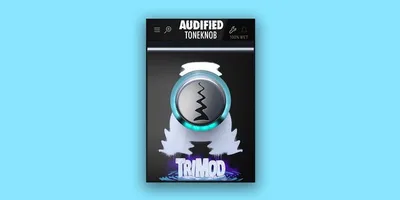
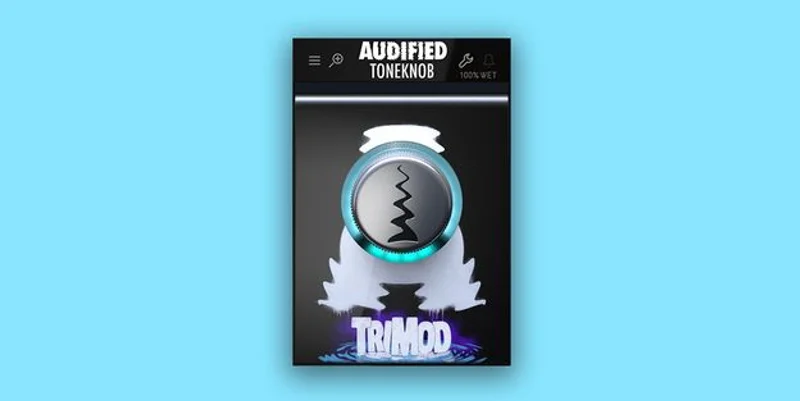
The installer takes under a minute. The UI loads and there’s one knob. One. A clean vintage-styled face with the ToneKnob front and centre.
No rate. No depth. No feedback. No wet/dry blend exposed in the traditional sense.
Our first reaction was frustration. Our second was curiosity. We turned the knob to about 15% and the guitar track immediately got wider, with a gentle swirl that sat behind the pick attack without eating it. That’s a good sign. Subtle modulation that doesn’t smear transients is harder to pull off than it looks.
The plugin feels like a hardware pedal someone threw in a rack. That’s intentional. Audified’s pitch is playability over precision, and they commit to it fully.
Getting It Into a Real Workflow
We dropped TriMod directly on a guitar bus in a rock session and on a synth pad channel in a separate electronic project.
On the guitar bus, the workflow was satisfying. Turn the knob below 20% and you get subtle movement, the kind that makes a double-tracked rhythm part breathe without announcing itself. The modulation sits in the mix rather than floating above it. That’s the behavior you want on a rhythm guitar.
Push past 50% and the character shifts toward something more overt. By 75% you’re in chorus territory that references those wide, slightly warped sounds from late-’70s records. At 100% the blend hits what Audified calls “wild vintage chorus combined with Quad Chorus and Phaser.” It sounds as chaotic as that description suggests.
The friction point is real, though. We hit it fast. When the producer asked for “something a bit faster, more tremolo-like,” we had nowhere to go. The knob controls blend and intensity, not modulation rate. We ended up running a second plugin alongside it just to get rate control.
That’s annoying. Not a dealbreaker for the right session. But annoying.
What It's Genuinely Good At
The blend of all three modulation types in a single sweep is clever. Most plugin developers would sell flanger, chorus, and phaser separately. Audified baked them into one movement, and the crossfade between them sounds musical rather than mechanical.
We tested it on vocals running a lead through at around 25% knob position. The result was a gentle shimmer that added perceived width without the “obviously processed” quality that cheap chorus plugins add. Useful for demos, useful for tracks where the vibe matters more than surgical precision.
On synth pads, TriMod at 60-70% adds a nostalgic wobble that works well for anything targeting ’70s or ’80s textures. Think vintage polysynth, not modern EDM shimmer.
The $29 price point is honest. You’re not getting a modulation workstation. You’re getting a modulation character piece. For $29, the character it delivers earns its place.
The AU, VST3, and AAX support means it runs in every major host. No surprises there.
The Rough Edges
We need to be straight about the limitations here, because they’re structural, not cosmetic.
No published CPU usage specs exist. We couldn’t find latency data. Audified doesn’t list them. That’s a problem for producers running dense sessions who need to know whether a plugin will push them over their CPU ceiling. We ran it in Logic Pro on an M2 MacBook Pro and saw negligible load, but we can’t quote a number with confidence because the manufacturer hasn’t provided one.
The one-knob design is a feature until it isn’t. No rate control means you cannot sync modulation to tempo. No depth control means you can’t make the effect more or less dramatic independently of the blend. No wet/dry knob on the plugin face means you’re working with the host’s wet/dry or nothing.
We also wish the three modulation modes had any individual character adjustment. Even a simple “bright/dark” toggle would extend the plugin’s life considerably.
Who This Is Really For
- ✅ Buy if you want fast, genre-appropriate vintage modulation without opening a parameter page mid-session.
- ✅ Buy if you're targeting guitar tones that reference the '70s through '90s and need a quick character layer on a bus.
- ✅ Buy if the Ultimate Bundle covering six ToneKnob plugins at an introductory price fits your budget and you want the full toolkit.
- ❌ Skip if you need tempo-synced modulation or any rate/depth control.
- ❌ Skip if you're working on modern pop or EDM where modulation needs to be precise and surgically placed.
- ❌ Skip if you already own a full-featured modulation plugin like Soundtoys MicroShift or Effect Rack and only need one thing from it.
Score Breakdown
| Category | Score | Notes |
|---|---|---|
| Sound Quality | 3.5/5 | The blend between flanger, chorus, and phaser sounds musical and cohesive at most knob positions |
| Value for Money | 4.0/5 | $29 is low risk; the bundle pricing is even more defensible |
| Ease of Use | 4.5/5 | One knob. Nothing easier exists in this category. |
| Features | 2.0/5 | No rate, depth, feedback, or wet/dry control is a hard ceiling |
| CPU Efficiency | 3.0/5 | Felt light in testing but developer publishes zero specs, so we can't score this higher |
| Overall | 3.6/5 | Niche but honest; does one thing well, can't do much else |
Alternatives to Consider
If you need modulation with actual parameter control, Soundtoys PhaseMistress review gives you rate, depth, feedback, and drive on a dedicated phaser. More expensive, but you won’t hit its ceiling in two sessions.
For chorus specifically, best chorus plugins for guitar covers options from free to professional that give you tempo sync and wet/dry control. Several of those options cost very little.
If the “one knob, vintage vibe” appeal of TriMod is what you’re after but you want more hardware-accurate character, Eventide MicroPitch review costs more but gives you pitch detuning plus modulation depth with real parameter access.
ToneKnob TriMod is a $29 bet on simplicity. It wins that bet in the right session. We’d grab the Ultimate Bundle at the introductory price before August 2025 if we were building a quick-character toolkit from scratch. But if you already have a modulation plugin that syncs to tempo, TriMod won’t replace it. It’ll just sit next to it.
The honest closing thought: it’s a pedal that got converted into a plugin. Some days that’s exactly what you need.
Frequently Asked Questions
Does ToneKnob TriMod work on instruments other than guitar?
Yes. We tested it on synth pads and vocals and got usable results on both. The modulation blend works best on sustained sounds where the movement has time to develop. Short percussive sounds won't benefit much from it, but pads, leads, and room guitar tracks respond well across the knob's range.
Can you tempo-sync ToneKnob TriMod to your DAW?
No. There is no tempo sync option. The modulation rate is fixed within the plugin's design. If tempo-synced modulation is a workflow requirement for you, this plugin won't meet that need, and we'd point you toward a more full-featured option.
Is the ToneKnob Ultimate Bundle worth it over buying TriMod alone?
At the introductory price, the bundle covering six ToneKnob plugins works out to a low per-plugin cost, which is a reasonable deal if you need the variety. Once the price rises, the value calculation is tighter. Check Audified's site for the current bundle status before the August 2025 deadline passes.
What DAWs are compatible with ToneKnob TriMod?
TriMod ships in VST3, AU, and AAX formats, covering Logic Pro, Pro Tools, Ableton Live, Cubase, Studio One, and most other major DAWs on both Mac and Windows. We'd verify compatibility with your specific DAW version on Audified's site before purchasing, particularly if you're running an older Pro Tools version with AAX requirements.