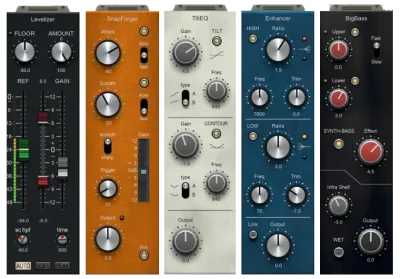
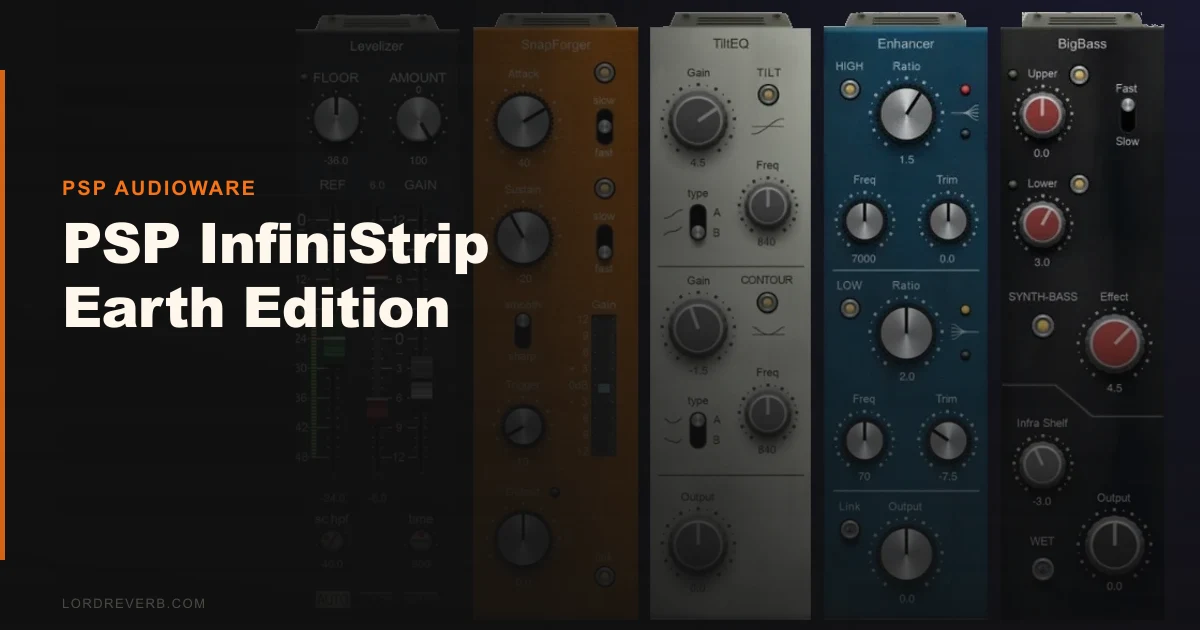
We were three hours into a drum-replacement session when we dropped PSP InfiniStrip Earth Edition across the overhead bus. The new TiltEQ module was already loaded. We swept the tilt point to around 3.5kHz, tilted about 1.5dB toward the highs, and the overheads stopped fighting the room in a way that two previous EQ attempts hadn’t managed. No latency spike in the DAW buffer readout. No compensation delay creeping into the transient timing. Just a usable sound, immediately.
That moment is what this plugin is about. PSP InfiniStrip Earth Edition, v1.4.0, released early 2026, is a modular channel strip with 30+ processors across 8 module categories. It targets engineers who track and mix in the same project and can’t afford latency in either mode. The intro price holds until January 11th, 2026, and existing InfiniStrip users pay less to upgrade.
What PSP Earth Edition Actually Is (and Isn't)
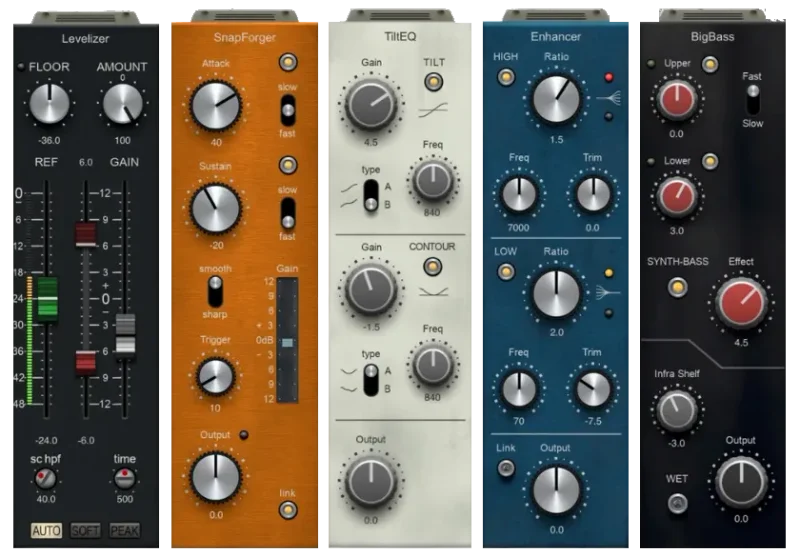
InfiniStrip isn’t a console emulation. It’s not trying to sound like an API 1608 or an SSL 4000. It’s a modular rack where you configure seven dedicated module slots plus two flexible insert points from a pool of 30+ processors. Earth Edition adds five new modules: Levelizer, SnapForger, TiltEQ, Enhancer, and BigBass.
That’s the selling point. It’s also the trap.
If you want something that “just sounds like the desk,” this isn’t it. InfiniStrip rewards engineers who know what problem they’re solving before they open the plugin. It won’t make decisions for you. Treat it like a utility belt, not a character box, and it earns its place. Treat it like a one-click tone machine and you’ll be frustrated inside of ten minutes.
It’s also not a replacement for dedicated character plugins like PSP BussPressor on a drum bus. It coexists with them.
Living With PSP InfiniStrip Earth Edition Day-to-Day
Setup takes longer than it should if you’re coming in cold. The iLok activation is mandatory, no iLok app, no plugin. That’s annoying in 2026. Get it done before a session. Don’t find out at 11pm.
Once you’re past that, the first honest session is disorienting. The module selector requires you to think in categories before you grab a processor. Gate category, then which gate. Compressor category, then which algorithm. The 250+ presets from global engineers are genuinely useful here. We loaded a preset from a known broadcast engineer and used it as a reference map to understand how the modules were meant to stack before building our own chains.
By session four, the workflow clicked. We were loading Levelizer for quick level management before the compressor, using SnapForger to hit transients without touching the main compressor ratio, and dropping TiltEQ at the end of the chain instead of reaching for a separate EQ plugin. That’s three modules doing work that used to require three separate plugins.
The BigBass module is the one we weren’t expecting to love. We ran a DI bass track through it, set the low-frequency enhancement around 80Hz, and the fundamental sat differently in the mix. Not louder. More present. Harmonically, it added content in the 160Hz range that the DI alone was missing. We kept it on every bass session after that.
Zero-latency held throughout. We ran five instances on a session with 48 active tracks and a 64-sample buffer. The DAW showed no added latency in the plugin delay compensation readout. Slate VMR, our previous go-to for similar modular work, shows latency in PDC-sensitive chains depending on the module combination. InfiniStrip doesn’t. That matters for tracking.
The Real Trade-Offs
The modular design is the best and worst thing about InfiniStrip.
Best: you build exactly the signal chain you need. No wasted processing. No modules eating CPU while sitting idle. Worst: you have to know what you need. Engineers early in their career will open this and feel lost. The learning curve isn’t steep, but it’s real, and the interface doesn’t hold your hand.
CPU is fine per instance. It’s not a light plugin, but it’s not the kind of drain you’d flag in a TDR bundle comparison. Stack five or six instances in a dense session and you’ll start monitoring the CPU meter. We’d budget roughly 2-3% CPU per instance on an M-series Mac with a medium-complexity module chain.
The iLok dependency is a hard policy choice by PSP. We understand why. We still find it frustrating in 2026 when iLok hardware can be a session-stopper.
The new Earth Edition modules are good, not brilliant across the board. BigBass and TiltEQ earn their keep immediately. Levelizer is clever but overlaps with what a well-set compressor already does. Enhancer is useful but subtle enough that you’ll wonder if it’s working.
How It Sits Against the Field
Slate Virtual Mix Rack is the obvious comparison. VMR has more third-party module developers feeding into it, which means more character options. InfiniStrip has better latency performance. If zero-latency tracking is your priority, InfiniStrip wins. If you want the SSL G-Bus or a Neve 1073 tone baked in, VMR
‘s module library is deeper right now.
PSP’s own Studio Modular Collection covers different ground entirely. Synthesis versus signal processing. Not a direct competitor.
FabFilter Pro-Q 3 and Pro-C 2 combined will beat InfiniStrip on pure precision and visual feedback, but they’re not zero-latency in every mode and they cost more together than Earth Edition at intro price.
InfiniStrip’s value case is the combination of modular flexibility, zero-latency operation, and a 30+ processor library in one license. No single competitor bundles all three at this price.
The Real Verdict
At $199, PSP InfiniStrip Earth Edition is worth it for engineers who track and mix in the same session and want a single modular strip that doesn’t introduce latency anywhere in the chain. The five new Earth Edition modules, especially BigBass and TiltEQ, add genuine range.
Skip it if you’re looking for console character. Skip it if you’re new enough that you’d rather a plugin make choices for you. And absolutely skip it if iLok is a dealbreaker in your setup.
For everyone else: buy it before January 11th, 2026. The gap between intro and regular price is real.
Score Breakdown
| Category | Score | Notes |
|---|---|---|
| Sound Quality | 4.0/5 | BigBass and TiltEQ are standouts; Enhancer is too subtle to consistently justify its slot |
| Value for Money | 4.5/5 | The intro price for 30+ processors and five new modules is a fair deal |
| Ease of Use | 3.5/5 | Modular workflow rewards experienced engineers; punishes anyone without a plan |
| Features | 4.0/5 | Seven slots, two inserts, 250+ presets, zero-latency throughout covers most tracking and mixing needs |
| CPU Efficiency | 3.5/5 | Manageable per instance; stacks up on dense sessions with multiple channels |
| Overall | 4.1/5 | Serious tool for engineers who track and mix. Not a plug-and-play solution. |
Alternatives to Consider
Slate Virtual Mix Rack, better third-party module variety, more console character options. Loses on latency performance. If tone comes first and tracking isn't a concern, VMR is worth comparing. The current price is shown in the buy box on this page.
FabFilter Pro-Q 3 + Pro-C 2, unmatched precision and visual feedback for EQ and compression. More expensive combined, and not zero-latency in every mode. Works best for mix engineers who don't need an all-in-one strip. Channel strip plugins compared
TDR Channel Strip Bundle, strong value, clean processing, lighter CPU footprint. Less modular flexibility than InfiniStrip. Better entry point if you want something that works without a learning period. TDR Channel Strip Bundle review
If you're deep in the PSP world already, the upgrade from base InfiniStrip is the easiest decision in this article. Done. If you're new to the plugin, the intro window is the only time this calculation makes sense. After January 11th, 2026, weigh it at $199 against the alternatives above before committing.
Frequently Asked Questions
What's new in PSP InfiniStrip Earth Edition compared to the original InfiniStrip?
Earth Edition adds five new modules at v1.4.0: Levelizer, SnapForger, TiltEQ, Enhancer, and BigBass. It also ships with 250+ presets from working engineers worldwide. Existing InfiniStrip users access the upgrade at a lower price. The core architecture, including seven dedicated module slots and two flexible insert points across 30+ total processors, carries over from the base version.
Does PSP InfiniStrip Earth Edition work without an iLok dongle?
iLok activation is required, but you don't need the physical USB dongle if you use iLok License Manager with cloud licensing enabled. You do need an iLok account. There's no dongle-free or serial-only option. Plan accordingly before a session.
Is PSP InfiniStrip Earth Edition good for beginners?
Honest answer: not really. The modular system rewards engineers who know what problem they're solving before opening the plugin. The 250+ presets help flatten the learning curve, but the interface doesn't guide you toward decisions the way simpler strips do. We'd recommend at least 6-12 months of active mixing before this plugin makes full sense.
How does PSP InfiniStrip Earth Edition handle CPU on a larger session?
Per instance, it's manageable. We tracked roughly 2-3% CPU usage per instance on an M-series Mac with a medium-complexity module chain at a 64-sample buffer. On a session with 48 tracks and five active instances, the total CPU load was noticeable but not session-stopping. Heavy users with 10+ instances running simultaneously should monitor CPU closely and consider freezing tracks where InfiniStrip is doing static, non-automated processing.