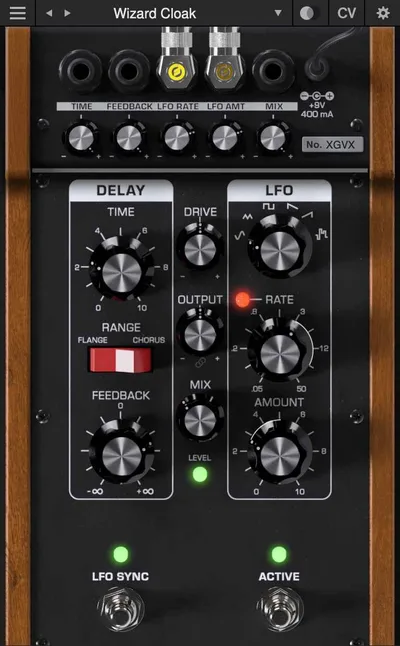
Most chorus plugins sound like they're apologising for existing. They thin out your signal, sit awkwardly on top of the mix, and add shimmer without weight. The Moogerfooger MF-108S Cluster Flux is the plugin you reach for when you're tired of that. It's a software recreation of Moog's MF-108 hardware pedal, built around a dual-range Bucket Brigade Device delay line and a multi-waveform LFO, and it does chorus, flanging, and vibrato with a personality most modern plugins skip entirely. At $79, it's not cheap for a single effect. But it's aimed squarely at producers who've already tried the cheap options and found them unsatisfying.
What's Wrong With Every Other Chorus Plugin?
The problem isn't that chorus is hard to make. It's that digital chorus is too clean. You get perfect modulation curves, no noise floor, no interaction between parameters. Everything behaves exactly as expected. That predictability is also why it sounds sterile.
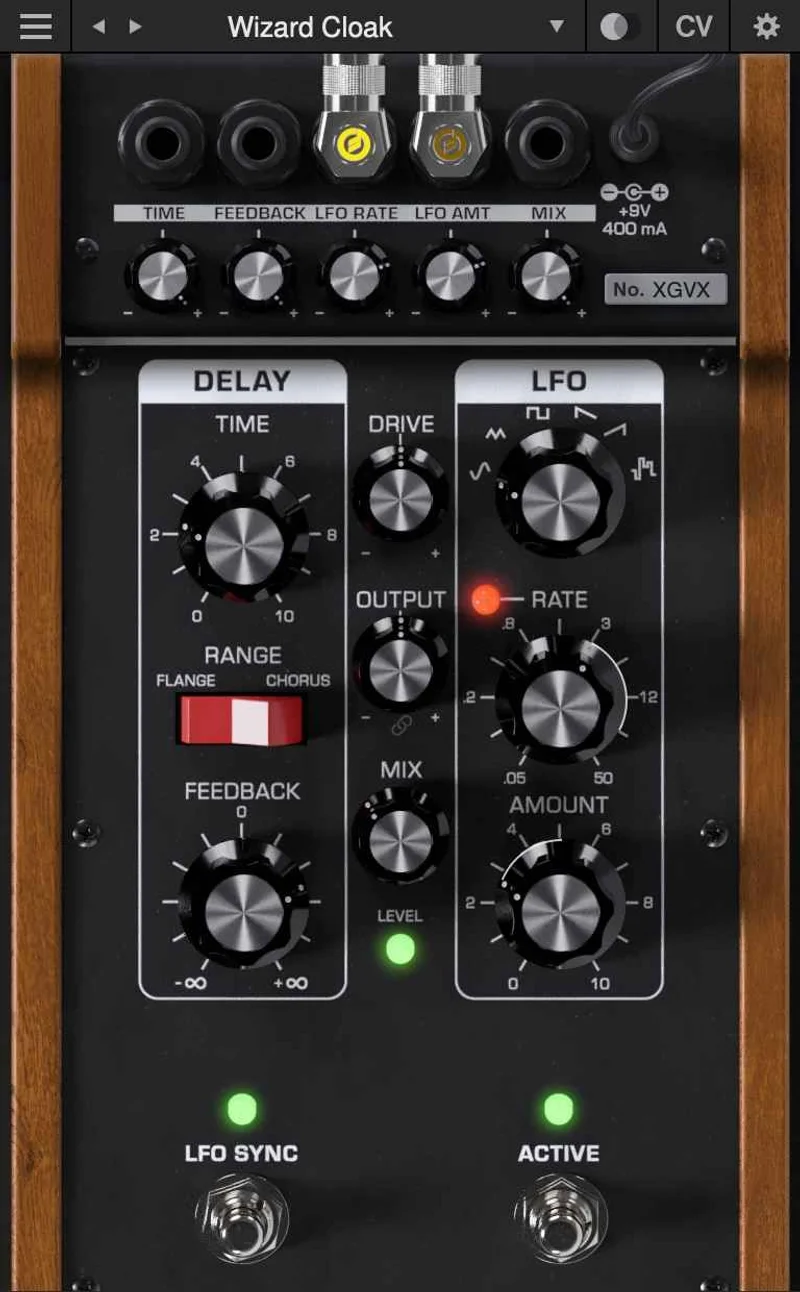
The original MF-108 hardware used two Panasonic BBD chips that are no longer in production. That architecture had a specific character: the way delay time interacts with LFO rate, the way drive colours the signal, the organic messiness of it. Reviewers consistently report that the Cluster Flux adds weight and smoothness even at subtle settings, not just shimmer on top. That's the gap this plugin fills.
If you've been stacking three chorus plugins trying to get density and still end up with something thin, that's exactly the frustration this addresses.
How the MF-108S Actually Performs
The plugin is built on the same architecture as the 2011 hardware: a BBD delay line designed for very short delay times, modulated by a multi-waveform LFO. That combination covers chorus, flanging, and vibrato from one signal chain. No menu-switching between modes. You move the controls.
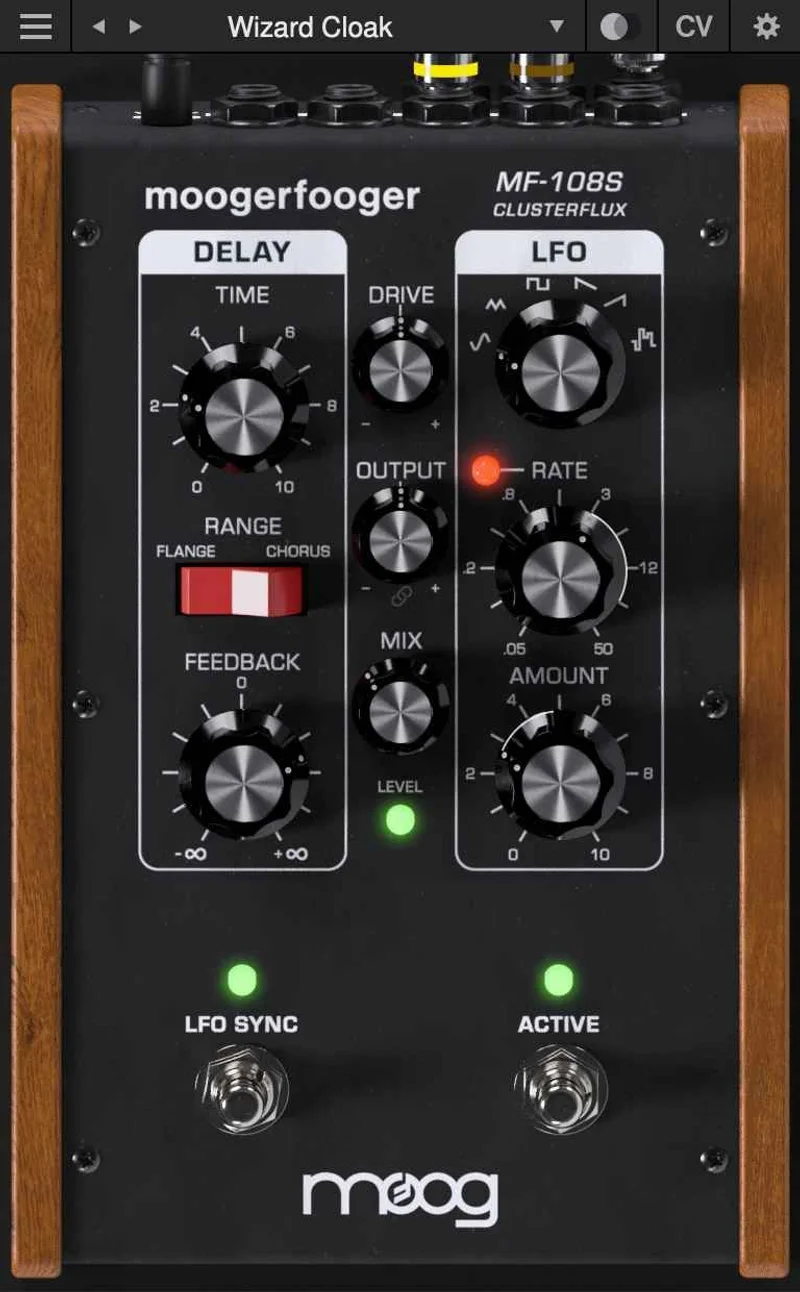
Reviewers report the chorus side is addictive without being intrusive at moderate settings. Push harder and you get the flanger's swirls and what users describe as "boings," the kind of metallic whomp that makes a synth pad feel alive. The drive control adds colour that reviewers call warm, meaning harmonically dense without artificial brightness.
The developer says the plugin captures the organic way parameters interact. That's a marketing claim, but it lines up with what users report: the sweet spots are sound-specific and require dialling in. That's not a flaw. It's the point. This isn't a set-and-forget plugin. It's something you work.
CV interconnectivity is where the MF-108S gets genuinely interesting for production work. You can run multiple instances and have one modulate the parameters of another, across your whole project in any supported DAW. Pair it with another Moogerfooger plugin and the routing becomes a modular-style system inside your session. Digital attenuverters on every CV input give you fine control over modulation depth. That's a workflow you don't get from a standard chorus pedal emulation.
The iOS version exists at a much lower price point if you want to experiment before committing to the full plugin. Same architecture, smaller investment. Worth knowing.
Strengths and Weaknesses
The strengths are real. Reviewers report the plugin controls are well-calibrated and that finding sweet spots for modulation is easier than on the original hardware. That's a legitimate upgrade over the pedal. All parameters automate, presets save and recall properly, and it runs in VST3, AU, and AAX. The coverage across Mac and Windows is solid.
Now the weaknesses. And these are real too.
The stereo output has a known phase issue. Multiple users recommend running it in mono to avoid problems. That's annoying on a plugin that advertises stereo functionality.
At severe settings, users report excessive hissing and a sound that's overly dark and muddy. Push too hard and you lose the pleasant weight; you get mush instead. There's also a reported behaviour where, with LFO Amount cranked and no audio playing, each LFO cycle produces an audible thud. That's ugly in a quiet session.
The hardware version has a spontaneous reboot issue at high voltages. That's hardware-specific, not plugin-specific, but worth knowing if you're deciding between formats.
Is $79 Worth It?
Compared to generic chorus plugins? Yes. Compared to the full Moogerfooger bundle? That's where you need to think harder.
If you want one analog-character modulation plugin with unusual CV routing, $79 is fair. The BBD architecture, the LFO flexibility, the automation and preset system all justify it for a specialist tool. Sound on Sound critics flagged the price, and that's a fair criticism. This is not an everyday bread-and-butter effect at this cost. It's a character plugin.
For producers who buy one or two plugins a year for specific textures, it earns its place. For producers who need a chorus on everything, there are cheaper ways to solve that problem.
Who Should Buy This, and Who Shouldn't
- ✅ Buy if you want analog chorus/flanger character in the box and standard digital emulations have left you cold
- ✅ Buy if you're already using other Moogerfooger plugins and want to build CV modulation chains between instances
- ✅ Buy if you work with synths, guitars, or voice and want modulation that adds weight rather than just shimmer
- ❌ Skip if you need a transparent, clean chorus for surgical mixing work
- ❌ Skip if stereo modulation effects are core to your sound and you can't work around the phase issues
- ❌ Skip if you want a plug-and-play effect with obvious presets and no learning curve
Specs & Technical Details
| Developer | Moog |
| Price | $79 |
| Plugin Format | VST3 / AU / AAX |
| OS Support | macOS 11.7 or newer (Intel / Apple Silicon) / Windows 10 or newer (64-bit) |
| Activation | N/A |
| CPU Usage | N/A |
| Trial Available | N/A |
| Version Reviewed | MF-108S |
Score Breakdown
| Category | Score | Notes |
|---|---|---|
| Sound Quality | 4.5/5 | BBD architecture delivers analog character reviewers consistently praise; muddy at extreme settings |
| Value for Money | 3.5/5 | Fair for what it does, but a specialist tool at a specialist price |
| Ease of Use | 3.5/5 | Controls are well-calibrated but sweet spots are sound-specific; not plug-and-play |
| Features | 4.5/5 | CV interconnectivity, multi-waveform LFO, full automation, and sidechain are genuinely useful |
| CPU Efficiency | 3.5/5 | No official figures published; check at your session size |
| Overall | 4.2/5 | A love-it-or-skip-it plugin: brilliant for analog modulation character, frustrating at the edges |
Alternatives to Consider
If the phase issues or learning curve put you off, a few alternatives are worth a look.
Soundtoys MicroShift is a different flavour of modulation, built for width and thickness rather than BBD character. modulation plugin roundup It's simpler, faster to dial in, and less opinionated. Good if you want modulation as a utility rather than a centrepiece.
Cableguys FilterShaper XL takes the LFO-driven modulation concept in a completely different direction. FilterShaper XL review If you want deep LFO routing without the analog emulation angle, it's worth comparing.
And if you want a Moog filter without the modulation complexity, the VEQ-HLF filter plugin review is a cleaner, more surgical option for tonal shaping without the BBD architecture.
None of these do exactly what the Cluster Flux does. That's the point. If the specific BBD character is what you're after, there's no clean substitute.
Final Verdict
Load the MF-108S onto a dry synth pad and slowly bring up the LFO Amount. That's where you'll either love this plugin or decide it's not for you. The modulation breathes in a way that clean digital chorus doesn't. Users report that it adds weight and smoothness even at subtle settings, and that's what you're paying for.
But run it stereo without checking the phase relationship and you'll spend an hour wondering why your mix sounds hollow. Push the drive and LFO together past sensible limits and you'll hit the hissing, muddy territory users flag. These aren't dealbreakers. They're the cost of working with something that has a real personality.
At $79, it's a satisfying buy for producers who work with synthesis and want modulation that contributes something beyond shimmer. It's the wrong pick if you want chorus as a set-and-forget polish pass.
This is a plugin for people who find ordinary chorus boring. If that's you, it'll earn its place in your signal chain. If you just need a quick modulation fix, honestly? Skip it.
Related reviews: FilterShaper XL
Frequently Asked Questions
What's the difference between the MF-108S plugin and the MF-108M hardware?
The MF-108M is the original hardware pedal, which used two Panasonic BBD chips that are no longer manufactured. The MF-108S is the plugin recreation, designed to capture the same character while adding features like CV interconnectivity between instances, full parameter automation, preset management, and stereo functionality. The plugin also adds digital attenuverters on every CV input, which the hardware doesn't have. If you want the physical unit, expect to hunt the second-hand market.
Does the Moogerfooger MF-108S work with Apple Silicon Macs?
Yes. The plugin supports macOS 11.7 or newer on both Intel and Apple Silicon systems. On Windows, it requires Windows 10 or newer on a 64-bit Intel system. It runs in VST3, AU, and AAX formats, so it covers most major DAWs.
What does CV interconnectivity actually mean in a plugin context?
In the Moogerfooger plugin range, CV interconnectivity means one instance of a Moogerfooger plugin can modulate the parameters of another instance running elsewhere in your project. It works across your DAW session, not just within a single channel. That's a modular-style routing setup inside the box. Digital attenuverters on every CV input let you control exactly how much modulation passes through.
Is the MF-108S good for guitar, or is it mainly a synth tool?
The developer designed it for guitar, voice, synthesizer, and other audio sources. Reviewers report the flanger side works well on guitar, delivering the swirls and metallic character associated with classic BBD flanging. The chorus side is reported as addictive and unobtrusive at moderate settings on most sources. It's a flexible tool, not synth-only. That said, the learning curve applies regardless of source material.