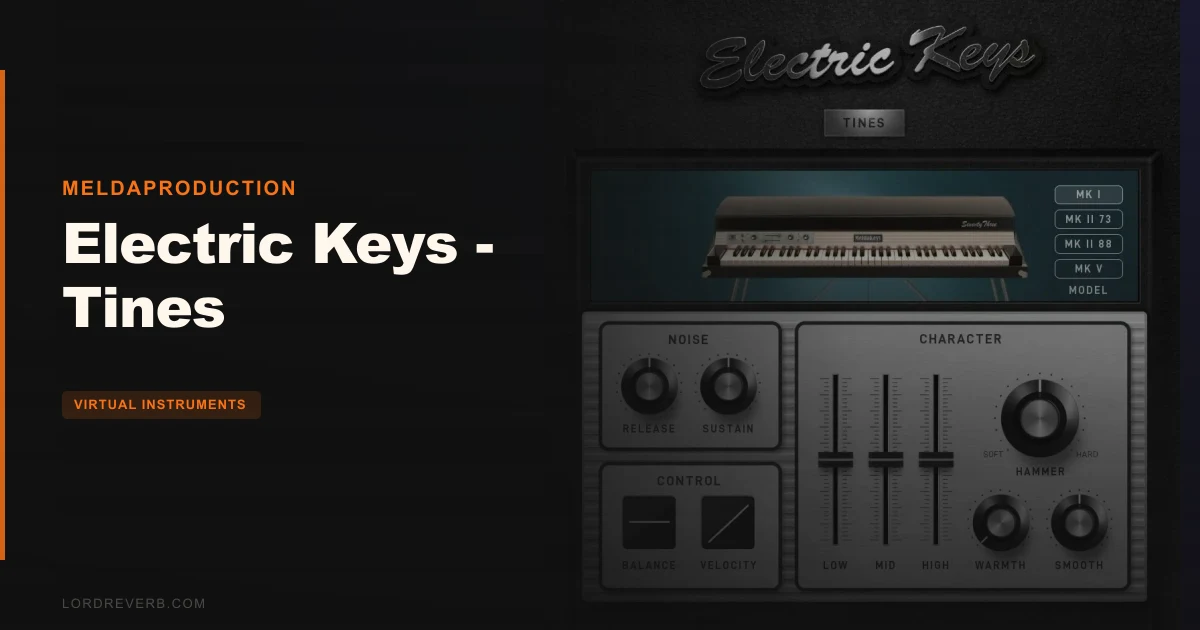
Electric Keys Tines is a strong electric piano instrument that punches above its weight in sound quality, but the installation experience is genuinely frustrating and two bugs will hit you before you play your first chord. At $74 it's already compelling, and for MSoundFactory owners it's free, which changes the conversation entirely. It's built for producers who want MK I, MK II 73, MK II 88, and MK V Rhodes tones in a single, effects-ready package without paying Keyscape money.
Quick verdict: This is one of the better-sounding electric piano instruments at this price point, and owners consistently rank it above expectations once they get past setup. Score: 4.2/5. At $74 for non-MSoundFactory owners, the value is real. For MSoundFactory owners, it's a no-brainer pickup. The right-pan stereo issue and the sustain-pedal quirk are annoying and need a fix before a session, but neither kills the instrument's core usefulness.
Who Ends Up Regretting This
The buyer who regrets Electric Keys Tines is almost always someone who didn't know it runs inside MSoundFactory, not as a standalone plugin. You open your DAW expecting to load it like any other instrument and instead you're downloading Melda libraries you never asked for. That's a frustrating fifteen minutes before you've heard a single note.
Keyboard players who rely heavily on the sustain pedal during live sessions will also run into trouble fast. Repeated notes mute improperly when the sustain is held, which is not how most keyboard libraries work. If your playing style leans on that pedal constantly, that inconsistency will quickly become a problem.
If you're a Logic user who just wants something better than Logic's built-in Rhodes and you've never touched MSoundFactory, there's a setup cost here beyond the price tag. It's not huge, but it's real.
What Owners Actually Say
The praise from owners is consistent and specific. Several report it ranking above Keyscape when effects are disabled, which is a bold claim for an instrument at this price. The word that comes up repeatedly is "non-intrusive." The character of the samples suits background parts, songwriting sessions, and Stevie Wonder or Joe Sample-style playing without fighting the mix.
Owners comparing it to Logic's native Rhodes describe it as significantly better in both sound and visuals. That's not hard to believe, but it's still a meaningful upgrade for producers who've been defaulting to what ships with the DAW.
The complaints cluster around two things. First, installation friction. The automatic download of unused Melda libraries alongside the instrument bothers people. Second, the right-panning stereo issue shows up across different DAWs and hardware setups, which suggests it's not a one-off configuration problem. Owners flag it as a consistent out-of-the-box default. Annoying, and fixable manually, but not ideal.
What You Actually Get
Four electric piano models: MK I, MK II 73, MK II 88, and MK V. Multi-layer sampling with release and pedal noises included. The Character section gives you Hammer hardness, Warmth, and Smooth controls to shape tone before the signal hits the effects rack.
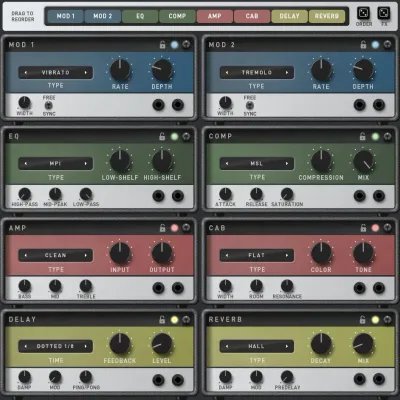
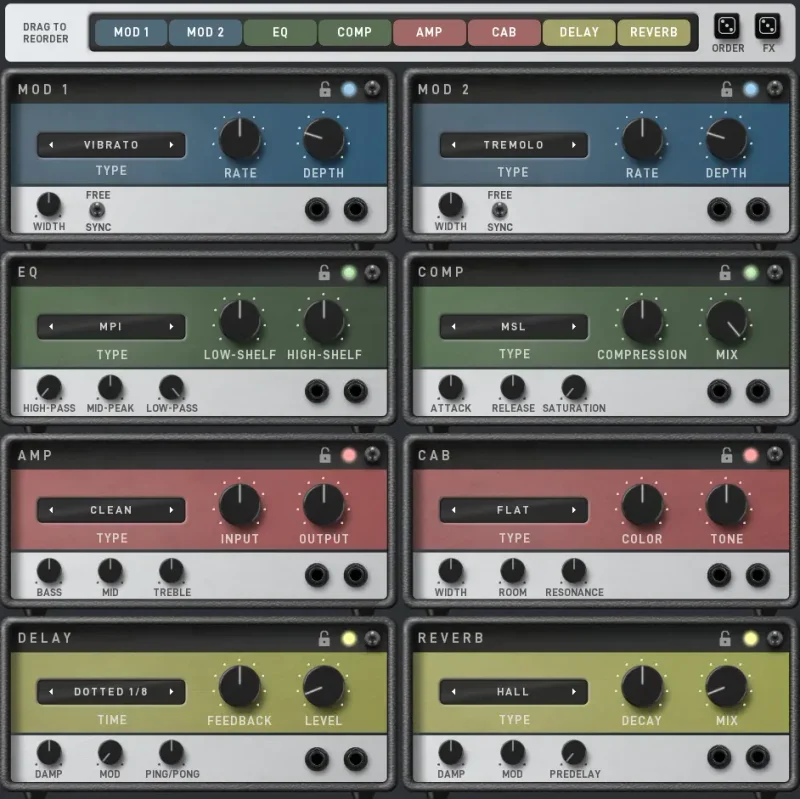
The effects rack holds eight processors: Mod 1 and Mod 2 (Vibrato, Tremolo, Wah-Wah, Rotary), EQ, Compressor, Amp, Cab, Delay, and Reverb. You drag and drop to reorder them. Each effect has two main knobs with deeper fine-tuning underneath. The Globals tab handles master tuning and pitch, with a locking feature that holds your preferred settings while you browse presets.
Polyphony runs up to unlimited voices. The instrument is described as CPU- and RAM-efficient. It runs in VST, VST3, AU, and AAX formats. And it requires MSoundFactory as its wrapper. That's the limit that catches people off guard.
The Smarter Route
If you already own MSoundFactory, there's no smarter route. You pick this up for free and the conversation ends there.
If you don't own MSoundFactory, the comparison that comes up most often is Keyscape. Keyscape is a full-featured competing library with its own Rhodes content. Owners of Electric Keys Tines say Tines sounds better with effects off, which is a real data point. But Keyscape runs standalone without a wrapper dependency, which matters if the MSoundFactory installation flow bothers you.
Logic's native Rhodes is the other reference point. It's free if you're already on Logic, but owners who've compared them directly call Tines a clear step up in both sound and interface. If you're on Logic and you've been living with the built-in option, Tines at $74 is worth considering.
Buy or Wait?
Buy it if you already own MSoundFactory. No hesitation. Free, sounds great, done.
Buy it at $74 if you're a producer who wants serious Rhodes tones and you're willing to sort the stereo pan default and the sustain-pedal quirk before your session. Both are fixable. Neither is a dealbreaker for studio work.
Wait, or skip it, if you're a live keyboard player who needs a reliable sustain pedal workflow out of the box. That inconsistency isn't acceptable on stage. And skip it if the idea of a wrapper requirement genuinely bothers you more than the sound quality satisfies you.
Specs & Technical Details
| Developer | MeldaProduction |
| Price | $74 |
| Plugin Format | VST / VST3 / AU / AAX |
| OS Support | Mac / Windows |
| Activation | N/A |
| CPU Usage | Light (reported as CPU- and RAM-efficient) |
| Trial Available | N/A |
| Version Reviewed | N/A |
Score Breakdown
| Category | Score | Notes |
|---|---|---|
| Sound Quality | 4.5/5 | Owners rank it above Keyscape with effects off; four distinct models add real depth |
| Value for Money | 4.5/5 | Free for MSoundFactory owners; strong quality-to-price ratio at full cost too |
| Ease of Use | 3.5/5 | Interface is clean once loaded; wrapper dependency and stereo default hurt the first experience |
| Features | 4.0/5 | Eight-module drag-and-drop effects rack, four piano models, Character controls, Globals locking |
| CPU Efficiency | 4.5/5 | Reported as light on both CPU and RAM across setups |
| Overall | 4.2/5 | A brilliant-sounding instrument with a clunky install and two fixable but real bugs |
Alternatives to Consider
Keyscape (Spectrasonics) is the full-featured competing Rhodes library that comes up most often alongside Tines. With effects disabled, Tines ranks above Keyscape in sample quality. Keyscape runs without a wrapper dependency, which matters if the MSoundFactory ecosystem feels like overhead. Check current pricing; it sits in a significantly higher bracket.
Logic's Native Rhodes is worth naming because it's the instrument most Logic producers are defaulting to before they find Tines. It's built in and costs nothing extra. Owners report Tines delivers significantly better sound and visuals than Logic's built-in Rhodes. If you're on Logic and you're happy with your current Rhodes sound, stay put. If it's been bugging you, Tines is the fix.
If you're hunting for something with no wrapper requirement at all and you want a straightforward install, check what else lives in your current DAW's stock library before spending anything. You might already have something workable. If you don't, Tines is the more satisfying long-term answer at this price point.
Electric Keys Tines has a handful of setup headaches that feel bigger than they are and a sustain-pedal behavior that could frustrate a live player. But the sample quality is the thing that keeps owners from returning it. Owners report the non-intrusive character suits songwriting and appeals to those seeking classic Stevie Wonder and Joe Sample aesthetics. For MSoundFactory owners, picking it up is an obvious call. For everyone else, $74 buys you something that sounds like a much more expensive instrument, as long as you're ready to spend a few minutes fixing what ships out of the box.
Frequently Asked Questions
Does Electric Keys Tines work as a standalone plugin?
No. It requires MSoundFactory as a wrapper to operate. You can't load it directly as a standalone instrument without MSoundFactory installed. This is the most common source of installation frustration owners report. If you already have MSoundFactory full or LE, the instrument is free and the wrapper is already there.
What electric piano models are included in Electric Keys Tines?
Four models: MK I, MK II 73, MK II 88, and MK V. Each is built from a multi-layer sample library that includes release and pedal noises. The Character section lets you adjust Hammer hardness, Warmth, and Smooth for each model to match your playing style or production context.
Is the stereo panning issue in Electric Keys Tines a hardware problem or a bug?
Owners report the instrument defaults to right-panning across different DAWs and hardware setups, which points to a default configuration issue in the instrument rather than a hardware-specific problem. It's fixable manually once you know to look for it, but it's not ideal behavior out of the box. Check your stereo output before you start a session.
How does Electric Keys Tines compare to Keyscape for Rhodes sounds?
Owners who have used both report that Tines ranks above Keyscape when effects are disabled, which is a meaningful claim at this price difference. Keyscape has a broader instrument library and no wrapper dependency. If you only need electric piano sounds and you're already in the MSoundFactory ecosystem, Tines is the smarter, cheaper choice. If you want a one-stop multi-instrument library without additional software requirements, Keyscape is worth the investment.