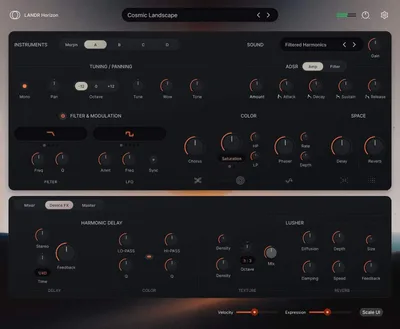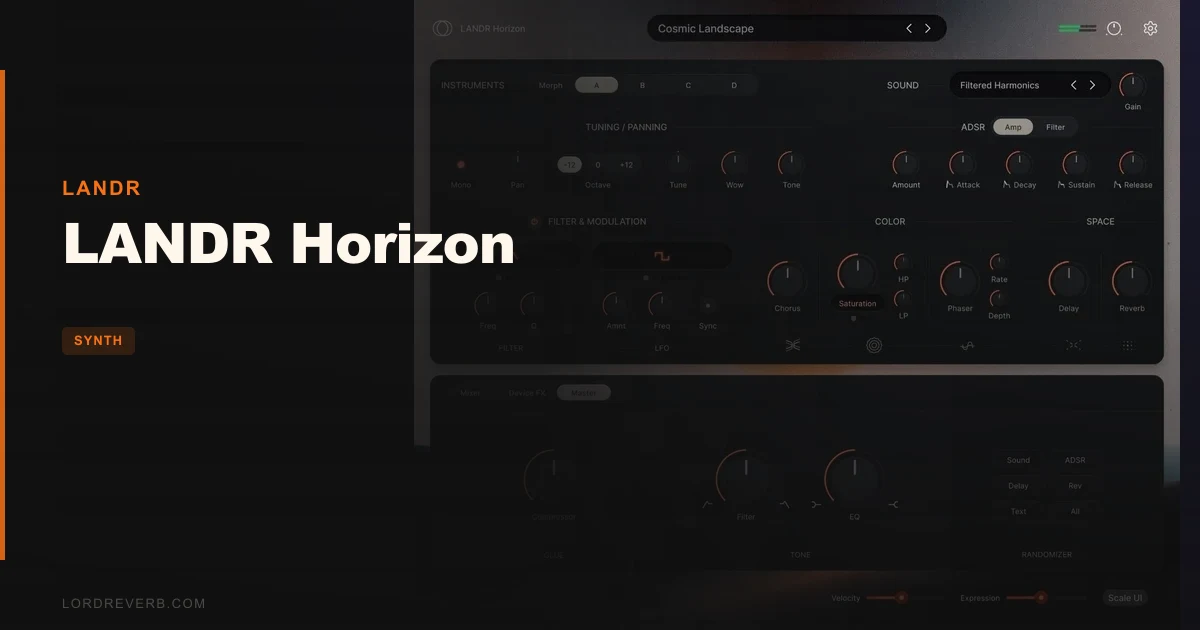
LANDR Horizon gets stacked against Spitfire LABS and Output Arcade almost every time someone searches for it, and that comparison is mostly unfair to all three. Horizon isn't a loop engine or a free tier sampler. It's a hybrid cinematic string instrument built on bowed cellos and analog synthesis, priced at $79, and aimed squarely at producers who want orchestral emotional weight without building a Kontakt library from scratch. We tested it on trailer cues and underscore beds. Our verdict: it earns its place in the right signal chain, but it's not for everyone, and LANDR's own branding muddles what it actually does.
How It Compares Out of the Box
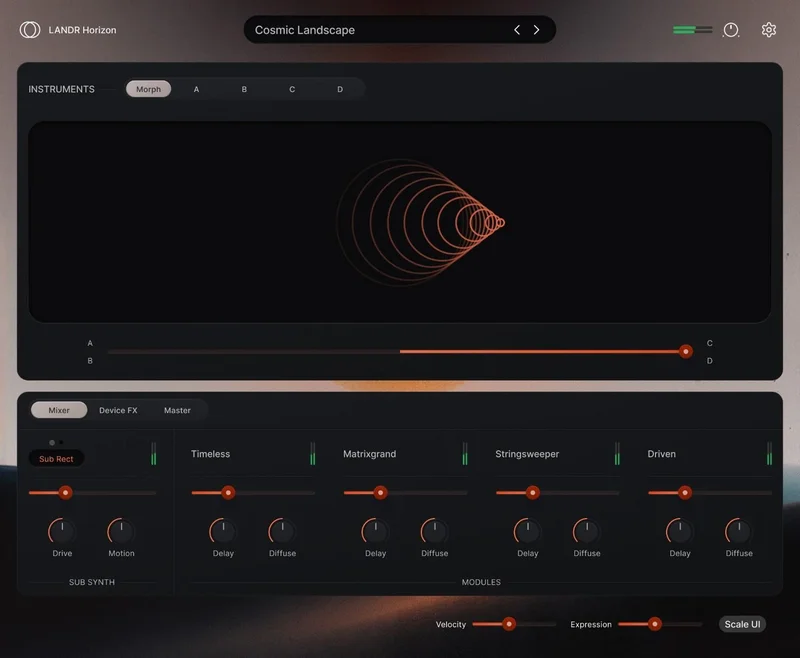
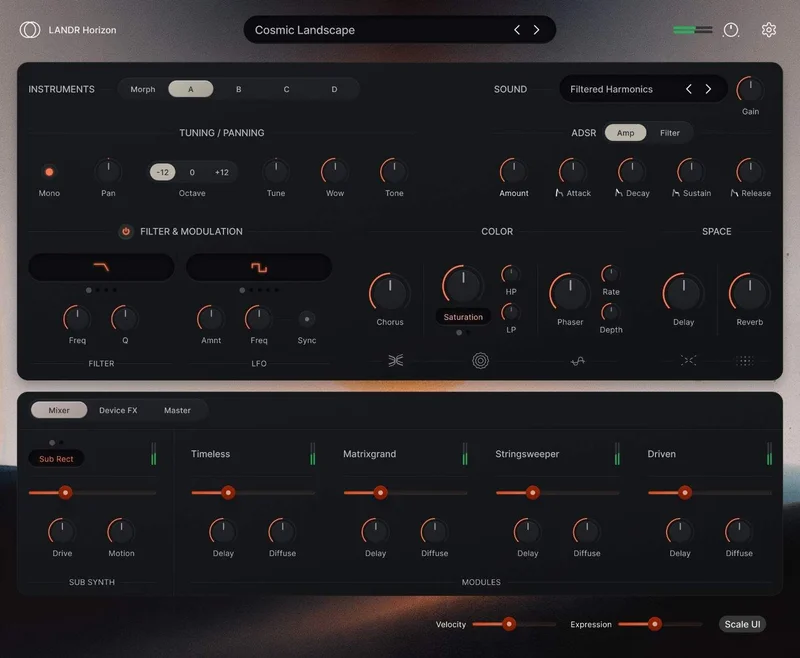
Pull up Spitfire LABS Strings next to Horizon and the difference is immediate. LABS gives you one layer of sampled string color. Horizon gives you four simultaneously, with a Morph controller running across the center of the interface.
We loaded the "Dark Hollow" preset first. Push the Morph left and you get something close to a low-register cello section in a dead room. Push it right and the same patch opens into a bright, room-filling swell with analog shimmer underneath. That's a performance gesture, not just a filter sweep.
Compared to Arturia MiniFreq V's synth architecture, Horizon is narrower in scope but deeper in its specific lane. MiniFreak V gives you synthesis. Horizon gives you scored emotion. Different tools for different sessions.
Performance Deep Dive
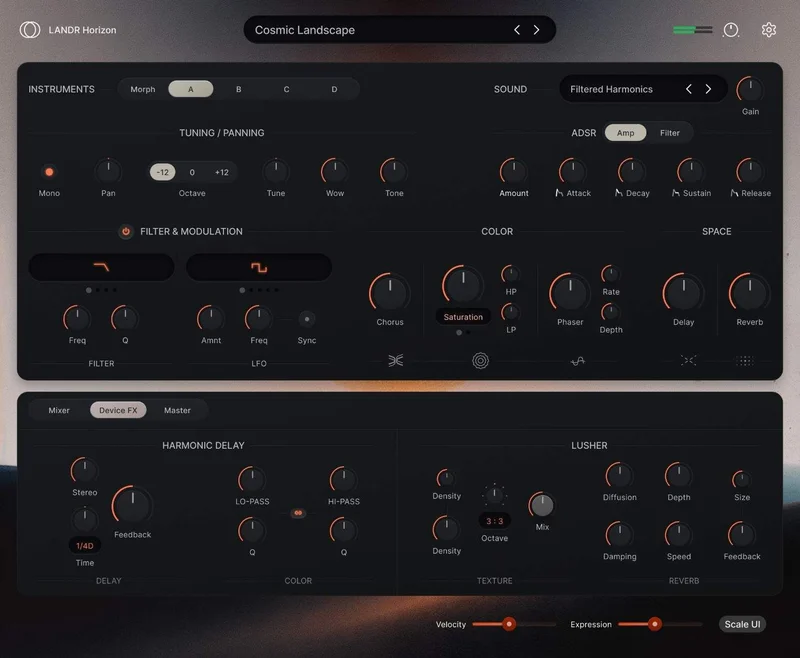
The 4-layer hybrid engine is the technical core here. You're stacking bowed acoustic sources, captured from real cellos, against analog synthesis layers. The 30 custom sound sources mean you're not just triggering samples. You're shaping tone with the Global Tone and Filter knob, which shifts frequency character across the full patch in one move.
We ran a mid-range cello layer through the Glue Compressor at moderate settings while stacking two synthetic pads beneath it. No clipping. The dynamics processor genuinely keeps massive textures from turning into a wall of noise, which is a real problem with dense cinematic plugins.
The Lusher and Harmonic Delay processors handle the 3D placement. Pull a pad into the distance, and the Harmonic Delay adds subtle pitch-related reflections rather than straight slap-back. The Randomizer is a useful panic button: one click and you've got a spatial configuration you wouldn't have dialed in manually. We found it satisfying to use mid-session when a cue felt flat.
CPU load stays reasonable. It runs native VST3, AU, and AAX without Kontakt or a sampler host, which keeps your instance count predictable. Compare this to AudioThing's SX1000 approach if CPU-per-track matters in your sessions.
Where It Wins
The Morph controller is genuinely clever. Most cinematic instruments separate their dark and light textures into different presets or keyswitches. Horizon puts the transition on a single bipolar control you can automate in real time. A 16-bar underscore cue can breathe and shift mood with one recorded gesture.
We love that it runs standalone. No Kontakt license required. At $79, you're not paying a sampler tax on top of the instrument price, which matters when you're stacking multiple cinematic layers in a film cue session.
The 150 factory presets are well-curated. We didn't hit a wall of unusable fillers. Most landed somewhere between "usable immediately" and "needs one knob of Morph adjustment." That's a better hit rate than we expected. Chromaphone 3's 100-preset question gives useful context on what a good preset library actually looks like.
Where the Competition Wins
Dedicated convolution reverb plugins beat Horizon's spatial tools for precision. If you're placing a string section in a specific hall and need the reverb tail to behave like a real room at a specific distance, you'll want a separate reverb on the bus. Horizon's Lusher is evocative, not precise.
Reviewers report frustration with LANDR's broader subscription branding. The Horizon plugin sits inside an ecosystem that also sells AI mastering and distribution, and users keep running into confusion about what they're actually buying versus subscribing to. The pricing structure across LANDR's products is genuinely annoying to parse.
There's also no human engineer loop here. You get no feedback, no contextual discussion about how this patch fits your mix. That's fine if you know what you're doing. It's a real gap if you're scoring for the first time and want guidance beyond 150 presets. The SEM V comparison is useful here for understanding where guided synthesis tools outperform preset-first designs.
Who Should Buy Which
- ✅ Buy if you score trailers, games, or film and need a single instrument that covers underscore to aggressive cello without a sampler library.
- ✅ Buy if you want real-time Morph automation built into your performance workflow rather than keyswitch articulations.
- ✅ Buy if you're running a lean setup and need a Kontakt-free cinematic string engine at $79.
- ❌ Skip if you need forensic hall-placement reverb. Add a proper convolution reverb instead.
- ❌ Skip if you're expecting LANDR's AI mastering intelligence inside the instrument. It's not there. Different product entirely.
- ❌ Skip if you make hip-hop, house, or any genre where cinematic string textures are off-brief. ABX3 is a better fit for that territory
Specs & Technical Details
| Developer | LANDR |
| Price | $79 |
| Plugin Format | VST3 / AU / AAX |
| OS Support | Mac / Windows |
| Activation | LANDR account / online activation |
| CPU Usage | Medium |
| Trial Available | N/A |
| Version Reviewed | 1.0 |
Score Breakdown
| Category | Score | Notes |
|---|---|---|
| Sound Quality | 4.5/5 | Bowed cello recordings are rich and the hybrid layering produces genuine orchestral weight |
| Value for Money | 4.0/5 | Strong at $79 with 150 presets and no sampler required, but pricing confusion around LANDR's wider products costs a point |
| Ease of Use | 4.0/5 | Morph controller lowers the learning curve significantly; spatial tools need more hands-on time |
| Features | 3.5/5 | 4-layer engine and built-in Glue Compressor are smart inclusions; spatial toolset is limited by dedicated reverb standards |
| CPU Efficiency | 4.0/5 | Native VST3/AU/AAX with no Kontakt overhead keeps resource usage predictable |
| Overall | 4.0/5 | A focused, well-executed cinematic string instrument that delivers on its specific promise |
Alternatives to Consider
Spitfire LABS (free tier): If your budget is zero and you need one quality string layer, LABS is hard to argue with. It's a single layer versus Horizon's four, and there's no Morph controller, but it's free and it works.
Arturia SEM V: Not a cinematic instrument, but if you want analog synthesis character to layer under your strings from a different source, SEM V gives you focused analog warmth with serious historical credibility.
AudioThing SX1000: Built for a completely different aesthetic, but worth knowing about if your "cinematic" leans industrial or experimental rather than orchestral.
If you're scoring drama or trailers regularly and want something faster to perform than a full orchestral library, Horizon at $79 is the right call. It's not a replacement for a deep sample library when you need section articulations and true legato transitions. That's the honest caveat. But for producers who need emotional weight on a deadline without scripting a sampler from scratch, this sits in the mix with less effort than anything else in this price range we've tested.
Buy it if you write cues. Skip it if you don't.
Related reviews: Attack 3 Review
Frequently Asked Questions
Does LANDR Horizon require a LANDR subscription to use?
Horizon is a standalone plugin purchase, not a subscription-only product. You'll need a LANDR account for activation, but you're buying the instrument outright at $79. It does not require an active LANDR mastering or distribution subscription to function after purchase.
Does LANDR Horizon need Kontakt to run?
No. Horizon runs natively in VST3, AU, and AAX formats without Kontakt or any third-party sampler host. This is one of its practical advantages over competing orchestral libraries that require a full Kontakt license to operate.
What is the Morph controller in LANDR Horizon?
The Morph controller is a central bipolar dial that shifts the entire sonic character of a patch in real time. Move it right for bright, open textures. Move it left for dark, hollow, moody tones. You can automate it in your DAW to let the sound evolve across a cue without switching presets or keyswitches.
Is LANDR Horizon good for beginners to film scoring?
It's accessible, but it's not a tutorial. The 150 presets and single Morph controller lower the barrier to getting usable cinematic sounds fast. However, there's no contextual feedback or mix guidance built in, so reviewers note it works best for producers who already have some sense of where strings and pads sit in a mix.