Perfect Plate XL sits in the same conversation as Valhalla Plate ($50) and the plate mode inside FabFilter Pro-R 2 ($199), and after three weeks in our sessions, here's the short version: it beats Valhalla on creative range, it doesn't beat Pro-R 2 on transparency, and at $69 it earns its place in the middle. This review is for producers who want a plate that does classic vocal shimmer and genuinely weird sound design without switching plugins.
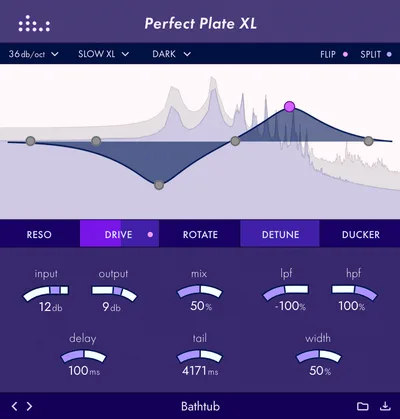
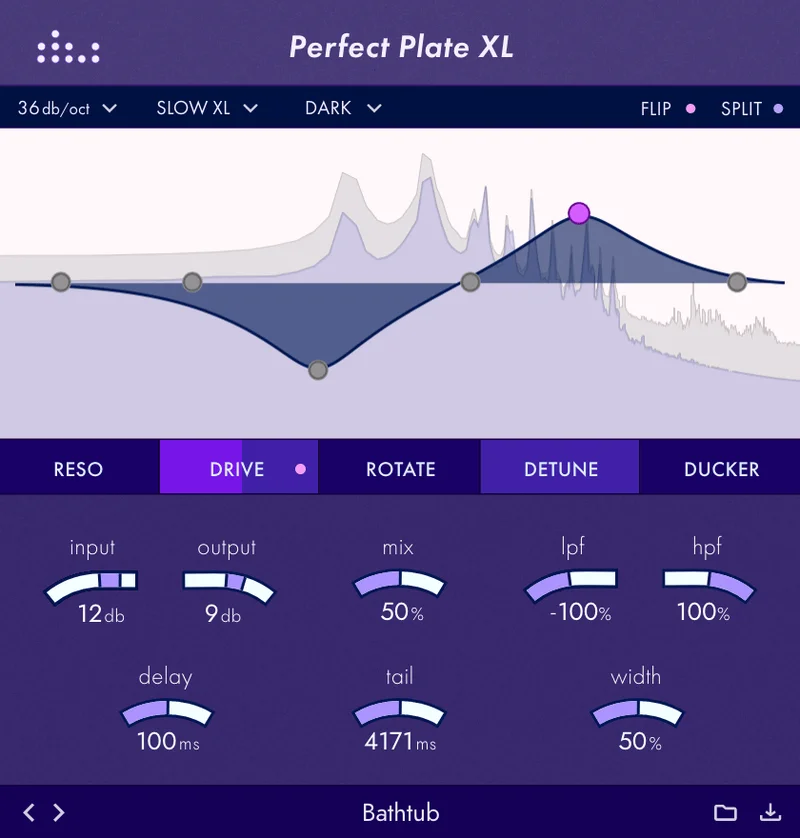
The XL in the name matters. This isn't just a plate emulator with a pretty GUI. It's a plate with five effect modules, a six-band EQ graph, and damping slope control at 12, 24, 36, and 48dB per octave. That's a specific toolkit, not a vague "creative mode."
It's built for producers and engineers who work across multiple genres. Pop vocal mixing, drum room design, cinematic FX, lo-fi sound design. One plugin, genuinely different results across all four.
How It Compares Out of the Box
First-launch impressions: the interface is cleaner than Valhalla Plate's parameter-dense layout, and less clinical than Pro-R 2's metering-forward design. You get a central EQ graph, the standard controls (pre-delay, stereo width, high/low pass filter, mix, tail), and three effect modules underneath: RESO, DRIVE, and ROTATE.
Valhalla Plate has more reverb algorithm variety. That's a real difference. Denise focuses the whole plugin on a single TXVerb algorithm tuned specifically for plate behaviour, where Valhalla gives you six modes. If algorithm variety is what you need, Valhalla wins before you even open the manual.
FabFilter Pro-R 2 is a different product category at this point. It's a room-and-hall specialist with a plate mode. Perfect Plate XL is a plate specialist with effects. Comparing them directly is like comparing a telecaster to a les paul. Different tools, different jobs.
For reverb plugin comparisons across price tiers, Perfect Plate XL is one of the few sub-$100 options with proper damping slope control.
Performance Deep Dive
We opened a session with a close-miked snare: tight, dry, hitting at around -12dBFS peak. We loaded Perfect Plate XL on a send bus, set pre-delay to 18ms, tail length short (roughly 0.8 seconds by feel, Denise doesn't display exact seconds), and pushed the damping slope to 48dB per octave. The result was a sharp, fast tail that didn't cloud the kit. Satisfying.
Then we flipped it. Long tail, 12dB damping slope, slow dampening speed. The same snare turned into something that sounds like it was recorded in a corrugated steel corridor. We didn't reach for RESO at all. The core plate algorithm did the heavy lifting.
The six-band EQ graph is where we spent most of our time. We pulled 3dB at 400Hz with a moderate Q to clear the boxiness, and added a gentle 1.5dB shelf above 8kHz to keep the air. That control, inside the reverb itself, means we skipped an extra EQ insert entirely.
CPU load: Denise doesn't publish a specific figure, and our DAW meter showed moderate consumption, roughly comparable to Valhalla Plate on a single instance. We'd treat it as a medium-load plugin. Don't stack 12 instances without checking your CPU budget first.
The ROTATE effect deserves its own mention. Host-synced vibrato, tremolo, filtering, and panning combined into one module. We put a mono vocal pad through it with ROTATE engaged at quarter-note sync. The stereo field started moving. It wasn't subtle. It was the kind of effect you'd normally build with three separate plugins on a chain.
Where It Wins
The damping slope options are the feature we wish every plate emulator had. Going from 12dB per octave (smooth, gradual high-frequency roll-off) to 48dB per octave (sharp, almost filter-like cutoff) changes the character of the tail dramatically. No other plate at this price gives you that control.
The mono-to-stereo conversion works without phase issues. We tested it on a mono vocal track. The stereo spread was wide and stable in mono sum. That's not a given with cheaper reverbs. Some spread your sound and collapse it entirely when you fold to mono. This one holds.
RESO is genuinely clever. It adds metallic resonance to the tail. On drums, it creates a pitched, metallic ring. Annoying if you dial too much in. Brilliant when you keep it subtle at around 20-30% and layer it under a synth pad.
We love that the EQ graph adjusts the reverb's colour specifically, not the dry signal. That distinction matters for clean gain staging.
Where the Competition Wins
Valhalla Plate's six algorithm modes give you more starting points. If you're doing a quick mix and want to audition five different plate characters fast, Valhalla's preset switching is faster than tweaking Denise's parameters from scratch. Speed of workflow matters in professional sessions.
FabFilter Pro-R 2's reverb tail is more transparent on classical and acoustic material. Perfect Plate XL has a coloured character that works brilliantly for rock, pop, and electronic music. On solo piano or acoustic guitar, that colour can feel l
Neither the standard Perfect Plate pricing nor bundle pricing from Denise is clearly documented anywhere we found. If you want to upgrade from Classic to XL later, or buy both, we couldn't find the math. That's frustrating.
For a different take on creative reverb at a similar price point, our Hippie Elephant review covers a plugin that goes even further into experimental territory.
Who Should Buy Which
- ✅ Buy Perfect Plate XL if you produce pop, rock, or electronic music and want classic plate tones plus sound design tools in one $69 plugin.
- ✅ Buy it if you're running mono sources that need wide, stable stereo reverb without phase problems.
- ✅ Buy it if damping slope control matters to your workflow and you're tired of plates with only one filter curve option.
- ❌ Skip it if you need algorithm variety fast. Valhalla Plate gives you six modes for $19 less.
- ❌ Skip it if you're mixing classical or acoustic music and need a truly transparent plate. The colour will fight you.
- ❌ Skip it if CPU headroom is tight and you need a verified, published load spec before committing.
Score Breakdown
| Category | Score | Notes |
|---|---|---|
| Sound Quality | 4.5/5 | TXVerb plate algorithm is convincing and characterful; slightly coloured for critical acoustic work |
| Value for Money | 4.0/5 | $69 is fair for this feature set; bundle pricing opacity is a mild irritant |
| Ease of Use | 4.0/5 | Core controls are intuitive; EQ graph and effect modules have a learning curve |
| Features | 4.5/5 | Damping slope options, six-band EQ, RESO/DRIVE/ROTATE, and mono-to-stereo all punch above the price |
| CPU Efficiency | 3.5/5 | Moderate load based on our testing; no published spec makes planning harder |
| Overall | 4.2/5 | A strong plate emulator with genuine creative depth, let down only by a lack of CPU transparency |
Alternatives to Consider
Valhalla Plate ($50): Less creative range, more algorithm options. Faster for quick mix decisions. See how Valhalla fits into a broader reverb setup before committing to either.
Klevgrand Kleverb: A different vibe entirely: room-focused, simpler controls, lower price. Our Kleverb review covers whether it's enough for serious mixing work.
Apogee Clearmountain's Spaces: Bob Clearmountain's own reverb collection, including plate impulses. Much more transparent. Much less flexible for sound design. Read our Clearmountain's Spaces review if transparency matters more than character to you.
IK Multimedia CSR Room Reverb: Worth considering if you need plate and room in one bundle. Our CSR Room Reverb review breaks down the value case.
Perfect Plate XL costs $69, has a free trial, and earns its price for anyone mixing pop, rock, or electronic music. It's wrong for you if you need algorithmic variety fast or if you're working on classical material that can't tolerate a coloured reverb tail. Use the trial. Load it on a snare send. Push the damping slope to 48dB and pull it back to 12dB. If that difference excites you, you already know the answer.
Frequently Asked Questions
Is Perfect Plate XL worth the upgrade from the standard Perfect Plate?
If you only need classic plate tones for vocals and drums, the standard Perfect Plate may cover you. The XL adds the six-band EQ graph, the four damping slope options, and the RESO, DRIVE, and ROTATE effects modules. If any of those features appear in your workflow regularly, the XL is the version to buy. We couldn't find clear pricing on the standard version to give you the exact upgrade cost, so check Denise Audio's site directly.
Does Perfect Plate XL work on Apple Silicon Macs?
Yes. Denise confirms native Apple Silicon support. It runs as a 64-bit plugin on macOS 10.7 and newer. No Rosetta translation layer needed on M-series machines.
What's the TXVerb algorithm and why does it matter?
TXVerb is Denise Audio's proprietary reverb engine, shared with their Perfect Room plugin. It's designed to model natural reverb behaviour with low artefact content. The same engine powering a room reverb that engineers rate highly is doing the work inside Perfect Plate XL. That shared technology base is part of why the plate tail sounds convincing rather than synthetic.
Can Perfect Plate XL be used as a send/bus effect or only as an insert?
It works on both. Denise Audio specifically recommends it for bus use, and the mix wheel makes send/return routing natural. Set the mix to 100% wet on a reverb bus and dial in the return level from your channel fader. The mono-to-stereo conversion is particularly useful in this configuration for narrow source signals.