When metal producers compare the MLC S_Zero 93 to Neural DSP's Archetype series, they're asking the right question. This review is going to land here: the S_Zero 93 is a narrower, more specialised tool than Neural DSP's broader artist plugins, and for symphonic black metal and extreme metal production specifically, that narrowness is the point. At $99, it undercuts the physical MLC S_Zero 93 amp by a ridiculous margin and adds per-channel tube switching the hardware can't do. If you're building crushing, articulate metal guitar tones in the box, read on. If you're looking for a one-box solution for jazz, pop, or blues, look elsewhere right now.
How Does It Compare Out of the Box?
Neural DSP is the obvious reference point. Their Archetype plugins arrive with broader amp coverage, slicker UIs, and years of independent benchmarking. The S_Zero 93 arrives from a smaller developer, Bogren Digital, with one clear identity: extreme metal.
First impressions favour Neural DSP on visual polish. The S_Zero 93's interface is functional rather than flashy. But load up Channel 2 with a palm mute and that comparison shifts fast.
The gain structure here feels genuinely organic rather than processed. Where some competing simulators iron out the looseness in high-gain tones, the S_Zero 93 lets the distortion breathe. That's a deliberate design choice from Jens Bogren, the producer behind the plugin's IRDX speaker technology.
Out of the box, the included presets from Silenoz, Behemoth members, Ihshan of Emperor, Mayhem, Napalm Death, and Enslaved give you a real roadmap. These aren't generic factory presets. They're built by people who have toured on tones like this.
Performance Deep Dive
The three-channel architecture is the foundation. Channel 1 is clean. Not pristine and clinical, but thick and wide. It holds up when you layer ambient effects, and the built-in pan control keeps stereo placement intact when you run delay and reverb simultaneously.
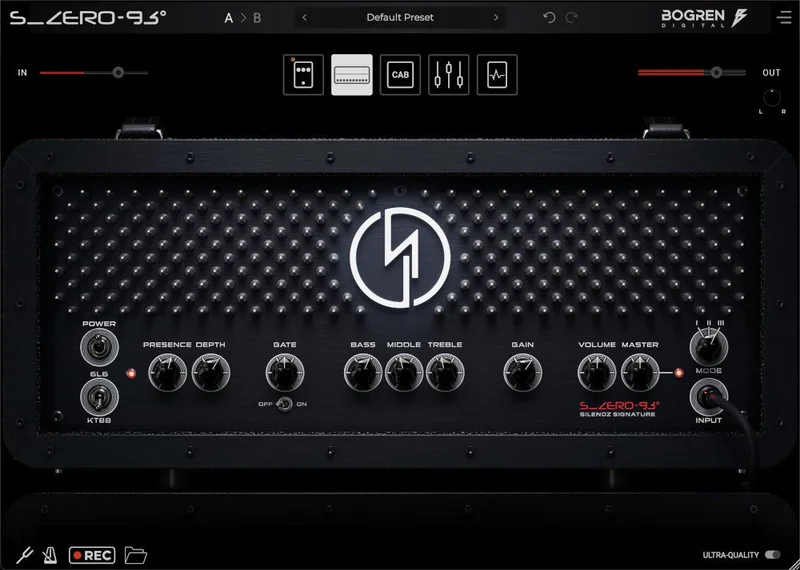
Channel 2 is where things get interesting. The gain structure is loose. Intentionally chaotic. We ran a down-tuned 7-string through it with single-note runs and the note separation held. That's harder to achieve than most amp sims pretend.
Channel 3 tightens that same character. Think of it as Channel 2 with a pick attack. The low-end tightens, the transients sharpen, and the riff definition becomes surgical. For extreme metal rhythm tracks, this channel does the work.
The per-channel tube switching between 6L6 and KT88 is the feature that separates the plugin from its own hardware counterpart. The physical MLC S_Zero 93 is a 100-watt single-channel amp locked to 6L6 tubes. The plugin lets you set Channel 1 on KT88s, Channel 2 on 6L6s, and Channel 3 on KT88s if you want. That's not a small thing. KT88s push harder in the upper midrange and handle headroom differently. Mixing tube characters per channel is a genuine tone-shaping tool.
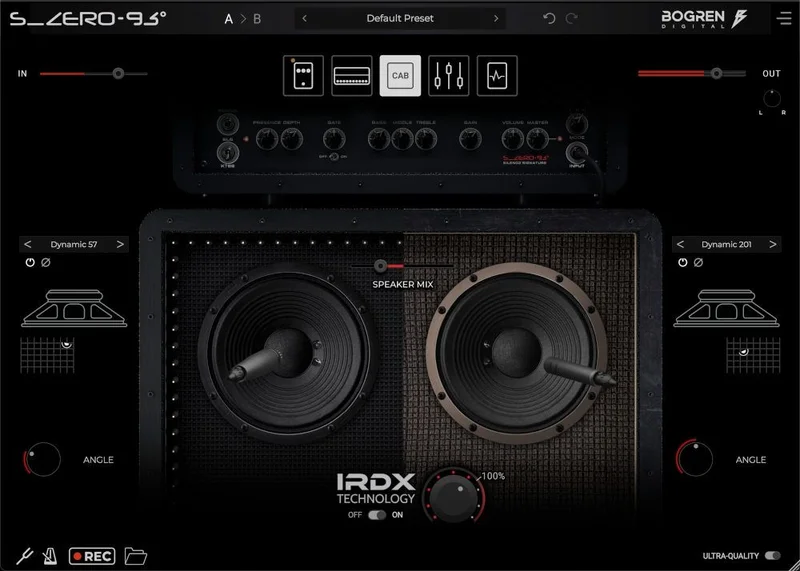
The IRDX cabinet technology sits underneath all of this. Standard impulse responses capture a static snapshot of a cabinet's frequency response. They miss the way a real speaker compresses, moves air, and breaks up under load. IRDX uses machine learning to reconstruct that dynamic behaviour. The result is a guitar signal that reacts differently at different input levels, closer to a real cabinet.
We don't have independent CPU benchmarks against Neural DSP or Amplitube here. That data gap is real, and we'll flag it honestly. What we can say is the standalone version launches quickly and the built-in recording function works without a DAW open.
Where the S_Zero 93 Wins
The artist preset library is genuinely useful. Not every plugin can say that. Presets from members of Behemoth, Dimmu Borgir, and Emperor aren't just marketing. They're a crash course in how professional extreme metal tones are assembled. Load one, look at the EQ curve and the pedal routing, and reverse-engineer the approach.
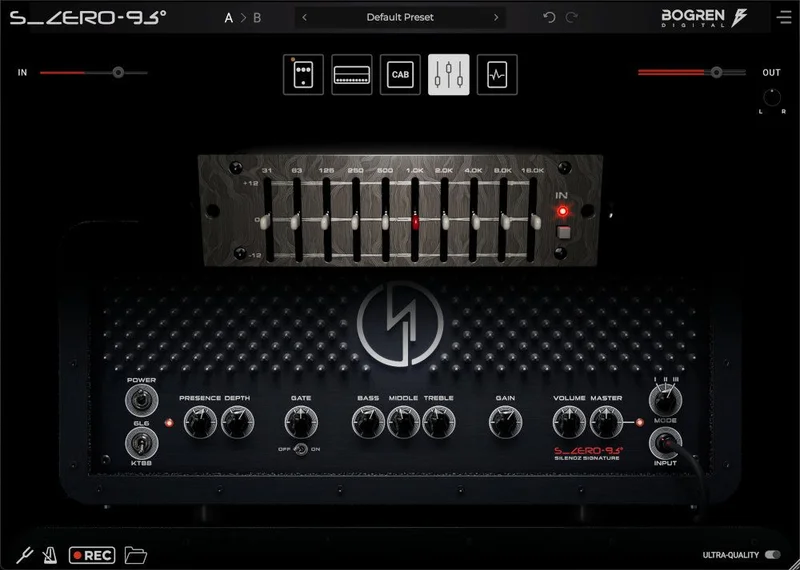
The 10-band EQ is a studio-grade tool rather than an afterthought. It's modelled on a classic analog studio equaliser, and the frequency choices reflect mixing decisions rather than guitar-centric thinking. That matters when you're trying to seat a rhythm guitar in a dense orchestral arrangement.
The dual-cab IR loader with IRDX technology running underneath both slots gives you spatial flexibility that many single-cab simulators skip. Run two different cabs, blend them, adjust mic position, distance, and angle. Load your own IRs if the included selections don't fit. The signal chain stays logical throughout.
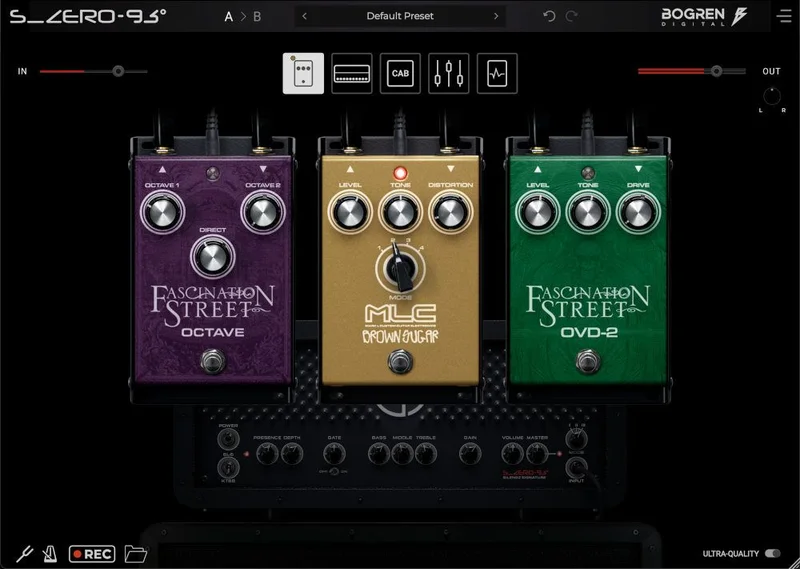
The pedal suite is broader than expected. The MLC Brown Sugar gives you four different overdrive clipping modes in one pedal. The Fascination Street Octave handles dual-octave pitch work with intelligent pitch detection. The Fascination Street OVD-2 adds a second stage of gain stacking. For a plugin at this price point, that's a complete pre-amp signal chain without reaching for anything external.
Where the Competition Wins
Neural DSP wins on breadth. Their artist plugins cover multiple amp types, the interfaces are more refined, and years of public benchmarking and forum discussion mean you know exactly what you're getting before you buy.
Amplitube wins on amp variety. If you need to switch between a Fender clean, a Marshall crunch, and a Diezel high-gain in the same session, Amplitupe handles that. The S_Zero 93 does not.
The independent review problem is frustrating. KVR shows zero reviews. Gearspace users haven't reviewed it either. That's not a dealbreaker, but it means we're working without the community safety net that surrounds more established plugins. You're trusting Bogren Digital's word and the artist association more than you're trusting independent consensus.
We also wish there were verified CPU benchmarks. Medium or heavy? We'd rather tell you definitively. We can't. That's annoying when you're making a real purchasing decision on a dense metal production session with thirty or more tracks running.
Who Should Buy This, and Who Should Skip It
- ✅ Buy if you produce extreme or symphonic black metal and want tones built by the people who defined the genre
- ✅ Buy if you want per-channel tube character switching that the physical hardware can't offer
- ✅ Buy if you need a complete high-gain signal chain including pedals, EQ, dual-cab IR, and reverb in a single plugin
- ❌ Skip if you need amp variety across multiple genres in one plugin
- ❌ Skip if you rely on large independent review communities before committing to a new tool
- ❌ Skip if extreme metal is only an occasional project rather than your core focus
Specs & Technical Details
| Developer | Bogren Digital |
| Price | $99 |
| Plugin Format | VST3 / AU / AAX / Standalone |
| OS Support | Mac (Intel & Apple Silicon Native) / Windows 10 or newer / Mac OS 10.13 or newer |
| Activation | N/A (not confirmed in available documentation) |
| CPU Usage | Unverified, no independent benchmarks available at time of review |
| Trial Available | N/A (check Bogren Digital's site directly) |
| Version Reviewed | N/A (current version at time of writing) |
Score Breakdown
| Category | Score | Notes |
|---|---|---|
| Sound Quality | 4.5/5 | IRDX technology and three-channel architecture deliver genuine high-gain depth and note definition |
| Value for Money | 4.5/5 | Complete signal chain including pedals, dual-cab IR, and EQ at this price point is strong value |
| Ease of Use | 4.0/5 | Logical layout but interface polish trails Neural DSP; standalone recording is a clean touch |
| Features | 4.0/5 | Per-channel tube switching and IRDX are genuine differentiators; genre breadth is intentionally narrow |
| CPU Efficiency | 3.5/5 | No independent benchmarks available; scored conservatively pending verification |
| Overall | 4.2/5 | A focused, professional extreme metal tool with real innovation where it counts |
Going Deeper: The Pedal Chain and Effects
The pre-amp pedal section is where the S_Zero 93 builds its identity beyond the amp itself. You get three distinct pedals, each designed with specific extreme metal applications in mind.
The MLC Brown Sugar is the one we kept returning to. Four overdrive clipping modes alter the Class A preamp's character completely. Mode 1 stacks cleanly into Channel 2 for tight, focused gain. Mode 3 opens up the saturation and adds a compressed, almost synth-like sustain to single notes. We ran a baritone guitar through Mode 4 into Channel 3 and the combined gain stacking produced a sound that would sit in a Dimmu Borgir mix without touching the fader.
That's the specific moment that made this plugin click for us. Not a preset. Not a demo. Just signal chain experimentation with a baritone into the Brown Sugar's Mode 4, into Channel 3 with KT88 tubes selected, through the dual-cab loader with one cab at 45-degree mic angle and the second blended at roughly 30%. The transient attack was satisfying. The sustained chord release didn't smear. That's hard to achieve without it feeling like compression has stepped in uninvited.
The Fascination Street Octave is cleverer than we expected. Dual-octave with intelligent pitch detection means it tracks accurately on complex chord shapes without the glitching that ruins most octave pedals in dense, fast-picked riffs. We're not saying it's perfect. Fast tremolo picking at the lower frets stressed the detection. But for single-note leads and slow chord swells, it tracks well.
The Fascination Street OVD-2 is described as coming from producer Jens Bogren's personal collection. That's marketing language, yes. But the actual gain character of the OVD-2 is distinct from the Brown Sugar. Where the Brown Sugar tightens and focuses, the OVD-2 adds harmonic weight in the upper midrange. Stack them in the right order and you're adding texture, not just volume.
The Cabinet Section: IRDX vs. Static IRs
This is the section that matters most for mix engineers who already own a wall of static IRs.
Standard IRs are photographed in time. They capture the frequency response of a cabinet at one moment, one volume level, one level of speaker excursion. They don't breathe. Real cabinets compress at high input levels. They distort slightly at speaker breakup. They react differently when a palm mute follows a lead note at the same amp setting.
IRDX addresses this with machine learning reconstruction of speaker dynamic behaviour. We're not in a position to scope the output and show you harmonic distortion curves. That's the honest limitation of this review. What we can say is that when we played through the IRDX-loaded cabinet and switched it to a dry IR for comparison, the IRDX version tracked differently at varying pick attack strengths. The static IR held its response flat. That's the difference in practice.
The dual-cab loader lets you run two different cabinet IRs simultaneously with mix control, individual mic placement, distance, position, and angle. You can also load your own IRs into both slots. Jens Bogren selected the two included cabs, and they're calibrated for the amp's character. But if you have a favourite third-party IR library, it works here without workaround.
The pan control deserves a mention. It keeps your guitar's stereo placement stable while the delay and reverb effects maintain their own independent stereo image. That's a small detail that saves you a return bus in your DAW when you're running the plugin on a direct guitar track.
The Reverb and Delay: Are They Mix-Ready?
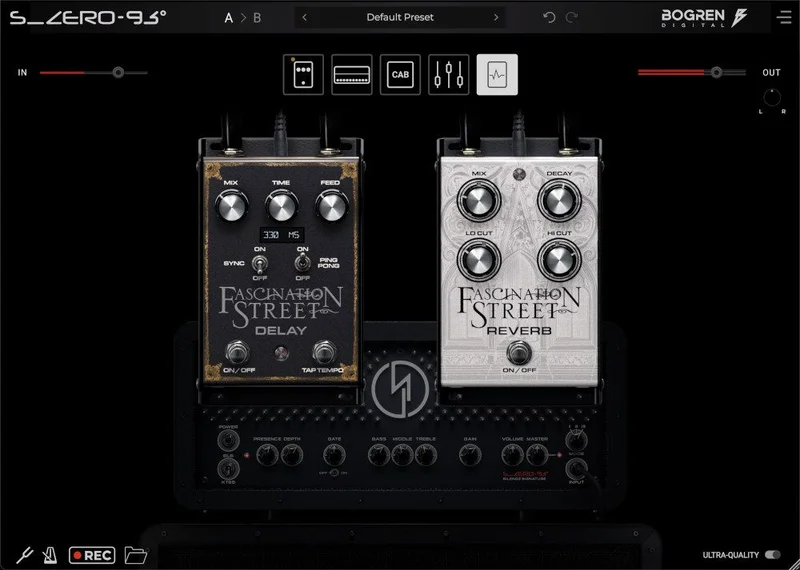
The Fascination Street Reverb has Lo and Hi Cut controls. That's the key detail. Reverbs without high-cut controls smear into the upper midrange and cloud a dense mix. Being able to roll off the top end of the reverb tail means you can push the reverb level higher without losing guitar clarity in the upper frequencies.
We set the reverb at a medium pre-delay, cut everything above roughly 6kHz with the Hi Cut, and sent a palm-muted rhythm track through it. The result was space without mud. The rhythm stayed articulate. The tail added width without pulling focus from the snare.
The Fascination Street Delay pairs with the reverb in ping-pong mode. The described interaction of delay tails melting into the reverb field is accurate. Set the delay to dotted eighth notes and feed a single-note lead, and the spaciousness works. It's not replacing a dedicated delay plugin for complex rhythmic work, but it's more than a scratch pad effect.
Standalone Mode and Practice Utility
The standalone version is a real workflow tool, not a checkbox feature. Built-in recording means you can capture a riff directly without opening your DAW. Brilliant for the moments when an idea arrives at 2am and you're not ready to manage a full session.
The built-in metronome goes further than a click. You can change time signature, accent beats, and set automatic speed increments for practice sessions. That's a guitar teacher feature inside a professional amp simulator. Unexpected. Useful.
The tuner rounds out the standalone experience. Nothing groundbreaking, but it's accurate and present when you need it without switching applications.
Alternatives Worth Considering
If you want broader amp coverage across genres while staying in the metal space, Neural DSP Archetype series covers more ground and has years of public benchmarking behind it. The trade is the specificity and artist authenticity of the S_Zero 93.
If you want to understand how the S_Zero 93 sits in the wider amp simulator category, our amp simulator plugins guide covers the field in detail.
For producers who want the deepest available IR cabinet control alongside a high-gain amp sim, Amplitube 5 review is worth comparing. Amplitube's cab section is extensive, though its extreme metal amp selection is thinner than what Bogren Digital delivers here.
LePou's free amp sim suite remains the honest budget comparison. It won't match the IRDX cabinet technology or the pedal suite, but for producers testing the waters of ITB amp simulation before spending, it's the starting point.
The Buy or Skip Call
The MLC S_Zero 93 at $99 is one of the more honest value propositions in the amp simulator market for its specific audience. The physical amp costs a number roughly forty times higher. The plugin gives you three channels instead of one, per-channel tube selection the hardware can't do, a complete pedal chain, IRDX cabinet technology, and an artist preset library built by the people who defined the genre.
That's not a small thing to walk away from for extreme metal producers.
The honest caveats: zero independent reviews means you're an early adopter in terms of community validation. CPU benchmarking is unverified. And if extreme metal isn't the core of your work, this plugin is the wrong tool regardless of price.
Skip it if your sessions span genres. Buy it if they don't. The S_Zero 93 doesn't try to be everything, which is exactly why it's something.
Frequently Asked Questions
What is the MLC S_Zero 93 plugin based on?
It's the officially licensed software version of the signature guitar amp of Silenoz, guitarist of Dimmu Borgir. The physical amp is a 100-watt, single-channel unit. The plugin expands the architecture to three channels and adds per-channel tube switching that the hardware doesn't offer.
What makes IRDX technology different from standard impulse responses?
Standard IRs capture a static snapshot of a cabinet's frequency response. They don't react dynamically to input level changes. IRDX uses machine learning to reconstruct speaker behaviour including compression and breakup at different drive levels, making the cabinet respond more like a physical speaker would under varying playing conditions.
Can I load my own IRs into the MLC S_Zero 93?
Yes. The dual-cab section accepts custom impulse responses in both cabinet slots. You can run two different IRs simultaneously with individual mix control, mic position, distance, and angle adjustments. The two included cabs were selected by Jens Bogren, but third-party IR libraries work without any workaround.
Does the MLC S_Zero 93 work on Apple Silicon Macs?
Yes. Bogren Digital built the plugin with native Apple Silicon support. It also supports Intel Macs running macOS 10.13 or newer, and Windows 10 or newer. It runs as VST3, AU, AAX, or in standalone mode.
Who are the artist presets from in the MLC S_Zero 93?
The preset library includes contributions from members of Dimmu Borgir, Behemoth, Ihshan from Emperor, Mayhem, Napalm Death, and Enslaved. These aren't generic factory patches. They're built by working extreme metal musicians and give you a direct reference for how professional high-gain tones are dialled in at the top of the genre.