The AmpKnob BDH 5169 is a single-knob VST3/AU/AAX emulation of the 1992 Peavey 5150 block letter head, built for metal guitarists who want a professional-grade, producer-dialed tone at $29 without touching a gate, EQ, or speaker sim. We ran it on a metalcore rhythm track at 44.1kHz, hit record in standalone mode before even opening a DAW, and the riff we'd been chasing for 20 minutes was captured in three takes. That's the pitch in action.
This isn't a do-everything amp sim. It's a precision tool for one sound: aggressive, punchy, high-gain metal guitar. If that's what you need, read on. If you need jazz cleans or blues crunch, look elsewhere.
First Impressions: Deceptively Simple
Installation is fast. No iLok, no credit card for the 14-day trial, no activation circus. It shows up in your DAW minutes after download on macOS 10.13 or Windows 10 and above.
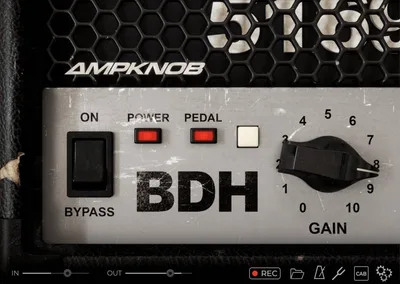
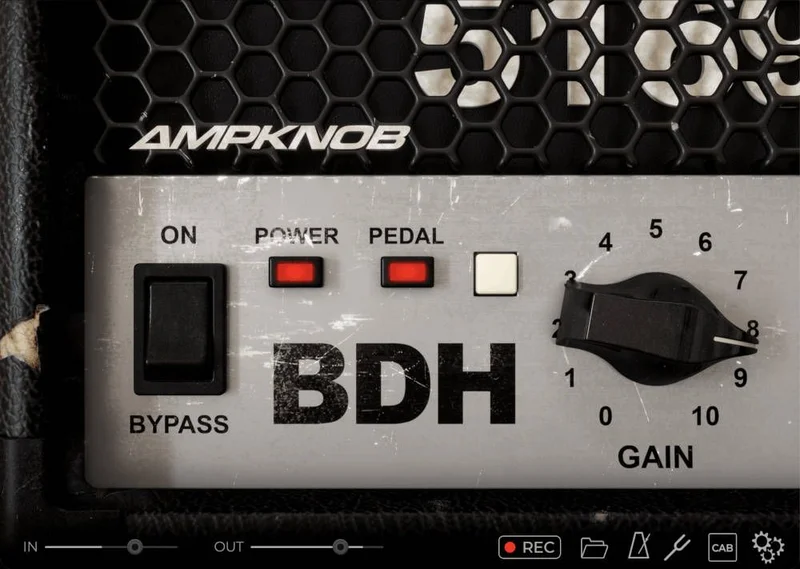
Opening the plugin, the UI is striking in its restraint. One knob. A cab disable switch. An IR loader. An overdrive pedal toggle. That's the whole front panel. Our first reaction was mild suspicion. Then we played through it.
The low-end is tight on the very first strum. No flabbiness, no mud. The high-mids cut through in a way that's immediately recognizable to anyone who's heard a mid-90s metal record. Jens Bogren's speaker cabinet and mic chain choices are doing heavy lifting here, and you can hear it.
Getting It Into a Real Workflow
Drop it on a DI guitar track. Set your gain knob somewhere in the upper third for rhythm work. Hit the overdrive pedal switch. Done. That's legitimately the whole process for 80% of metal sessions.
We tested it in both DAW mode (VST3 in Reaper, AAX in Pro Tools) and standalone. At 0.4ms latency, playing feels real. There's no perceptible delay between pick attack and speaker response. That matters for feel, especially for tight palm-muted riffing.
The friction point is the absence of a built-in noise gate. Real 5150 tones at high gain produce hum and buzz between phrases. You'll need a gate on the channel before the BDH 5169, or after it on a send. That's one extra plugin in your signal chain that should arguably be baked in at this price point. Annoying, but workable.
The standalone workflow is a genuine surprise. We've all had the experience of a great riff evaporating because the DAW wasn't open. The BDH 5169's standalone recording, metronome, and tuner mean you can capture a idea in under 30 seconds. The metronome lets you change meter, set accents, and dial in automatic speed increments for practice runs. It's more than a scratchpad.
What It's Genuinely Good At
The gain sweep is usable across its full range. Reviewers consistently report the same thing we noticed: there's no dead zone where the tone turns fizzy or loses definition. You get usable tones from about 9 o'clock all the way to maximum. That's not always true of amp sims with more knobs.
The overdrive pedal switch is clever. It tightens the low-end and drives the input harder simultaneously. We ran a downtuned 7-string through it at 96kHz. The low B stayed articulate. No bloom, no mud. For heavy riffing, Bogren designed this as the default-on mode, and we agree with that call.
IR loading gives you an escape hatch from the stock cab without building a complex signal chain. If you have a cab IR collection from other amp sim sessions, you can load them directly. The stock cab sounds great, but the option matters.
CPU load is light. We ran eight instances on a mid-spec session without a performance hit. Comparing that to Neural DSP's Archetype series, which can run 2-3x heavier depending on the preset, the BDH 5169 is noticeably friendlier to resource-constrained sessions.
The Rough Edges
One knob is the product's whole identity and its biggest limitation. We love the philosophy. We sometimes hate the reality.
When a rhythm guitar isn't sitting right in a dense mix, the normal move is to pull some 400Hz, push 3kHz, or adjust the presence. Here, your options are: adjust gain, disable the cab, or load a different IR. That's it. For producers who dial in guitar tones across multiple amp parameters, the constraint will frustrate.
There's also no built-in EQ post-cab, which means you're always reaching for another plugin to do final tone shaping. That's standard practice in professional workflows, but competitors at this price point increasingly include basic post-processing. It's a real gap.
Users report that the plugin doesn't include a noise gate. At the gain levels this amp operates at, that's not an oversight you can ignore. It's the one thing we wish Bogren Digital had added.
Who This Is Really For
- ✅ Buy if you record metal or metalcore rhythm guitars and want a professional 5150 tone without spending a session tweaking parameters.
- ✅ Buy if you want standalone capture functionality for riff ideas away from your DAW.
- ✅ Buy if you're already considering the three-plugin BDH bundle. The bundle pricing makes buying individually first a waste of money. Check the AmpKnob Duet and AmpKnob Trivium Lead before you commit to a single purchase.
- ❌ Skip if you need a noise gate built in. You'll be annoyed every session.
- ❌ Skip if you need clean or crunch tones. This does one thing. High-gain metal is that thing.
- ❌ Skip if you want multi-parameter control over the preamp, mid-shift, presence, and resonance. Neural DSP Archetype: Nolly or STL Tonality will serve you better there.
Specs & Technical Details
| Developer | Bogren Digital |
| Price | $29 |
| Plugin Format | VST3 / AU / AAX / Standalone |
| OS Support | macOS 10.13+ / Windows 10+ |
| Activation | No iLok required; online activation |
| Sample Rate Support | 44.1kHz to 96kHz |
| Latency | 0.4ms |
| CPU Usage | Light |
| Trial Available | Yes (14-day, no credit card) |
| Version Reviewed | Current as of 2026 |
Score Breakdown
| Category | Score | Notes |
|---|---|---|
| Sound Quality | 4.5/5 | Jens Bogren's mic chain is the real product. Tight, punchy, professional. |
| Value for Money | 4.0/5 | Strong at $29, but the bundle is the smarter buy. |
| Ease of Use | 4.5/5 | One knob. Standalone. Done. Hard to be easier than this. |
| Features | 3.5/5 | No noise gate and no post-cab EQ are real omissions for metal recording. |
| CPU Efficiency | 4.5/5 | Light enough to run 8+ instances without a performance conversation. |
| Overall | 4.2/5 | A brilliant single-purpose tool held back by the absence of a gate. |
Alternatives to Consider
Neural DSP Archetype: Nolly is the comparison that comes up most often. It runs heavier on CPU and costs more, but gives you full preamp parameter control, a built-in gate, and a wider range of amp voicings. If you want to shape rather than just play, Nolly wins. Check our amp simulator plugins guide for a full breakdown.
STL Tonality: Howard Benson targets a different genre but shows what a producer-designed plugin can do with more parameters exposed. Worth a look if your sessions span multiple guitar styles.
AmpKnob Duet and Trivium Lead deserve a mention as the BDH 5169's siblings. The AmpKnob Duet and AmpKnob Trivium Lead are available as a three-plugin bundle that makes individual pricing look pointless. Buy all three or plan to.
Final Word
The BDH 5169 is a satisfying answer to a specific question: what does a perfectly dialed-in 1992 5150 block letter sound like through Jens Bogren's mic chain, at $29, with no fuss? The answer is: it sounds like a metal record.
If that's what you're recording, buy it. If you need a gate baked in or more than one parameter to tweak, you'll be reaching for other plugins constantly. That's the honest trade-off. For rhythm metal guitar tracking, this is our recommendation. For everything else, keep looking.
Frequently Asked Questions
Is the AmpKnob BDH 5169 based on a real amp?
Yes. It's modelled on the Peavey 5150 "block letter" head from 1992. That's the original Eddie Van Halen signature amp before the Peavey/EVH split. Bogren Digital have built the emulation around that specific version of the amp, not later revisions or the EVH 5150 III.
Does the BDH 5169 work without a DAW?
It does. The standalone version includes a built-in recorder, tuner, and metronome with adjustable meter, accent, and automatic speed increments. You can capture ideas, practice with a click, and tune up without ever opening your DAW.
Do I need a noise gate with the BDH 5169?
For high-gain metal recording, yes. The plugin doesn't include one. You'll want a gate plugin placed before the BDH 5169 in your signal chain to control hum and buzz between phrases. It's a real omission at this gain level and something to budget into your signal chain setup.
Is it worth buying the BDH 5169 individually or as part of the bundle?
The bundle pricing makes buying individually first a questionable move unless you genuinely only need the 5150 voicing. If you produce metal across multiple amp characters, the three-plugin bundle gives you more for less. We'd check the full bundle before committing to a single plugin purchase.