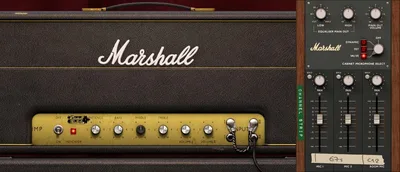
Softube's Marshall Plexi Super Lead 1959 is the most credible software version of this amp we've run through a DAW, and at $99 it's priced to actually compete rather than just pose. This isn't a vibe-approximation. It's a component-level model of the actual 1967 Marshall museum specimen, with cabinet IRs captured by AC/DC engineer Tony Platt at Kore Studios in London. If you track rock guitar in the box and you've been tolerating lesser Plexi emulations, this is the one to fix that. It won't replace a cranked hardware stack in a live room, but for 95% of studio work, you won't feel like you're settling.
What You're Actually Getting
This is a 100-watt British amp emulation, modeled after a pristine 1967 Plexi Super Lead. The hardware spec it references: 4x EL34 power tubes, 3x ECC83/12AX7 preamp tubes, two channels (lead and rhythm), each with high and low gain inputs.
The "jumpable" input design lets you bridge both channels simultaneously, which is how players like Angus Young got that particular mid-push and compression that sits somewhere between a clean and a driven sound without being cleanly either.
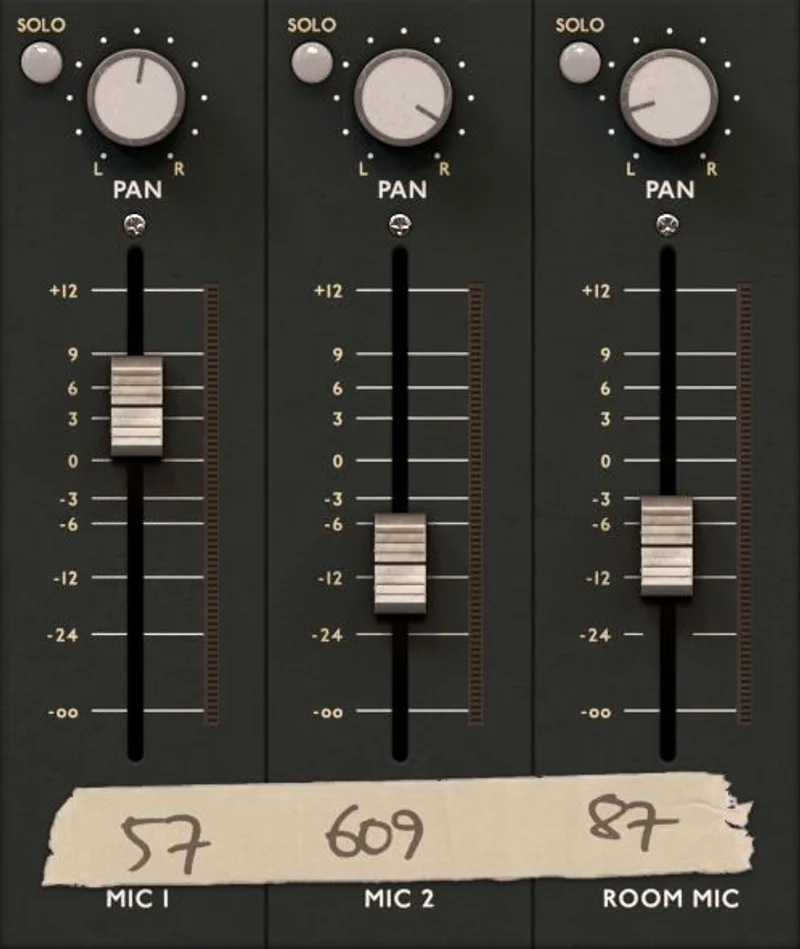
Beyond the amp, there's a full channel strip. Tony Platt recorded three mic setups (FET, Valve, Dynamic) against an era-correct 1960BHW cabinet. Each setup gives you three mics: two close, one room. You get individual volume, pan, and solo controls per mic, plus a two-band master EQ on the main output. This is not a bare amp sim with a cabinet toggle.
The Good
The distortion accumulation behavior is where this pulls ahead. We loaded a humbucker Les Paul signal, set Volume I at 6 and Volume II at 8 with the Presence at 7, and the breakup happened in layers. Pick attack hit first with some clean snap, then compressed into harmonic saturation as the note bloomed. That's what a real Plexi does. Cheaper emulations just add fuzz to a clean signal.
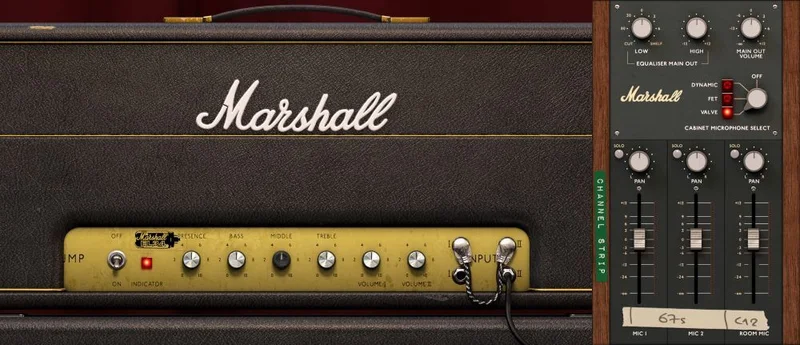
Platt's mic blending is brilliant and genuinely saves time. We blended the Valve mic (positioned slightly off-axis) with the Dynamic room mic, pulled the Valve back about 3dB, and got a tone that sat in a dense rock mix without needing additional EQ or compression on the way in. That's a satisfying workflow.
The preset library is better than average. Over 50 presets, all tuned by Platt, not a marketing intern. The "AC/DC Rhythm" preset dropped us within two tweaks of a workable Back In Black crunch. That's useful.
Playing dynamics translate. Dial back your guitar's volume knob to 6 and the plugin cleans up. Push it to 10 and it bites. That touch sensitivity is hard to fake and most plugins don't bother.
The Not-So-Good
The iLok requirement is annoying. Not a dealbreaker if you're already in the Softube or iLok ecosystem, but if you're a one-DAW producer who avoids third-party license managers, this adds friction and potential cost before you've even loaded the plugin.
CPU usage is heavier than it needs to be. Component-level modeling is expensive to compute, and this plugin confirms that. On an M1 MacBook Pro, running four instances on a dense session started causing buffer spikes. Lighter Plexi models exist, and if CPU headroom matters to you, that gap is real.
There's no hardware vs. software comparison available in the marketing, and that's a frustrating gap. The Marshall 1959HW reissue exists. It's a different product category and a very different price, but producers genuinely ask which to chase, and Softube doesn't help you answer that. The plugin has virtues the hardware can't match (no mics, no room, no neighbours complaining), but the plugin won't tell you that itself.
No free trial available. At $99, that's a trust exercise.
Compared to the Alternatives
The most direct competitor is the Kuassa EFEKTOR GrandMaster, which offers three Marshall-derived tones at a lower price point. Read our EFEKTOR GrandMaster review to see how those three tones hold up under scrutiny The GrandMaster is lighter on CPU and more accessible. It doesn't have Platt's IRs or the jumpable channel behavior, and it sounds like a good approximation rather than a specific amp. Different goal.
Neural DSP's Plini and Tone King Imperial emulations are often mentioned in the same conversation. Neither is specifically a Plexi model, but they compete for the same "go-to rock amp" slot in a session. Neural wins on UI and preset organisation. Softube wins on Plexi authenticity and the built-in engineer-grade mic chain.
Line 6 Helix Native covers the Plexi with its "Brit Plexi" models and costs roughly the same. It's broader, not deeper. You get 70 amps. You don't get a component model of one specific amp and Tony Platt's cabinet placement notes.
Who Should Buy This
- ✅ Buy if you track rock, classic rock, or blues rock guitar in the box and want a Plexi tone that doesn't need fixing in the mix
- ✅ Buy if you're already in the Softube ecosystem and iLok isn't a new problem
- ✅ Buy if you want a complete mic-blending workflow without needing to manage separate IR loaders
- ❌ Skip if your sessions are CPU-tight and you're running multiple amp sim instances
- ❌ Skip if you hate iLok on principle, because this won't change your mind
- ❌ Skip if your main work is metal or high-gain modern rock. This amp's character is wrong for that, and no amount of Presence tweaking fixes a vintage British amp into a high-gain monster
Specs & Technical Details
| Developer | Softube |
| Price | $99 |
| Plugin Format | VST / VST3 / AU / AAX |
| OS Support | macOS Big Sur 11 and later / Windows 10 (64-bit) and Windows 11 |
| Activation | Softube account + iLok account required |
| CPU Usage | Heavy (component-level modeling) |
| Trial Available | No |
| Version Reviewed | Current as of 2026 |
Score Breakdown
| Category | Score | Notes |
|---|---|---|
| Sound Quality | 4.8/5 | Component-level modeling of the actual museum unit; touch sensitivity and breakup behavior are the real thing |
| Value for Money | 4.0/5 | No trial available softens the case, but what you get for $99 is premium-grade |
| Ease of Use | 4.0/5 | iLok setup adds early friction; once you're in, the channel strip is intuitive |
| Features | 4.5/5 | Jumpable channels, three mic types, full channel strip, 50+ pro presets. Genuinely complete. |
| CPU Efficiency | 3.5/5 | Heavier than comparable Plexi emulations; multiple instances will stress mid-tier systems |
| Overall | 4.3/5 | The most accurate Plexi plugin we've used, held back only by iLok friction and CPU weight |
Alternatives to Consider
Kuassa EFEKTOR GrandMaster: Three Marshall-flavored tones in a lighter, more CPU-friendly package. Not a component model of a specific amp, but a love letter to Marshall's character. Works best for producers who want Marshall flavor without committing to one model.
Line 6 Helix Native: Covers a broad catalog including Plexi-derived models. Better for producers who want a single plugin covering many amp types. The Plexi emulations are solid but not deep.
Marshall 1959HW (hardware reissue): If you have a live room, good mics, and patient neighbours, the hardware reissue captures what no plugin fully replicates: the physical movement of air. It costs dramatically more, needs professional micing, and still needs to hit about 85-90dB SPL to open up properly. The plugin removes all of those barriers. Worth knowing what you're trading.
For most ITB producers, the Softube plugin wins on practicality without sacrificing the tone you're actually after.
Tony Platt has recorded some of the most famous guitar tones in rock history. The fact that his mic placements and cabinet reads are baked into a plugin at $99 is, frankly, ridiculous value. The iLok gate is a real hurdle and the CPU ask is honest. But if you track rock guitar and you've been reaching for a Plexi emulation that keeps almost getting there, this one actually gets there. Buy it if your music is louder than your neighbours. Skip it if you need to run eight instances or you're allergic to license managers.
Related reviews: L12X Solid State Amplifier Review 2026
Frequently Asked Questions
Is the Softube Marshall Plexi Super Lead 1959 modeled after a real amp?
Yes. Softube modeled Marshall's own 1967 museum-piece Plexi Super Lead under direct supervision from Marshall. It's not a generic British amp approximation. The cabinet IRs were also captured from an era-correct 1960BHW cabinet with vintage microphones placed by Tony Platt at Kore Studios in London. That's the actual reference chain.
Do I need a physical iLok dongle to run this plugin?
No, you don't need the physical iLok USB dongle. You do need a free iLok account and the iLok License Manager software installed on your computer. Licenses can be stored in the cloud or on a computer. The dongle is optional, but the account and software are mandatory.
What does "jumping" the channels mean, and does this plugin support it?
Jumping the channels means bridging Channel I and Channel II inputs simultaneously, which was a hardware technique players used to combine the tonal character of both channels. It creates a distinctive mid-range push and compression that neither channel delivers on its own. Yes, the Softube plugin supports this with its dual-channel architecture and combined input options.
How does this compare to the Marshall 1959HW hardware reissue?
The hardware reissue sounds and feels different at volume, and that's an honest answer rather than a diplomatic one. Air movement, room interaction, and the physical response of real tubes at real SPL are things no plugin replicates. What the plugin does better: zero setup, no microphone placement guesswork, Tony Platt's professional IRs already baked in, and no complaints from anyone living below your studio. For ITB production, the plugin is the smarter tool for most sessions.