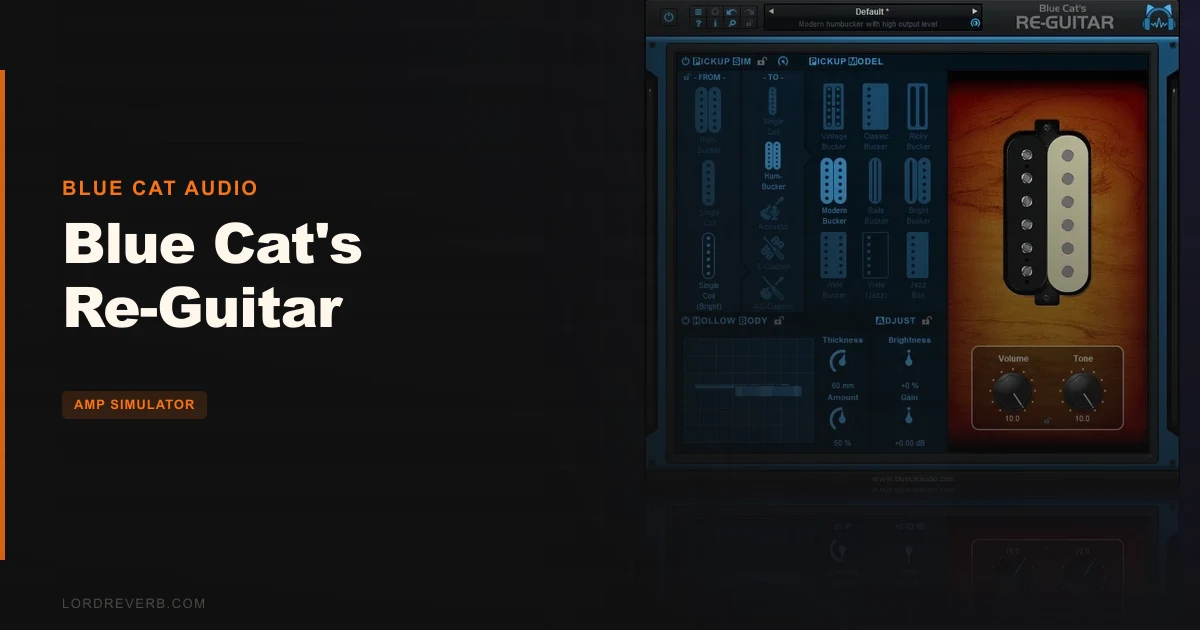
Blue Cat's Re-Guitar is a pickup modeling and guitar tone reshaping plugin that lets you switch between single coils, humbuckers, piezo, and acoustic emulations on a recorded DI track, entirely in the box, with zero latency. It costs $99 and it's built for one specific problem: you tracked guitar, the pickup sounds wrong for the mix, and you don't want to re-record or buy new hardware. Whether it solves that problem well enough to justify $99 depends almost entirely on what kind of playing you tracked.
If you do a lot of single-note lead work and DI sessions, there's a real case for this. If your sessions are rhythm-heavy strumming, the story gets complicated fast. That's the split this review keeps coming back to.
What's Actually Inside Re-Guitar
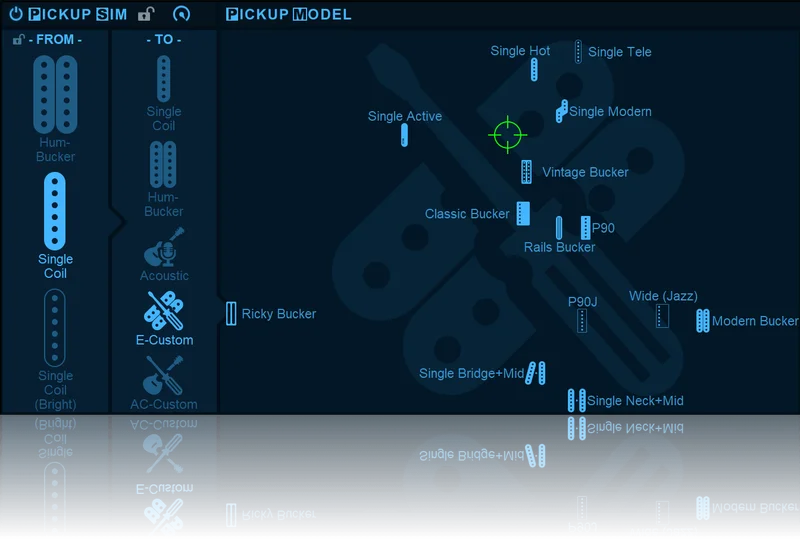
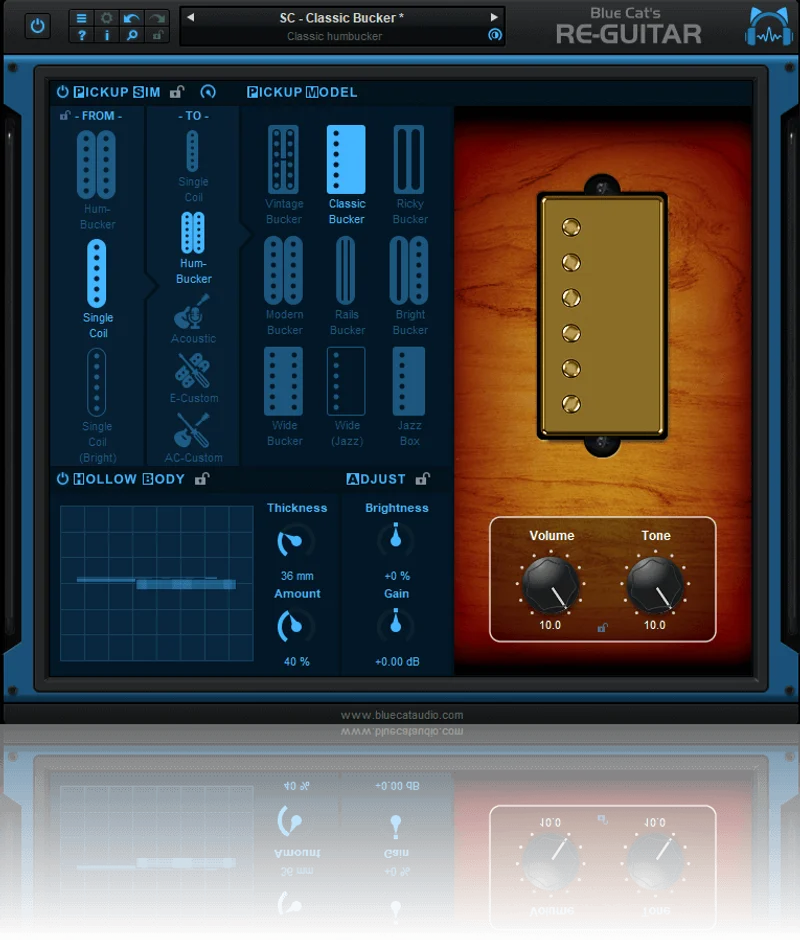
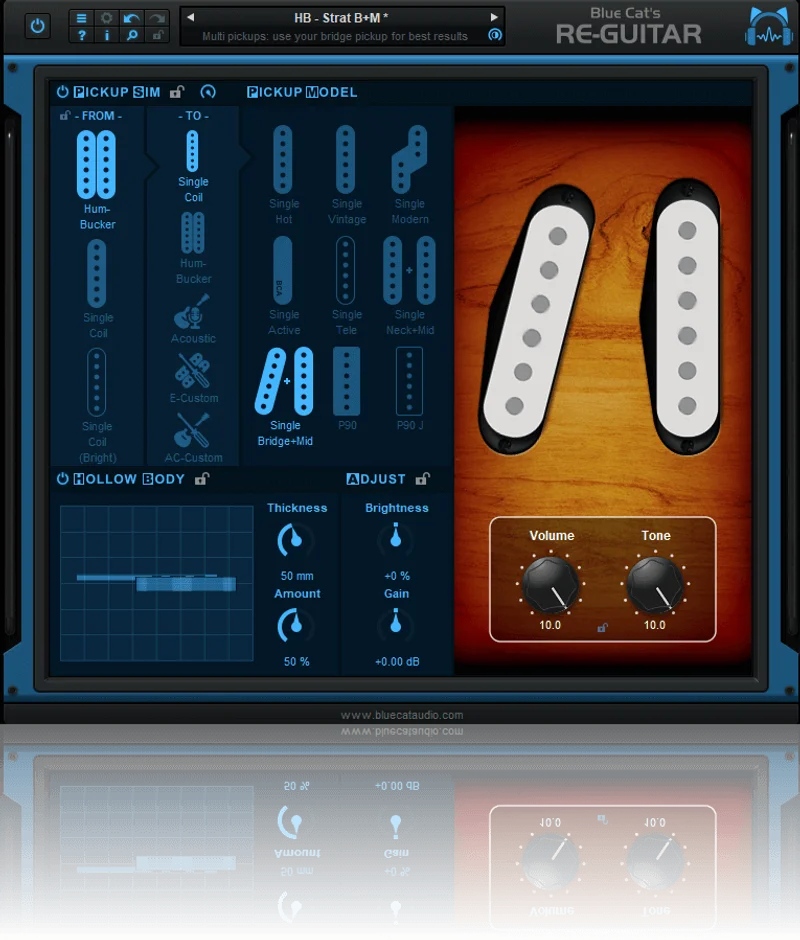
The plugin ships with a full library of built-in pickup models. On the single-coil side you get nine options: single hot, vintage, modern, active, tele, neck+mid, bridge+mid, P90, and P90J. Humbuckers run to ten: vintage, classic, ricky, modern, rails, bright, wide, wide(jazz), and jazz box. Those are specific, named models with distinct characters rather than generic "pickup A/B/C" labels.
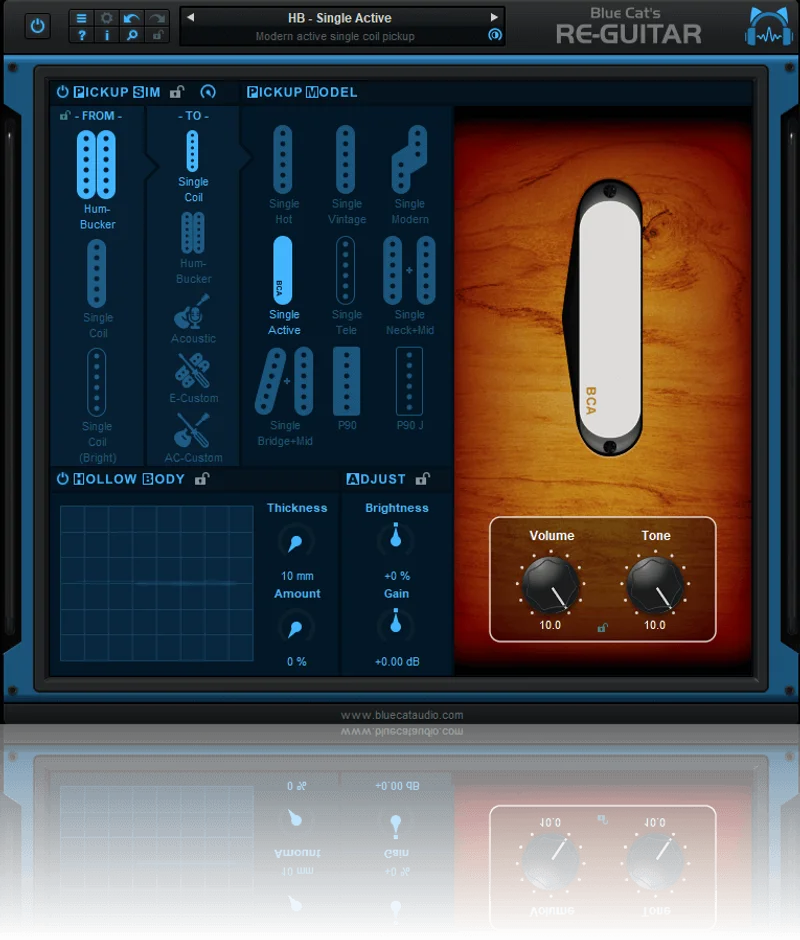
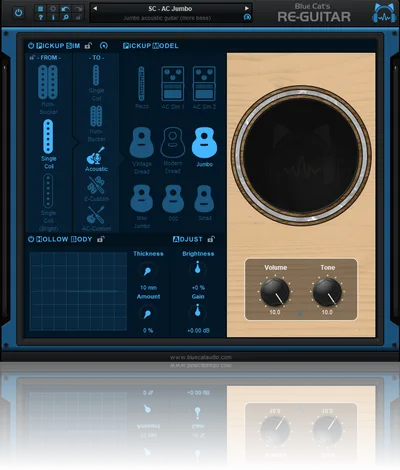
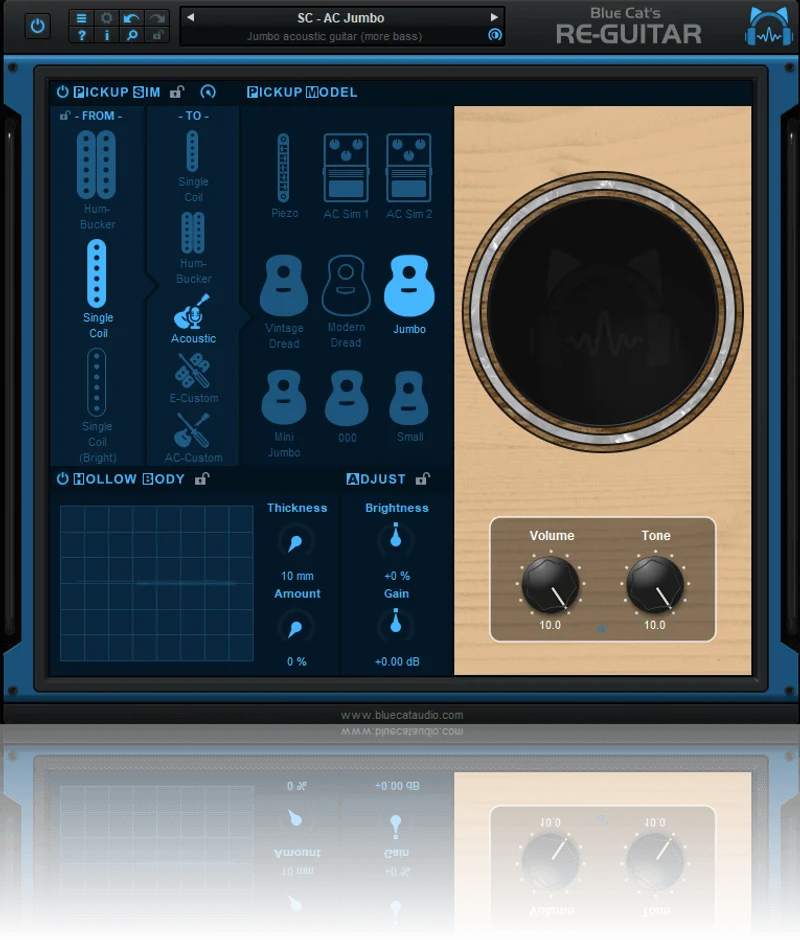
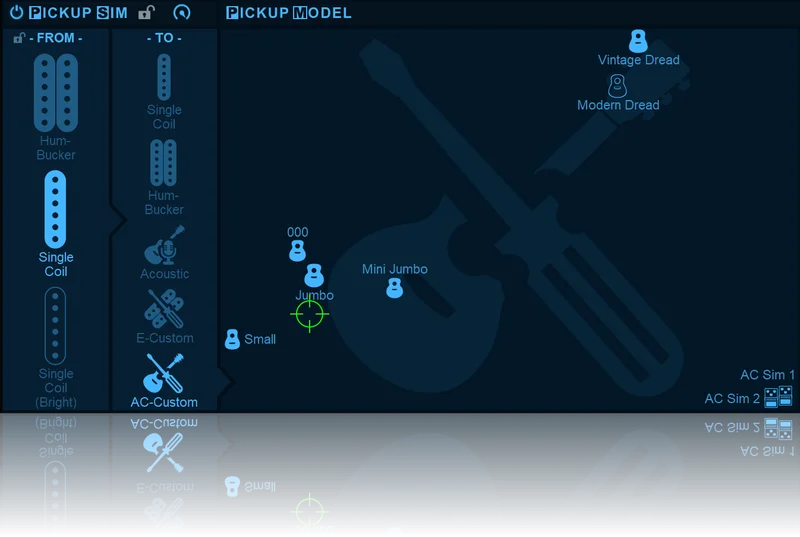
Beyond electric pickups, Re-Guitar includes piezo and acoustic emulations covering solid body piezo, acoustic sim pedals, modern and vintage dreadnought, jumbo, mini jumbo, 000, and small body.
You also get a hollow body body simulator with adjustable thickness and amount controls, virtual volume and tone pots (both automatable), brightness and gain adjustment, and a custom model builder for electric pickups and acoustic emulations alike. MIDI Learn is fully implemented with zipper-free parameter updates, so live switching won't glitch. Undo/Redo is there, clipboard copy/paste between instances works, and bypass is smooth with no click or pop.
Format support covers AAX, AU, VST, and VST3 on both Mac and Windows. Zero latency is confirmed at any sample rate. CPU load drops to zero when the input is silence, which is a clever and genuinely useful engineering choice for mix sessions with lots of tracks.
Where Re-Guitar Actually Lives In Your Session
The right place for Re-Guitar is directly on a clean DI guitar track, pre any amp simulation or processing. You feed it a raw guitar signal and it outputs a reshaped tone that your amp sim, cabinet loader, or reamping chain then treats as if it came from a different instrument.
That pre-reamping position is where it does something genuinely clever. Owners report using it to fix poor pickup tracking on a DI before sending the signal out for reamping, reshaping the tone without losing the original character of the take. That's a specific, practical use case that most guitarists wouldn't think of immediately but will love once they try it.
You can also run it in a purely ITB chain: DI into Re-Guitar, then into your amp plugin of choice. The zero-latency operation means it doesn't disrupt your plugin delay compensation or force you into a monitoring workaround. That matters more than it sounds.
What it's not built for is real-time live performance switching in a traditional guitar rig. It's a DAW plugin. The MIDI control is there for automation, not for use as a standalone modeling device.
One thing to watch: Logic Pro users running the AU demo version have reported the host freezing on project reopen. If you're on Logic and testing before buying, save aggressively.
What It's Genuinely Good At
The single-coil to humbucker conversion is where Re-Guitar earns its reputation. Users report single-coil to humbucker transformation achieved comparable results to Line 6 Variax without latency. For a software tool at $99, that's not a small claim.
Quiet operation is another real strength. Users comparing it directly to Bias FX describe Re-Guitar as noticeably quieter, with a lower noise floor. If you're stacking multiple guitar tracks and noise buildup is a concern, that difference adds up across a full session.
Single-note work and picked passages track cleanly and convincingly. The P90 and tele models in the single-coil bank have enough character to feel distinct from each other rather than the same filter tilted slightly. The ricky and jazz box humbuckers cover territory most pickup modelers ignore.
The hollow body thickness control is an underrated feature. Owners report using it to bring definition back to dull acoustic recordings, dialing up body resonance without muddying the low-mids. It's a subtle tool but a satisfying one when a track needs air without EQ.
Owners report acoustic emulation from electric guitars exceeds many real acoustic instruments in a mix context. The modern and vintage dreadnought models in particular seem to hold up. That's high praise, and it's coming from people who've made the comparison on actual recordings.
Zero idle CPU is quietly brilliant engineering. On a 40-track session with eight guitar buses, those near-silent idle tracks stop drawing power completely. It's a small thing that adds up to real headroom.
The Rough Edges You Need To Know About
Strumming. That's the main problem. Rhythm guitar playing with full chord strumming produces inconsistent results, and multiple users flag this independently. The modeling works best on single-note lines and picked phrases. Push it into an aggressive strum pattern and the emulation loses coherence.
The 12-string emulation is frustrating. The pitch-shifting artifacts are obvious enough that multiple users mention them without prompting. If you're after a Rickenbacker 12-string shimmer, this won't get you there cleanly. It's the kind of thing that sounds passable at low volume and falls apart the moment someone listens critically.
Acoustic simulation is the most divisive territory. Some owners love it; others describe it as weak and unusable even at maximum settings. The honest read is that your source guitar matters enormously. A bright, well-recorded DI from a Strat might take to the dreadnought emulation reasonably well. A dark, mid-heavy humbucker DI might give you something thin and unconvincing regardless of the preset.
The humbucker emulation can fail on certain guitar configurations. One user with an SSS Strat found the humbucker conversion didn't work for their instrument. That's an annoying outcome for a tool that's supposed to let you virtually change your guitar. It won't happen to everyone, but it's worth knowing it can happen.
No alternate tuning support. That's a limit worth calling out plainly because Variax and similar hardware tools offer it, and if that's part of your reason for looking at Re-Guitar, you'll need to look elsewhere.
Who This Is Really For: Three Types, Three Answers
The Session Producer Working With DI Tracks
You've got a guitarist's raw DI sitting in your session and the pickup character isn't right for the arrangement. The riff needs a tele bridge snap but they tracked it on a Les Paul-style humbucker. You're not going to get the guitarist back in.
Re-Guitar is built for exactly this moment. Drop it on the DI, dial in the tele model, adjust brightness and gain to match the rest of the track, then route it into your cab loader. Owners report the single-coil conversion working convincingly in this context. The zero-latency operation means your session doesn't skip a beat.
For this workflow: buy it.
The Singer-Songwriter Tracking Acoustic-Style Parts On Electric
You want an acoustic texture in a demo but you've only got your electric to hand. You try the dreadnought model and push the thickness control. Sometimes it works. Sometimes you get something thin and disappointing that sits awkwardly in the low-mids.
The acoustic emulation is too inconsistent for this to be your primary tool. It depends too much on the source guitar. If this is your main use case, Overloud AcGtrSimul is a more reliable solution with no input selection needed.
For this workflow: think hard before buying.
The Live Recordist Tracking Rhythm Guitar
You're recording a full band live and the guitarist is tracking rhythm parts, full strumming, barre chords, the lot. You want the flexibility to change the pickup model in the mix.
This is where Re-Guitar struggles. The inconsistent strumming results aren't a minor caveat. They're a core limitation for rhythm-focused sessions. You may get usable results on some chords and broken ones on others, which is worse than no processing at all.
For this workflow: skip it.
Who Should Buy It and Who Should Walk
- ✅ Buy if you work primarily with single-note or picked DI guitar tracks and need post-recording pickup flexibility
- ✅ Buy if noise floor and CPU efficiency matter to your session setup
- ✅ Buy if you're doing pre-reamping DI work and need tone shaping before the amp stage
- ❌ Skip if strumming and rhythm guitar is your main use case
- ❌ Skip if convincing 12-string emulation is on your list
- ❌ Skip if you need alternate tuning support alongside pickup switching
Specs & Technical Details
| Specification | Detail |
|---|---|
| Developer | Blue Cat Audio |
| Price | $99 |
| Plugin Format | VST / VST3 / AU / AAX |
| OS Support | Mac (10.9+, Intel and Apple Silicon) / Windows (Vista, 7, 8, 10, 32 and 64-bit) |
| Activation | N/A |
| CPU Usage | Zero load on silence; light during active processing |
| Trial Available | N/A |
| Version Reviewed | N/A |
Score Breakdown
| Category | Score | Notes |
|---|---|---|
| Sound Quality | 3.5/5 | Convincing on picked single-note work; inconsistent on strumming and acoustic emulation |
| Value for Money | 3.5/5 | Fair at $99 for the right workflow; overpriced for rhythm-focused players |
| Ease of Use | 4.0/5 | Named models, automatable controls, and smooth bypass make it easy to dial in quickly |
| Features | 3.5/5 | Wide pickup library and hollow body simulator, but no alternate tuning and weak 12-string |
| CPU Efficiency | 4.5/5 | Zero idle CPU is a genuine differentiator in large sessions |
| Overall | 3.5/5 | A focused tool that does its best job in a narrow but real use case |
Alternatives to Consider
Bias FX gives you more immediate character and wet/dry control in a full amp and effects chain. The tradeoff is a higher CPU tax and a louder noise floor than Re-Guitar. If you want an all-in-one guitar processing suite rather than a dedicated pickup modeler, Bias FX is the broader tool. Expect to manage more noise, especially on quiet passages.
Overloud AcGtrSimul is the stronger option if acoustic emulation is your priority. It handles the acoustic-to-electric transformation with no input selection needed, which removes one of the variables that makes Re-Guitar's acoustic results inconsistent. If your sessions regularly need convincing acoustic tones from an electric DI, AcGtrSimul is built more directly for that job.
Line 6 Variax is hardware rather than a plugin, so it's a different kind of purchase. Its single-coil emulation is weaker than Re-Guitar by user accounts, and it adds latency that Re-Guitar avoids completely. The one thing Variax does that Re-Guitar doesn't is sustain modeling, and if that matters to your sound, it's the gap you'll notice most.
The Verdict
Re-Guitar is a genuinely clever piece of software solving a genuinely specific problem. When you've got a clean DI track, primarily single-note or picked playing, and you need to change the pickup character post-recording without touching the take, it delivers. The noise floor stays low, the zero-latency operation keeps your signal chain honest, and the named pickup models have enough individual character to make switching feel meaningful rather than cosmetic.
But it's not a guitar transformation tool in the broad sense. Push it into full rhythm strumming, 12-string emulation, or acoustic simulation from a dark-sounding source guitar, and it shows the seams. Those aren't minor complaints. They're the sounds that make up the majority of guitar parts in most sessions.
At $99, it's priced fairly for what it does well. It's priced badly for what it doesn't. Know which side of that line your sessions fall on before you buy. If your work is DI lead guitar, pre-reamping tone shaping, or virtual pickup swaps on single-note takes, this earns its place in your signal chain without argument. If you're a rhythm player or acoustic specialist, the money goes further elsewhere.
Re-Guitar is a precision tool sold to people who sometimes need a Swiss Army knife. Make sure you need a scalpel before you buy one.
Frequently Asked Questions
Does Blue Cat's Re-Guitar work in real time with zero latency?
Yes. The plugin operates with zero latency at any sample rate, which means it won't disrupt your DAW's plugin delay compensation and doesn't require a monitoring workaround during tracking. This is one of its clear technical advantages over hardware guitar modeling tools.
Can Re-Guitar convert a single-coil guitar to sound like a humbucker?
Yes, and owners report the results are comparable to what hardware systems like the Line 6 Variax produce. That said, results vary by source guitar. Users with certain SSS Strat configurations have reported the humbucker emulation didn't work convincingly for their instrument. It's worth testing your specific guitar before committing.
Is Re-Guitar useful for acoustic guitar emulation from an electric?
It includes solid body piezo, acoustic sim pedals, and six body-type acoustic models from dreadnought to small body. Owner reports are split: some describe results that beat real acoustic instruments in a mix context; others find the simulation weak and unusable even at maximum settings. The outcome depends heavily on the source guitar's character.
Does Re-Guitar support Apple Silicon Macs?
Yes. The plugin runs natively on M1 and later Apple Silicon processors under macOS 10.9 or newer, in 64-bit only. If you're on an M-series Mac, you won't need Rosetta emulation.
How does Re-Guitar compare to Bias FX for pickup modeling?
They're built for different jobs. Re-Guitar is a dedicated pickup modeler focused on guitar tone reshaping. Bias FX is a full amp and effects suite. Re-Guitar users report quieter operation and a lower noise floor than Bias FX, but Bias FX offers more immediate character with wet/dry controls and broader amp shaping options. If you want pickup modeling alone, Re-Guitar is the focused choice; if you want a complete guitar processing chain, Bias FX covers more ground.