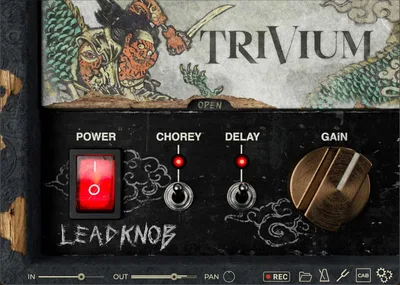
If you're choosing between the AmpKnob Trivium Lead and something like Neural DSP's Archetype series, here's where we land: this plugin wins on immediacy and price, but it loses on flexibility. At $49, it's a focused tool that does one thing brilliantly. Corey Beaulieu's searing lead tone, tuned by producer Jens Bogren, is baked in and ready to sit on top of your rhythm tracks without a dial-in session. If that's your goal, it's a no-brainer. If you want a signal chain you can sculpt into twelve different genres, keep reading, because this is deliberately not that.
How Does It Compare Out of the Box?
Neural DSP's Archetype plugins give you a full rig: multiple amp channels, deep EQ, a cab section with loadable IRs, and a pedalboard. You'll spend twenty minutes just choosing your starting point.
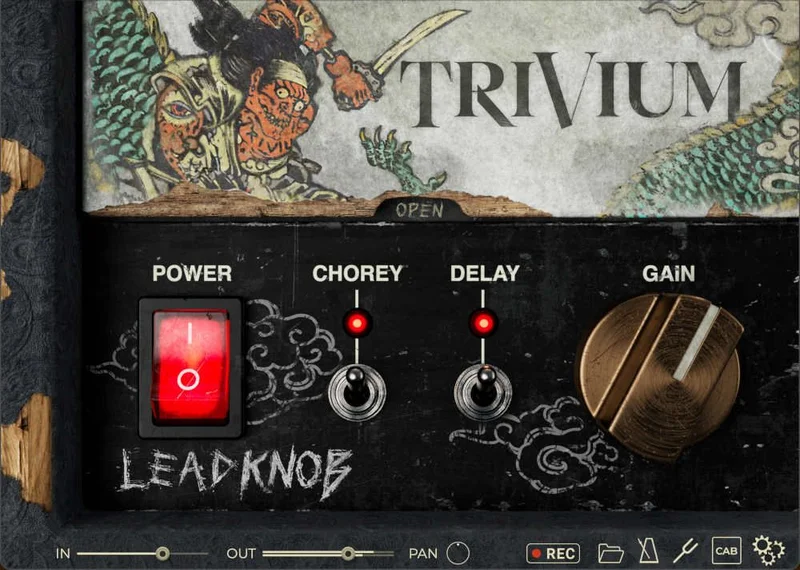
The AmpKnob Trivium Lead gives you almost no choice at all. That's the point.
The amp character is fixed around Beaulieu's lead sound. The built-in Chorey chorus/doubler and delay are pre-voiced for Trivium's melodic solo work. The cab and microphone chain has been chosen and locked in by Bogren. You open it and you play.
Reviewers consistently report that the plug-and-play experience is the plugin's biggest selling point. No agonizing over mic placement. No three-hour tone-chasing rabbit hole. That's a real advantage for producers who need a lead guitar track done by the end of a session.
Performance Deep Dive
The IRDX (Impulse Response Dynamix) technology is where Bogren Digital sets this apart from standard IR-loaded amp sims. Standard impulse responses are static snapshots. They capture the tonality of a cab but not how the speaker physically responds when pushed hard.
IRDX uses machine learning to reconstruct that dynamic speaker behavior. The result: the sim compresses, breathes, and breaks up the way a real cab would when the amp is cooking. Reviewers report this translates to leads that feel alive and track-ready without post-processing to remove the "stale" quality you hear with static IR-only sims.
We loaded a clean DI track from a humbucker-equipped guitar into the plugin. The attack sharpened up instantly. Picking dynamics registered clearly at the front end, and the tail of each sustained note had movement in it rather than a flat, frozen sustain wall. That's the IRDX doing its job.
You can also bypass the built-in cab entirely and load your own IRs, which keeps the plugin useful if you want to experiment beyond Bogren's chain. Multi-format support covers VST3, AU, and AAX, so it drops into any serious DAW on the market.
Published CPU data from Bogren Digital is thin. No specific latency figures or CPU percentage benchmarks are listed. Users on forums report it runs light, consistent with other plugins in the AmpKnob range, but we'd want independent testing to confirm that before calling it a light CPU load with confidence.
Where the Trivium Lead Wins
Speed. This is the plugin's love language.
We pulled up a rough demo session with rhythm guitars already bounced. Dropped the Trivium Lead on a new DI track, hit play. The lead sat above the rhythm guitars without any EQ adjustments. That doesn't happen often with amp sims out of the box.
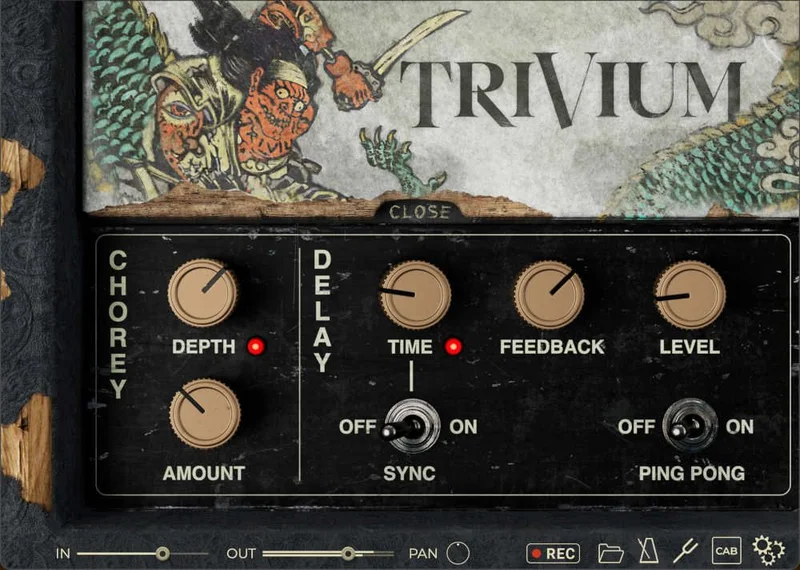
The stereo Chorey chorus/doubler is clever. It widens the lead without smearing it. Played back on headphones and on near-fields, the lead held its center while the shimmer spread out behind it. Useful, not gimmicky.
The standalone app is genuinely satisfying as a practice and capture tool. Built-in recorder, tuner, metronome with variable meter and auto-increment tempo settings. You can capture a riff at 2am without touching your DAW. That's a workflow win for any working guitarist.
For $49, you're getting a Jens Bogren-voiced rig that would cost real studio time to approximate from scratch. The value is solid for the target audience.
Where the Competition Wins
Flexibility. Full stop.
Neural DSP's Archetype: Gojira, to name the most direct comparison in feel and genre, gives you multiple amp channels, a full pedalboard, and enough variation to build tones for death metal, djent, or post-rock without fighting the plugin. The Trivium Lead is voiced for one thing. Try to use it for clean indie guitar and you're working against it.
Broader amp sim platforms like amp simulator plugins also offer more granular control over gain staging, EQ curves, and cabinet behavior. If you're building a versatile production setup, a plugin with a single tonal target creates a real workflow problem across a varied project slate.
The absence of independent review coverage is annoying for buyers doing due diligence. Most amp sim competitors have been stress-tested publicly across forums, YouTube tear-downs, and pro reviews. The Trivium Lead has a narrower paper trail, and that makes it harder to validate claims without doing your own testing.
Who Should Buy Which?
- ✅ Buy if you produce metal and need a lead tone on top of rhythm guitars fast.
- ✅ Buy if you're a Trivium fan wanting Corey Beaulieu's specific sonic signature in your rig.
- ✅ Buy if you want a standalone practice tool with recording, tuner, and metronome built in.
- ❌ Skip if you need tonal flexibility across genres beyond heavy metal.
- ❌ Skip if you want detailed amp controls and deep cab editing options.
- ❌ Skip if you're already running the full Bogren Digital AmpKnob Duet, which may cover similar ground at a broader level.
Specs & Technical Details
| Developer | Bogren Digital |
| Price | $49 |
| Plugin Format | VST3 / AU / AAX / Standalone |
| OS Support | Mac OS 10.13+ (Intel & Apple Silicon Native) / Windows 10+ |
| Activation | N/A |
| CPU Usage | Light (user-reported; no official data published) |
| Trial Available | N/A |
| Version Reviewed | N/A |
Score Breakdown
| Category | Score | Notes |
|---|---|---|
| Sound Quality | 4.5/5 | IRDX gives the lead tone real dynamic life; sits in a mix without much intervention |
| Value for Money | 4.5/5 | At $49, Bogren's cab voicing alone justifies the cost for metal producers |
| Ease of Use | 4.5/5 | Absurdly fast to get a working tone; minimal UI is frustration-free |
| Features | 3.5/5 | Chorey and delay are well-done but the overall feature set is narrow by design |
| CPU Efficiency | 3.5/5 | User-reported as light, but no published benchmarks to verify |
| Overall | 4.0/5 | A brilliant one-trick specialist, priced right for what it does |
Alternatives to Consider
Neural DSP Archetype: Gojira is the most direct competitor in spirit. It's built for heavy music but gives you significantly more amp channel variation, a full pedalboard, and flexibility beyond a single tonal signature. It costs more, but producers who work across multiple heavy subgenres will use every dollar of that difference. Check our amp simulator plugins guide for a full breakdown of where both sit.
Bogren Digital AmpKnob Duet is worth a look if you want to stay in the Bogren ecosystem but need rhythm and lead coverage together. Our AmpKnob Duet review breaks down how it compares as a more rounded studio tool.
STL Tones Howard Benson Vocals & Guitar Plugin takes a similar Bogren-style approach: one producer's chain, carefully voiced, no endless tweaking. Different tonal target, but the philosophy is the same. Worth demoing if simplicity matters to you across genres.
Should You Buy the AmpKnob Trivium Lead?
At $49, this is one of the more honest plugin purchases you can make in amp sim territory. You know exactly what you're getting before you buy it. Corey Beaulieu's lead tone, shaped by Jens Bogren, with IRDX speaker behavior that makes static IRs feel like a step backwards once you've heard it.
The caveat is real, though. This plugin is wrong for you if you want a workhorse amp sim that pulls duty across pop, blues, or prog sessions. It doesn't pretend to be that. It's a specialist tool in a market that sometimes overvalues generalism.
If heavy metal leads are a regular line item in your work, the Trivium Lead earns its place. If you've never mixed a chugging rhythm track with a screaming lead on top and thought "I need this to be easier," this plugin has nothing to offer you.
Buy it for the one thing it does. Don't apologize for that.
Related reviews: L12X Solid State Amplifier Review 2026
Frequently Asked Questions
What is IRDX technology and why does it matter for guitar amp sims?
IRDX stands for Impulse Response Dynamix, developed by Jens Bogren. Standard impulse responses capture the static tonal character of a cabinet but miss how a real speaker physically moves, compresses, and breaks up under different input levels. IRDX uses machine learning to reconstruct that dynamic behavior, so the sim responds to your picking attack and sustain the way a real cab would. The result is a lead tone that feels alive rather than frozen.
Can the AmpKnob Trivium Lead be used for genres outside metal?
Technically yes, but you'd be fighting the plugin's voice. It's tuned around Corey Beaulieu's high-gain, searing lead character. You can bypass the cab and load your own IR to redirect the tone, but the core amp character sits comfortably in heavy metal and doesn't naturally lend itself to clean or low-gain styles. There are better tools for genre-diverse work.
Does the standalone version replace a DAW for recording demos?
For capturing quick ideas, yes. The standalone includes a recorder, metronome with variable meter and auto-increment tempo, and a tuner, so you can lay down a riff, stay in time, and stay in tune without opening a project. It's not a substitute for full DAW production, but it's a legitimately useful scratch pad for guitarists who lose ideas between inspiration and boot time.
Is the AmpKnob Trivium Lead part of a larger bundle?
Yes. It's one component of the broader Trivium AmpKnob Bundle, developed with Matt Heafy, Corey Beaulieu, and Paolo Gregoletto. The bundle covers rhythm guitars, lead guitars, and bass, each voiced for its specific role in Trivium's recorded sound. Buying the full bundle gives you a complete, cohesive guitar and bass production setup built around the band's signature sound.