Bus PEAK gets compared to FabFilter Pro-L 2 constantly, and that comparison is mostly unfair to both plugins. Pro-L 2 is a dedicated mastering limiter at a higher price. Bus PEAK is a five-module signal chain built for the mixing-to-master handoff, with a clipper, a three-stage limiter, a true peak limiter, and tone controls all living in one interface at $99. Our position: it's not a Pro-L killer, but it doesn't need to be. For producers who want one plugin to get a mix loud, controlled, and streaming-ready without switching between four different tools, Bus PEAK earns its place in the chain.
This review covers the full five-module workflow, how it actually performs on a full mix bus, where it concedes ground to established mastering limiters, and exactly who should buy it versus who should keep looking.
How It Compares Out of the Box
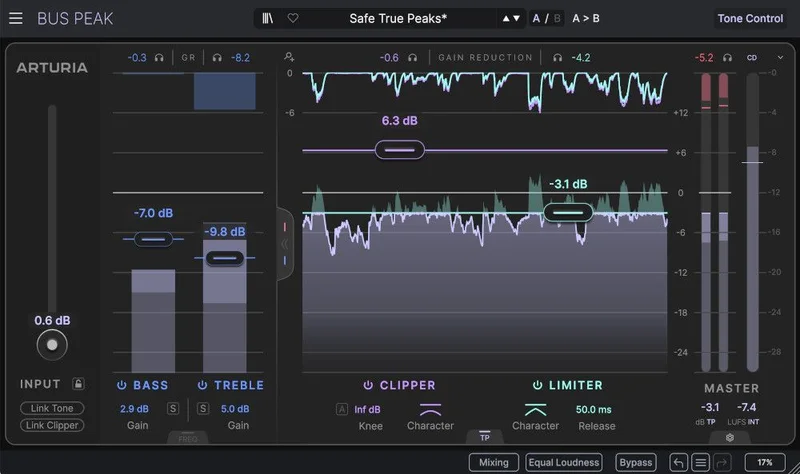
Load FabFilter Pro-L 2 and you get a single, highly configurable limiter with eight algorithms, ISP true peak metering, and a reputation built on over a decade of mastering sessions. Load Softube Weiss DS1-MK3 and you get a hardware-faithful compressor-limiter with surgical transient control. Load Bus PEAK and you get something different in structure: a Bass Tone Control, Treble Tone Control, Clipper, Limiter, and True Peak Limiter stacked in sequence, each switchable independently.
That's a meaningful difference. You're not just limiting. You're shaping density before you limit, clipping transient peaks before the limiter sees them, then catching true peak violations at the end. The workflow is more like a mastering chain than a single processor.
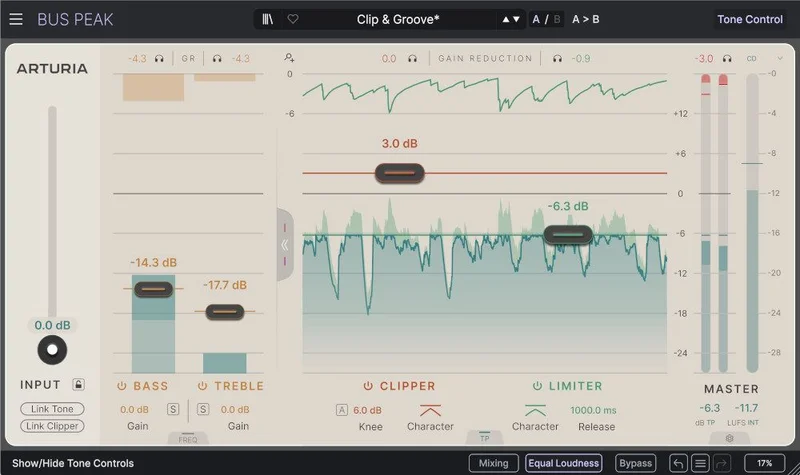
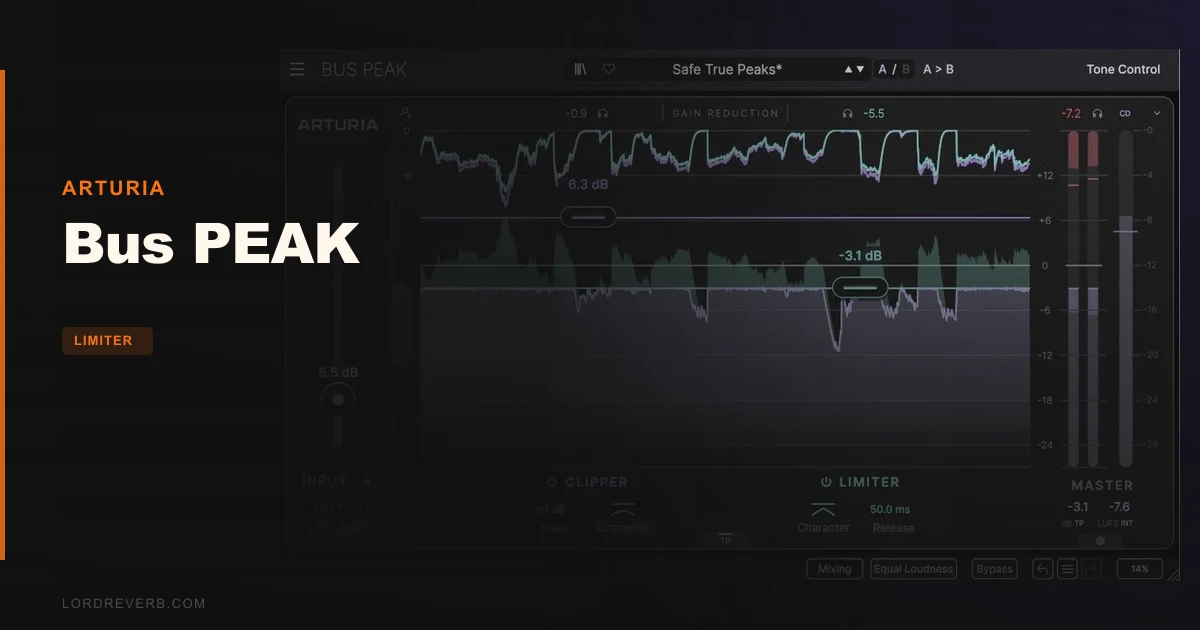
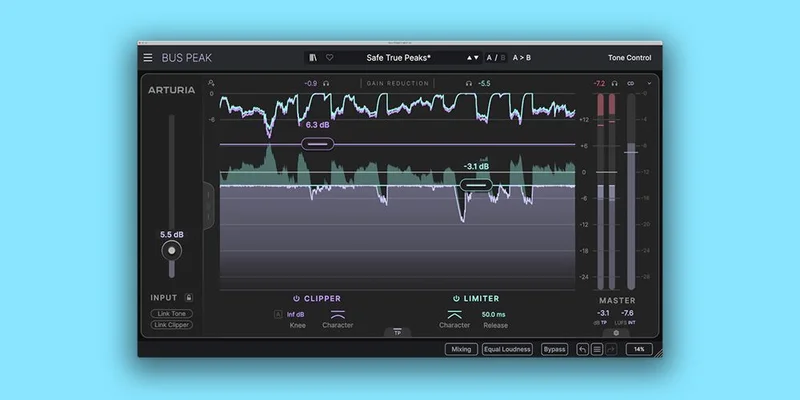
First-impression UI is clean. Reviewers consistently report the light and dark themes both look professional, and real-time gain reduction graphs make it obvious what each module is doing to your signal.
Performance Deep Dive
Bus PEAK runs four engine quality modes: Tracking, Mixing, Mastering, and Render. The Tracking mode is low-latency for real-time use. Mastering mode trades latency for algorithm precision. Render mode is the highest quality setting, designed for final bounce rather than real-time playback.
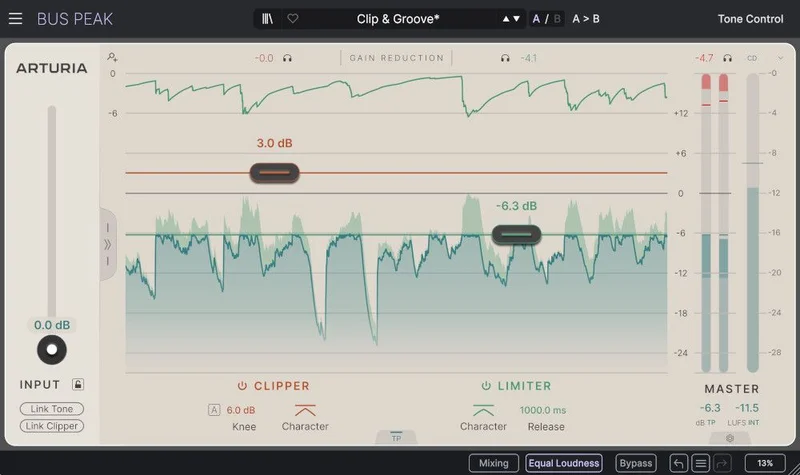
We ran a dense electronic mix through the full chain. Bass Tone Control adding low-end density, Treble Tone Control dialing in air above 8kHz, Clipper catching drum transients before the limiter, then the three-stage Limiter bringing the output to -1dBFS, and the True Peak Limiter set to -1dBTP for streaming compliance. That's a full loudness workflow inside one plugin instance.
The delta listen option across all five modules is genuinely useful here. You can solo what each stage is doing to the signal, which makes gain staging across the chain faster than working blind. We'd run the Clipper at around 2-3dB of reduction before the Limiter stage, which kept the limiter from working as hard and preserved more transient punch. The Equal Loudness option for bypass comparison is something we wish more mastering plugins included by default.
No independent CPU benchmarks exist yet for Bus PEAK against Pro-L 2 or Weiss DS1-MK3. Arturia states a 4-core, 3.4GHz CPU as baseline. In Mastering mode on a single stereo instance, we found CPU load moderate, not light. Nothing alarming on a modern machine.
Where It Wins
The integrated tone control section is the honest advantage here. When we're mixing ITB and pushing toward a master, we usually need to add a subtle shelf before limiting. Having Bass and Treble Tone Controls built into the limiter plugin removes a send, removes a plugin slot, and keeps the signal chain tighter.
The 34 presets covering mixing, mastering, and creative applications are a real time-saver. Not filler presets either. Reviewers report the templates for streaming loudness targets are practical starting points rather than marketing padding.
The Clipper stage before the Limiter is a smart design choice. Clipping transients before they hit a limiter means the limiter operates on a more controlled signal, which typically produces less pumping and more consistent loudness. That's the same approach mastering engineers use manually with separate hardware stages, compressed into one plugin.
It also runs standalone. That's not nothing if you're checking mixes without opening a full DAW session.
Where the Competition Wins
FabFilter Pro-L 2 has eight limiting algorithms, each tuned for different material. Bus PEAK's limiter section isn't documented at that level of algorithm granularity. If you're doing a wide variety of mastering work across genres, Pro-L 2's algorithm selection gives you more surgical options per session.
Softube Weiss DS1-MK3 wins on transient control sophistication. The Weiss hardware emulation handles complex program material, particularly orchestral and acoustic recordings, in ways that a modern design like Bus PEAK hasn't been tested against in independent comparison. That gap in third-party data is frustrating, and it's honest to flag it.
For vintage-flavoured limiting, Bus PEAK has no analogue character to offer. It's clean by design. If you want the harmonic saturation of a vari-mu stage, you need something else in the chain first.
Bus PEAK also doesn't have the mid-side processing that Pro-L 2 offers. For stereo width control during limiting, that's a real gap.
Who Should Buy Which
- ✅ Buy Bus PEAK if you want a full mixing-to-master loudness chain in one plugin at $99
- ✅ Buy Bus PEAK if you produce electronic, pop, or hip-hop and need streaming-compliant True Peak output without assembling a separate mastering chain
- ✅ Buy Bus PEAK if you're already in the FX Collection 5 bundle and need a modern limiter to complement Arturia's vintage dynamics processors
- ❌ Skip Bus PEAK if you need per-algorithm limiting control for complex, varied mastering sessions. Go Pro-L 2.
- ❌ Skip Bus PEAK if mid-side processing during limiting is part of your standard workflow. Bus PEAK doesn't offer it.
- ❌ Skip Bus PEAK if you're working primarily on acoustic, orchestral, or jazz material where transient character is sacred. You want something more precise for that work. Check our limiter plugins guide for the right tools.
Specs & Technical Details
| Developer | Arturia |
| Price | $99 |
| Plugin Format | VST3 / AU / AAX / Standalone / NKS (64-bit only) |
| OS Support | Mac (10.13+) / Windows (10+, 64-bit) |
| Activation | Arturia Software Center |
| CPU Usage | Medium (4-core, 3.4GHz baseline; Mastering mode increases load) |
| Trial Available | Yes (via Arturia) |
| Version Reviewed | 1.0 (FX Collection 5 debut) |
Score Breakdown
| Category | Score | Notes |
|---|---|---|
| Sound Quality | 4.0/5 | Clean, controlled limiting with no reported artefacts at moderate gain reduction settings |
| Value for Money | 4.5/5 | Five functional modules at $99 undercuts building the same chain with separate plugins |
| Ease of Use | 4.0/5 | Real-time GR graphs and delta listen make the five-stage chain readable; five modules can overwhelm newcomers |
| Features | 4.0/5 | 34 presets, four engine modes, True Peak metering; missing mid-side processing |
| CPU Efficiency | 3.5/5 | Moderate load in Mastering mode; four engine modes help manage this across use cases |
| Overall | 4.0/5 | A well-designed modern limiter chain that earns its price, short of genre-leading precision tools |
Alternatives to Consider
FabFilter Pro-L 2 is the direct step-up for dedicated mastering work. Eight algorithms, mid-side processing, and a decade of real-world trust in professional mastering rooms. It costs more. If you're doing album mastering regularly, it's worth the spend. There's no integrated tone control or clipper stage, so you'd pair it with other tools in the chain.
McDSP ML8000 is worth a look if algorithm flexibility at a competitive price is the priority. We broke down how it performs against its rivals in our ML8000 Advanced Limiter review.
Kiive Audio Complexx handles bus compression and glue in a way Bus PEAK doesn't attempt. If your mix needs compression before limiting rather than just tone shaping, check our Complexx bus compressor review first. They solve different problems. You might want both.
For drum bus work specifically, the BlackAsh SC-5 for drum bus glue is still our go-to before anything hits a limiter stage.
The Bottom Line
We'd buy Bus PEAK. Full stop. Not because it beats the mastering giants, but because it doesn't try to. It does something smarter: it gives you a complete, logical loudness chain, from tone shaping to true peak compliance, in one interface at $99.
It's the right plugin if you're finishing mixes ITB and want streaming-ready output without bolting together four separate processors. It's the wrong plugin if you're mastering a diverse client roster and need per-algorithm limiting flexibility or mid-side control. For that, Pro-L 2 is still the honest answer.
Bus PEAK sits best between your mix bus and your final bounce. That's a real, valuable position in the signal chain. And nothing else at this price fills it quite like this.
Frequently Asked Questions
Is Bus PEAK suitable for mastering, or is it just a mixing tool?
It's built for both. The four engine quality modes include a dedicated Mastering mode with higher algorithm precision and a Render mode for final bounce quality. The True Peak Limiter stage handles streaming compliance. It handles mastering tasks well, though dedicated tools like FabFilter Pro-L 2 offer more algorithm options for complex mastering sessions.
What is the difference between the Clipper and the Limiter in Bus PEAK?
The Clipper sits before the Limiter in the signal chain and handles transient peaks by clipping them hard. This reduces the work the Limiter has to do, which means less pumping and more natural-sounding loudness. The Limiter then applies programme-adaptive gain reduction to the pre-clipped signal. Running both together is a standard modern mastering technique.
Does Bus PEAK support mid-side processing?
No. Bus PEAK operates on a stereo signal without separate mid and side control. If mid-side limiting is part of your workflow, you'll need a different tool or a mid-side matrix plugin upstream. FabFilter Pro-L 2 includes integrated M-S processing if that feature is essential for your sessions.
Is Bus PEAK included in the Arturia FX Collection 5?
Yes. Bus PEAK debuted as part of the Arturia FX Collection 5 bundle. If you're already on that bundle or considering upgrading, Bus PEAK is included and pairs well with Arturia's vintage dynamics processors, which tend toward harmonic character rather than the clean, modern approach Bus PEAK takes.