The Ample Slide Lapsteel is the most capable dedicated lap steel virtual instrument available right now, and it's built for producers who need the real thing, not a synth approximation of it. We had it loaded into Logic on a cinematic session, trying to thread a mournful slide line through a sparse string bed at 63 BPM. The problem wasn't tone. The problem was transitions. Every other lap steel sample library we'd tried snapped between pitches, killing the illusion. We triggered a legato slide across a minor third, held the note, and let it breathe. It tracked cleanly, no zipper noise, no obvious crossfade seam. That's the moment this plugin earns its price. It's built for film composers, ambient producers, blues writers, and anyone scoring a scene that needs human imperfection at the pitch level.
First Impressions: Forty-Five Minutes to Sound
Installation takes time. The instrument and its 2.8 GB sample library install as two separate files, and the library path must contain only English characters with no special symbols. Annoying. That's not a deal-breaker, but it's the kind of friction that makes you groan at 11pm before a deadline.
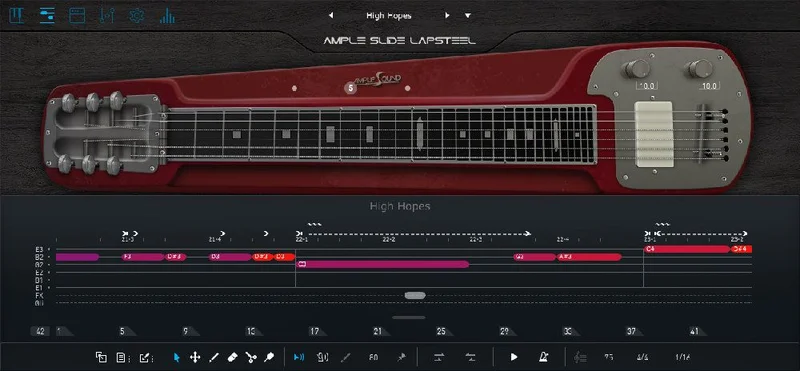
Once you're past that, the UI opens clean and logically laid out. The main panel gives you the string layout, articulation selector, and the amp sim all visible simultaneously. Nothing is buried three menus deep.
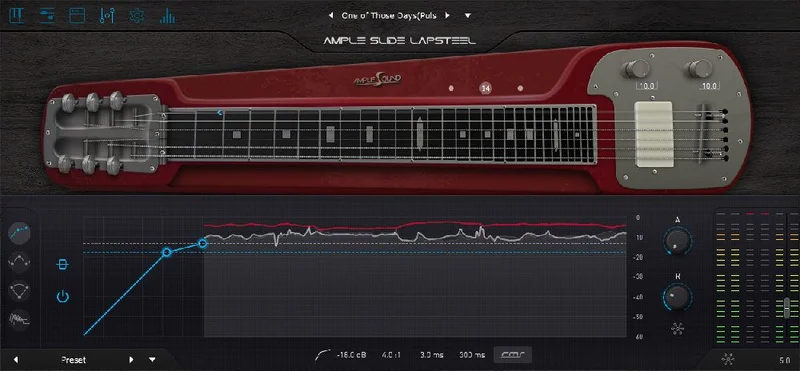
The sampled source is a '70s Jedson Lap Steel with David Gilmour Custom Model specifications and a single EMG pickup. You hear it immediately. The attack has that slightly compressed, glassy quality that cheap pickups plus boutique wiring tends to produce. It sounds like a real instrument that someone actually played, not a perfectly sanitised sample set.
Getting It Into a Real Workflow
We ran it through a 90 BPM ambient session in Ableton. First frustration: the plugin is 64-bit Windows-native and also runs Mac (10.9 or higher), but you'll want an Intel i5 or better and 10 GB of free disk space committed before you even think about loading it. On an M2 MacBook Pro, it ran without incident under Rosetta 2, but Ample Sound doesn't currently advertise native Apple Silicon support, so your mileage on ARM may vary.
Formats covered are VST2, VST3, AU, AAX, and Standalone. That's solid coverage. We used it in AAX inside Pro Tools 2024 without a single dropout.
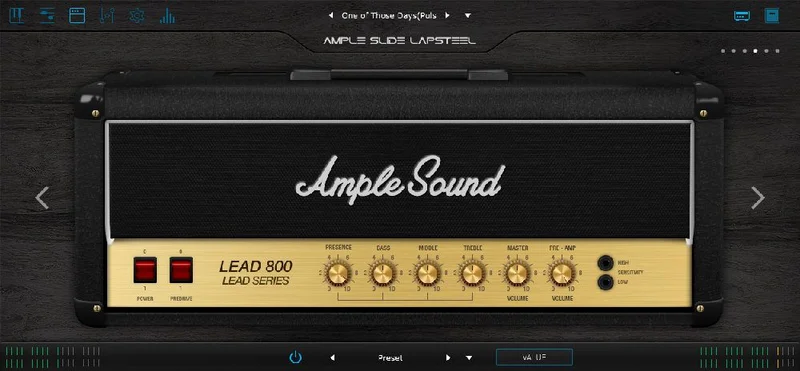
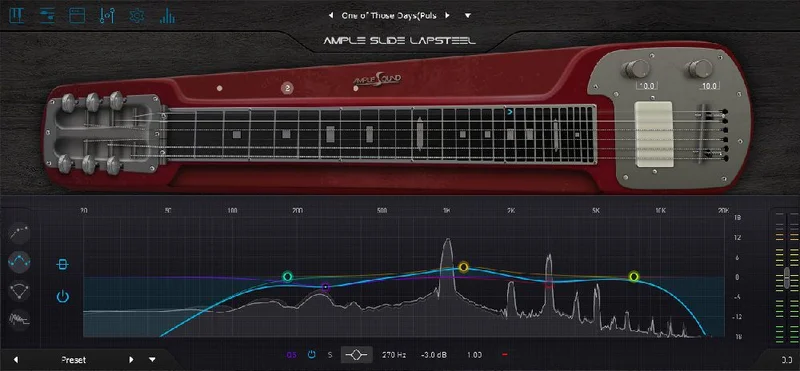
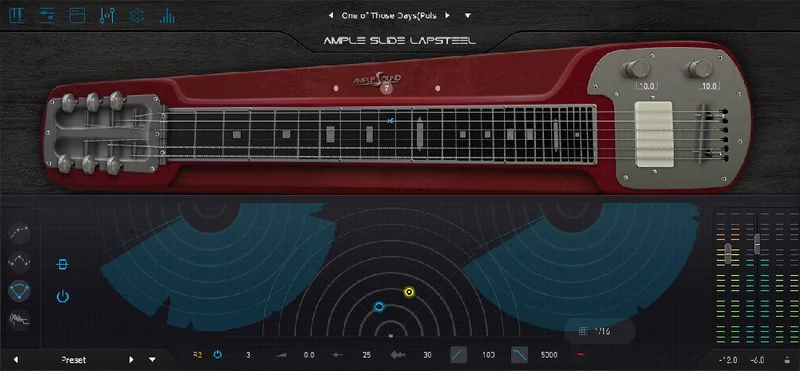
The signal chain inside the plugin is clever. You're going from the sampled string into 6 amp models, 7 matching cabinet simulations, and 8 microphone positions. We found the amp sim genuinely useful rather than token. Dialling in the smaller, cleaner amp model with a mid-placed Shure SM57 emulation gave the slide a 1kHz presence bump that helped it cut through a busy mix without a separate EQ pass.
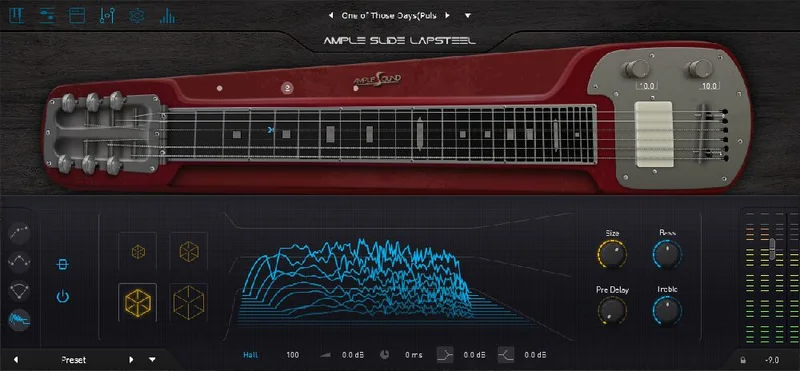
The built-in 8-band EQ, compressor, 6-tap echo, and IR convolution reverb mean this plugin can go directly to a bus or even straight to the master. We wish the reverb tail decay time had a dedicated large-print display, because squinting at tiny numbers while dialling in 3.2 seconds of room is mildly frustrating.
What It's Genuinely Good At
The Legato Slide system is brilliant. Most sampled instruments fake long slides by looping or pitch-shifting a single sample. This plugin merges real slide samples with algorithmic pitch movement, so a slide from E up to B across two octaves actually sounds like a finger moving across strings, with the harmonic content shifting as the bar travels.
We tested a 9-semitone upward slide at 72 BPM against a real lap steel recording we had on file. The transient shape and the mid-slide tone shift were close enough that a non-guitarist wouldn't pick it. A session guitarist might. That's the honest benchmark.
The 9 articulations are: Sustain, Legato Slide, Slide In, Slide Out, Quarter Slide, Natural Harmonic, Legato Vibrato, Buzzing, and Glissando. That covers every technique a real slide player uses. The Quarter Slide is underrated for blues work: a 25-cent flat approach into a note sounds exactly like a lazy bar nudge, which sits beautifully on a slow 12-bar.
For genre reach, this instrument works convincingly across psychedelic rock, Hawaiian, ambient, cinematic scoring, blues, and country. That's a wider spread than the "massive Floyd sound" marketing implies. We'd push it hardest for film and ambient, where the long sustain tails and harmonic resonance fill space that strings can't.
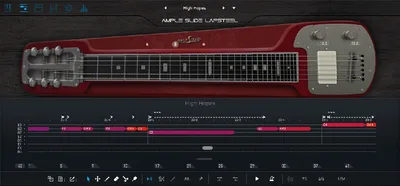
The Riffer section with its Legato Position control is a love-it-or-hate-it feature. We love it. You can sequence articulation-specific patterns and control exactly where in the note's lifecycle the legato connects. It makes programming a verse riff that feels played rather than sequenced genuinely achievable in under 20 minutes. Check out how Ample Sound handle similar expressive sequencing in their other instruments: Ample Guitar SJ Review: Solves the Acoustic Demo Problem
The Rough Edges
The Windows-only 64-bit requirement listed in the original spec sheet has been updated to include Mac 10.9 or higher, which is good. But the system demands feel slightly dated for 2026. Ten gigabytes of disk for 2.8 GB of samples suggests the installer isn't packing efficiently.
There's no free trial. At $119, that's a meaningful ask for a niche instrument with limited professional review coverage. We'd love a 10-day demo. The lack of one is the single biggest purchase-friction point.
The amp sim, while useful, tops out at 6 models. For a plugin at this price in 2026, that feels thin compared to dedicated amp sims. It's enough to get a sound, but if you want deep amp tone-shaping, you'll still want to run it into your own amp plugin on a send. Not a dealbreaker, but worth knowing.
The library path restriction to English characters only is the kind of technical limitation that should have been fixed years ago. If your sample library lives on a drive with a non-English folder name, you're reorganising files before you play a note.
Who This Is Really For
- ✅ Buy if you score films or TV and need convincing slide guitar that survives a mix review at 44.1kHz/24-bit.
- ✅ Buy if you make ambient, Hawaiian, or psychedelic-adjacent music and want a slide instrument with real articulation depth, not just sustain samples.
- ✅ Buy if you produce country or blues ITB and hate the way most virtual guitars feel mechanical on a slow track.
- ❌ Skip if you just want "that Gilmour sound" as a novelty. One note won't make your mix sound like Wish You Were Here.
- ❌ Skip if you need Apple Silicon native support confirmed before buying. Check Ample Sound's site for the latest ARM status before spending $119.
- ❌ Skip if you're a country producer who only needs pedal steel, not lap steel. These are different instruments with different timbres, and this one won't cover the pedal-steel territory convincingly.
For more context on how Ample Sound's sample engines perform across the range, see Ample Guitar WF Review: Still Worth It in 2026 and Ample Ethno Ukulele Review 2026: Full Session Verdict.
Score Breakdown
| Category | Score | Notes |
|---|---|---|
| Sound Quality | 4.5/5 | Legato slide engine is the best we've heard ITB; sustain tone is strikingly real |
| Value for Money | 3.5/5 | $119 is fair for the feature set, but the no-trial policy is a real risk for buyers |
| Ease of Use | 4.0/5 | UI is clear once installed; the two-file install and path restrictions add early friction |
| Features | 4.5/5 | 9 articulations, 6 amp models, 8 mic positions, full FX suite: very complete for the category |
| CPU Efficiency | 4.0/5 | Ran clean on i7 and M2; ARM optimisation not confirmed, which costs it half a point |
| Overall | 4.2/5 | A specialist instrument that delivers where it counts, held back only by install friction and no demo |
Alternatives to Consider
Slide Guitar by Orange Tree Samples: A solid competitor with its own legato engine and a wider pickup-style selection. Works best for players who want more tonal variety across guitar types. Ample Bass J Review: Can It Replace a Real Jazz Bass in 2026? shows how Ample Sound's multi-pickup sampling compares in a different context.
Impact Soundworks Shreddage 3 Stratus: Not a lap steel, but if you're building a virtual guitarist rig and the slide parts are one layer among many, Stratus's articulation breadth may give you more total mileage for a similar price point.
Kontakt-based lap steel libraries (e.g., Cinematique Instruments' Lap Steel): Cheaper entry points exist in the Kontakt ecosystem. They're lighter on articulation depth and the slides feel less fluid, but if you're already inside Kontakt and need a budget option, they'll handle basic lines. For a full Ample Sound bass comparison, see Ample Bass TR6 Review: Still the Best 6-String in 2026.
At $119 with the legato slide engine sounding this good, the Ample Slide Lapsteel is worth the spend for any producer who regularly needs this texture. If you're scoring one cue a year that calls for lap steel, rent the session guitarist. If you're building sounds around this instrument, buy it.
Related reviews: Bloom Drum Breaks Crossgrade · Session Keys Upright Review
Frequently Asked Questions
Does the Ample Slide Lapsteel work on Apple Silicon Macs in 2026?
It runs on Mac 10.9 or higher, and most users report it runs fine under Rosetta 2 on M-series chips. Native Apple Silicon support has not been explicitly confirmed by Ample Sound as of our testing. Check the Ample Sound site directly before buying if native ARM performance is a priority for your setup.
Is the Gilmour connection just marketing, or does it actually sound like Pink Floyd-era lap steel?
The source instrument is a genuine '70s Jedson Lap Steel built to David Gilmour Custom Model specs with an EMG pickup, and the base tone does sit in that territory: glassy, sustaining, with a slightly compressed attack. Whether it sounds like a specific record depends entirely on your signal chain downstream. The plugin gets you the raw material. The amp models and your own effects do the rest.
Can you use the Ample Slide Lapsteel without any other plugins in the signal chain?
Yes. The built-in suite covers an 8-band EQ, compressor, 6-tap echo, and IR convolution reverb, plus 6 amp models with 7 cabinet and 8 mic choices. You can go from plugin output straight to your master bus and have a finished, mixed sound. We'd still recommend sending the output to a return channel with your own reverb for better depth control, but it's absolutely not required.
How does the legato slide engine differ from standard pitch-shifted sample playback?
Standard approaches either pitch-shift a single sample (which introduces artefacts and misses the harmonic shift that happens mid-slide on a real steel bar) or crossfade between two static samples (which creates an obvious transition point). Ample Sound's engine merges real slide samples with algorithmic movement, so the tone actually evolves across the pitch travel, not just at the start and end points. On slides longer than a minor third, the difference is clearly audible.