GTR Solo is a worthwhile amp sim for players who want to get a great guitar tone quickly and without fuss, and at $29.99 it mostly delivers on that promise. The claim that it sounds musical and close to real amps holds up for clean and overdrive tones. Where it starts to wobble is in the detail work: tracking sessions, delay noise, and DAW compatibility snags that remind you this plugin has roots in an older generation.
If you're a bedroom player, a songwriter demoing ideas, or someone who practices quietly at 2am, GTR Solo earns its spot. If you're tracking a final guitar part for a commercial release, you might want to look harder before committing.
The Claim: A Greatest Hits of GTR3
Waves positions GTR Solo as the greatest hits version of their GTR3 suite. Same modeling, same detail, stripped down to the essentials so you're not wading through options you'll never touch.
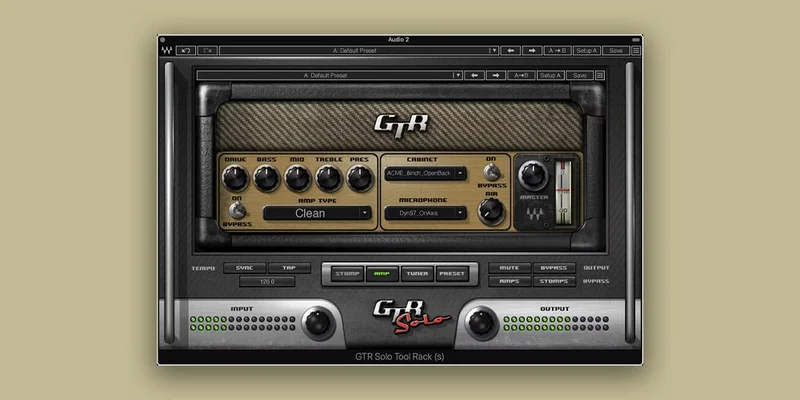
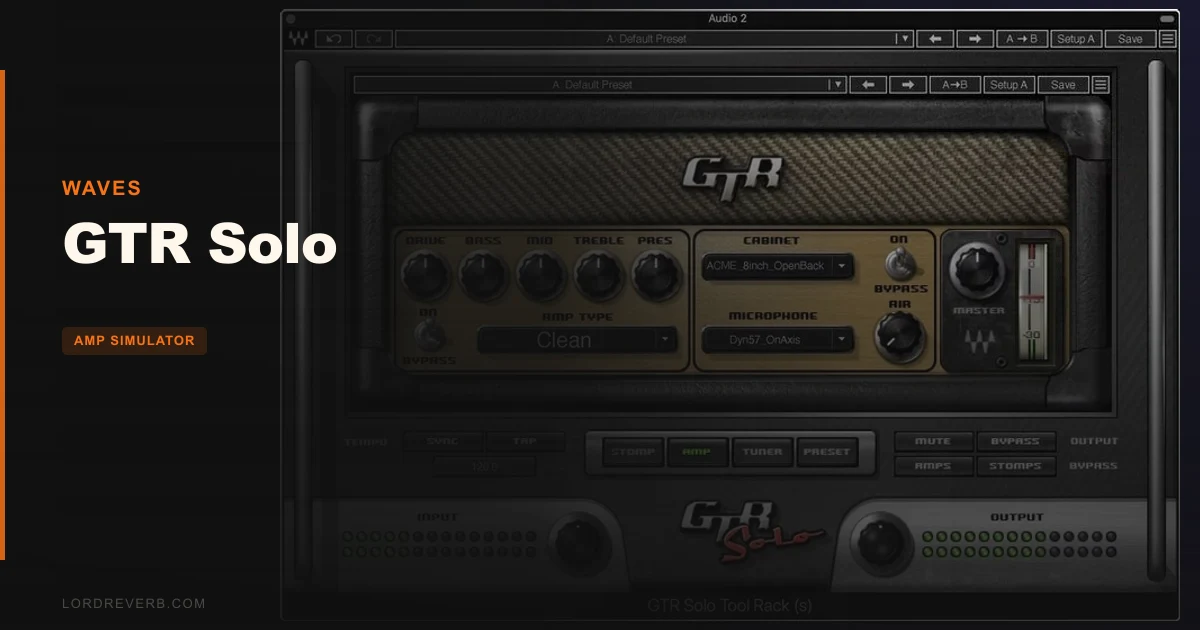
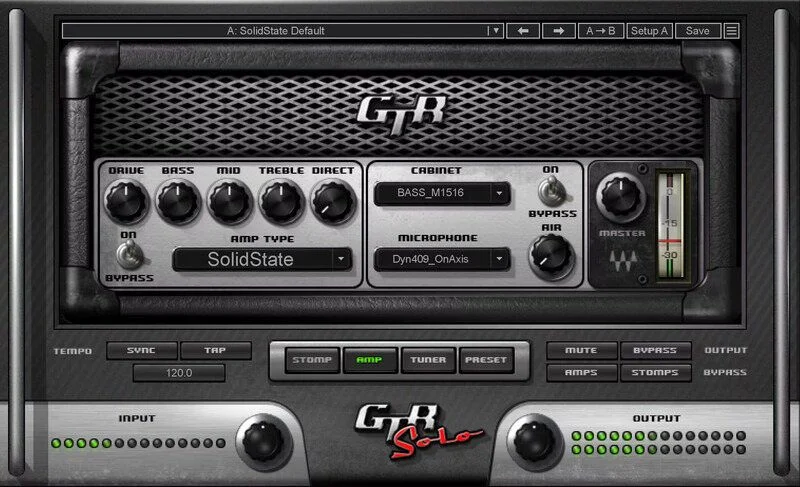
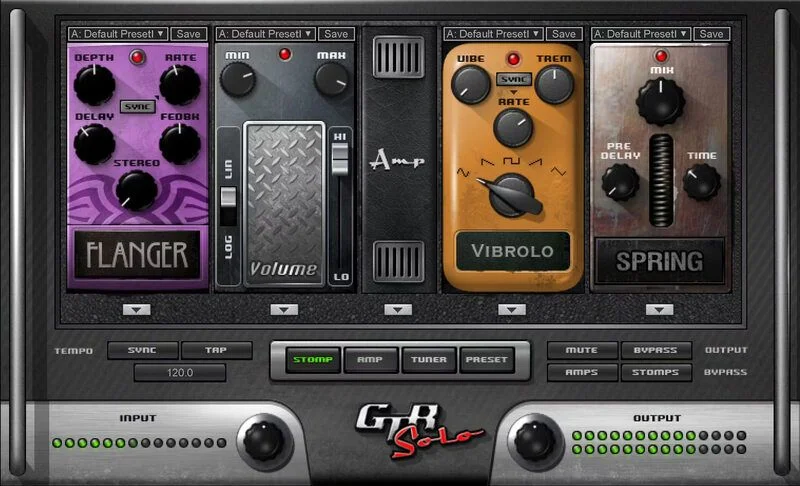
That means 9 amps across clean, overdrive, and high-gain territory, 2 clean, 3 overdrive, and 4 high-gain, with two of them custom designs by Paul Reed Smith. You get 9 guitar cabs, 1 bass cab, 3 mic types with 12 miking options, and a 4-pedal effects chain you can position pre- or post-amp. Drag the reverb before the amp if that's your thing. Sixty-eight factory presets get you moving immediately. The ToolRack paradigm is designed for real-time performance, and there's tap tempo with tempo sync for the delay-driven players.
The pitch: big sounds, fast workflow, at a price that doesn't hurt.
What Holds Up
The amps are the best part. Owners consistently describe them as musical, and the gap between GTR Solo's clean and overdrive tones and actual hardware is minimal enough that you'd have to work hard to tell. For anyone getting into guitar recording, that's a satisfying discovery rather than a compromise.
Push one of the high-gain amps and roll back the guitar's volume knob. The response cleans up the way a good tube amp does. That kind of feel keeps players coming back.
The workflow is genuinely fast. Load a preset, tweak the cab mic position, drag the chorus before the amp, done. No deep menus, no three nested screens to find the reverb tail control. Owners specifically call out speed as a strength, and you feel it the first time you're chasing a tone before a session starts.
The bass cab is a clever inclusion. Users report GTR Solo works well on bass, which means the plugin does double duty for anyone recording guitar and bass themselves.
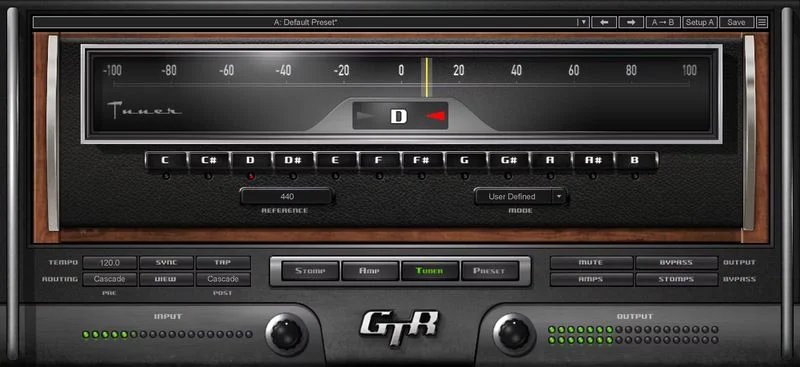
The tuner handles alternate tunings and user-defined tunings, which is a small thing that becomes annoying to live without once you have it.
What Doesn't Hold Up
Noise in the delay settings. That's the most frustrating technical issue owners flag, and there's no clean workaround that doesn't cost you something in the effect itself. If delay is a big part of your sound, that matters.
Compatibility is patchier than it should be. Some users run into problems opening GTR Solo in their recording software. That's not an abstract risk: it's a real thing that happens, and troubleshooting a plugin at the start of a session is a terrible way to spend your time.
One reviewer put it plainly: GTR Solo doesn't feel up to date next to current amp sims. That's a fair read. The modeling is solid, but modern competitors have moved into more surgical control of cab IR loading, deeper modulation options, and tighter DAW integration. GTR Solo doesn't go there.
One buyer found results disappointing for tracking. That tracks with what the plugin is built for: it's optimised for speed and playability, not for the kind of obsessive tone-shaping you do when a guitar part is going on a final mix. Know that going in.
Who Gets the Promised Result
Beginners and intermediate players get almost everything they want here. The amps sound great for the learning curve, preset speed removes the barrier of not knowing where to start, and $29.99 is a genuinely low bar for what you're getting.
Practice players who want good tones at low volume late at night: this is a legitimate answer. The quiet practice use case is well-covered and well-reported by owners.
Skip GTR Solo if you're tracking guitars for a serious release and need that extra inch of control. Skip it if delay is load-bearing in your sound and you can't afford to chase a noise floor. And skip it if you don't have a DAW on the compatibility list, because you might spend more time troubleshooting than playing.
The Verdict
At $29.99, GTR Solo is a smart purchase for anyone who wants musical amp tones without a learning curve. The PRS custom amps and the fast drag-and-drop workflow earn their money. The delay noise and DAW compatibility gaps are real problems, not minor footnotes.
We'd buy it for a second machine used for practice and demos. We'd think twice before making it the only amp sim on a machine where tracking quality matters. That's not a dismissal: it's the right way to use a plugin that's honest about what it is.
Specs & Technical Details
| Developer | Waves |
| Price | $29.99 |
| Plugin Format | VST / AU / AAX (Mac); VST / AAX (PC) |
| OS Support | macOS Monterey 12, Ventura 13, Sonoma 14, Sequoia 15; Windows 10 or later |
| Activation | N/A |
| CPU Usage | N/A |
| Trial Available | N/A |
| Version Reviewed | N/A |
Score Breakdown
| Category | Score | Notes |
|---|---|---|
| Sound Quality | 4.0/5 | Amps are musical and close to hardware; delay noise is a dent |
| Value for Money | 4.0/5 | Strong at the price point for the target player |
| Ease of Use | 4.5/5 | Fast preset workflow and drag-and-drop chain are hard to argue with |
| Features | 3.5/5 | Solid selection but behind modern amp sims in depth and integration |
| CPU Efficiency | N/A | Not verifiable from available data |
| Overall | 3.8/5 | Underrated for beginners, overrated for serious tracking sessions |
Alternatives to Consider
Pod Farm is the go-to for players who want more stomp options. Some users who left GTR Solo cited the pedal selection as a reason to look at Pod Farm first, and if effects are central to your guitar sound that's a real advantage.
Amplitube and Guitar Rig both sit in the same category and are worth comparing if you need deeper cab control or stronger DAW integration. Neither is a plug-and-play upgrade at every price point, but if GTR Solo's current-generation limitations feel like a problem, those two are the natural next stop.
Revalver is another name that comes up in this comparison. Worth checking if the amp modeling depth matters more to you than speed.
Who Should Buy GTR Solo in 2026
If you're a guitarist who wants to plug in and find a tone quickly, GTR Solo at $29.99 is a clever solution that won't embarrass you. The PRS amps are brilliant for clean and crunch work. The drag-and-drop effects chain is satisfying in a way that more complicated plugins aren't.
But if you're tracking guitar for anything that needs to hold up under scrutiny, the delay noise issue will annoy you, the DAW compatibility risk is real, and the feeling that you've hit the ceiling of what GTR Solo can do will come sooner than you'd like.
Buy it for the practice rig and the demos. For your best tracking session? Go look at the alternatives first.
Frequently Asked Questions
Does GTR Solo work on bass as well as guitar?
Yes. GTR Solo includes a dedicated bass cab alongside the guitar cabs, and owners report it works well on bass. It's not a bass-specific plugin, but it does the job if you're tracking bass and guitar on the same setup.
Is GTR Solo good for beginners?
It's one of the stronger choices for players just getting into amp sims. The presets get you moving immediately, the amps are musical without needing deep knowledge to dial in, and the drag-and-drop effects chain makes the signal chain concept easy to understand hands-on. The price keeps the risk low.
What DAW formats does GTR Solo support?
On Mac, GTR Solo supports VST, AU, and AAX. On PC it supports VST and AAX. That covers most major recording software, but some users have reported compatibility issues in certain programs, so it's worth checking your specific setup before buying.