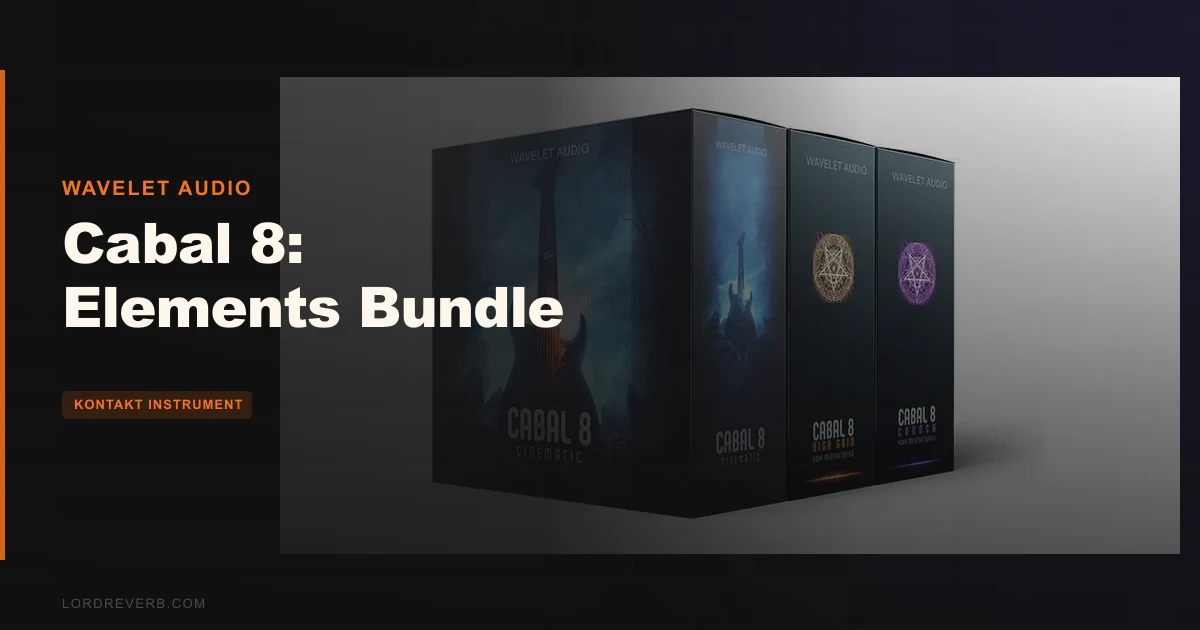
The Cabal 8: Elements Bundle is a Kontakt-based sampled 8-string guitar library from Wavelet Audio, priced at $89, and whether it belongs in your session depends almost entirely on one question: are you writing djent-influenced progressive metal, or something else? If you answered "something else," the honest answer is that you'll probably feel cheated.
That's not a guess. It comes straight from the people who bought it. One user put it plainly: the Elements bundle offers poor value and may leave buyers feeling cheated. Another found that the baked-in chorus, phaser, and flanger effects make it impossible to get a dry signal without fighting through post-processing. A third came in expecting a workhorse rhythm guitar and found something that buckles under repetitive power chords.
And yet, for a specific kind of producer, it works. Push it into a djent riff with proper EQ and compression, layer the Crunch NKI under the Hi-Gain, and the result is dense and satisfying in a way that's genuinely hard to build from scratch. The pitch-wheel portamento is clever. Eight Round Robins per note provide decent variety without eliminating repetition on faster riffs. The sample quality is real.
So this is a 50/50 review. At $89, it earns its keep for the right workflow. For the wrong one, it wastes your money and your afternoon.
Who Ends Up Regretting This
You'll regret this if you need a dry DI signal. The Elements version does not include clean DI NKIs. The full version does. That distinction matters a lot if your plan was to run the samples through your own amp sim chain from a neutral starting point.
You'll also regret it if your tracks lean on repetitive riffs or dense power chord progressions. Owners report those are exactly the moments where the library struggles. The shotgunning issue, where the same sample gets triggered too often in a row, is a documented problem that no amount of EQ fixes.
And if you don't already own a licensed copy of Kontakt 5.7.3 or higher, the free Kontakt Player won't load this. Factor that into the real cost.
Producers working in rock, post-rock, or anything clean-adjacent will hit a wall fast. The two included guitars, Hi-Gain and Crunch, are distorted 8-string instruments. There's no middle ground in the Elements version.
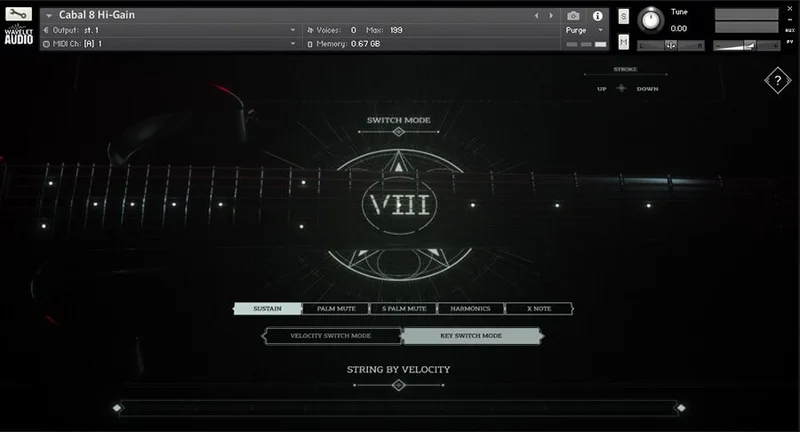
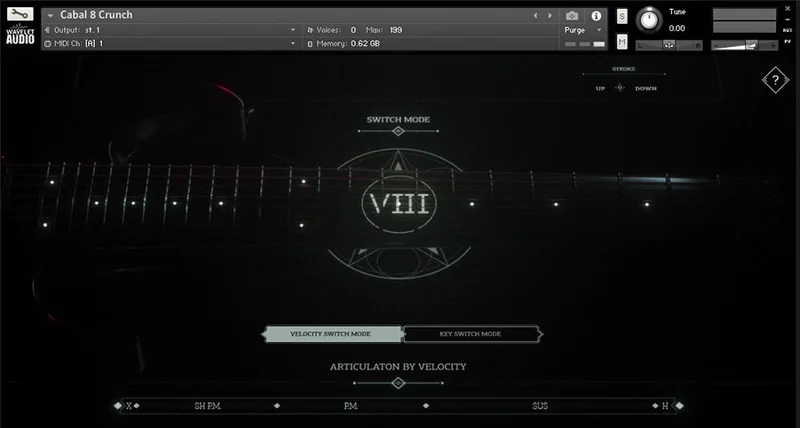
The interface is also frustrating in a way that's hard to overlook. Tiny white type on a black background is genuinely difficult to read, especially on a high-resolution monitor. Small annoyances compound over a long session.
What Owners Actually Say
Start with the good, because it's real. Owners consistently report that the sound quality is good when you're willing to work for it. The phrase "adequate EQ and compression" comes up often, and that's honest. This isn't a library you drop in and call done.
The pitch-wheel portamento gets specific praise. Owners describe glissandos that feel realistic because slide noise gets triggered randomly, not mechanically. That detail is what separates a convincing guitar part from something that sounds like a robot playing scales.
Doubling the Crunch NKI with Hi-Gain is the workflow tip that comes up most in owner reports. It's a clever pairing: Crunch fills the mid-range body, Hi-Gain adds the aggressive top end, and together they produce something wider and more convincing than either guitar alone.
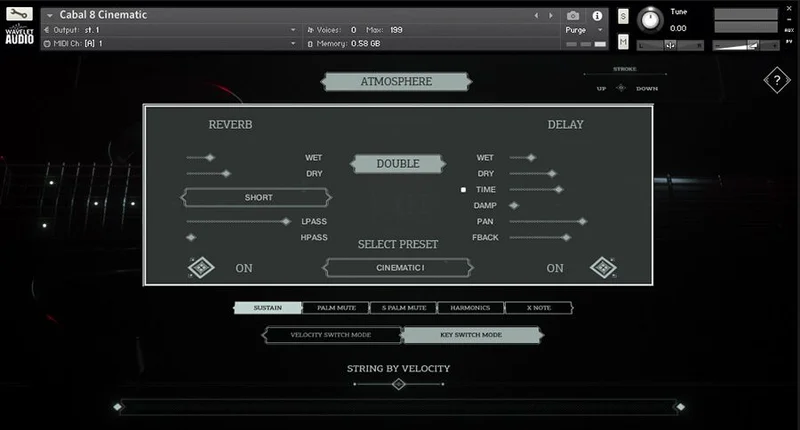
But the complaints are consistent too. Baked-in effects are the most common frustration. If the built-in chorus or phaser doesn't fit your track, you can't simply turn it off and play dry. You're working around it, not with it.
The lack of tutorial materials gets a mention from multiple users, and you're expected to figure it out yourself.
Shotgunning is real. On repetitive riffs, the same sample repeats in a way that trained ears catch immediately. Eight Round Robins per note is a decent count, but it doesn't solve the problem when a riff hammers the same note 16 times in a bar.
What You Actually Get
The bundle contains over 9,800 hand-edited samples recorded at 48kHz and 24-bit. That's a substantial sample pool, and the editing quality shows in the articulation behaviour.
Two guitars are included: Hi-Gain and Crunch. Hi-Gain is a distorted 8-string. Crunch is an 8-string with a powerful crunch character. Both are recorded with up and down picking, which matters for riff realism.
Each guitar ships with 6 primary articulations: Sustain, Palm Mute, Short Palm Mute, Harmonics, X-Note, and Tappings. Two additional articulations cover FX territory: FX Sustain and FX Palm Mute. That's a good spread for an extreme metal library.
Eight Round Robins per note is the number that stands between you and obvious machine-gun repetition on faster riffs. It's adequate. Not generous, but adequate.
MIDI is included. The pitch-wheel portamento algorithm is built in, enabling cross-fret glissandos that trigger random slide noises as part of the movement.
What's missing matters. No Cinematic guitar. No Blackhole or Sparkverb reverb presets. No clean DI. Those are all in the full version, not here. Seven gigabytes of hard drive space is required.
Digging Into the Articulations and Playing Feel
Load up the Hi-Gain NKI and start a riff. The Sustain articulation handles your standard fretted notes and responds well to velocity changes. Push velocity high and the attack gets aggressive. Bring it down and the tone softens without losing its grit.
Palm Mute and Short Palm Mute are where a lot of djent-style writing lives, and the library handles them reasonably well. Short Palm Mute is tighter and percussive. Full Palm Mute has more body. The difference is audible and useful when you're building that rhythmic chug that defines the genre.
Tappings open up melodic possibilities that most rhythm-focused guitar libraries skip entirely. X-Note handles dead or muted string hits, the kind that add percussive texture between chord hits. Together, these two articulations give the library more range than a pure rhythm tool.
Harmonics are present but, like everything in this library, benefit from EQ work before they sit correctly in a full mix. On their own, they can sound a little thin.
The FX articulations, FX Sustain and FX Palm Mute, are the wildcard elements. These are texture-forward and work best as accent material. They're not meant for melodic work, but dropped into an arrangement at the right moment, they add character.
The pitch-wheel portamento is genuinely one of the smarter things in the library. Map your pitch wheel, slide between notes, and the built-in algorithm introduces random slide noise. You get something that feels less sampled and more played. That's a real win.
The EQ and Processing Reality
Here's the part the developer's marketing skips. The claim that this bundle delivers results "without third-party tools or plugins" doesn't hold up against what owners actually report.
Every experienced reviewer says EQ is required. Compression is required. The raw samples are good, but they're not mix-ready without work. That's not a dealbreaker, but it's honest context that shapes whether $89 is worth it to you specifically.
The baked-in effects are the real friction point. Some amount of chorus, phaser, or flanger is already in the signal. If that suits your track, brilliant. If it doesn't, you're EQing around an effect you didn't choose, which is a frustrating position to be in.
Owners who get the best results treat the library as a starting material. They EQ out problem frequencies, add compression to tighten the transients, and use the layer pairing (Crunch under Hi-Gain) as the foundation of a guitar sound rather than the finished product.
That's a valid workflow. It's just not the "ready-to-use" experience the developer describes. Know that going in and you'll be fine. Go in expecting instant results and you'll be annoyed.
For djent specifically, the low-mid punch in the Palm Mute samples responds well to a high-pass around 80Hz and a small cut between 300Hz and 400Hz to reduce boxy buildup. Add a touch of compression with a fast attack and the rhythm parts snap into place.
Value For Money: Elements vs. Full Version
This is the section that matters most if you're standing at checkout with your card out.
The Elements version is priced at $89. The full version adds the Cinematic guitar, clean DI NKIs, and Blackhole and Sparkverb reverb presets. If you need any of those three things, the Elements version is the wrong purchase.
One user's warning is direct and worth repeating: the Elements bundle may leave buyers feeling cheated. That sentiment almost always comes from buyers who needed the full version's features and didn't realise what was stripped out. Read the specs before you buy. The difference between the two versions is not cosmetic.
The absence of clean DI is the sharpest cut. If you have a specific amp sim that you love and you wanted to run these samples through it from a neutral signal, the Elements version blocks you. That's a significant workflow restriction for anyone who's built a guitar tone around their own processing chain.
The 7GB footprint is another real-world cost. That's not a complaint, it's a storage fact. Budget for it.
At $89, with the understanding that it requires Kontakt (not the free Player), that EQ and compression are non-optional, and that it performs best in a narrow genre range, the value calculation comes out somewhere in the middle. Good sample quality for the price. Meaningful restrictions that may or may not matter to you.
The Smarter Route
If you're writing outside djent and progressive metal, this library is the wrong tool for your needs.
If you're on the fence between Elements and the full version, tilt toward the full version. The clean DI alone changes the flexibility significantly. Paying more upfront to avoid the wrong version is cheaper than buying Elements and then upgrading.
If Kontakt licensing is a barrier, that cost needs to be factored into the total. This library requires the full version of Kontakt 5.7.3 or higher. There's no workaround.
If you already have the full Kontakt license and you write djent-influenced music, the Elements version is a reasonable entry point. Just go in with an EQ and compression plan, and don't expect the baked-in effects to suit every track.
Buy or Wait?
Buy it if you write djent or progressive metal, own the full version of Kontakt, and already have amp sim processing habits you trust. Layer the Crunch and Hi-Gain NKIs, EQ early, and this library earns its cost.
Don't buy it if you need clean DI, if your riffs are repetitive or power-chord-heavy, or if you were hoping for a ready-to-mix result out of the box. The Elements version specifically is the wrong purchase if the Cinematic guitar, the reverb presets, or a dry starting signal matter to you.
It's a library built for one thing. When that one thing is your thing, it works. When it's not, $89 disappears without much to show for it.
Specs & Technical Details
| Developer | Wavelet Audio |
| Price | $89 |
| Plugin Format | Kontakt Instrument (.nki) |
| OS Support | N/A |
| Activation | N/A |
| CPU Usage | N/A |
| Trial Available | N/A |
| Version Reviewed | N/A |
| Sample Rate / Bit Depth | 48kHz / 24-bit |
| Sample Count | 9,800+ |
| Hard Drive Space | 7 GB |
| Required Software | Kontakt 5.7.3 or higher (full version) |
| Kontakt Player Compatible | No |
| Round Robins | 8 per note |
| Guitars Included (Elements) | Hi-Gain, Crunch |
| Primary Articulations | 6 (Sustain, Palm Mute, Short Palm Mute, Harmonics, X-Note, Tappings) |
| Additional Articulations | FX Sustain, FX Palm Mute |
| MIDI Included | Yes |
Score Breakdown
| Category | Score | Notes |
|---|---|---|
| Sound Quality | 3.5/5 | Good sample quality at 48kHz/24-bit, but requires EQ and compression before it sits in a mix |
| Value for Money | 2.5/5 | Elements strips out DI, Cinematic guitar, and reverb presets that the full version includes; buyers in the wrong genre feel the sting |
| Ease of Use | 3.0/5 | Baked-in effects, tiny interface type, and no tutorial materials make the learning curve steeper than it needs to be |
| Features | 3.5/5 | Eight articulations, 8 Round Robins, pitch-wheel portamento, and up/down picking are a solid feature set for the genre |
| CPU Efficiency | N/A | Not confirmed in available data |
| Overall | 3.2/5 | A capable djent library with real limitations, fair for the right producer and a frustrating spend for the wrong one |
The Cabal 8: Elements Bundle is a library that knows exactly what it is. The problem is that what it is doesn't match what the marketing says it is, and that gap is where buyer regret lives. For djent producers who own Kontakt, can EQ from memory, and want a sampled 8-string that layers convincingly, it earns its $89. For anyone else, the Elements version is a trimmed-down product solving a problem you might not have.
One user's warning stands: go in with both eyes open, or don't go in at all.
Frequently Asked Questions
Does the Cabal 8: Elements Bundle work with the free Kontakt Player?
No. The free Kontakt Player won't load it. You need the full licensed version of Kontakt 5.7.3 or higher. If you don't own Kontakt outright, factor that cost into what you're actually paying to use this library.
What's the difference between the Elements version and the full Cabal 8 bundle?
The Elements version excludes three things: the Cinematic guitar, the Blackhole and Sparkverb reverb presets, and the clean DI NKIs. If a dry signal or cinematic textures matter to your workflow, the full version is the correct purchase. The Elements version gives you Hi-Gain and Crunch only.
Can you get a dry signal from the Cabal 8: Elements Bundle?
Not cleanly. The samples have baked-in modulation effects, including chorus, phaser, and flanger, that can't be fully bypassed. The clean DI NKIs that would offer a dry starting point are only in the full version. If your workflow depends on running a neutral signal through your own amp sim, this is a real limitation.
Is Cabal 8: Elements Bundle good for power chords and metal rhythm parts?
Owners report it struggles with repetitive riffs and power chords. Shotgunning is a documented issue, where the same sample audibly repeats on consecutive triggers. It performs best on varied, djent-style riffing rather than grinding the same chord pattern through a verse. Know that before you build a whole track around it.
How much hard drive space does Cabal 8: Elements Bundle require?
The library requires 7 GB of hard drive space. That's a real storage cost on top of the purchase price, so plan accordingly if your drive is already close to capacity. The sample pool covers over 9,800 hand-edited samples recorded at 48kHz and 24-bit, which explains the size.