If you own Aria Vocalscapes and want to build melodic soprano lines on top of its pads, the Emma Legato Upgrade is worth the $20 ask, and it's not a close call. This upgrade is for existing Aria Vocalscapes owners only. It adds three vocal articulations performed by the same classically-trained soprano from the original library, Emma May Price, and layers a true legato engine on top of the textural foundation you already have. If you don't own Aria Vocalscapes, there's no way in. That's the whole conversation.
At $20, you're not buying a full library. You're buying a specifically designed melodic complement to something you already own. The question isn't whether it replaces Aria Vocalscapes. It doesn't, and it's not meant to. The question is whether the upgrade earns its place in your signal chain when you need a soprano voice to actually go somewhere.
It does.
What You Are Upgrading To
Aria Vocalscapes sits best under suspense cues and haunting soprano textures. It's a pad-forward library. What Emma Legato adds is movement: the ability to write actual melodic phrases with that same voice.
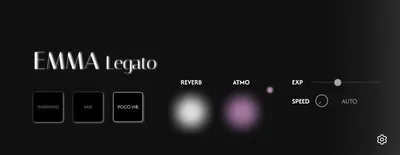
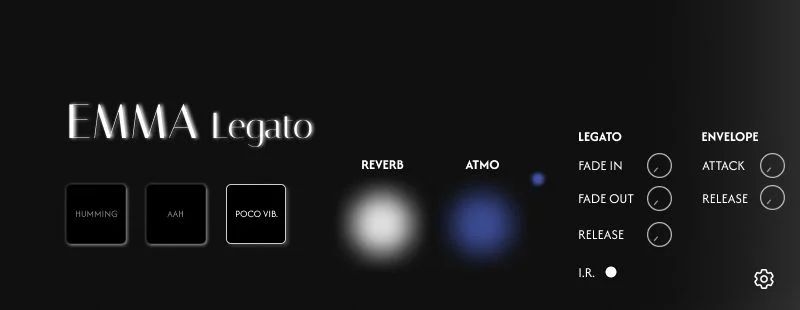
The upgrade brings three articulations: Humming, Poco Vibrato, and Aahs. The Aahs include expressive vibrato. Those three cover a narrower range than you'd get from a full soprano library, but each one is built for cinematic use rather than theatrical breadth.
The legato engine uses true legato sampling, which means transitions between every note pair are recorded individually rather than crossfaded from single notes. That matters. You'll hear it on wide interval jumps: a minor sixth doesn't glitch or blur the way it would with a crossfade-based system. The transition sounds like a voice moving, not a plugin trying to fake one.
Two reverb signals, BLUE and PINK, come baked in. BLUE gives you shimmery, diffused ambience with a huge tail. PINK runs a slowly modulated reverb with granular-like processing. Neither one is subtle. Both are designed for epic spaces, and they deliver.
Who Qualifies
You need Aria Vocalscapes. You need Kontakt Player 8 or higher. That's the full entry checklist.
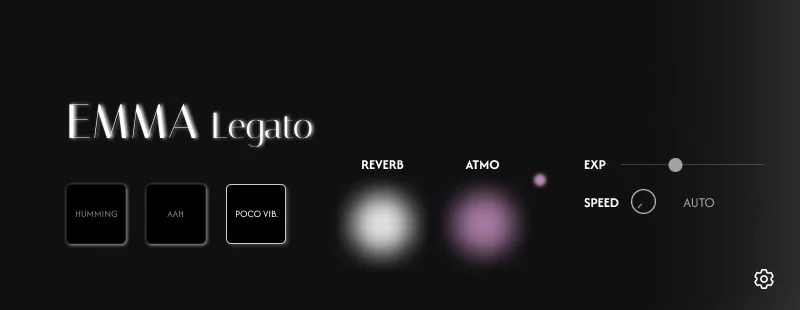
If you're already in that position and you're composing cinematic or ambient music that calls for a soprano melody rather than just texture, you're exactly who this upgrade was built for. Owners report it feels playable as a true legato library, which is a real compliment for a $20 add-on. The learning curve is almost non-existent. You load it, dial in the SPEED control, and start writing lines.
If you're not an Aria Vocalscapes owner, there's nothing to discuss here. Come back when you are one.
The Value Case
True legato vocal libraries are not cheap as a category. The fact that this one comes in at $20 as an upgrade is what makes the value case so clean.
What you're actually getting: three articulations from a classically-trained soprano, true legato transitions for every note pair, an AUTO mode that reads note distance and adjusts transition speed without you touching anything, an EXPRESSION slider for pre-effects shaping, and two ready-to-use cinematic reverb signals. For a scoring composer who already owns Aria Vocalscapes, that's a usable, production-ready tool.
The curated snapshots are a smart addition. Drop one in and you're writing inside a minute. Owners describe the character as genuinely distinct, partly because the performer is so good and partly because the legato transitions feel human rather than mechanical.
Is it a complete soprano library? No. Three articulations is a narrow palette. But for the price and the specific use case, it's not trying to be one. It's trying to give your Aria Vocalscapes sessions a melody line that holds up. It does that well.
Who Should Skip It
If you need a full soprano instrument with breath articulations, staccato, marcato, runs, and a wide dynamic range, this won't satisfy you. Three articulations is limiting if you're writing detailed vocal lines for orchestral mockups where expression is everything.
If you're not building cinematic or ambient music, the BLUE and PINK reverbs are going to feel over-engineered for your needs. They're tuned for epic spaces. Pop production, jazz, intimate folk arrangements: those aren't the target.
And if Kontakt Player 8 isn't already part of your setup, factor that dependency in before you decide. It's a free player, but it's still a requirement that adds friction if you're on an older system.
The honest skip case is this: if you want breadth of articulation, look elsewhere. If you want depth on a specific voice for a specific style, this earns its place.
The Verdict
Emma Legato Upgrade is a satisfying, focused tool that does exactly what it promises and nothing it doesn't. The AUTO legato mode is clever. The performer is brilliant. The $20 price point for existing Aria Vocalscapes owners is fair enough that holding off is hard to justify if cinematic melody is part of your work.
Three articulations keeps it out of "complete library" territory. That's a real limit, not a quibble. But if you know what you're buying, which is a melodic layer for a library you already love, it's one of the more satisfying add-ons in this corner of the sample world.
Specs & Technical Details
| Developer | Sonora Cinematic |
| Price | $20 |
| Plugin Format | VST / AU / AAX |
| OS Support | N/A |
| Activation | N/A |
| CPU Usage | N/A |
| Trial Available | N/A |
| Version Reviewed | N/A |
Score Breakdown
| Category | Score | Notes |
|---|---|---|
| Sound Quality | 4.5/5 | Emma May Price's performance gives the library a character most sample soprano libraries lack |
| Value for Money | 4.5/5 | True legato vocal sampling at this price tier for existing owners is hard to argue against |
| Ease of Use | 4.5/5 | Owners report almost no learning curve; the control set is minimal by design |
| Features | 3.5/5 | Three articulations is functional but narrow; the reverb signals and AUTO mode compensate |
| CPU Efficiency | N/A/5 | No data available from source material |
| Overall | 4.3/5 | A focused, well-executed upgrade that earns its place for the right buyer |
Alternatives to Consider
Aria Vocalscapes is the foundation this upgrade builds on. If you haven't bought the base library yet, that's your first move, not this. Aria Vocalscapes handles suspense pads and haunting soprano textures. Emma Legato handles where you want the voice to actually go somewhere melodically. They're complementary, not competing.
What we can say is this: if you're shopping for soprano legato instruments and you don't already own Aria Vocalscapes, your search is wider than what this upgrade can resolve. The feature set you can compare: articulation count, true legato vs. crossfade legato, and whether a live reverb stage is baked in or left to your chain.
Emma Legato is for a specific buyer. If that's you, the alternatives don't really compete at this price point for this use case.
If you own Aria Vocalscapes, write cinematic or ambient music, and want a soprano melody that sits and breathes rather than just pads, pick this up at $20. It's a frustratingly small articulation set for anyone expecting a full soprano workstation, but for what it is, it's one of the more underrated add-ons you'll find in this price tier. Skip it only if you need breadth. Buy it if you need character.
Frequently Asked Questions
Do I need to own Aria Vocalscapes to use Emma Legato Upgrade?
Yes. Emma Legato is designed as an upgrade for existing Aria Vocalscapes owners. There's no standalone version and no separate purchase path. If you don't own Aria Vocalscapes, this upgrade isn't available to you.
What vocal articulations are included in Emma Legato?
The upgrade includes three articulations: Humming, Poco Vibrato, and Aahs. The Aahs articulation features expressive vibrato. That's the full list. It's a focused set built for cinematic and ambient melodic writing rather than broad expressive range.
How does the AUTO legato mode work?
AUTO mode reads the distance between notes in your performance or piano roll and adjusts the legato transition speed accordingly. Wider intervals trigger a slower transition; closer notes get a faster one. You can toggle AUTO on and off via keyswitch, and you can override it manually with the SPEED control if you want consistent timing regardless of interval size.
What is the difference between the BLUE and PINK reverb signals?
BLUE delivers shimmery, diffused ambience with a large tail, sitting closer to a classic hall or chamber sound at epic scale. PINK uses slowly modulated reverb with granular-style processing, which gives it a more textural, atmospheric quality. Both are designed for cinematic spaces rather than intimate rooms.