Iron Pack 8 - Tuned Glass sits in the same niche as boutique glass and crystal percussion libraries like Heavyocity's Novo or Output's Analog Brass & Winds, but it sells for $5 instead of a much higher price. That gap is exactly where this review lives: is the price difference the whole story, or does Iron Pack 8 carve out a genuinely satisfying role in a working signal chain? Our answer is both, and it depends entirely on what you're asking the library to do.
This is a Kontakt instrument for composers who want one specific texture: a hand-played, chromatically tuned water vase set with the bell-like ring of glass percussion. It's for soundtrack work, ambient production, and anyone who needs a gentle, high-frequency melodic layer that isn't a glockenspiel, vibraphone, or synth patch. At $5, there's almost no wrong reason to own it. But there are a few reasons you might load it once and forget it.
How It Compares Out of the Box
Put Iron Pack 8 next to a dedicated glass library like Soniccouture's Glass Works or Native Instruments' own Crystal Choir, and the scope difference is immediate. Those are multi-gigabyte instruments built for foreground melodic use, with deep velocity layering and round-robin variation. Iron Pack 8 is 402 MB installed. That's not a flaw. It's a design decision.
What you get is 1 primary acoustic preset covering the core water vase instrument, plus 11 ambient pad, lead, and atmosphere patches processed from the same source recordings. The acoustic preset sits in the upper-mid register with a peak around 4–6 kHz on initial attack, then the tail rolls off cleanly above 10 kHz. It layers without fighting other elements. That's the win right there.
The 20 custom FX presets add significant colour to the ambient side. Some of those pads push into drone territory with the filter closed down; others stay close to the source and just add reverb depth. Useful range for a library this compact.
Performance Deep Dive
We loaded the main NKI bank into Kontakt 7 on a session already running a string ensemble and two piano tracks. CPU barely moved. The library's footprint is light enough that it doesn't ask permission to exist in a busy project.
The 107 samples are recorded at 24-bit/48kHz uncompressed PCM. On the acoustic preset, we played a C4 note with moderate velocity and held it. The attack transient hit with a sharp 3–4 dB presence spike around 5 kHz, exactly where you'd want a glass overtone to cut through a pad wash. The sustain decayed over roughly 4 seconds before disappearing cleanly into the noise floor. No audible sample loop seam.
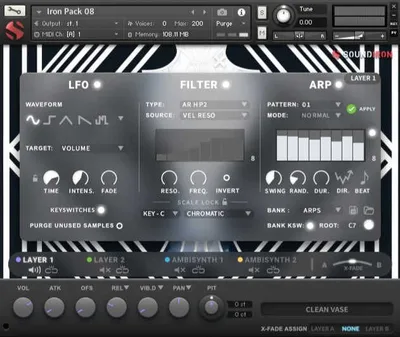
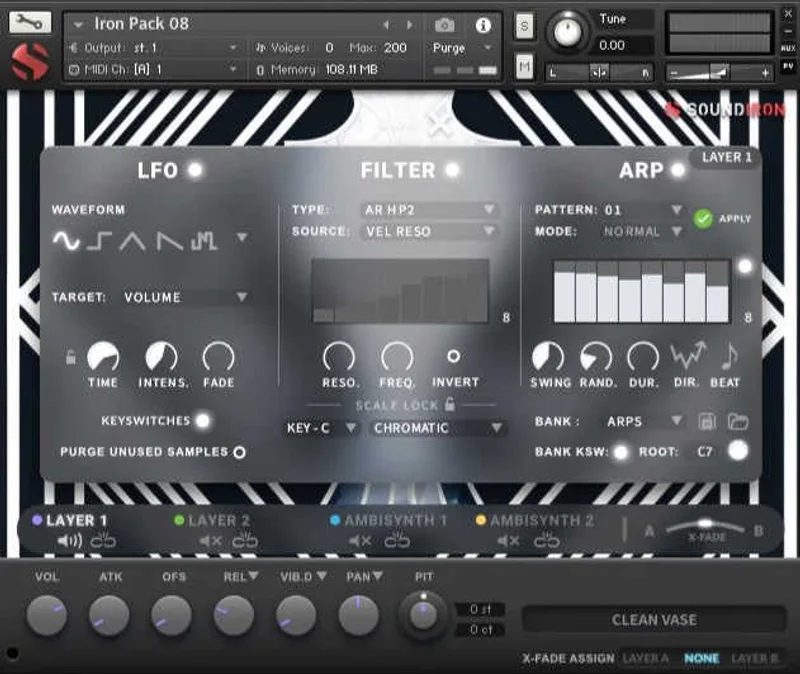
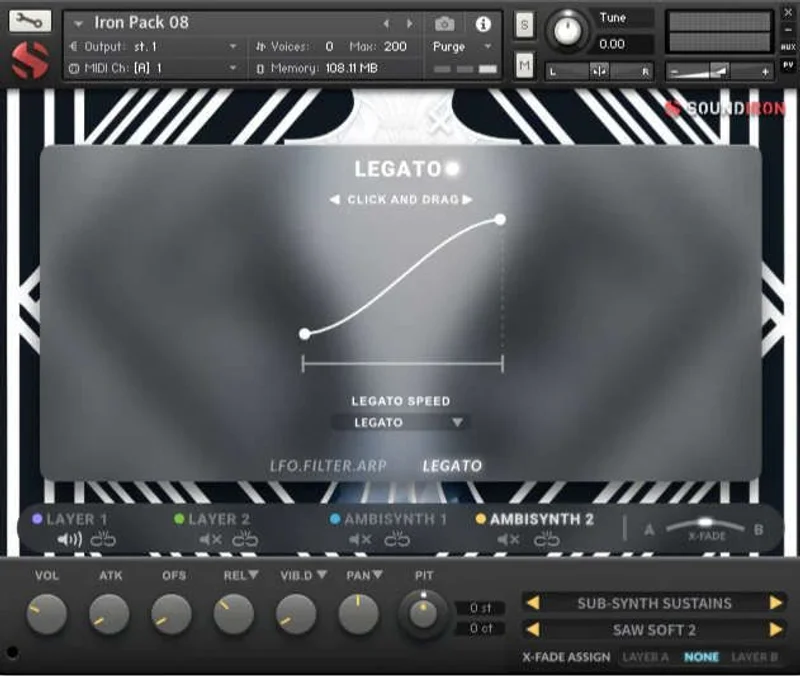
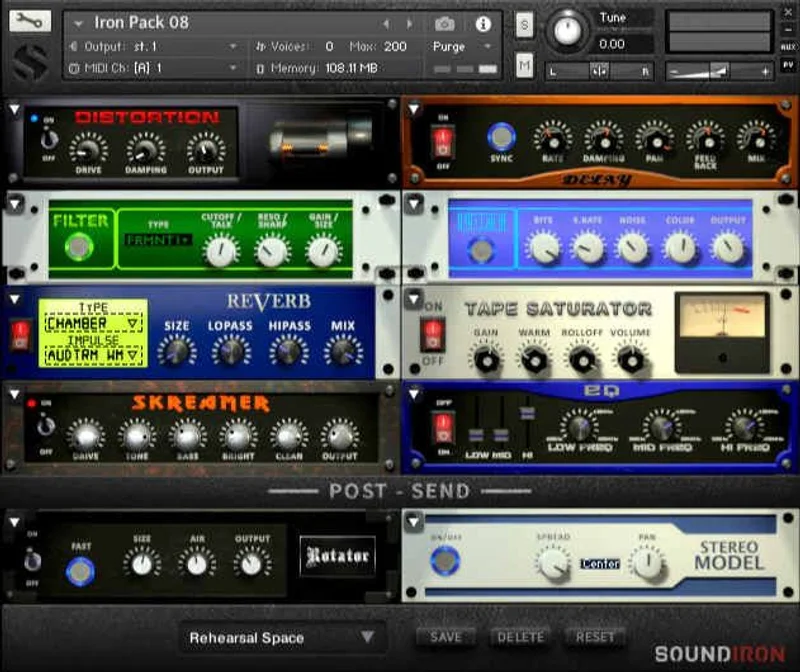
Here's where it got frustrating. We pushed the velocity from 40 to 110 MIDI velocity on the same note. The timbre barely changed. What changed was volume. If you're writing a passage that needs expressive dynamic nuance from pianissimo to forte, you're going to need to automate your gain staging manually or layer a velocity-sensitive envelope in Kontakt. The modular interface includes swell, attack, release, offset, vibrato, and filter controls, plus articulation switching and cross-fade layering. Those tools help compensate. But the underlying sample set doesn't give you the raw dynamic variation that a more expensive glass library would bake in at the recording stage.
The SFZ versions work as advertised in any SFZ-compatible sampler. Decent fallback if you're not a full Kontakt owner, except that you lose all 20 FX presets, the convolution reverb, the LFO, the arpeggiator, and the full modular UI. You're left with basic playback. Annoying limitation, but honest about the open-format tradeoff.
Where It Wins
The source material is what we love here. You're not buying a repackaged stock glass sample set. Soundiron physically tuned and chromatically recorded actual water-filled vases by hand. The result has a character you'd hear immediately: there's a slight air and resonance irregularity across the range that makes it feel organic. Synthetic glass emulations don't do this. They're too perfect, too consistent. This one breathes.
We dropped the acoustic preset into a cue that needed something between a music box and a windchime. We swelled the filter up from around 800 Hz over four bars, let the upper harmonics open, then automated a slow vibrato increase through the phrase. The whole thing took 90 seconds to dial in. That's the satisfying version of a five-dollar library: fast, specific, done.
The 11 ambient patches vary more than you'd expect. Three of them push into outright drone-pad territory, which works brilliantly for horror or tension underscore. Two sit closer to the acoustic source and function as a reverb-heavy solo lead. The spread is good for such a compact library.
Where the Competition Wins
This is where we have to be straight. If you need glass percussion as a featured melodic instrument, something a listener will consciously register and follow, Iron Pack 8 will underdeliver. The single acoustic preset with limited velocity depth means expressive solo lines feel mechanical unless you're doing a lot of manual work in your DAW's MIDI editor or leaning heavily on the Kontakt interface controls.
Larger glass libraries give you multiple velocity layers, round-robin variation, and often separate mallet and finger articulations. Those matter when the instrument is in front. Iron Pack 8 is at its best underneath things: a textural layer at -12 dBFS under a piano melody, an ambient pad behind dialogue, a shimmer on a send bus.
The Kontakt Player restriction is also a real blocker for a segment of buyers. Full retail Kontakt is not cheap. If you're still on Kontakt Player, the SFZ fallback strips out too much to be satisfying. That's not Iron Pack 8's fault specifically, but it's a practical limitation worth knowing before purchase.
Who Should Buy Which
- ✅ Buy if you need a fast, unique glass texture for cinematic or ambient layering and you already own full Kontakt.
- ✅ Buy if you work in game audio or media composition and want a $5 one-trick pony that does its trick extremely well.
- ✅ Buy if you collect the Soundiron Iron Pack series and want the full palette of handmade acoustic oddities at low cost per library.
- ❌ Skip if you need glass as a featured solo melodic voice with expressive dynamic range.
- ❌ Skip if you only own Kontakt Player, the SFZ version loses too much of the instrument's best features.
- ❌ Skip if you already own a large, multi-layer glass or crystal library and are hoping for meaningfully different source material rather than a budget supplement.
Score Breakdown
| Category | Score | Notes |
|---|---|---|
| Sound Quality | 4.0/5 | Unique organic source material; limited velocity depth holds it back from a higher score |
| Value for Money | 5.0/5 | $5 for 24-bit/48kHz hand-recorded chromatically tuned glass percussion is a ridiculous deal |
| Ease of Use | 4.0/5 | Intuitive Kontakt UI with swell, LFO, filter, arpeggiator; SFZ fallback is stripped-down |
| Features | 3.5/5 | 20 FX presets and 11 ambient patches are solid; single core acoustic preset is thin coverage |
| CPU Efficiency | 4.5/5 | 402 MB, standard PCM streaming, barely registers in a loaded session |
| Overall | 3.8/5 | A clever, underrated micro-library that earns its place in any texture toolkit at five dollars |
Alternatives to Consider
Soniccouture Glass Works, If you need glass as a foreground melodic instrument with deep velocity expression and multiple articulations, this is the upgrade path. Significantly higher price, but the sample depth justifies it for dedicated glass work. Kontakt instrument reviews
Soundiron Iron Pack 6 Wooden Flutes, Same series, same price logic. If you love the hand-played organic character of Iron Pack 8 but need a warmer, mid-range timbre instead of high glassy shimmer, the wooden flutes fill the gap cleanly. Read our full Iron Pack 6 review here.
Loot Audio Palm Mute Piano, Not glass, but it occupies a similar "small, specific, textural" role in a mix. If you're building a toolkit of compact utility libraries for cinematic layering, these two sit well together. See our Palm Mute Piano review. Best Compact Kontakt Libraries 2026
Iron Pack 8 - Tuned Glass is a $5 decision with a correct answer for most composers: just buy it. The source material is genuinely one-of-a-kind, the ambient patches do real work in a film or game session, and the CPU hit is nothing. The hard skip is if you only have Kontakt Player, you'd be buying a stripped-back SFZ version of something designed around Kontakt's full engine. Full Kontakt owners have no excuse not to own it. Everyone else: sort your Kontakt situation first, then come back.
Frequently Asked Questions
Does Iron Pack 8 - Tuned Glass work with Kontakt Player?
No. It requires the full retail version of Native Instruments Kontakt 5.5 or later. The free Kontakt Player does not support these open-format NKI libraries. An SFZ version is included for use in other SFZ-compatible samplers, but it loses the FX presets, convolution reverb, LFO, arpeggiator, and the full modular interface.
How many presets does Iron Pack 8 include?
You get 1 master NKI instrument bank with the core acoustic glass vase preset, plus 11 ambient pad, lead, and atmosphere patches. On top of that, there are 20 custom sound-designed FX presets for Kontakt. The SFZ version provides 12 presets in that format for non-Kontakt environments.
Is Iron Pack 8 - Tuned Glass useful for professional film scoring, or is it only a beginner library?
It's useful for both, but not as a featured solo instrument in pro contexts. Working composers use it as a textural layer or ambient background element, where its organic character earns its keep. For front-line melodic glass work with professional expressive control, you'd want a larger library with deeper velocity sampling. At $5, most pros buy it anyway and use it situationally.
What genres or production styles suit Iron Pack 8 - Tuned Glass best?
Film and TV underscore, ambient electronic music, game audio (especially anything with an ethereal or cinematic tone), and lo-fi or experimental production all get real value from this library. It works best as a textural support layer rather than a lead line. Drop it on a send bus under a piano melody, automate the filter, and you'll hear immediately why it's worth five dollars.