You own the CL 1B Mk II. It's been your go-to optical compressor for two years. Vocals, drum bus, mix bus. It sits in the mix like it belongs there. But every time you need multiband compression that actually sounds like analog hardware, you're loading a different plugin from a different developer with a different philosophy, and the signal chain feels stitched together rather than designed. That frustration is exactly what the Tube-Tech Complete Collection 2 upgrade from CL 1B Mk II exists to solve. It's the full Softube Tube-Tech arsenal, unified, officially licensed, and for CL 1B Mk II owners, it comes in at $299.
The Gap This Upgrade Actually Fills
The CL 1B is brilliant at what it does: optical gain reduction with a tube stage that adds harmonic weight in the 2nd and 3rd order range without sounding forced.
What it doesn't do is multiband work. And if you've been reaching for a different three-band compressor on your mix bus, you know how wrong that can feel sonically next to a Tube-Tech signal chain.
The SMC 2B Multiband Compressor closes that hole. It's Softube's officially licensed emulation of the hardware SMC 2B: a three-band opto comp that mastering houses and mix engineers have trusted for decades. Softube bills it as an expert emulation of the renowned three-band opto compressor. Nothing else in software touches it for that specific combination of slow opto release and three-band control.
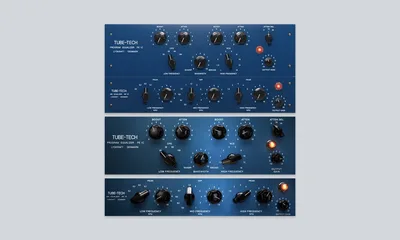
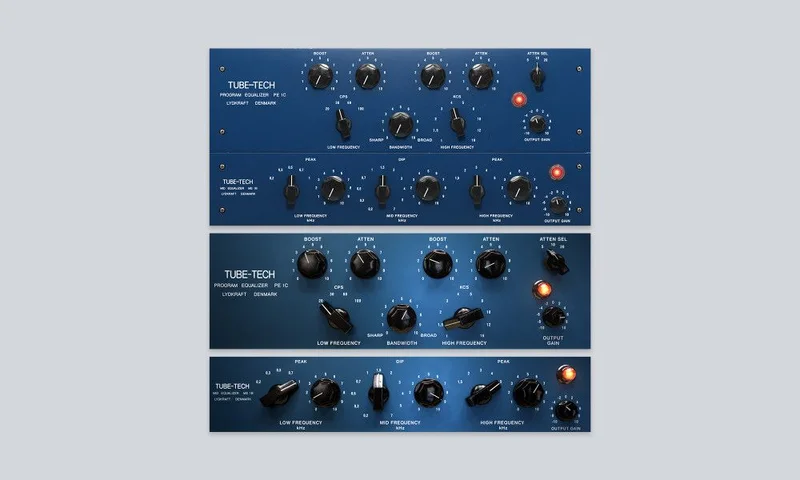
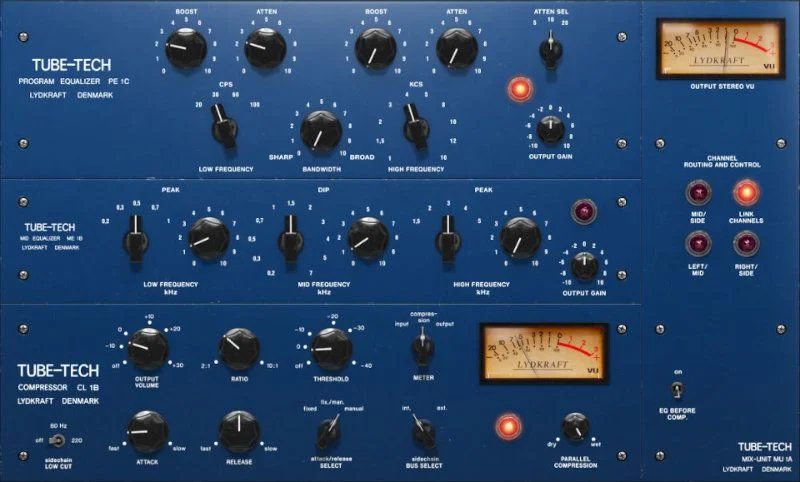
Beyond the SMC 2B, the upgrade adds the Classic Channel Mk II and Equalizers Mk II. The Classic Channel combines both generations of the CL 1B optical compressor, accessible via the Generation Switch, plus the PE 1C and ME 1B, two complementary tube-driven passive equalizers. That's a complete Pultec-style front-to-back chain in a single plugin.
Softube added modern workflow features including parallel blend and side-chain low cut for the CL 1B, the Generation Switch for toggling between Mk I and Mk II versions, and stereo processing via linked or selectable Dual Mono for the SMC 2B. Mid/side processing opens Classic Channel up to serious stereo-image management applications.
How It Performs in Practice
We ran a dense mix bus through the SMC 2B at conservative settings: low band crossover at 250Hz, high crossover at 3kHz, attack at medium-slow, ratio at 2:1 on all three bands. At 3dB of reduction on the low band and 1.5dB on the mids, the low end tightened without losing the sub weight. The opto release meant the low band recovered slowly and musically. No pumping. No artifacts.
That slow, musical recovery is what separates real opto emulation from generic multiband compressors doing a bad impression of one.
We then flipped to the Classic Channel Mk II on a lead vocal. We set the CL 1B section at a 4:1 ratio, attack at 9 o'clock, and let 4-5dB of gain reduction do its job. Then we hit the Generation Switch to the Mk I position. The difference is audible: Mk II is cleaner, with tighter transient response. Mk I is slightly softer in the attack, with a rounder character in the 200-400Hz range. We loved the Mk I on the vocal. Satisfying to have both without loading a second plugin.
The CL 1B brings warmth through its tube stages, transparent operation on transients through its quick attack, and smooth, musical levelling due to the slow reset characteristics of its gain reduction element. That description holds up under testing. The Mk II version specifically handles transients cleaner than the Mk I, which makes it the better pick for drums and bass where definition matters more than color.
For mid/side work on the Classic Channel Mk II, we side-chained the detector on the mid channel with a high-pass at 80Hz, then pushed 2dB of compression on the mid signal. The vocal came forward in the mix without touching the fader. Softube describes this technique specifically for mastering: gently balancing the vocal against the rest of the track by low cutting the detector circuit of the mid portion of the signal. It works exactly as described.
CPU load is medium to heavy. Running the full Classic Channel Mk II plus SMC 2B on a single mix bus session in Logic Pro 11 on an M2 MacBook Pro was manageable at 3-4% CPU per instance. On older Intel quad-core systems, that number climbs. Windows users need a quad-core Intel Core i3/i5/i7 or AMD quad-core processor with SSE 4.2 support at minimum. Don't try this on a four-year-old dual-core laptop.
Supported sample rates run from 44.1 up to 192 kHz in both mono and stereo. No limitations there for high-resolution mastering sessions.
Strengths and Weaknesses
The SMC 2B is the headline. It's the only officially licensed three-band opto compressor emulation in software. That's not marketing language, that's a real differentiator. Softube's partnership with Tube-Tech goes back to 2006, when they began work on the definitive plug-in representations of the Danish company's best and most highly prized analog hardware units. That length of collaboration shows in the accuracy of the emulation.
The Generation Switch is cleverly implemented. Softube's CL 1B Mk II includes the legacy CL 1B compressor plus a total sonic remodel done with the latest signal processing technology. Hit the Generation Switch to move from the sound of Mk I to the sound of Mk II. We'd have this feature on every compressor emulation if we could.
The weaknesses are real, though. The iLok requirement is annoying. In 2026, requiring a third-party license manager for a $299 plugin is a friction point that Softube's competitors have abandoned. If your iLok fails on session day, you're not working.
Softube include the discontinued legacy products to ensure existing projects are safe when upgrading, though some legacy products may be unsupported. That's a sensible inclusion, but "may be unsupported" is worth noting if you're relying on older Tube-Tech sessions.
The $299 upgrade price from just the CL 1B Mk II is steep if your only interest is the SMC 2B. The SMC 2B standalone was available at a lower price during its intro period. If you already own the Classic Channel Mk II separately, run the numbers on whether this bundle makes sense versus just buying the SMC 2B outright.
Is $299 (Upgrade) Worth It?
If you already own the full previous Tube-Tech collection, the upgrade math gets tighter. The SMC 2B is the only genuinely new piece here. Softube bring the only officially licensed Tube-Tech SMC 2B Multiband Compressor plug-in as the centerpiece of the new Collection 2. If three-band opto compression is part of your regular workflow, $299 for this upgrade is fair. If it isn't, wait for a sale.
Check current pricing at Plugin Boutique as the intro prices from the 2023 launch period have expired.
Who Should (and Shouldn't) Buy This
- ✅ Buy if you own the CL 1B Mk II and want a unified Tube-Tech signal chain from input EQ through multiband compression without mixing emulation philosophies
- ✅ Buy if three-band opto compression on mix buses and mastering sessions is part of your regular workflow and you want the only officially sanctioned ITB version
- ✅ Buy if you're doing mid/side mastering work and want the Classic Channel's detector side-chain control baked into your EQ/compression channel strip
- ❌ Skip if you already own the Classic Channel Mk II and EQ Collection: buying just the SMC 2B standalone will be cheaper
- ❌ Skip if iLok dependency is a deal-breaker for your studio setup or live performance workflow
- ❌ Skip if you're on an older Intel dual-core or low-spec Windows machine: the CPU overhead from running the full chain will hurt your session
Score Breakdown
| Category | Score | Notes |
|---|---|---|
| Sound Quality | 4.8/5 | SMC 2B opto characteristics and CL 1B Mk II tube behavior are the best ITB representations of these specific units available |
| Value for Money | 3.8/5 | Fair for new-to-the-collection CL 1B Mk II owners; less compelling if you already own the Classic Channel separately |
| Ease of Use | 4.0/5 | Interfaces are clear and hardware-accurate; iLok setup adds friction at first install |
| Features | 4.5/5 | Generation Switch, M/S processing, parallel blend, and side-chain low cut cover every modern workflow need |
| CPU Efficiency | 3.5/5 | Manageable on Apple Silicon; heavier than competing channel strips on older Intel rigs |
| Overall | 4.3/5 | The SMC 2B alone makes this a serious collection; upgrade value depends entirely on what you already own |
Alternatives to Consider
McDSP 6050 Ultimate Channel Strip HD v7: If you want a broader signal chain toolkit with more EQ character options, this is our pick for flexibility. It doesn't have opto compression as authentic as the Tube-Tech, but the sheer range of modules gives it an edge for tracking engineers who work across genres. McDSP 6050 Ultimate Channel Strip HD v7 Review
TDR Channel Strip Bundle: At a fraction of the price, this is where we'd point anyone who isn't married to analog hardware emulation. The sound isn't Tube-Tech. But the workflow is excellent and the CPU footprint is light. If you're budget-limited, start here. TDR Channel Strip Bundle Review
API Vision Channel Strip: For engineers who want aggressive, punchy processing rather than the soft optical character of the Tube-Tech chain, the API Vision is ridiculous value. Different tool, different sound, but worth knowing about before you spend $299. API Vision Channel Strip Review
If you're a CL 1B Mk II owner who regularly mixes into a master bus and finds yourself reaching for a different multiband compressor that never quite matches the Tube-Tech character: buy this. The SMC 2B is the missing piece, and the $299 upgrade gives you everything else in the collection too. If you're content with your current multiband tool and just want the CL 1B Mk II you already own, there's nothing here that demands your money right now. The Tube-Tech collection is the best sounding version of these specific hardware units in software. That's a precise statement for a precise buyer.
Frequently Asked Questions
Is the Tube-Tech Complete Collection 2 upgrade from CL 1B Mk II worth it if I already own the Classic Channel Mk II?
Probably not at full price. If you already own the Classic Channel Mk II separately, the main new element in this upgrade is the SMC 2B Multiband Compressor. Check whether buying the SMC 2B as a standalone plugin costs less than the $299 bundle upgrade. The EQ Collection and updated features are nice, but they may not add enough new ground if you're already deep into the Tube-Tech ecosystem. Wait for a sale or buy the SMC 2B individually.
What does the Generation Switch actually do in practical terms?
It switches the CL 1B between Mk I and Mk II sonic behavior inside the same plugin instance. The Mk I character is softer in the 200-400Hz range with a slightly rounder attack. The Mk II is cleaner, with tighter transient control and less coloration. Both versions are useful: we lean toward Mk II on drums and bass for definition, Mk I on vocals for warmth. You can A/B them instantly without changing your gain staging or loading a second plugin.
Do I need a physical iLok dongle to run Tube-Tech Complete Collection 2?
No, a physical dongle isn't required. You need an iLok account and the iLok License Manager software, but licenses can be stored on your computer rather than a physical USB dongle. Softube recommends always using the latest iLok License Manager version. That said, if you ever need to move the license to a new machine or your computer dies, having a physical iLok dongle as backup insurance is worth considering for professional studio use.
How does the SMC 2B compare to other multiband compressors in the same price range?
The SMC 2B's defining characteristic is three-band optical compression, which means the gain reduction element responds more slowly and more musically than VCA-based multiband compressors. You won't get the surgical precision of a linear-phase multiband limiter from it. What you get instead is glue, density, and a release behavior that recovers without pumping. It's built for mix buses and mastering applications where the goal is cohesion, not brick-wall control. For transparent broadband limiting, look elsewhere.