Roland’s Analog Monosynth Collection is a strong buy at $299 unless you run a modest CPU, a 4K monitor or a SYSTEM-8, because those are exactly where it snags.
Owners report heavy CPU load that can push timing off. They also report a bright, poorly scaled Roland Cloud interface on 4K screens. And the TB-303 can’t join the SYSTEM-8 PLUG-OUT party.
Clear those three hurdles and you get five circuit-modeled monosynths: SH-101, SYSTEM-100, SH-2, TB-303 and PROMARS. That’s a lot of acid, bass and lead for one purchase.
This is for producers who live in bass lines and want vintage Roland character without hunting down hardware.
Quick Verdict
We give it 4.2 out of 5. At $299, you get five synths with extended parameters, an arpeggiator and onboard effects. The sound earns its praise from owners. The CPU appetite and the 4K interface keep it from a higher score. Buy it on a capable machine. Think twice on a weak one.
The Catch Up Front
Here’s what owners and reviewers actually complain about. We’ll be blunt.
First, CPU. Users report that heavy usage can affect timing. That’s the worst kind of problem for a bass synth, because a TB-303 line that drifts off the grid is useless.
Second, the interface. Owners say the Roland Cloud UI is bright and poorly sized on 4K monitors. If you work on a high-resolution display, expect to squint or fiddle.
Third, expansion packs are not included. If you assumed the bundle came with extra sound libraries, it doesn’t.
Fourth, the TB-303 Software Bass Line isn’t compatible with SYSTEM-8 PLUG-OUT. Annoying if that hardware is in your studio.
What You Get If You Clear It
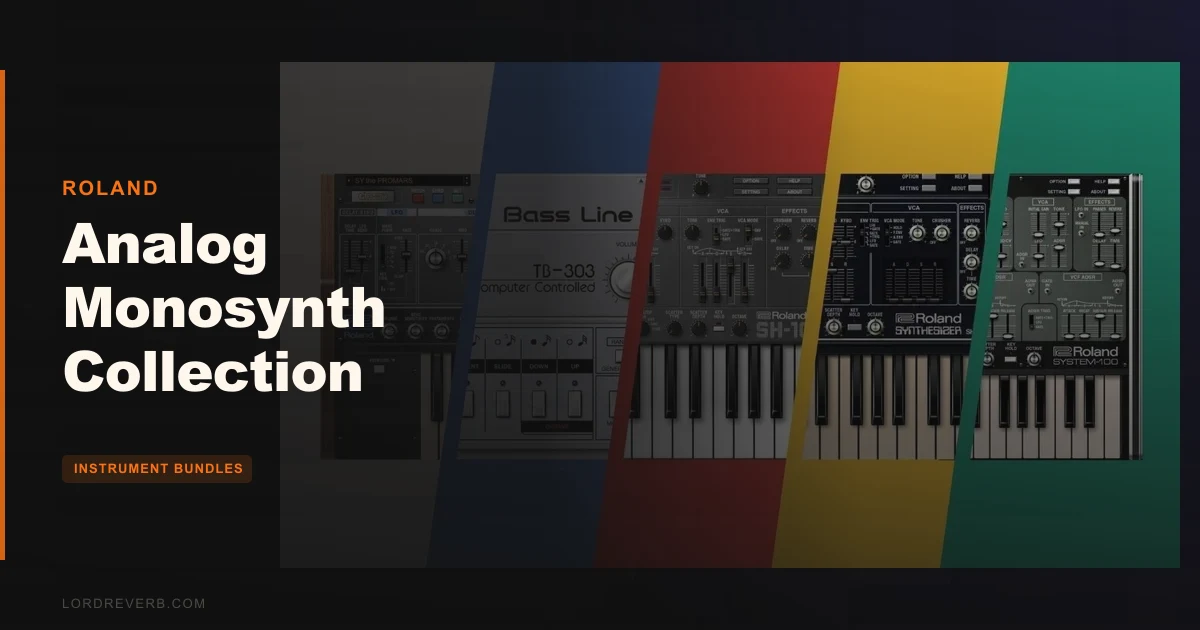
Five synths, one collection. SH-101, SYSTEM-100, SH-2, TB-303 and PROMARS.
All of them run as VST3, AU and AAX, with native Apple silicon support. You’re not stuck in Rosetta limbo on a modern Mac.
Each synth gets extended parameters beyond the originals. You also get an advanced arpeggiator and onboard effects. Every original patch is included, plus new sounds.
The interfaces are detailed, built to replicate the feel of vintage hardware. The developer pitches the whole thing on its Analog Circuit Behavior technology, which analyzes original units, circuit diagrams and historical data. Roland’s claims of “stunning accuracy” are marketing. Owner feedback on the sound is the better evidence.
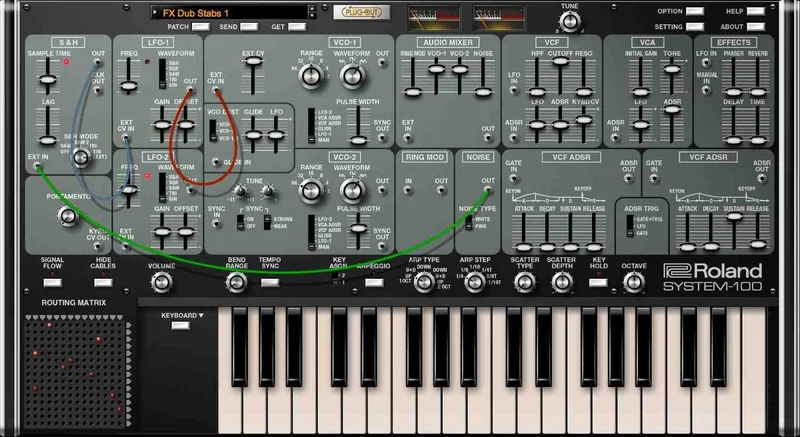
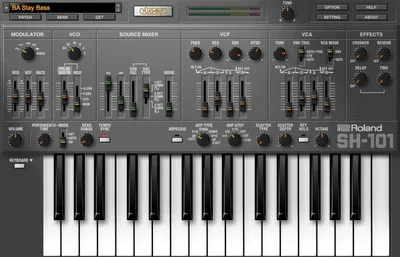
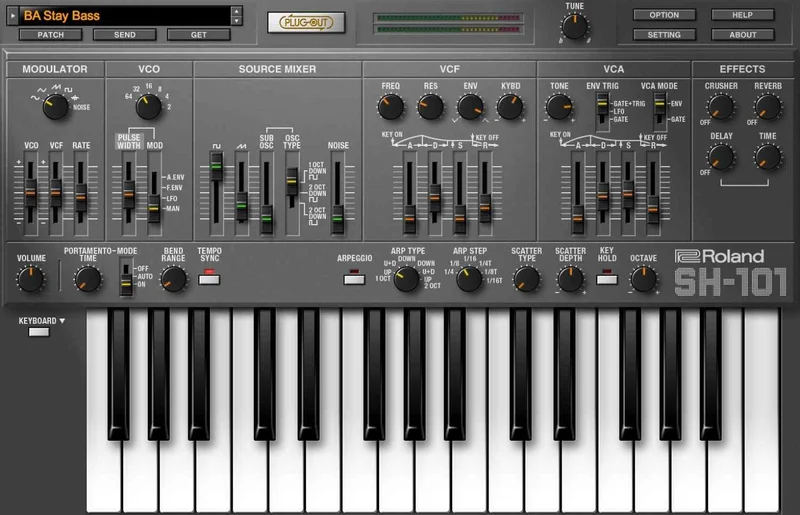
SH-101: The Circuit-Level Workhorse
The SH-101 uses advanced circuit-level modeling. It’s one of the synths the developer credits with shaping decades of electronic music styles.
Think of a bass line in a techno loop. You want it tight, monophonic and sitting under the kick without a fight. This is the kind of job the SH-101 is built for.
Reach for the extended parameters when the stock panel runs out of road. That’s where a plugin earns its keep over a museum piece.
SYSTEM-100: Two Machines in One
This one’s clever. The SYSTEM-100 combines features of the Model 101 Synthesizer and the Model 102 Expander. You get a two-oscillator monosynth with modular routing.
Modular routing is the point. Patch a signal somewhere unexpected and the instrument stops being a preset player. It becomes a small sound-design lab.
Try routing it for a lead that fights back a little. Vintage gear is at its best when it’s slightly unruly, and the ACB approach claims to preserve those quirks and instabilities.
SH-2: Dual VCO and a Sub-Oscillator
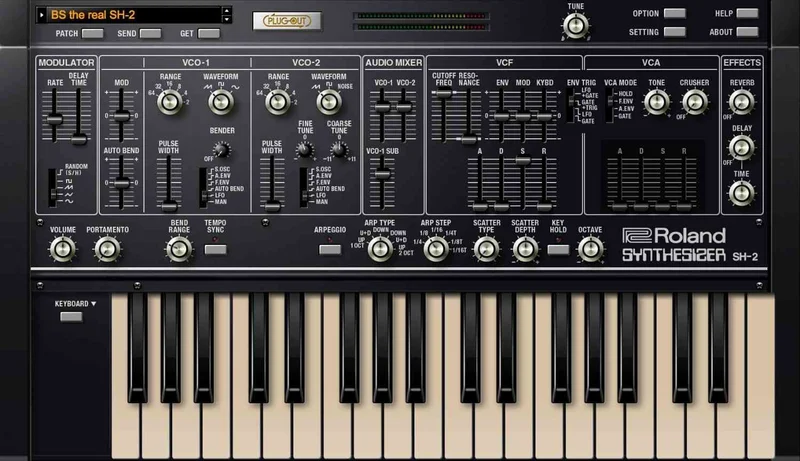
The SH-2 runs dual VCOs plus a sub-oscillator. Stack those and you have the ingredients for heavy low end.
The developer’s own words are “devastatingly fat basses, edgy leads, and wild effects.” That’s hype, sure. But owners back the workflow and sound accuracy on the SH-2, so the praise isn’t only coming from the press release.
Load it for a bass that needs to hold a club system. Add the sub-oscillator and listen to how the low end thickens. Then check your CPU meter before you stack five instances.
TB-303: Acid, With Modern Extras
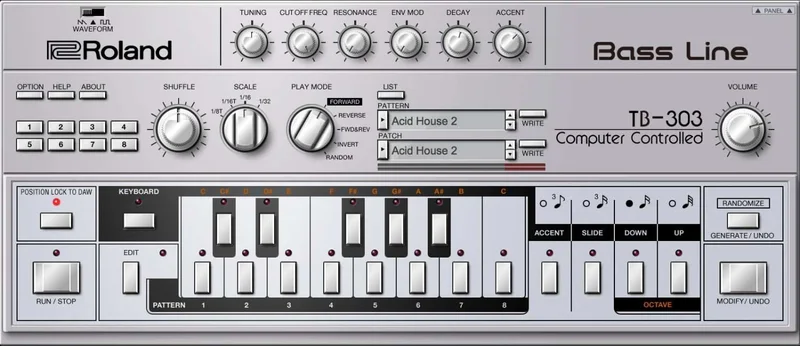
The TB-303 Software Bass Line pairs circuit-level sonic accuracy with modern enhancements. This is the box that defined the acid house movement of the late 1980s, per the developer.
Owners single it out for sound accuracy and workflow. For acid lines, that’s the review that matters.
One catch, and it’s a real one. This is the synth that isn’t compatible with SYSTEM-8 PLUG-OUT. If you planned to load it into that hardware, plan again.
Watch your timing, too. Heavy CPU load is the reported problem, and a 303 sequence is the last place you want a stumble.
PROMARS: The Quiet Pick
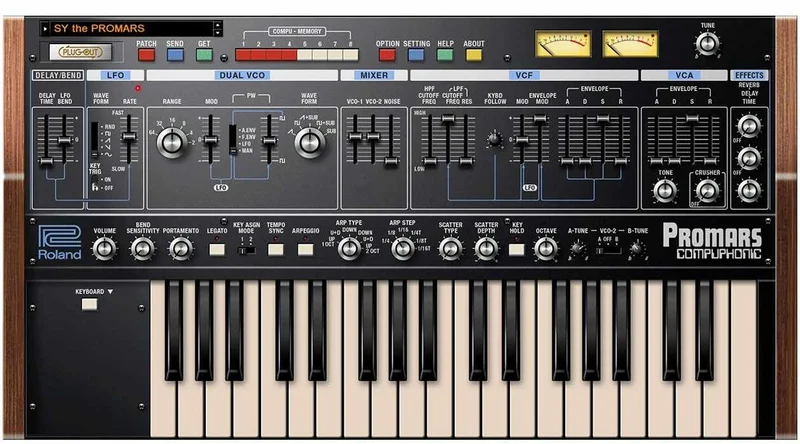
PROMARS is sonically accurate down to the circuit level. The developer says it has the unmistakable character of Roland synths from its era.
Owners name it alongside the SH-2 and TB-303 for appreciated workflow and accuracy. It’s the underrated one in the lineup, the synth you’ll skip past until a track needs exactly its voice.
Give it a chance on a lead. You might be surprised.
Arpeggiator, Effects and Patches
The advanced arpeggiator is included across the collection. On a monosynth, an arp turns a single voice into a pattern engine, and that’s a satisfying trick.
The onboard effects mean you can finish a sound inside the plugin. Less routing, fewer inserts, a lighter session.
And you get all original patches plus new sounds. That’s a sensible starting library, though expansion packs are not part of the bundle.
Where It Shines
Five synths, three plugin formats, native Apple silicon. That breadth is the headline.
The SYSTEM-100 deserves special mention for folding two modules into one instrument with modular routing. That’s design we love.
Owners praise the workflow and sound accuracy, especially on the SH-2, PROMARS and TB-303. Praise from people who use the thing daily outweighs a manufacturer’s superlatives.
Value is the other strength. At $299, five circuit-modeled instruments with extended parameters, an arp and effects is a lot of synth.
Against the Field
Arturia V Collection is the competing software suite of classic synth emulations. If you want emulations spanning many brands, it’s the broader shelf.
Native Instruments Komplete is the competing bundle with similar scope. Pick it if you want a general-purpose toolkit rather than a Roland-specific one.
Analog Polysynth Collection is a related Roland product built on similar ACB technology. It’s the sibling to look at if you want polyphonic Roland character instead of monosynths.
This collection wins on focus. It’s five Roland monosynths, done as one set.
Who Should Buy This
✅ Buy if you write bass-heavy electronic music and want SH-101, SH-2 and TB-303 voices in one place.
✅ Buy if you want SYSTEM-100’s modular routing for sound design.
✅ Buy if you’re on a Mac with Apple silicon or a capable Windows machine with CPU to spare.
❌ Skip if your CPU is already struggling, since heavy load can affect timing.
❌ Skip if you work on a 4K monitor and hate fiddly, oversized, glaring interfaces.
❌ Skip if you wanted SYSTEM-8 PLUG-OUT support for the TB-303, or expansion packs in the box.
Specs & Technical Details
| Developer | Roland |
| Price | $299 |
| Plugin Format | VST3 / AU / AAX |
| OS Support | N/A |
| Activation | N/A |
| CPU Usage | Heavy (owner reports) |
| Trial Available | N/A |
| Version Reviewed | N/A |
Score Breakdown
| Category | Score | Notes |
|---|---|---|
| Sound Quality | 4.5/5 | Owners praise accuracy on SH-2, PROMARS and TB-303 |
| Value for Money | 4.5/5 | Five synths, an arp and effects for $299 |
| Ease of Use | 3.5/5 | Good workflow, but the 4K UI is bright and badly sized |
| Features | 4.5/5 | Extended parameters, arpeggiator, effects, SYSTEM-100 routing |
| CPU Efficiency | 3.0/5 | Heavy usage can affect timing |
| Overall | 4.2/5 | Excellent sound and value, held back by CPU load and interface scaling |
Alternatives to Consider
Arturia V Collection
Competing software suite of classic synth emulations. Choose it if you want emulations from many makers rather than only Roland.
Native Instruments Komplete
A competing bundle with similar scope. Choose it if you’d rather have a broader general toolkit.
Analog Polysynth Collection
A related Roland product using similar ACB technology. Choose it if polyphonic Roland character matters more than monosynth bass.
The Bottom Line
Buy it at $299 if your machine can carry five circuit-modeled synths without stumbling on timing. The sound earns its reputation with the people who own it.
Skip it if you’re tight on CPU, locked to a 4K display you can’t tolerate scaling issues on, or counting on SYSTEM-8 support for the TB-303. For those readers, this is the wrong box.
Everyone else gets a proper acid, bass and lead toolkit in one install.
Related reviews: Cassette Mallets .02 Still Beats Pricier Rivals in 2026 · Can Murst Instruments Bundle Replace 3 Pricier Plugins?
Frequently Asked Questions
Which synths are in the Analog Monosynth Collection?
The collection contains five software synthesizers: SH-101, SYSTEM-100, SH-2, TB-303 and PROMARS. Each has extended parameters, and the set includes an advanced arpeggiator, onboard effects, all original patches and new sounds.
What plugin formats does it support?
It supports VST3, AU and AAX. Native Apple silicon support is included, so you’re not running through translation on a modern Mac.
Does the TB-303 work with the SYSTEM-8 hardware synth?
No. The TB-303 Software Bass Line isn’t compatible with SYSTEM-8 PLUG-OUT technology. The rest of the collection can work with the SYSTEM-8 via PLUG-OUT.
What are the main complaints from owners?
Owners report that heavy CPU usage can affect timing and that the Roland Cloud UI is bright and poorly sized on 4K monitors. They also note that expansion packs aren’t included in the bundle.