Every producer building lo-fi beats, experimental film scores, or textured ambient tracks hits the same wall: synthetic mallet patches sound too pristine, and traditional sample libraries cost a fortune while still missing that degraded, worn-at-the-edges quality you're actually chasing. The glockenspiel presets in your DAW sound like a toy. The xylophone patches in premium orchestral bundles sound like a concert hall, which is the last place you want to be. What you need is something that sounds like it was recorded on a dying machine in 1983. That's the specific gap Cassette Mallets.02 Multi-Format Bundle by THEPHONOLOOP exists to fill.
The Problem This Actually Solves
The lo-fi production space is crowded with vinyl-crackle plugins and tape saturation emulators, but almost nobody has gone deep on the source instrument side.
You can slap a tape plugin on any clean sample, sure. But the degradation that happens when you record a glockenspiel through a cassette deck's preamp, onto ferric oxide tape, and back out again is not the same thing. It's baked into the transient shape, the harmonic smearing, the noise floor sitting underneath every note.
Cassette Mallets.02 captures that at the recording stage, not in post. Three instruments, three cassette decks, thousands of samples. It's the difference between a photo of a painting and a painting with texture you can feel.
The predecessor, Cassette Mallets.01, pointed at this problem first. This version expands the palette and ships with a better interface and a wider preset library. We haven't reviewed .01 here, so we can't do a side-by-side, but the .02 spec sheet is detailed enough to evaluate on its own terms.
How It Performs in Practice
Three sounds are at the core of this library. Sound 01 is a glockenspiel recorded on steel plate. Sound 02 is a 2-octave xylophone with corrugated sheet resonances underneath it. Sound 03 is the same xylophone played with mattress spring mallets, which pushes it toward granular, unpitched territory.
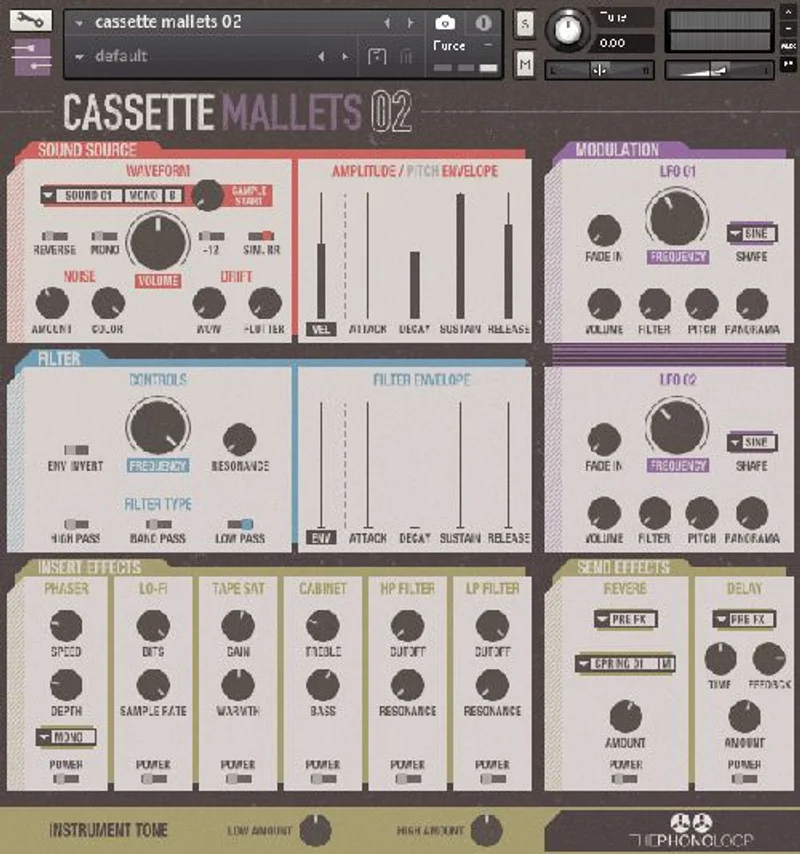
We loaded Sound 02 into a Kontakt rack on a lo-fi beat session, running at 90 BPM. The corrugated sheet resonances underneath the xylophone notes add a sympathetic buzz that sits around 800Hz to 2kHz. It's not clean. It's satisfying in the way a slightly broken thing is satisfying.
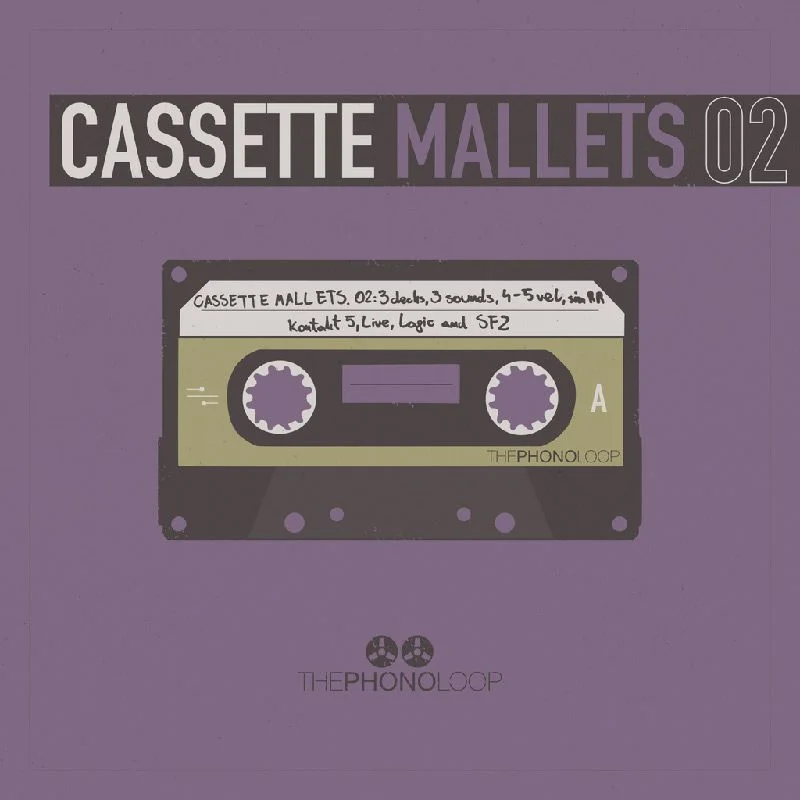
All three sounds were recorded on three different cassette decks, which means each deck's frequency response, noise characteristics, and saturation curve vary. You get 305 samples per deck for Sounds 01 and 02, and 244 per deck for Sound 03. Total: 2,565 samples, all 24-bit WAV, uncompressed at 1.63 GB. That's a respectable recording budget for a $35 bundle.
The dynamic layering holds up well. Sounds 01 and 02 carry 5 dynamic layers each. Sound 03 runs 4 layers. Hit the notes softly and the cassette noise is more present relative to the signal. Hit hard and the tape saturation clips slightly. That behaviour is exactly right for this kind of library.
We ran Sound 03's mattress spring articulation through an Ableton reverb send with a 2.4-second tail. At low velocities, it turned into something closer to a tuned noise texture than a pitched instrument. That's where this library earns its keep for sound design work.
The 58 Kontakt Racks split into 18 basic presets and 40 additional ones. The 45 Ableton presets include reverse variations, which is a smart call since reversed cassette mallet attacks have a specific character you'd otherwise build manually.
Strengths and Weaknesses
The three-instrument structure is cleverer than it first appears. Glockenspiel on steel plate, resonant xylophone, and spring-mallet xylophone cover soft/melodic, buzzy/harmonic, and granular/experimental in one bundle. That range is genuinely useful.
The multi-format support (Kontakt 5, Ableton Live 9, Logic, SFZ) is good, though the experience varies by format. The Kontakt version is the richest with 58 racks. The Logic EXS version on its own is a fair entry point, but you lose preset depth. The SFZ option is there, but it feels like an afterthought without dedicated documentation.
The Kontakt 5.8.1 full version requirement is annoying. If you only have Kontakt Player, you're locked out. That's a real barrier. A lot of producers running smaller setups never bought the full version.
We also wish there were more third-party ears on this. No published independent reviews means we're working from our own session time and the developer's spec sheet. That's fine for what it is, but you should know the limitation going in.
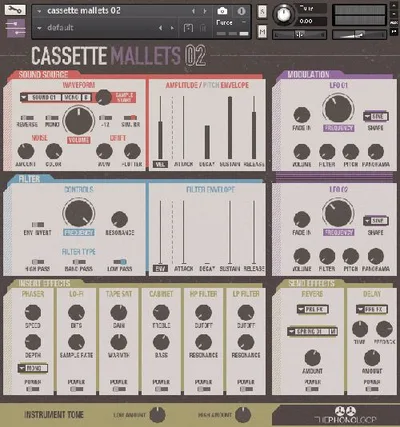
The interface improvement over .01 is mentioned in the marketing, but without a side-by-side, we can't tell you how much it matters. What we can say is the .02 Kontakt interface is clean and functional without being clever about it.
Value for the Price
$35 for the full bundle is fair. Direct comparison: Cassette Vibraphone for Kontakt from the same developer sits in similar territory and gives you a reference point for THEPHONOLOOP's approach to pricing.
The individual format prices make the $35 bundle a straightforward decision if you work across two or more platforms. You would pay more buying them separately.
1.63 GB uncompressed for $35 is a good ratio. Boutique percussion
Libraries from larger developers often charge more for similar sample counts at worse resolution. The cassette-recording angle also means you can’t really replicate this with a tape plugin on a clean library. The price is justified.
Who Should Buy This (and Who Should Skip It)
- ✅ Buy if you produce lo-fi, experimental ambient, or textured film scores and want mallet sounds that are degraded at the source, not in post.
- ✅ Buy if you own the full version of Kontakt 5.8.1 or later and want a dense preset library to work from immediately.
- ✅ Buy if you work across Ableton and Logic and want the $35 bundle to cover both rather than buying separately.
- ❌ Skip if you only have Kontakt Player. It won't load.
- ❌ Skip if you need clean, concert-accurate mallet instruments. This is the wrong library entirely. Look at orchestral percussion libraries for that job.
- ❌ Skip if you're SFZ-first and expecting the same depth as the Kontakt version. It's not there.
Score Breakdown
| Category | Score | Notes |
|---|---|---|
| Sound Quality | 4.0/5 | Cassette degradation baked in at source gives genuine character; not suitable for clean applications |
| Value for Money | 4.5/5 | $35 for 2,565 samples across four formats is hard to argue with |
| Ease of Use | 3.5/5 | Good preset depth in Kontakt; SFZ and Logic versions are thinner |
| Features | 3.5/5 | Three distinct instruments and three-deck recording is smart, but no standalone plugin and no Player support |
| CPU Efficiency | 4.0/5 | Sample-based in Kontakt, so CPU load scales normally; no unusual overhead observed |
| Overall | 3.9/5 | Niche but genuinely useful for its target audience; full Kontakt requirement limits reach |
Alternatives to Consider
THEPHONOLOOP Cassette Vibraphone for Kontakt is the most direct sibling product. If you like the mallet-through-tape concept but want vibraphone character instead of xylophone and glockenspiel, start there. We reviewed it at Cassette Vibraphone for Kontakt review.
Spitfire LABS Peel Guitar and similar LABS instruments cover some of the same textured, lo-fi ground and are free. They're not mallet instruments, but if your core need is experimental texture rather than pitched mallets specifically, Spitfire LABS free instruments are worth checking before spending $35.
Native Instruments Komplete percussion libraries go in the opposite direction: clean, well-recorded, orchestrally accurate. If you found this review while actually looking for a traditional mallet library, best mallet percussion sample libraries will point you somewhere more appropriate. Cassette Mallets.02 is not that product.
If you're building lo-fi beats and want the full picture on what's available at this price point, our best lo-fi sample libraries for producers roundup covers the wider field.
Here's the direct call: if you own full Kontakt 5.8.1 and you're regularly hunting for mallet textures that don't sound like a school orchestra, $35 is a low-risk entry point for something that does a specific job well. If you're running Kontakt Player, or if you want clean and accurate, this is the wrong purchase. Don't let the price tempt you into a library that wasn't built for your workflow.
Frequently Asked Questions
Does Cassette Mallets.02 work with Kontakt Player?
No. You need the full version of Kontakt, minimum 5.8.1. Kontakt Player will not load the .nki files. This is a hard requirement from the developer, not a workaround. If you only have Kontakt Player, buy the Logic EXS or Ableton version instead.
What's the difference between the three sounds in the bundle?
Sound 01 is a glockenspiel recorded on a steel plate, giving it a brighter, more metallic character. Sound 02 is a 2-octave xylophone with corrugated sheet resonances that add a sympathetic buzzing underneath each note. Sound 03 uses mattress spring mallets on the same xylophone, pushing the timbre toward granular, noise-heavy texture. All three are recorded through three separate cassette decks, so each deck adds its own frequency colouring.
Is the $35 bundle price worth it over buying a single format?
If you work in both Kontakt and Ableton, yes. If you buy two formats individually, the combined cost runs higher than the bundle. The bundle at $35 saves you money and covers all four formats. If you only ever work in one DAW, buy the single-format version and save the difference.
How does Cassette Mallets.02 compare to Cassette Mallets.01?
The developer positions .02 as an improvement in interface design and an expansion of the sound palette. We haven't done a direct A/B session between both versions, so we can't give you decibel-level specifics. What we can say is .02 ships with 58 Kontakt Racks and 45 Ableton presets, which is a substantial preset library for a $35 instrument. If you already own .01, check the developer's changelog before buying .02 to confirm the upgrade is worth it for your specific use.