The honest doubt about BASSROOM is this: is it just a glorified preset browser dressed up in a fancy room, or does it actually make better low-end decisions than a capable engineer with a good EQ? It makes better decisions than a rushed engineer with a bad room. That's the real sell.
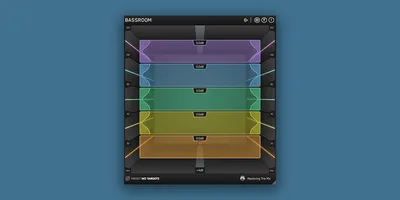
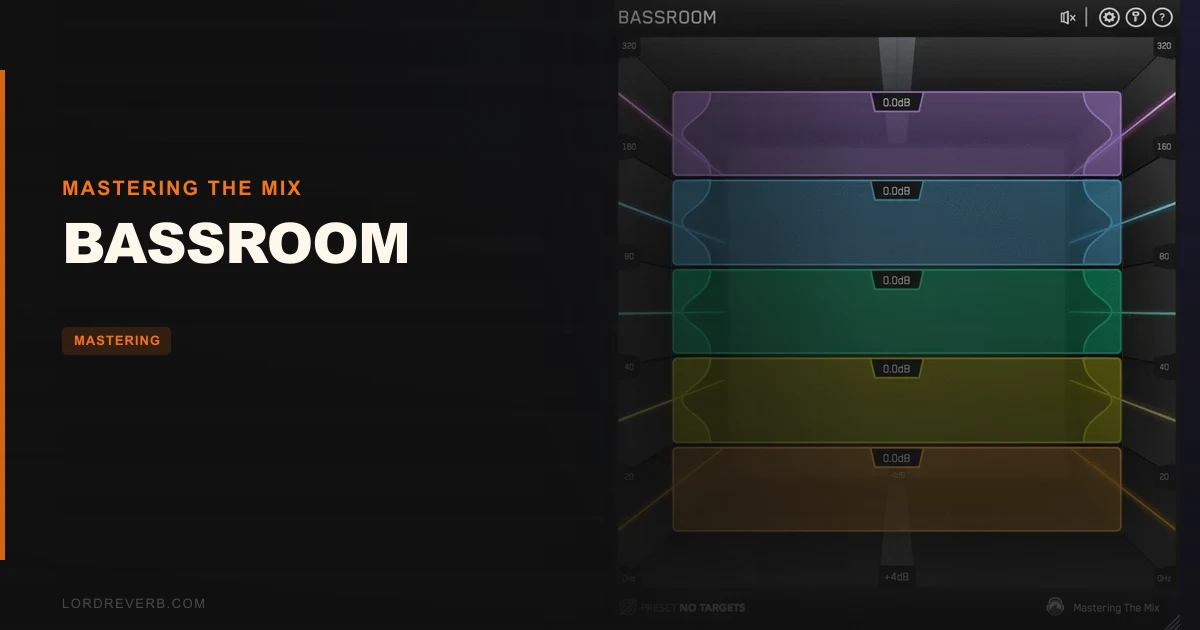
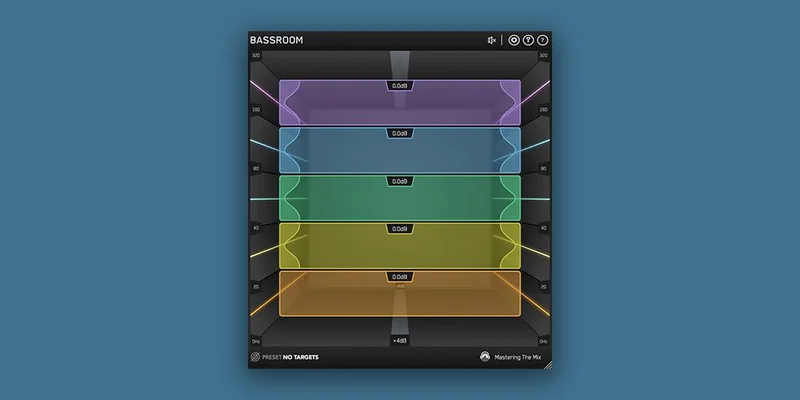
BASSROOM is an $80 mastering EQ from Mastering The Mix. It covers only 0-320Hz, has five fixed bands, 60 genre-based preset targets, and a 3D room visualization that replaces the standard frequency-vs-gain grid. That's the whole thing. No mid-side, no saturation, no multiband compression hiding in a tab somewhere.
It's built for EDM, hip-hop, and R&B producers who consistently lose the plot on bass translation. If your kicks sound huge in the studio and disappear on a phone speaker, BASSROOM is worth your attention. If you're already working in a treated room with reference speakers you trust, it's a useful second opinion, not a necessity.
Does It Actually Deliver on the Low-End Promise?
Mastering The Mix built BASSROOM around one specific problem: most mixes fail in the low-end not because the engineer can't hear bass, but because they can't hear bass accurately relative to the rest of the mix. Untreated rooms and consumer headphones tell lies below 200Hz. BASSROOM's algorithm accounts for loudness differences between your mix and the reference targets, so the suggestions stay relevant whether you're at -6 LUFS or -14 LUFS.
We loaded it on the master bus of a hip-hop track that had a 808 sitting too low at 60Hz and a kick fighting it at 80Hz. The "Hip Hop" preset immediately flagged both bands. The target indicators pulled the 80Hz band back by about 3dB and nudged 60Hz forward slightly. That matched exactly what we'd have done after 20 minutes of A/B referencing. BASSROOM got us there in 90 seconds.
It holds a 4.7/5 rating across 2,873 reviews on Plugin Boutique and a 96% positive rating on the Mastering The Mix site. Those numbers don't lie about consistency. The Music Tech Excellence Award is fair recognition for something that does its one job very well.
Where BASSROOM Actually Shines
The filter design is the underrated star here. Most EQs force a choice: linear phase (no phase distortion, but pre-ringing on transients) or minimum phase (no pre-ringing, but phase smear). BASSROOM's custom filters minimize both. Mastering The Mix shows this with step-function plots comparing their output to standard linear-phase filters at 6dB of gain at 240Hz. The difference is visible: standard filters ring before and after the transient hit, BASSROOM's output stays clean.
In practice, we boosted 6dB at 120Hz on a drum bus and compared to a standard linear-phase EQ. The kick's attack at 4-5ms survived intact through BASSROOM. The linear-phase option softened it noticeably. That's not magic. That's smart filter math, and it matters on a master bus where you can't fix transient smear downstream.
The 3D room interface is clever, not gimmicky. Gain as depth in a room maps naturally to how we hear loudness spatially. Bringing a band forward feels like pulling bass toward you. Pushing it back recedes it. We stopped fighting the interface after about two sessions and started trusting it. That's a satisfying outcome for a UI this unusual.
The loudness-compensated level match feature also deserves credit. When your EQ adjustments push overall gain more than 2dB, a speaker icon turns orange and a level match pointer appears. It's a small detail that stops you from fooling yourself into thinking the louder signal sounds better.
Where It Falls Short
The pre-ringing issue at maximum Q settings is real. Mastering The Mix's own filter plots show near-zero ringing at moderate settings, but push the Q to its limit on the top four tunable bands and audible artifacts appear on sharp transients. It's not catastrophic, but it's annoying on dense material like layered kicks with fast attack envelopes. FabFilter's Q3 handles extreme Q settings more cleanly, and their linear-phase mode is more mature.
Sixty genre presets sounds like plenty until you're working in Afrobeats, Amapiano, or anything that doesn't fit a Western commercial template. The preset system gets thin fast outside EDM, hip-hop, pop, and rock. You can build your own targets from reference tracks, and the workflow for that is solid, but the onboarding advantage disappears if you're doing it manually every session.
The 0-320Hz ceiling also means BASSROOM can't help with anything above that range. It doesn't try to. But placing it on your master bus means you're committing to a dedicated low-end tool that your full-range EQ still has to do the rest of the work alongside. That's not a flaw, it's a design choice. Know what you're buying.
How It Stacks Up Against the Alternatives
The most direct comparison is iZotope Tonal Balance Control, which covers the full frequency spectrum with reference-based targets and integrates with RX and Ozone. Tonal Balance Control wins for full-spectrum reference matching and plugin ecosystem integration. BASSROOM wins for low-end precision, filter quality on the low-mids, and simplicity of workflow if you only need to sort out bass.
Against a full mastering EQ like the Kiive Audio M5133, BASSROOM isn't competing. The M5133 covers the full spectrum with hardware-modeled character. BASSROOM is purpose-built for the 0-320Hz zone with no coloration intent. They serve different roles and could reasonably sit in the same chain.
If you're building a broader mastering signal chain, our mastering plugins guide covers where BASSROOM fits relative to limiters, stereo width tools, and full-band EQs.
Is the Price Fair?
Yes. Not enthusiastically, but yes. Sixty-seven dollars for a plugin that solves one specific problem this reliably is reasonable. It's not a full mastering suite. It's not trying to be. For producers who regularly lose the low-end on translation, the time saved per session adds up faster than the cost.
If you're already working with a well-calibrated room, good reference monitors, and a full-band EQ you trust, BASSROOM becomes a nice-to-have rather than a need-to-have. For everyone else, the price is fair. Check the Mastering The Mix site for current pricing and occasional sale events.
For context on how BASSROOM fits into a full chain, the mastering suite plugins guide is worth a read before you build your signal flow.
Score Breakdown
| Category | Score | Notes |
|---|---|---|
| Sound Quality | 4.5/5 | Minimal phase and transient distortion is a genuine technical achievement for a mastering-grade filter |
| Value for Money | 4.0/5 | The price is fair for a dedicated specialist tool and less compelling if your room is already well-treated. |
| Ease of Use | 4.5/5 | 3D interface clicks fast; genre presets shortcut most sessions to under two minutes |
| Features | 3.5/5 | Excellent within 0-320Hz; the 60 presets thin out for non-commercial genres |
| CPU Efficiency | 4.0/5 | No published spec, but ran without issue on a loaded mastering session in our testing |
| Overall | 4.2/5 | Does one thing well and charges a fair price for it |
Alternatives to Consider
iZotope Tonal Balance Control: Full-spectrum reference matching with deep integration across the iZotope ecosystem. Better if you're already invested in Ozone or Neutron. Overkill if you only need low-end help.
FabFilter Pro-Q 3: A full-band surgical EQ with cleaner extreme-Q behavior than BASSROOM and excellent linear-phase mode. It won't tell you what adjustments to make, but it'll execute your decisions more transparently at high Q values. See the mastering suite plugins guide for how both fit into a chain.
Nugen Audio ISL 2: Not a direct competitor, but worth mentioning for producers building a mastering chain from scratch. BASSROOM handles the low-end shaping; a limiter like the Nugen Audio ISL 2 handles the ceiling. Together they cover two of the biggest mastering decisions. Also check the Nugen Audio ISL 2st for streaming-specific limiting workflows.
BASSROOM is a sharp, focused tool for a genuinely hard problem. If your low-end decisions have been costing you sessions, the price is small to pay for confidence. If you already know your room, your references, and your EQ, skip it and spend the money on better monitoring instead.
Related reviews: TDR SimuLathe CUT Review
Frequently Asked Questions
Can I use BASSROOM on individual tracks, or only on the master bus?
Mastering The Mix designed BASSROOM specifically for the master bus. Its algorithm analyzes low-frequency perception relative to the full mix balance, so it needs to see the whole signal to give accurate target suggestions. Using it on a single bass track or kick drum will produce misleading targets and less useful results.
Does BASSROOM work with Apple Silicon Macs?
Yes. Version 1.5 runs natively on Apple Silicon as a 64-bit AU, VST3, or AAX plugin. You'll need OS X 10.15 or higher. No Rosetta translation required, which keeps CPU overhead low on M-series machines.
What happens if none of the 60 genre presets fit my music?
You can build custom targets by importing reference tracks directly into BASSROOM's analysis window. The workflow is to select the drop or chorus of each reference track (the bass-heavy section), let BASSROOM analyze it, and it generates targets from that. It's a few extra minutes per session, but it works well for genres the preset library doesn't cover.
Is there a free trial before buying?
Trial availability changes. Check the Mastering The Mix website directly for the current demo or trial version status. Plugin Boutique occasionally runs sales on BASSROOM as well, so it's worth checking both before buying at full price.