Music Production Suite 9 is the most complete single-vendor plugin bundle you can buy in 2026, and it beats building a comparable rig à la carte by a margin that makes the $799 price easier to justify than it sounds.
The closest comparison most producers reach for is Waves' Mercury bundle or Steinberg's Absolute collection. That's the wrong frame. Mercury is deep but scattered. Absolute is instrument-heavy. MPS 9 is a focused, opinionated signal chain: mix, master, restore, process vocals, shape tone. Nothing else in that box.
This review is aimed at producers and mix engineers who are weighing the bundle against building the equivalent rack from scratch. We ran it through real sessions, pushed the AI tools hard, and found a couple of things we genuinely wish iZotope had handled differently. Here's the honest version.
How It Compares Out of the Box
Against Waves Mercury, the first thing you notice is intent. Mercury gives you 200+ plugins that cover everything from vintage emulations to broadcast metering. MPS 9 gives you 100+ plugins that all talk to each other. That inter-plugin communication is not a marketing point. It's the actual differentiator.
Neutron 5 can see what's sitting on other tracks via its Relay plugin. Nectar 4 Advanced feeds its vocal detection into Ozone 12's Master Assistant. Tonal Balance Control 3 reads your full mix in real time. None of this works if you're mixing Neutron with a third-party limiter. Waves can't do this. Steinberg's Cubase Pro has some of it natively, but only inside Cubase.
Logic Pro's stock tools are free and better than most producers admit. But they stop at the mix bus. They have nothing close to RX 12 for restoration, nothing like Ozone 12's Stem EQ for mastering after the fact. MPS 9 wins that category without a fight.
Performance Deep Dive
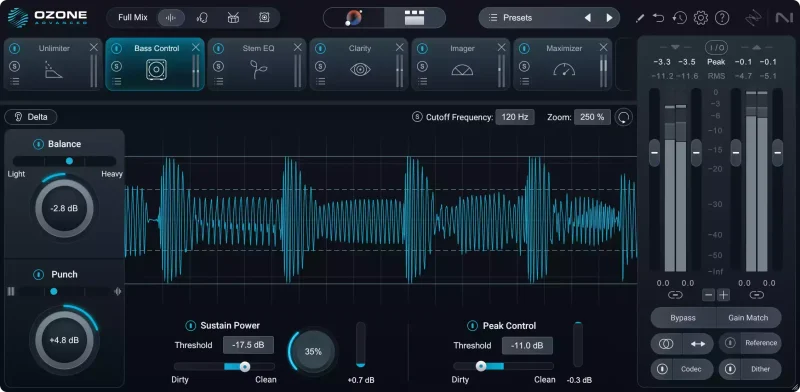
Ozone 12 Advanced leads the mastering section with 20 pro modules. Three are brand new: Bass Control, Unlimiter, and Stem EQ. We tested Unlimiter on a client master that had been over-limited to -8 LUFS peak. Run it with the Learn function, set the threshold around -3dB, and it genuinely pulls transients back into the picture. Not magic. But measurably better than anything we'd tried before on that kind of damage.
Stem EQ inside Ozone 12 separates vocals, bass, drums, and instruments from a stereo bounce and lets you EQ each stem independently. We cut 1.5dB at 250Hz on the drum stem of a mix that had already been bounced. Bleed into the other stems was minimal. Not zero, but workable at that level of adjustment.
RX 12 Standard ships with 50+ restoration tools. We ran a dialogue track recorded in a kitchen through Dialogue De-reverb. At 40% reduction, the room tail dropped from audible to negligible without pulling the voice into the frequency-hollow sound that cheaper de-reverb tools leave behind.
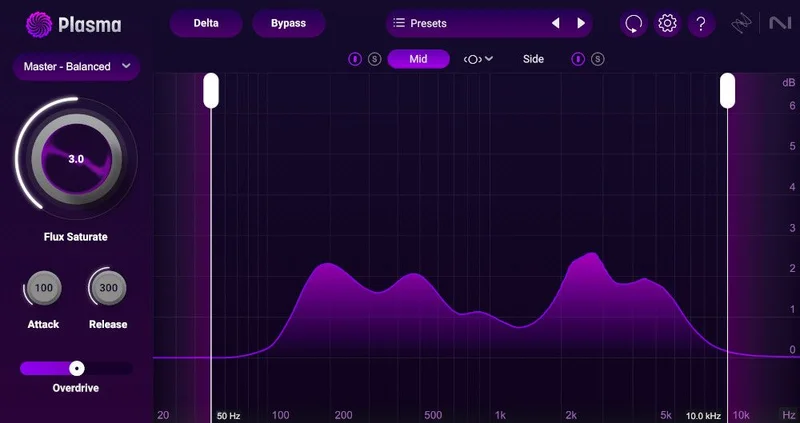
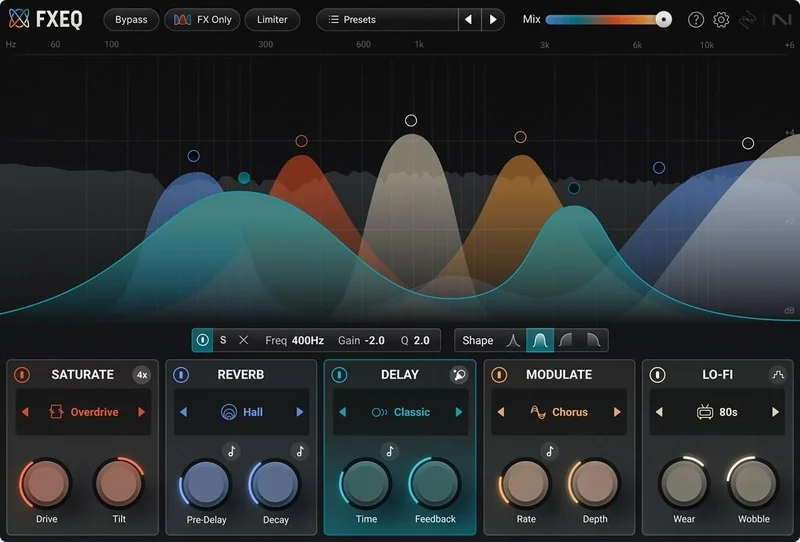
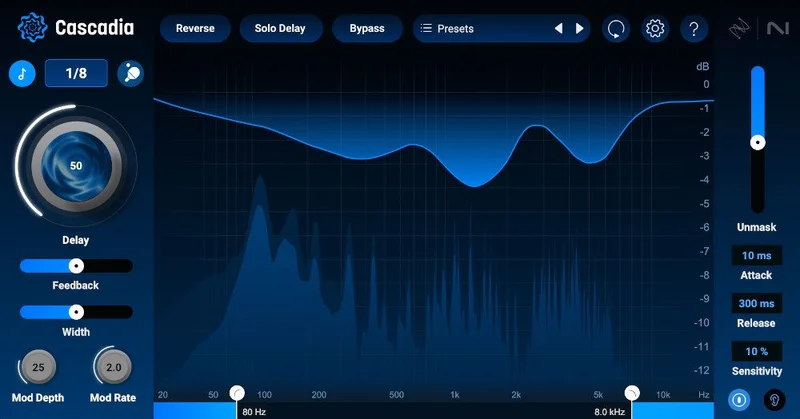
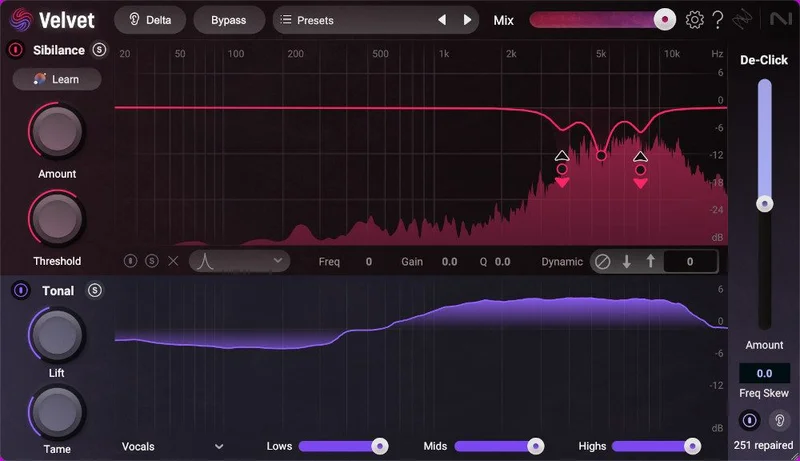
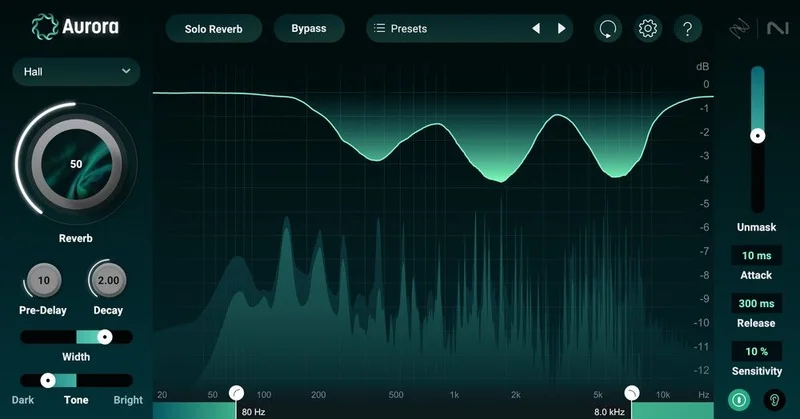
The Catalyst Series adds FXEQ, Velvet, Aurora, Cascadia, and Plasma as new creative tools. FXEQ routes five effects (drive, chorus, reverb, delay, bit reduction) through an EQ-style interface. Plasma's dynamic saturation applies differently depending on the signal's transient content. Neither replaces deep single-purpose tools, but both are fast and sit in the mix well.
CPU load is real. Running Neutron 5 on eight tracks with Assistant enabled, plus Ozone 12 on the master with Stem EQ active, pushed our test rig (Apple M2 Max, 32GB RAM) to around 35% CPU in Logic Pro X at a 256-sample buffer. That's not light. On older Intel machines, you'll want to freeze tracks or run a larger buffer once you're past the mixing stage.
Where It Wins
The cross-plugin communication is where MPS 9 earns its price. We pulled up a session with 22 tracks, hit Neutron 5's Mix Assistant, let it analyze the session, and had gain-staged, frequency-carved starting points on every channel in under four minutes. That's not hyperbole. That's clock time.
We love the Tonal Balance Control 3 update. It now ships with 30+ genre reference targets, including newer electronic and R&B curves that felt current. Running your mix against a genre target and seeing where your low-mids are sitting 2dB heavy relative to 10,000 reference tracks is genuinely useful feedback. Not a replacement for trained ears, but a brilliant sanity check.
RX 12 is the sleeper win here. If you do any location recording, podcast editing, voiceover work, or film sound, RX alone at MPS 9's loyalty pricing is almost embarrassingly good value. The suite around it is the bonus.
Guitar Rig 7 Pro is a satisfying addition for producers who track live guitars. 150 components, 17 amps, extensive cab routing. It works. For a plugin-first producer, it's a nice extra. For a guitarist, it's the one reason to pick MPS 9 over a more mixing-centric iZotope tier.
Where the Competition Wins
VST2 is completely gone. Not deprecated. Gone. If you're running an older DAW version or have templates built around VST2 instances of previous iZotope tools, you'll hit a wall on day one. VST3, AU, and AAX are all supported. But the hard cutoff is frustrating for anyone mid-project on an older system.
Waves Mercury wins on raw plugin count for vintage hardware emulations. If your signal chain leans heavily on SSL, API, or Neve-style channel strips, you'll find more of that in Mercury or even UAD's catalog. MPS 9 is iZotope's sound: analytical, AI-assisted, clinically clean. If you want analog warmth that sounds like a real console, you'll still be reaching outside this bundle.
Ownership structure is annoying. Buying the bundle doesn't mean you own each plugin separately. If iZotope releases MPS 10 and you don't upgrade, you'll lose access to things like Tonal Balance Control 3 rather than staying on a version you bought. Perpetual bundling with update dependency is a real downside that Waves handles better with its per-plugin ownership model.
Who Should Buy Which
- ✅ Buy if you produce and mix across multiple genres and need a single, coherent signal chain from tracking to master
- ✅ Buy if you do audio restoration, podcast production, film sound, or location recording alongside music work
- ✅ Buy if you're coming from MPS 8 and can hit the loyalty price, which makes this a no-brainer upgrade
- ❌ Skip if you're DAW-native and Logic Pro or Cubase's stock tools already cover your needs, and you only occasionally master
- ❌ Skip if your studio runs on VST2 in an older DAW version and you're mid-project
- ❌ Skip if your priority is analog hardware emulation and vintage console character rather than AI-assisted, analytically precise tools
For a broader look at building your plugin toolkit from scratch, see our complete beginner's guide to music production plugins.
Score Breakdown
| Category | Score | Notes |
|---|---|---|
| Sound Quality | 4.5/5 | Ozone 12 and RX 12 are best-in-class; Catalyst tools are good but not genre-defining yet |
| Value for Money | 4.5/5 | Loyalty pricing is outstanding; $799 full price is fair for what's here |
| Ease of Use | 4.0/5 | AI tools genuinely speed up workflow; initial setup and iZotope Portal can slow first-time users down |
| Features | 4.5/5 | 100+ plugins with inter-plugin communication is a real differentiator; VST2 removal loses half a point |
| CPU Efficiency | 3.5/5 | Full stack with Stem EQ and Neutron on multiple channels is demanding; Apple Silicon helps but it's not light |
| Overall | 4.3/5 | The most coherent professional bundle in its class, with two genuine frustrations holding it just shy of a top score |
Alternatives to Consider
Waves Mercury Bundle, If vintage hardware emulation is your priority and you want the deepest catalog of SSL, API, and Neve-style processing, Mercury wins on that specific axis. It doesn't have RX-level restoration or cross-plugin AI, but it has more analog character. Check our music production plugins guide for a full breakdown of how these stacks compare.
UJAM Music Creation Suite, At a significantly lower price point, the UJAM suite covers creative production tools for producers who primarily need instruments and beatmaking tools rather than pro mixing and mastering depth. See our UJAM Music Creation Suite 2026 review for more.
Rob Papen RAW-2, For producers who want creative synthesis and sound design depth rather than a restoration and mastering stack, RAW-2 occupies a completely different creative space. Read our RAW-2 review to see if that's the better fit for your workflow.
If your sessions lean bass-heavy and you're evaluating expansion tools alongside your main bundle, our take on the Producertech Bass Music Production Bundle is worth a read.
Buy MPS 9 at the loyalty upgrade price. If you're coming from MPS 8, the loyalty entry point for Ozone 12 Advanced and the full Catalyst Series is a decision you'll stop questioning after your first mastering session with Stem EQ. At full price, $799 gets you a complete professional toolkit that no other single vendor matches in this specific way. The caveat: if you're on a VST2-dependent DAW version or a modest CPU, sort that out first. This bundle will expose both problems immediately.
Frequently Asked Questions
Does Music Production Suite 9 include the full version of Ozone 12, or a limited edition?
MPS 9 includes Ozone 12 Advanced, which is the top tier of the Ozone lineup. That means you get all 20 pro mastering modules, including the three new additions in version 12: Bass Control, Unlimiter, and Stem EQ. You're not getting a stripped-down or Standard edition.
Can I use Music Production Suite 9 in Ableton Live?
Yes, but only via VST3 or AU format. iZotope dropped VST2 support with MPS 9, so if your Ableton Live version doesn't support VST3 (Live 11.1 and later do), you'll need to update your DAW first. AAX is available for Pro Tools users. AU works for Logic Pro and GarageBand on Mac.
Is the upgrade from Music Production Suite 8 worth the cost?
At loyalty pricing, yes, without much debate. You're getting the full Catalyst Series (FXEQ, Velvet, Aurora, Cascadia, Plasma), Ozone 12 Advanced with its three new modules, and Tonal Balance Control 3 with 30+ updated genre targets. That's a meaningful functional upgrade, not just a version number bump.
How does Music Production Suite 9 handle CPU load on older Windows machines?
It's heavy. Running Neutron 5 on multiple tracks with Mix Assistant active, alongside Ozone 12 Advanced with Stem EQ on your master bus, will stress older Intel quad-core machines at low buffer sizes. We'd recommend a 512-sample buffer or higher during mixing, and freezing non-essential tracks before engaging the full mastering stack. Apple Silicon machines handle it considerably better due to native M-series support.