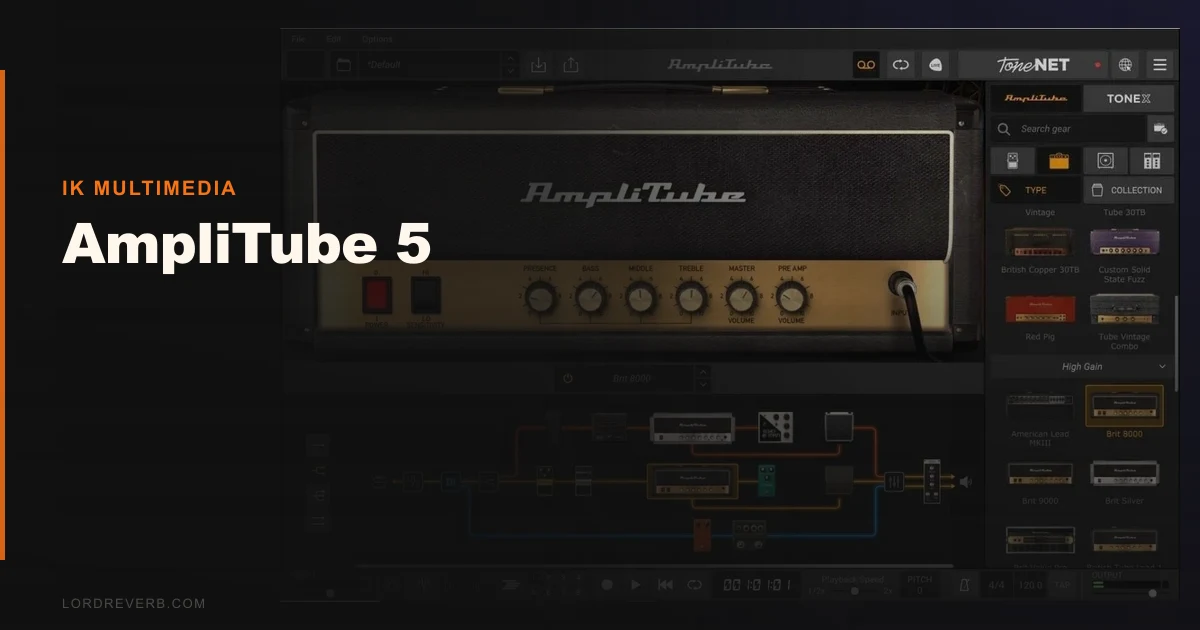
AmpliTube 5 is the most complete amp simulator on the market if you can stomach the tiered pricing, the occasional CPU spike, and the nagging feeling that IK Multimedia really, really wants you to open the Custom Shop.
AmpliTube 5 sits in a strange, satisfying place. It’s genuinely impressive software that also has a business model designed to make you spend more money every six months. Both things are true.
We’ve been running it through sessions since the MAX v2 update dropped, and here’s our honest read: if you want one plugin to cover clean Fender cleans, scooped Mesa crunch, and Ampeg SVT bass grind without buying a single physical amp, nothing touches it. The AmpliTube 5 MAX v2 review covers the upgrade specifically, but this review is about whether the platform itself earns your money.
It mostly does. With caveats.
What You're Actually Getting
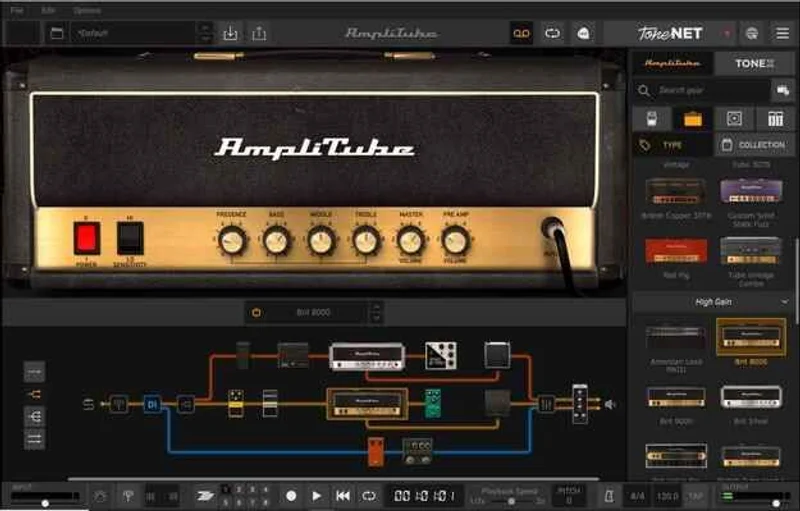
AmpliTube 5 is an amp simulator plugin that runs as a standalone app, VST3, AU, or AAX inside your DAW. It models guitars and bass amplifiers, cabinets, microphones, and stompbox effects through a virtual signal chain you build left to right, exactly like a physical pedalboard into an amp.
The tiered versions matter. The free CS version gives you 42 amp models and 10 stompbox effects. Standard costs more and bumps that to 183 gear pieces. MAX v2 is the top tier (check IK Multimedia’s site for current pricing, as this changes during sales) and delivers 430+ models.
The headline technology is VIR: Volumetric Impulse Response. Instead of a single IR per cabinet position, VIR captures 600 discrete impulse responses per speaker. You move a virtual mic in three-dimensional space and it responds like a real room. That’s not marketing fluff. It’s the feature that separates AmpliTube 5 from most competitors.
The Good
The VIR system is brilliant, and we’ll defend that word. We loaded a Mesa/Boogie Rectifier cabinet model, put a Shure SM57 emulation about two inches off-axis at the edge of the dust cap, then slowly walked it back four inches toward the centre. The low-mid content shifted exactly the way it does when you move a real mic on a real cab: tighter at the cap, progressively warmer and more mid-forward as you pull back. That kind of nuance is genuinely rare in software.
The licensed gear sounds like the real thing. The Fender Twin Reverb model gets the clean shimmer right: glassy around 3.5kHz, full in the low mids around 250Hz, with the kind of bloom on the attack that makes a Stratocaster feel alive. We ran a DI’d P-Bass through the Ampeg SVT model with the tweeter rolled off, and the result sat in a mix without EQ adjustment.
The TONEX Capture integration is underrated. If you’ve captured a real amp profile with IK’s TONEX hardware or software, you can import it directly into AmpliTube 5 and run it through the VIR cabinet and mic system. That’s a serious workflow win for players who own both tools.
The interface is clean. Chain building is drag-and-drop. It doesn’t feel like software from 2012.
The Not-So-Good
The Custom Shop model is annoying. It’s not dishonest, but it’s relentless. On Standard and even MAX tiers, there are gear pieces locked behind additional purchases. You’ll see greyed-out pedals and amps in the browser, each with a price tag. After a while, it feels less like a plugin and more like a storefront you happen to make music in.
CPU usage is a real problem on budget systems. We ran a single amp, one cabinet, and a reverb pedal on an older quad-core machine. CPU usage sat around 18-22% for just that one instance. Add a second guitar track with its own chain and you’re looking at 40%+ before you’ve touched drums or synths. On modern Apple Silicon systems, it’s fine. On a 2018 Intel machine, it’s a conversation.
The free CS version doesn’t show you what VIR actually does at its best. The cabinet options are restricted, which means most guitarists trying the demo hear a good but not extraordinary simulator. That’s a frustrating sales decision.
Compared to the Alternatives
Guitar Rig 7 is the main reference point. Native Instruments has modernised the interface significantly, and it runs leaner on CPU. But the licensed gear situation is different: Guitar Rig uses “inspired by” models rather than officially licensed ones. If you want a plugin that specifically says “Mesa/Boogie” on the faceplate because that’s what’s actually being modelled, AmpliTube wins.
Neural DSP plugins take a different approach entirely: artist-specific plugins built around one amp family. Better for players who know exactly what sound they want. Less flexible than AmpliTube’s all-in-one library.
Positive Grid BIAS Amp 2 is closer in philosophy to AmpliTube, with a deep amp customisation system. BIAS Amp lets you swap tubes and transformers virtually, which AmpliTube doesn’t. AmpliTube counters with better cabinet and mic modelling.
For bass players specifically, AmpliTube’s Ampeg c
ollection is the strongest in software right now. Nothing else comes close.
Who Should Buy This
✅ Buy if you want a single plugin that covers guitar and bass amp modelling with officially licensed gear and the flexibility to change your sound completely from project to project.
✅ Buy if you’re already in the IK ecosystem, own TONEX hardware, or use AmpliTube CS and want to stop fighting the gear limits.
✅ Buy if you record direct consistently and need realistic mic placement as part of your tone-shaping workflow. VIR is worth the price on its own.
❌ Skip if you have a budget CPU. Seriously. Check your specs first.
❌ Skip if you hate the idea of in-app purchases. The Custom Shop won’t let you forget it exists.
❌ Skip if you already know your amp sound and just want one great model. Neural DSP is cheaper and more focused.
Score Breakdown
| Category | Score | Notes |
|---|---|---|
| Sound Quality | 4.5/5 | VIR cabinet modelling and licensed amp models are the best in class |
| Value for Money | 3.5/5 | MAX v2 is fairly priced; the Custom Shop upsell pressure costs it points |
| Ease of Use | 4.0/5 | Chain building is intuitive; the Custom Shop browser adds friction |
| Features | 4.5/5 | 430+ models, TONEX integration, 143,000+ IRs: the feature list is enormous |
| CPU Efficiency | 3.0/5 | A single complex chain runs heavy; multiple instances will stress older machines |
| Overall | 4.1/5 | Outstanding sound and breadth, held back by CPU demands and upsell fatigue |
Alternatives to Consider
Guitar Rig 7 is the most direct swap. It runs leaner, the interface is clean, and Native Instruments keeps it updated. The trade-off is “inspired by” rather than officially licensed models. If the Fender or Mesa name on the UI doesn’t matter to you, Guitar Rig 7 review is worth reading before you commit.
Neural DSP Archetype series wins if you know your target sound. Each plugin is built around one artist’s specific rig. Less flexible, cheaper, and the amp modelling is exceptional for what it does. Neural DSP Archetype Cory Wong review is a good entry point for clean tones.
Positive Grid BIAS Amp 2 is the right choice if you want to go deeper into amp construction rather than selecting from a menu. It lets you customise preamp tube types and output transformer character, which AmpliTube doesn’t. The cabinet modelling isn’t as strong, but the amp design tools are more surgical.
AmpliTube 5 is the plugin you buy when you want everything. Buy it on sale, because IK Multimedia runs substantial discounts regularly, sometimes 50% off. If you’re paying full price without checking the sale calendar first, that’s the one mistake that’s entirely on you.
Frequently Asked Questions
Is AmpliTube 5 free?
Yes, the CS (Custom Shop) version is permanently free, not a time-limited trial. It gives you 42 amp models and 10 stompbox effects to use without paying anything. The catch is that the free version limits your access to VIR cabinet options, so you won't hear the plugin at its best until you upgrade or purchase gear pieces individually through the Custom Shop.
What's the difference between AmpliTube 5 Standard and MAX?
Standard gives you 183 gear models and covers the core collection. MAX v2 expands that to 430+ models and adds a significant number of officially licensed amp, cabinet, and effects models that aren't in Standard. If you record a wide variety of styles or want the Ampeg and Mesa/Boogie collections in full, MAX is worth the upgrade. Check current pricing on IK Multimedia's site before buying, as the gap between versions shifts during sales.
How does AmpliTube 5's VIR technology actually work?
VIR stands for Volumetric Impulse Response. Instead of capturing a single static snapshot of how a speaker cabinet sounds with a microphone in one fixed position, IK Multimedia captured 600 separate impulse responses per speaker by moving the mic through a three-dimensional grid in front of the cabinet. When you drag the virtual mic in the UI, AmpliTube interpolates between those measurements in real time. The result is that moving the mic two inches off-axis actually changes the tone the way it would in a real room.
Does AmpliTube 5 work with TONEX?
Yes, and the integration is one of the more useful things IK has done in recent years. If you've created amp captures using TONEX hardware or the TONEX plugin, you can load those profiles directly into AmpliTube 5 as an amp model. That means you get the accuracy of a real-amp capture combined with AmpliTube's VIR cabinet system and mic placement. It's a strong workflow if you own both tools.