AmpliTube 5 MAX v2 is the best value amp sim bundle available right now, and the upgrade from v1 is worth it if you don’t already own Mesa/Boogie models.
AmpliTube 5 MAX v2 is the Swiss Army knife of amp sims. Not the sharpest blade, but the most blades. For the upgrade from MAX v1, you get 435 total gear models, the updated VIR cabinet engine, and the Mesa/Boogie 2 and Morley collections that were not in the original. If you’re a working guitarist who records in the box and wants one plugin that handles a classic Fender clean, a 5150-style crunch, and a bass rig without switching tools, this is it. It’s not a Neural DSP killer. It’s something different: a complete guitar production environment that trades some top-end sonic nuance for sheer breadth.
What You're Actually Getting
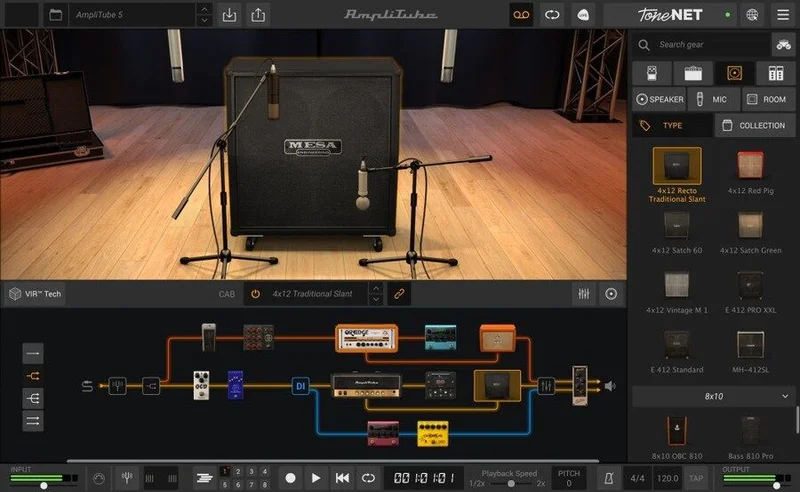
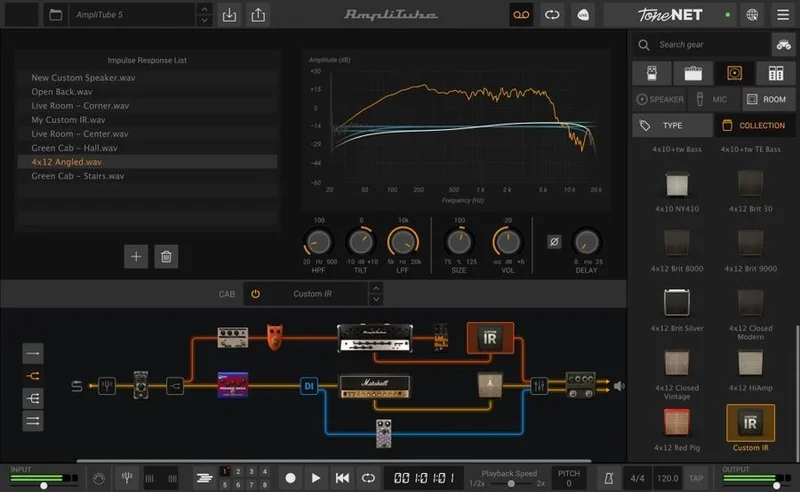
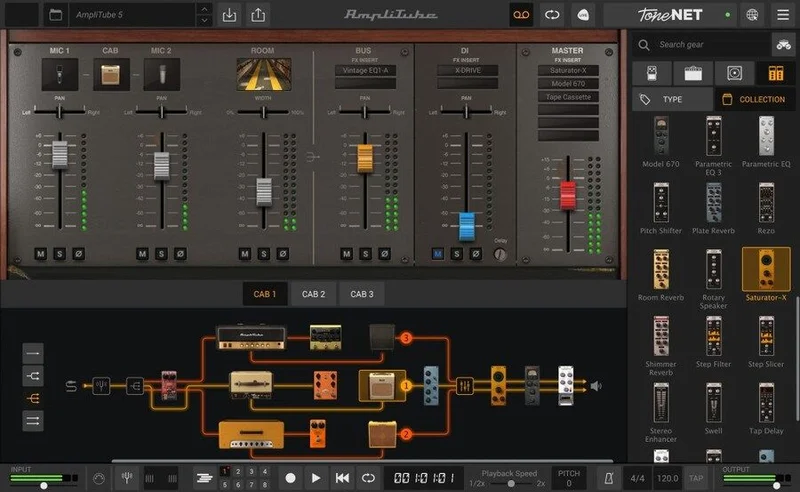
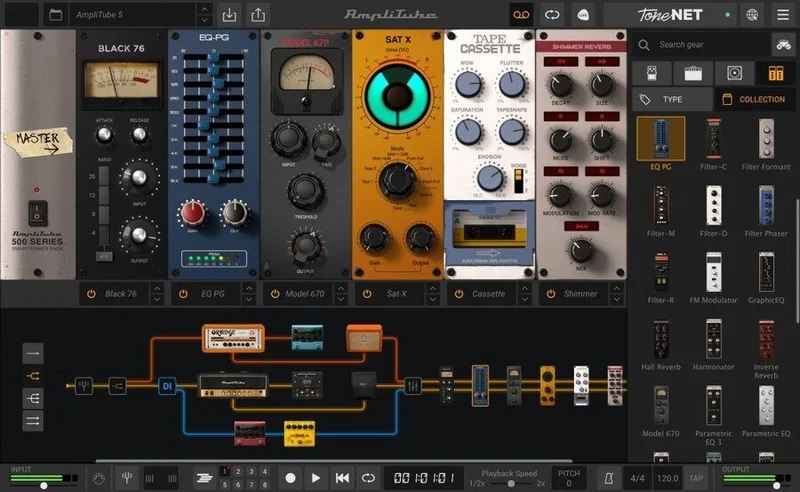
The v2 upgrade adds the Mesa/Boogie 2 collection and the Morley X-GEAR pedal collection to everything already in MAX v1. The full suite sits at 435 models: amps, cabs, effects, microphones, and rack units. The cabinet engine uses what IK calls Volumetric Impulse Response (VIR) technology. Instead of one static IR per speaker, it captures 600 IRs per speaker and interpolates between mic positions in three-dimensional space. That’s over 143,000 total IRs under the hood. You also get an 8-track built-in recorder, a looper, a tuner, and a mixer. It runs as a plugin (VST3, AU, AAX) or as a standalone app. Signal chains can stack up to 57 simultaneous models with series and parallel routing.
The Good
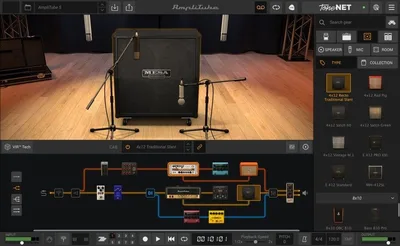
The VIR engine is where AmpliTube earns its reputation. We ran a Les Paul-style clean through a modeled Fender Deluxe Reverb, pushed the input just past breakup, then moved the virtual microphone 4 inches off-axis. The top end rounded off exactly the way it does in a real room. We’d heard that before with other IR-based systems, but the three-dimensional mic positioning here is genuinely satisfying. It’s not just brightness versus darkness. It feels like you’re moving around a speaker cabinet.
The Mesa/Boogie 2 collection is the headline addition for the v2, and it delivers. We loaded the Mark IIC+ model, dialed in the lead channel at around 7 on the gain knob, and stacked it with one of the included tubescreamer-style pedals. The harmonic density in the midrange sat between 800Hz and 2kHz the way a real Mesa does. It didn’t feel synthetic.
ToneNET is underrated. More than 6,000 free presets from the community, searchable by amp, genre, or tuning. We found a workable drop-C metal tone in under three minutes without building anything from scratch.
The Not-So-Good
The factory presets are frustrating. IK shipped this thing with presets that have reverb and delay cranked, midrange scooped, and gain so high it sounds like a YouTube demo from 2009. They don’t represent what the plugin sounds like when it’s dialled in properly. If you open AmpliTube for the first time, load a factory preset, and judge it on that alone, you’ll probably close it and never come back. That’s a real problem.
Stability is the other conversation nobody wants to have. We ran into a DAW lockup twice during testing with large signal chains (40+ models loaded). This isn’t universal, but user reports of freezing and session crashes are real. If you’re building a 57-model monster chain, stress-test it before a session, not during one. CPU usage scales hard with complexity. A simple amp-plus-cab chain is fine. A full rack plus effects plus reverb sends on multiple tracks? You’ll feel it.
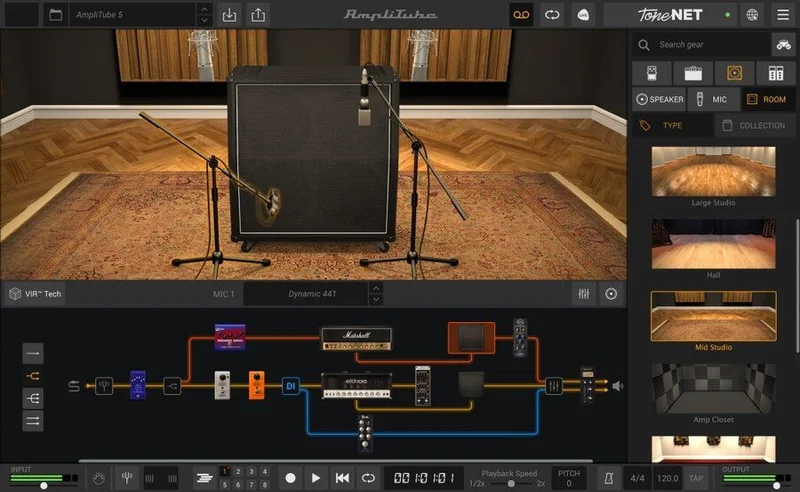
The interface is cluttered. Not unusable, but ugly in a way that other amp sims have solved by now.
Compared to the Alternatives
Neural DSP is the comparison everyone makes. Archetype plugins like Gojira or Plini sound extraordinary, but they’re single-artist collections. You are paying for one sonic universe. AmpliTube gives you everything for far less. If you want the absolute ceiling on one specific high-gain tone, Neural wins. If you need a clean Vox, a tweed Fender, a modern Mesa, and a bass rig in the same session, AmpliTube wins.
Universal Audio’s amp sims require a UAD interface or LUNA to access. They sound brilliant. But the hardware dependency is a dealbreaker for pure ITB workflows. AmpliTube runs on any machine without proprietary hardware. No asterisk.
Line 6 Helix Native is the closest direct comparison. It’s flexible, stable, and has a cleaner interface. Line 6 Helix Native review Helix Native costs more and doesn’t touch AmpliTube’s cabinet modeling depth. But it has better long-term stability in our experience.
Who Should Buy This
✅ Buy if you record guitar and bass across multiple genres and don’t want a different plugin for every session.
✅ Buy if you already own AmpliTube 5 MAX v1 and want the Mesa/B
oogie 2 models without paying full price.
✅ Buy if you want a standalone practice and performance environment with a built-in recorder, looper, and tuner.
❌ Skip if you only need one specific high-gain sound and want the absolute best version of it. Neural DSP owns that lane.
❌ Skip if your DAW sessions are already CPU-heavy. Complex AmpliTube chains will compete aggressively for resources.
❌ Skip if you want a plugin that sounds great out of the box with factory presets. The learning curve to get the best from this is real.
Score Breakdown
| Category | Score | Notes |
|---|---|---|
| Sound Quality | 4.5/5 | VIR cabinet engine and Mesa/Boogie modeling stand with the best in the category |
| Value for Money | 5.0/5 | 435 models as an upgrade is hard to beat on a per-model basis |
| Ease of Use | 3.0/5 | Cluttered interface and poor factory presets create a steeper learning curve than necessary |
| Features | 4.5/5 | Built-in recorder, looper, tuner, ToneNET integration, 57-model chains with parallel routing |
| CPU Efficiency | 3.0/5 | Simple chains are fine; complex rigs get expensive fast, and stability issues exist at high loads |
| Overall | 4.3/5 | Outstanding breadth and cabinet modeling held back by UX and stability at scale |
Alternatives to Consider
Neural DSP Archetype plugins review are the move if you want one perfect-sounding rig rather than 435 options. Better presets, cleaner interface, worse value for range.
Line 6 Helix Native review gives you a more stable ITB experience with a modern UI. It’s slightly more expensive, doesn’t have VIR cabinet modeling, but it won’t lock up your session.
Best amp sim plugins 2026 covers the full comparison if you’re still deciding between approaches. Worth checking before you commit to any single purchase.
For UAD users, the UA Amp simulators including the Friedman BE-100 and Marshall Plexi models are worth looking at. But again, you need UAD hardware. That’s a different budget conversation entirely.
If you’re coming from a hardware modeler and going fully ITB for the first time, AmpliTube MAX v2 is the most complete bridge available at any price. The VIR cabinet engine is the reason. It’s the closest a software cab sim has come to the experience of placing a microphone in front of a real speaker, and once you hear the difference at 3 o’clock on that mic position dial, you’ll understand why people love this thing despite its rough edges.
For the v1 to v2 upgrade, the Mesa/Boogie 2 collection alone probably covers the cost if you use it. Buy this. Just don’t judge it by the factory presets, don’t stack 50 models in your first session, and save your project before you push the limits.
Frequently Asked Questions
Is the AmpliTube 5 MAX v2 upgrade worth it if I already own MAX v1?
Yes, if you want the Mesa/Boogie 2 collection. That's the primary addition in v2, alongside the Morley X-GEAR pedals. If Mesa/Boogie tones are anywhere in your regular work, this upgrade pays for itself quickly. If you primarily play clean or low-gain styles and rarely touch high-gain territory, it's a harder sell.
What's the difference between AmpliTube 5 MAX v2 and a standard AmpliTube 5 license?
MAX v2 is the all-in edition: 435 models including every amp, cab, effect, microphone, and rack unit IK has released for the platform. Standard AmpliTube 5 comes with a smaller base model set and requires individual purchases to expand. MAX v2 also includes the VIR cabinet engine and ToneNET integration for the 6,000+ community preset library.
Does AmpliTube 5 MAX v2 cause DAW crashes or stability issues?
Some users report freezing and DAW lockups, and we experienced two crashes during testing with large signal chains over 40 models. The issue scales with chain complexity. Simple amp-plus-cab setups run without problems. If you're building large rigs, test them in isolation before committing them to a live session, and keep a saved version of your project handy.
How does AmpliTube's VIR technology compare to standard impulse response loaders?
Standard IR loaders use a single static IR per cab position. AmpliTube's VIR system captures 600 IRs per speaker and calculates the acoustic space between mic positions in three dimensions. The practical result is that moving the microphone in AmpliTube feels continuous and spatial, not like switching between discrete snapshots. For cabinet tone shaping, it's one of the more convincing approaches we've tested in any amp sim plugin.