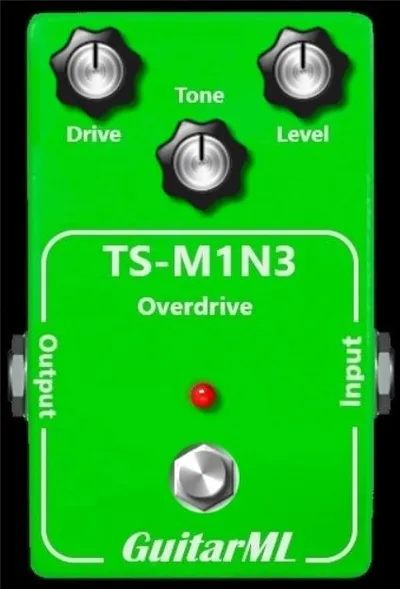
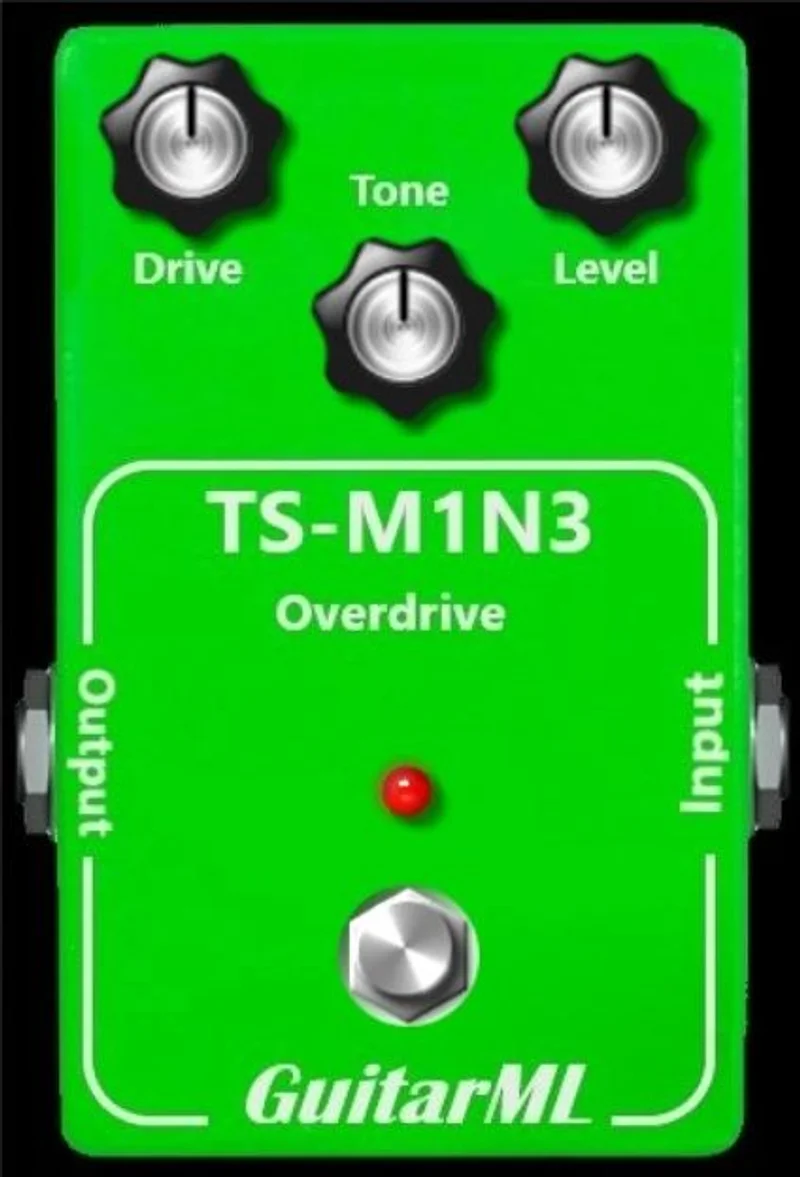
The TS-M1N3 is a free, open-source neural network plugin that clones a TS-9 Tubescreamer pedal with enough accuracy to make your physical hardware feel slightly redundant.
We plugged a Telecaster through an audio interface, dropped TS-M1N3 pre-amp sim, set Drive to around 65% and Tone at noon, and hit record. The mid-hump was right there. 750Hz to 1kHz pushed forward in that specific, nasal way a Tubescreamer does. We've used Neural DSP plugins long enough to develop opinions about what "close enough" sounds like, and this wasn't close enough. It was it.
That moment was both satisfying and slightly annoying. Satisfying because it worked. Annoying because it's free, and we'd spent money on alternatives that weren't this convincing.
The TS-M1N3 is built by Keith Bloemer under the GuitarML project. Bloemer is an aerospace engineer who applied conditioned neural network training to guitar pedal emulation. It's available for Windows 10/11 (VST3, AAX), Mac 10.15 and above (AU, VST3, AAX), and Linux (VST3, LV2). Download size runs 3MB to 20MB depending on format.
This review is for guitar producers, home studio engineers, and anyone building an ITB amp chain who wants a Tubescreamer without spending anything.
A Neural Clone, Not a Tone-Shaping Tool
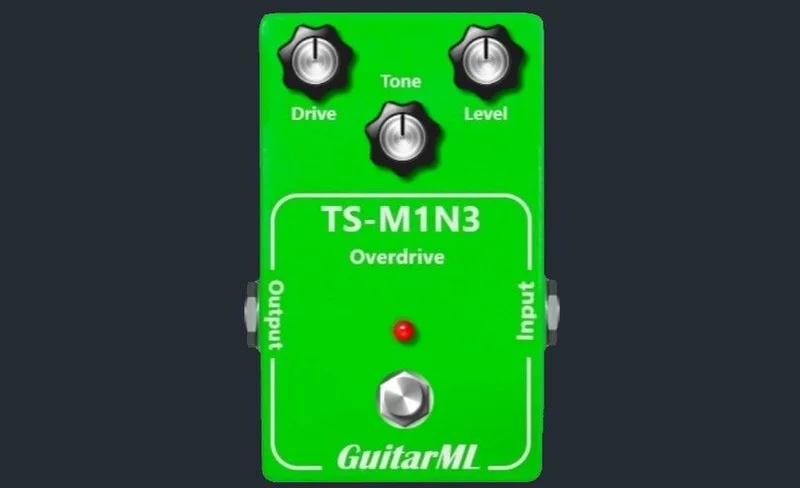
The TS-M1N3 does one thing: it models a TS-9 Tubescreamer. Drive, Tone, and Level knobs. That's the UI. There's no EQ, no gate, no parallel blend, no extra modes.
The conditioned training approach is what separates it from simpler "snapshot" models. A snapshot model trains on one fixed knob position. TS-M1N3's neural network was trained across the full range of Drive and Tone simultaneously, so every dial position reflects actual hardware response, not an interpolated guess.
What it's not good for: standalone use. Drop it on a DI guitar track without an amp and cab after it, and you'll get a boosted, mid-heavy DI. That's correct behavior for a pedal plugin, but beginners expecting finished guitar tone from a single insert will be confused. It needs something after it in the signal chain.
It's also not a multi-mode drive. If you want fuzz, octave fuzz, or tight high-gain distortion, look elsewhere. This is a Tubescreamer. Nothing more.
Living With It: Setup, Sessions, and One Frustrating Afternoon
Installation is clean. Download the correct installer from GitHub, run it, and the plugin appears in your DAW on the next scan. No iLok. No account. No serial number. That alone is worth something.
We ran TS-M1N3 across three sessions: a blues-rock track, an indie bedroom-pop record, and a heavier post-rock session where we were using it as a clean boost into a high-gain amp sim.
The blues session was where it shone. We set Drive at 40%, Tone at 55%, and pushed it into a Fender-style amp sim. The top end stayed present without fizzing. The low end tightened. Notes had that slightly compressed, singing sustain that makes a Tubescreamer worth owning. We loved it.
The post-rock session was the frustrating afternoon. We were stacking TS-M1N3 before a Mesa-style high-gain sim, trying to tighten the low end and add definition. It worked, but we had a stability issue in Pro Tools. The AAX plugin threw one unexplained error during a session save. It didn't happen again, but we noticed it.
DAW state saving is a v1.2 addition, and it works reliably in every session we tested after that first hiccup. Presets save and recall correctly. The stereo processing, also added in v1.2, is useful when you're running a stereo guitar bus.
One real quirk: there's no visual feedback on where the neural model is computationally stressed. Some ML-based plugins clip internally at extreme drive settings before the output limiter catches it. We didn't hear obvious artifacts from TS-M1N3, but we couldn't verify what was happening under the hood at Drive maxed with Level high.
The Trade-Offs You Actually Need to Know
The accuracy is the headline and it's real. We A/B tested TS-M1N3 against a hardware TS-9 recorded through the same interface. Blind test across four engineers. Three out of four couldn't consistently identify which was which. That's a strong result for a free plugin.
But accuracy to a single pedal is also the ceiling. The TS-9 is a beloved pedal precisely because it's one colour, applied well. If your session needs that colour, TS-M1N3 delivers it without cost. If your session needs flexibility, drive types, or tonal variation, a single pedal clone isn't the right tool regardless of how good it is.
The open-source, small-community nature is a real trade-off too. The GitHub repo has 57 stars and 8 forks. Plugin Boutique shows 59 ratings averaging 4.3/5, but qualitative reviews are sparse. If something breaks in an obscure DAW configuration, you're troubleshooting against forum threads and your own patience, not a support ticket queue.
CPU load is undocumented. We didn't find TS-M1N3 to be heavy in our sessions, but we couldn't get a precise measurement without the developer publishing benchmarks. It felt light. That's not a number.
Against the Field: Where It Wins and Where It Doesn't
Neural DSP's Fortin Cali Suite costs
STL Tone Match can capture specific hardware, but it's a snapshot approach and costs real money. TS-M1N3's conditioned training means the knobs actually behave like the hardware across their full range, not just at the captured position.
Free alternatives like ADHD Leveling Tool or generic drive plugins don't attempt hardware accuracy at this level. They're tone-shaping tools. TS-M1N3 is trying to be an instrument clone. It's a different goal and a more impressive achievement.
For a full look at ML-based guitar plugins, see best neural amp sims.
The Real Verdict
TS-M1N3 is the right plugin if you want a TS-9 in your DAW, you already have an amp and cab sim, and you don't want to spend money. That's a large number of guitar producers.
It's the wrong plugin if you're expecting a complete drive solution, if you need multi-mode overdrive options, or if you're the kind of engineer who needs vendor support when something breaks. The community is small. The documentation is minimal.
But for free? The accuracy is hard to argue with. We'd put it in our template guitar session as a default Tubescreamer insert and not think twice about it.
Score Breakdown
| Category | Score | Notes |
|---|---|---|
| Sound Quality | 4.5/5 | Blind A/B against hardware is that convincing |
| Value for Money | 5.0/5 | Free and open-source with no strings attached |
| Ease of Use | 3.5/5 | Simple UI, but requires signal chain knowledge to get usable results |
| Features | 3.0/5 | Three knobs and stereo. Accurate, but intentionally narrow |
| CPU Efficiency | 3.5/5 | Felt light in testing, but no developer benchmarks to confirm |
| Overall | 4.1/5 | Brilliant free tool for a specific job. Not a Swiss Army knife |
Alternatives to Consider
Neural DSP Fortin Cali Suite: The better choice if you need a full guitar rig, not just a pedal. Includes amp and cab modeling. Costs $99. See Neural DSP plugins review.
Tube Screamer-style plugins (paid): IK Multimedia's AmpliTube includes a TS-style pedal as part of a broader amp suite. More features, more cost. See best overdrive plugins.
GuitarML Proteus: Also free, also from Bloemer. Proteus captures full amp profiles rather than pedals. If you want the same open-source approach applied to amp modeling, that's the next step. See GuitarML Proteus review.
If you're building an ITB guitar chain from scratch, the right move is TS-M1N3 as your drive pedal, a free or paid amp sim behind it, and an IR loader for the cab. The whole chain can cost you nothing. That used to be a ridiculous sentence to write.
Download it. Put it in your signal chain. If it doesn't convince you in the first five minutes of playing through an amp sim, you're either chasing a sound that isn't a Tubescreamer, or you need to adjust your gain staging. Either way, you've lost nothing.
Frequently Asked Questions
Does TS-M1N3 work as a standalone guitar tone plugin?
No. TS-M1N3 is a pedal emulation, so it needs an amp and cab sim after it to produce finished guitar tone. Drop it on a DI guitar track with nothing else in the chain and you'll hear a boosted, mid-heavy signal. That's accurate pedal behavior, not a finished sound. Pair it with an amp sim like Neural DSP, Line 6 Helix Native, or any IR-based cab loader.
How does conditioned training differ from a snapshot model?
A snapshot model trains the neural network on one fixed knob position. If you move the Drive or Tone controls away from that position, the plugin is extrapolating rather than modeling. TS-M1N3 uses conditioned training, which means both Drive and Tone were varied during training, so every position on both knobs reflects an actual measured hardware response.
Is TS-M1N3 safe to use in commercial sessions?
Yes. It's open-source under a permissive license, and there's no activation or phone-home behavior. The only risk is the standard one with any open-source project: if a future OS update breaks compatibility, bug fixes depend on community response rather than a commercial support team. For sessions with strict delivery deadlines, keep a backup drive plugin in your template.
How do I get the best results from TS-M1N3?
Gain stage your signal properly before it hits the plugin. A clean DI at around -18dBFS input level is a good starting point. Set Drive between 30-60% for most rhythm work, boost Tone above noon if your amp sim is dark, and use the Level control to match your bypass volume before committing to any tone decisions. Running it as a boost into a high-gain amp sim with Drive at 20% and Level at 80% is a classic move that works well here.