FabFilter Saturn 2 beats iZotope Trash 2 on modulation depth and multiband control, ties with Soundtoys Decapitator on character, and loses to nothing at this price point for mastering bus saturation. That’s our position before we’ve written a single paragraph.
This is a $149 plugin. It earns it, but not for everyone.
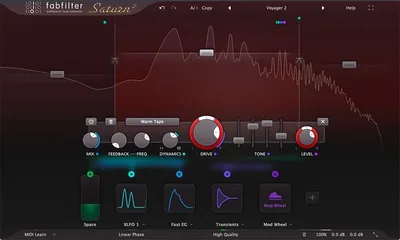
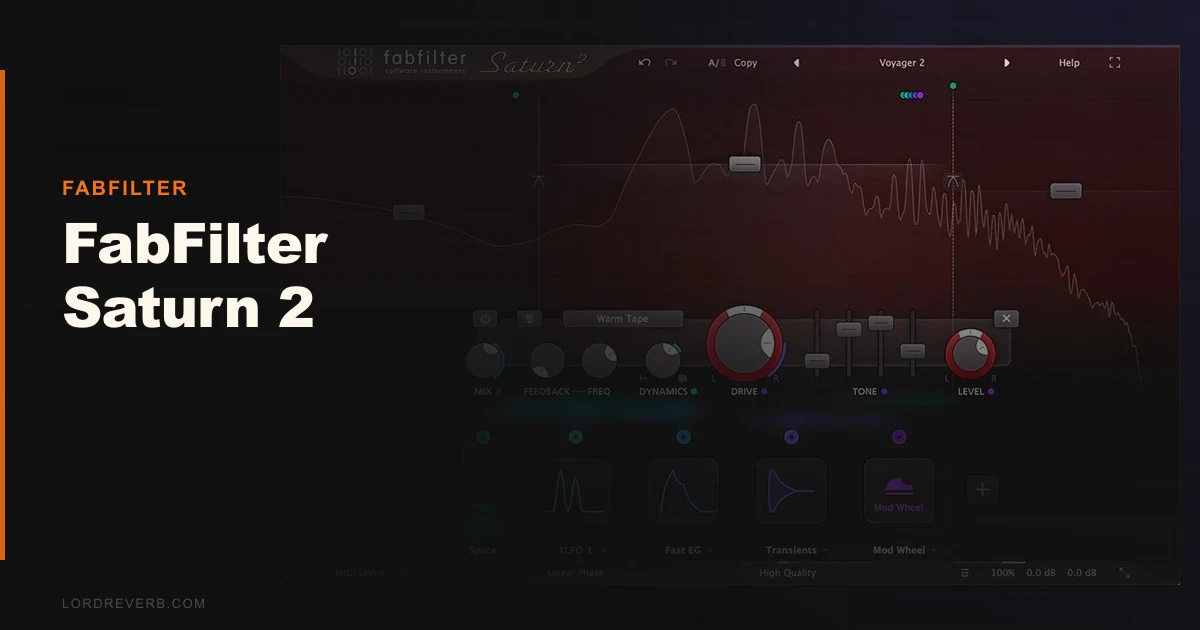
Saturn 2 is FabFilter’s multiband distortion and saturation processor. Six bands, 28 distortion styles, per-band modulation, and oversampling up to 32x. It’s built for producers who want one plugin that handles everything from barely-there tape saturation on a master bus to blown-out fuzz on a synth lead. If that range sounds useful to you, read on. If you just want a quick tube hit on your vocals, you’re paying for features you’ll never open.
How It Compares Out of the Box
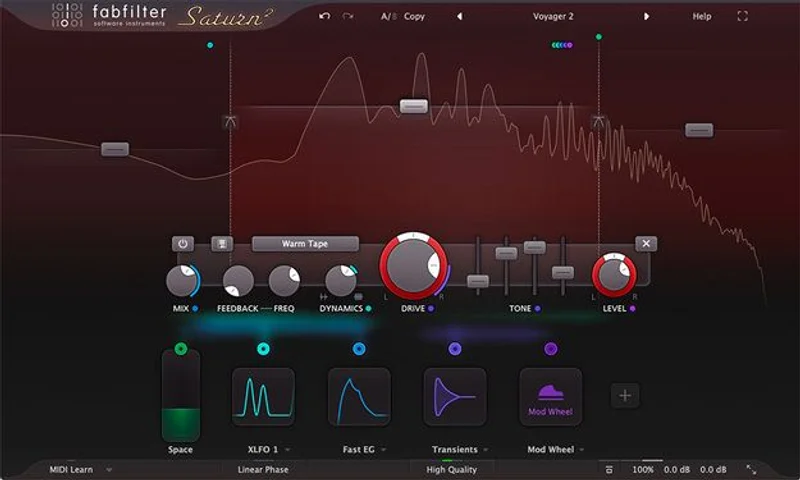
Stack Saturn 2 next to Soundtoys Decapitator and the difference is immediate. Decapitator sounds great fast. Five styles, one drive knob, done. Saturn 2 opens with a dropdown showing 28 distortion types and a modulation system that needs a minute to even parse. First session, we spent 20 minutes just browsing the saturation types before touching the drive.
Against iZotope Trash 2, Saturn 2 wins on interface clarity and modulation precision. Trash 2 has more raw destruction options, but its routing is messier and the workflow is slower. Against Waves J37 or Abbey Road Saturator, Saturn 2 wins on flexibility by a wide margin.
The honest first impression: this is a deep plugin. Rewarding, but it asks something of you upfront.
Performance Deep Dive
We ran Saturn 2 across three contexts: a stereo drum bus, a mastering chain, and a mono bass channel.
On the drum bus, we used the Tube saturation style with a single band covering the full range, drive at 18%, mix at 60%. The low mids got thicker without smearing the transients. We cut 1.5dB at 250Hz with Saturn’s per-band EQ afterward and the kit sat tighter in the mix immediately.
On the master bus, we switched to linear phase mode with 8x oversampling. CPU load on that one instance hit roughly 8-12% on an M1 MacBook Pro in Logic Pro at 256 samples. That’s noticeable. At 32x oversampling, we wouldn’t recommend more than one or two instances in a dense session. Standard mode is far lighter, closer to 2-3% per instance.
On bass, we used two bands: one for the low end using the Tape style below 200Hz, one for the mids using Triode above. The result was a bass sound that translated on laptop speakers without losing the low-end mass in the room. That two-band split took under two minutes to dial in once we understood the interface.
Where It Wins
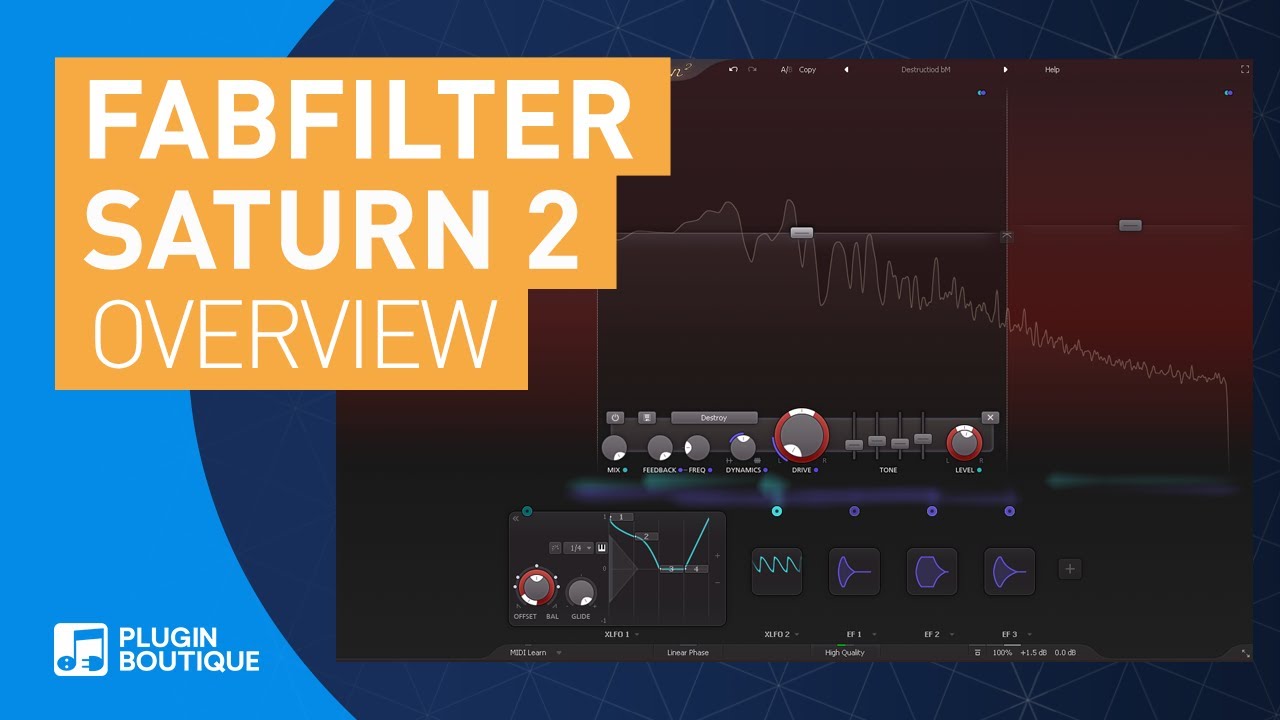
The modulation system is where Saturn 2 separates from the competition. You can modulate drive, mix, frequency range, and feedback independently per band using envelope followers, LFOs, XY controllers, or MIDI. We had a synth pad where the saturation depth rose and fell with the note velocity, adding harmonic content only when the notes hit hard. Nothing in Decapitator or Trash 2 comes close to that level of control.
The 28 distortion types aren’t just presets with different names. The difference between Triode, Pentode, and Class A is audible and meaningful. Pentode adds more upper-harmonic content. Class A clips harder at the top. These are real differences, not cosmetic ones.
Linear phase mode on the mastering bus is clean in a way that surprises you. No phase smear across the crossover points. We’d use it without hesitation at 8x oversampling on a 2-bus chain.
Where the Competition Wins
Decapitator wins on speed. If you need saturation that sounds good in 30 seconds, Soundtoys gets you there faster. Saturn 2 rewards patience. Decapitator does not demand it.
Trash 2 wins on outright destruction. If you want a signal to sound genuinely broken and damaged, iZotope’s waveshaper options go further into chaos territory than Saturn 2’s most extreme modes. Saturn 2’s heaviest distortion types, like the Fuzz or Metal styles, are aggressive. But they’re controlled. Trash 2 can sound genuinely unhinged. For sound design work where broken is the point, that matters.
Price is a real factor too. During iZotope sales, Trash 2 drops to a much lower price. Saturn 2 doesn’t move much below $149. The gap in features justifies the gap in price for working engineers. For a home producer with lighter needs, that’s a harder argument to make.
Who Should Buy Which
- ✅ Buy Saturn 2 if you're doing multiband saturation on a master bus and need linear phase processing without phase artifacts at the crossover points.
- ✅ Buy Saturn 2 if you want saturation that responds dynamically to your signal, with modulation that can key off envelope followers or MIDI.
- ✅ Buy Saturn 2 if you're already a FabFilter user. The workflow matches Pro-Q 3 and Pro-MB closely. It clicks fast.
- ❌ Skip Saturn 2 if you just want a character plugin for quick warmth on individual track
s. Decapitator or even the free Softube Saturation Knob will cover that.
- ❌ Skip Saturn 2 if CPU headroom is already tight. At 32x oversampling, it's hungry in a way that will cost you other plugins.
- ❌ Skip Saturn 2 if aggressive sound design is your primary use. Trash 2 or Kombinat will go stranger, faster, for less money.
Score Breakdown
| Category | Score | Notes |
|---|---|---|
| Sound Quality | 4.5/5 | 28 distortion styles that are sonically distinct and mix-ready across the board |
| Value for Money | 4.0/5 | $149 is justified for engineers who'll use the depth; hard to justify for casual use |
| Ease of Use | 3.5/5 | FabFilter's UI is clean, but the modulation system has a real learning curve |
| Features | 5.0/5 | Best-in-class multiband and modulation for a saturation plugin, full stop |
| CPU Efficiency | 3.5/5 | Standard mode is fine; 32x oversampling will cost you in a dense mix |
| Overall | 4.4/5 | A serious tool that earns its price for the right workflow, not a casual buy |
Alternatives to Consider
If Saturn 2 isn’t the right fit, here’s where to look.
Soundtoys Decapitator review is the first alternative we’d reach for. It’s faster, more immediate, and sounds brilliant on individual channels. Five drive styles, a mix knob, and a tone control. It won’t do multiband. It won’t modulate. But for 80% of saturation tasks, it’s satisfying in a way that takes no learning time.
iZotope Trash 2 review goes further into destructive territory. If you need waveshaping that crosses into genuinely damaged, broken sounds, Trash 2 handles that better. Watch for it on sale.
best distortion plugins for producers covers the broader field if you’re still working out which type of distortion you actually need. Worth reading before you commit $149 to a feature set you might not use.
For mastering-specific saturation, best mastering plugins has a section on harmonic excitation that’s worth your time before buying.
Our Verdict
Saturn 2 is the best multiband saturation plugin we’ve tested. That’s not a soft opinion. Nothing else gives you this combination of distortion variety, per-band modulation, and linear phase processing at crossover points in a single plugin at this price.
But “best” only matters if the features fit your work. A producer who needs quick tube saturation on vocals and synths will pay $149 for about 10% of what this plugin does. That’s frustrating, and it’s an honest reason to walk away from it.
At $149 full price, or a lower cost to upgrade from Saturn 1, Saturn 2 is worth every dollar for mix engineers doing multiband work, mastering engineers who need transparent oversampling, and producers building complex modulated saturation into their sound design. For everyone else, Decapitator exists and it doesn’t ask you to sit down and read a manual.
The only plugin that makes you feel clever and annoyed in the same session. You’ll love what it does when it works. You’ll wish the modulation system had a shallower on-ramp when it doesn’t.
Frequently Asked Questions
Is FabFilter Saturn 2 worth the upgrade from Saturn 1?
Yes, if you use Saturn regularly. The new distortion types, the redesigned modulation system, and linear phase processing at crossover points are real improvements, not cosmetic ones. The upgrade price is lower than the full price. Your existing Saturn 1 presets load without any issues. If you're only an occasional Saturn user, weigh whether you'll actually explore the new features before committing.
How does Saturn 2 handle CPU load in a real session?
In standard mode with no oversampling, Saturn 2 is light, around 2-3% per instance on modern hardware. At 8x oversampling, that climbs to roughly 8-12% per instance. At 32x, you'll feel it in a dense mix. Our advice: use 32x only on your master bus where you can freeze or bounce everything else first.
Can Saturn 2 replace a dedicated guitar amp plugin?
For recording purposes, no. Saturn 2's amp-style distortion types sound great on synths, buses, and processed sounds, but they don't include speaker cabinet simulation or mic placement controls. For actual guitar amp emulation in a production context, you'll want something like Neural DSP or Line 6 Helix Native. Saturn 2 works well as a post-amp character processor though.
Does Saturn 2 work on Apple Silicon without Rosetta?
Yes. FabFilter has released native Apple Silicon builds across their entire lineup, and Saturn 2 runs natively on M1, M2, and M3 chips. No Rosetta required. Performance on Apple Silicon is noticeably better than on equivalent Intel machines, which is relevant if you're planning to run multiple instances with oversampling enabled.