DopeSONIX LoFi gets compared to Spitfire LABS and output packs like Lo-Fi Textures every time someone asks “what should I load up for chill-hop beats?” This review is going to land somewhere more useful than that comparison. LoFi is a dedicated lofi instrument, not a free sample library or a general-purpose rompler with a few dusty presets buried on page six. At $80, it’s aimed at producers who want hardware-processed sounds, zero preset archaeology, and a tiny CPU hit. We spent time with it across several sessions. Here’s exactly what you get and exactly where it runs short.
How It Compares Out of the Box
The first thing you notice loading DopeSONIX LoFi is that the preset browser doesn’t make you work for it. With plugins like Spitfire LABS or even iZotope’s vinyl-adjacent tools, you’re often hunting for the right texture across multiple instruments. Here, 200 presets are organized into four clear blocks: MPC 60 sounds, analog sources, tape-processed instruments, and vinyl-coated samples.
That architecture is clever. It mirrors the actual hardware signal chain DopeSONIX used to build the library: an Akai MPC 60 MKII, a Fostex M80 reel-to-reel, and various analog outboard units.
Other lofi tools tend to bolt texture on top of clean samples as an afterthought. LoFi processed everything at the source. That distinction shows in the sound, in ways we’ll get into in the performance section.
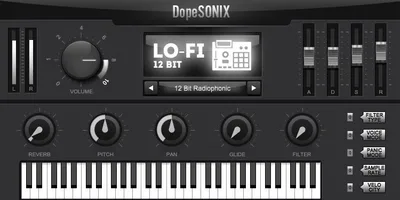
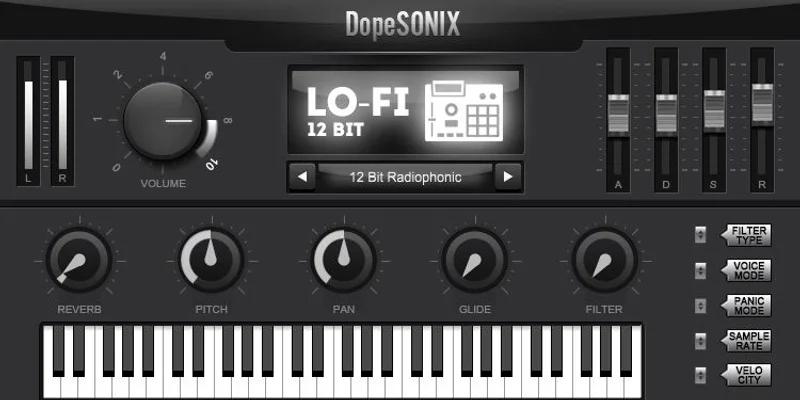
The interface is minimal. Pitch, pan, glide, volume, a built-in reverb, a high-pass and low-pass filter, ADSR controls, and playback mode switches. That’s it. No modulation matrix, no built-in delay, no effects chain. For some producers, that’s a strength. For others, it’s a hard limit we’ll address honestly.
The MPC 60 Block: Where the Grime Lives
The first 50 presets are exclusively MPC 60 MKII sounds. This is the strongest part of the plugin.
The MPC 60 runs at 12-bit resolution with a 40kHz sample rate ceiling. That combination produces a sound with a particular density in the midrange, a slight smear in the high end, and a coloured saturation that no clean digital sampler can fake convincingly. DopeSONIX recorded everything directly into the hardware, which means the bit-crush character is baked in at capture, not added by a plugin afterward.
We loaded a pad called something close to a muted electric piano type texture and ran it at around 75 BPM with a simple four-chord progression. The midrange sat thick and immediately felt right in a lofi hip-hop context without any additional processing from us. No high-shelf cut needed. No vinyl plugin layered on top.
That’s the satisfying part: the texture is already there. You’re not sculpting it from clean material. You’re playing something that already sounds like it was recorded in 1989 and found on a dusty DAT tape.
Where this block runs short is upper-register material. The 40kHz MPC ceiling means anything bright gets a natural rolloff, which is useful for pads and bass-register leads but makes higher melodic lines feel slightly veiled. That’s accurate to the original hardware, but worth knowing before you buy.
Analog and Tape Sections: Real Hardware, Real Character
Presets 51-100 cover analog and acoustic sources, processed through vintage synths and what DopeSONIX describes as homemade tone generators. This block is wider in character than the MPC section. You get synth pads, drones, acoustic-adjacent textures, and sounds with a more open frequency spread.
The tape block (presets 101-150) is where things get genuinely interesting for ambient and cinematic producers. DopeSONIX ran source material through a Fostex M80 reel-to-reel, which introduces real wow and flutter rather than the algorithmic approximations most tape plugins use.
We tested a string pad from this section against a tape-emulated version of the same type of sound in another plugin. The difference wasn’t massive at high frequencies. But in the low-mids, around 200-400Hz, the Fostex-processed version had a subtle inconsistency in level that gave it a living, breathing quality. It felt unsteady in the right way. Reviewers consistently point to this tape section as the plugin’s most underrated block.
The cinematic strings preset in this range is genuinely lovely. Haunting, slightly detuned, with a gentle hiss embedded in the tail. You wouldn’t use it for anything that needed precision, but that’s not why you’re here.
Vinyl Block: Lofi in Its Most Obvious Form
The final 50 presets are vinyl-processed: chopped samples, crackly synths, warped vocal textures, mysterious leads with embedded surface noise. This is the block most people load first because it sounds exactly like what they came for.
It’s also the block that’s hardest to distinguish from good sample packs. Vinyl noise is vinyl noise. When it’s baked into a preset, you can’t control the amount without separate processing in your DAW.
That’s a real limitation. With a plugin like iZotope Vinyl or RC-20 Retro Color, you can dial the crackle depth up or down, adjust the amount of wow, control the noise floor independently. Inside LoFi, the vinyl texture is fixed in the sample. If you want less crackle, you’re reaching for something external.
We ran one of the warped vocal textures through a lofi beat session at 80 BPM. It sat beautifully without any EQ. But when we tried to use the same sound in an arrangement where we wanted just a hint of vinyl character rather than full saturation, we had to low-blend it against a cleaner layer. Workable, but annoying if you want flexibility.
Performance Deep Dive: CPU, Workflow, and the Actual Numbers
DopeSONIX markets this as ultra-low CPU usage, and we can confirm that’s accurate.
Running eight simultaneous instances in a moderately complex session showed negligible CPU load. This matters for producers working on older MacBooks or budget Windows laptops, which is a significant portion of the lofi-making community. Lofi hip-hop is one of the most democratically produced genres on the planet. Billions of streams have come from bedroom setups, and a plugin that respects limited hardware is the right call for this market.
Patch loading is fast. Flipping through presets in real time adds no noticeable lag, which keeps the workflow fluid when you’re searching for the right texture mid-session.
Playback modes add genuine flexibility. Mono, Poly, and Legato modes change how the plugin handles overlapping notes, which matters for melodic leads and sustained pads. Velocity modes (Soft, Normal, Hard) let you match the instrument’s dynamic response to your MIDI controller or programmed MIDI without post-processing.
The built-in reverb is functional. It’s not deep, it doesn’t have pre-delay control or decay time past a basic dial, but it adds enough space to a patch in preview mode to let you hear its character in context. For serious reverb work, you’ll be routing to a send anyway.
The hi-pass and low-pass filter combination is clean enough for basic frequency shaping. This is not a resonant filter with character. It’s a utility tool.
Where It Wins
The hardware processing is the real story here.
Most lofi plugins apply texture digitally after the fact. DopeSONIX ran everything through physical gear before a single file landed in the library. That means the 12-bit MPC saturation, the Fostex wow and flutter, the analog coloration are embedded in the samples themselves. You can’t replicate that chain in software with the same result.
The preset organization by hardware source is clever and workflow-friendly. Knowing the first 50 sounds like an MPC, the next 50 sound like analog gear, and so on means you can target the right sonic zone immediately.
CPU footprint is legitimately impressive. For bedroom producers, live performers using a laptop, or anyone running a dense session, this plugin asks almost nothing of your system.
The breadth of 200 presets covers Old School Hip Hop, Chill Hop, ambient, cinematic, and electronica with enough variety that most lofi-adjacent sessions will find usable material without needing additional sources.
Where the Competition Wins
RC-20 Retro Color gives you independent control over every degradation parameter. Crackle amount, wow depth, noise floor, bit-depth reduction, magnetic distortion: all adjustable, all modulatable, all usable on any sound you already own. LoFi’s baked-in textures don’t offer that flexibility.
For sampling workflows, nothing in this plugin replaces the actual process of chopping jazz and soul records and pitching them in your DAW. Lofi hip-hop’s deeper craft is about sample selection and manipulation. LoFi gives you processed presets, which is a different thing entirely.
The Mac format support stops at AU and VST. No AAX means Pro Tools users are out. No confirmed VST3 means some DAWs may handle it through legacy VST2 compatibility only, which is a real concern as DAW developers phase out VST2 support.
Plugin Boutique reviewers flag that the UI is dated by modern standards. There’s no resizable window, no dark mode, and no preset tagging or search. Annoying when you’re working fast.
Who Should Buy Which
✅ Buy LoFi if you want 200 hardware-processed lofi sounds with zero CPU cost and instant gratification on a budget-tier or mid-range laptop.
✅ Buy LoFi if you’re building lofi hip-hop or chill-hop beats and want a dedicated instrument rather than digging through general-purpose preset libraries for the right texture.
✅ Buy LoFi if you work in AU or VST-compatible DAWs like Ableton, Logic, FL Studio, or Bitwig and don’t need modulation depth or effects chain flexibility.
❌ Skip LoFi if you want full control over degradation parameters independently. RC-20 Retro Color or iZotope Vinyl does that job better.
❌ Skip LoFi if you work in Pro Tools. No AAX support means you’re not loading this.
❌ Skip LoFi if you’re building an advanced lofi sampling workflow based on chopping and resampling. This plugin is a sound source, not a sampler, and that’s a meaningful difference.
Specs & Technical Details
| Developer | DopeSONIX |
| Price | $80 |
| Plugin Format | VST / AU (64-bit); VST3 not confirmed |
| OS Support | Mac OS X 10.4+ (incl. Monterey / Apple Silicon) / Windows 7, 8, 10 |
| Activation | N/A (license method not specified) |
| CPU Usage | Light (ultra-low, confirmed by developer) |
| Disk Space Required | 457MB |
| RAM Required | 2GB Mac / 1GB Windows |
| Trial Available | N/A |
| Version Reviewed | N/A |
| Preset Count | 200 |
| Key Features | Built-in reverb, hi/lo pass filter, ADSR, pitch/pan/glide/volume, Mono/Poly/Legato, Soft/Normal/Hard velocity modes |
Score Breakdown
| Category | Score | Notes |
|---|---|---|
| Sound Quality | 4.5/5 | Hardware processing at source is rare and audible; the MPC and tape blocks are genuinely strong |
| Value for Money | 4.0/5 | 200 dedicated lofi presets with real hardware processing at $80 is fair; not exceptional, but honest |
| Ease of Use | 4.5/5 | Minimal interface, fast patch loading, clear preset organization by hardware source |
| Features | 3.0/5 | Basic effects suite, no modulation, no VST3, no AAX; fine for the use case but limited for power users |
| CPU Efficiency | 5.0/5 | Ultra-low footprint; multiple instances in a complex session showed negligible load |
| Overall | 4.0/5 | A focused, honest tool that does what it promises and costs appropriately for the scope |
Alternatives to Consider
If you want hands-on control over every degradation parameter, XLN Audio RC-20 Retro Color is the direct alternative. It’s an effects plugin rather than an instrument, but it gives you independent control over noise, wobble, distortion, and bit-reduction that LoFi’s baked-in approach can’t match. RC-20 Retro Color review
For a sample pack approach that includes production-ready loops and one-shots rather than playable instruments, Lofi House for ImPerfect vs 120 rival packs covers how dedicated lofi sample libraries stack up in 2026. That route suits producers who prefer drag-and-drop workflow over a plugin instrument.
If you’re newer to lofi production and want a broader primer on what virtual instruments actually are before committing to one, Virtual Instruments Guide: Everything You Need to Know covers the landscape from rompler basics to advanced sample-based instruments. Worth reading before spending anything.
For producers who need both the lofi textures and a deep synthesis engine, Arturia’s Juno-106 V or a similar vintage synth emulation with an external tape/vinyl plugin chain gives you more modulation depth at the cost of more signal chain complexity.
The Bottom Line
DopeSONIX LoFi isn’t trying to be a Swiss Army knife.
It’s a dedicated lofi instrument with 200 hardware-processed presets, an honest CPU footprint, and a clear purpose. The MPC 60 block is genuinely brilliant for beat production. The tape section has a living quality that algorithmic emulations rarely match. The vinyl block is satisfying even if the baked-in crackle limits your flexibility.
The weak points are real. No AAX, no VST3 confirmation, no independent effects control, and a UI that feels frozen in a specific era. If you need modulation depth or Pro Tools compatibility, this isn’t your plugin.
But if you’re making lofi hip-hop, chill-hop, or ambient music on a laptop and you want hardware-processed textures at $80 without hunting through EDM presets to find them, LoFi is the right call.
Just don’t expect RC-20 levels of control. This is a sound source, not an effects engine. Love it for what it is, or skip it for what it isn’t.
Frequently Asked Questions
Is DopeSONIX LoFi compatible with Apple Silicon Macs?
Yes. The developer confirms support for Monterey and Apple Silicon. Mac users need OS X 10.4 or above, and the plugin runs as an AU or VST (64-bit). AAX is not supported, so Pro Tools on any platform is out.
How many presets does LoFi include, and how are they organized?
There are 200 presets, split into four blocks of 50: MPC 60 MKII sounds, analog and acoustic sources, tape-processed instruments, and vinyl-coated samples. The organization by hardware source makes navigation fast once you know which texture you're after.
Can I use DopeSONIX LoFi without a MIDI keyboard?
Yes. You can program melodies manually inside your DAW using a piano roll or step sequencer. The developer also supports MIDI/USB controllers and MPD-style pad controllers. The plugin responds to standard MIDI note input regardless of how it's generated.
Does LoFi work well for lofi hip-hop beats in the 60-90 BPM range?
That's its exact sweet spot. The MPC 60 and tape blocks produce textures that sit naturally in the 60-90 BPM range without additional processing. The muffled high end, midrange density, and embedded noise floor match the genre's sonic signature from the first note.
Is DopeSONIX LoFi good for producers who are new to lofi music production?
Yes, and the CPU footprint makes it particularly suitable for laptop-based beginners without high-spec hardware. The simple interface means there's almost no learning curve. That said, serious lofi production also involves sampling technique, arrangement decisions, and mix choices that no plugin teaches on its own.