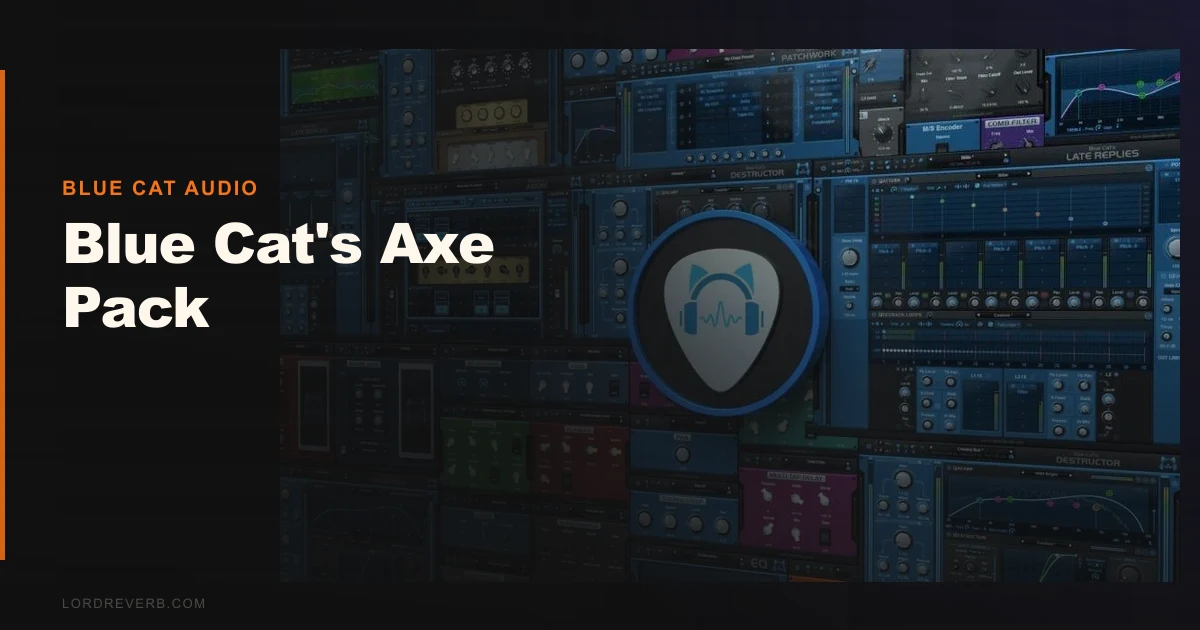
The real question about Blue Cat's Axe Pack isn't whether it sounds good. It's whether nine Blue Cat plugins you may never have heard of are worth more than one Neural DSP amp sim you already know how to use. After several weeks of hard testing, our answer is: yes, but only if you actually need a full ITB guitar ecosystem, not just a better amp tone.
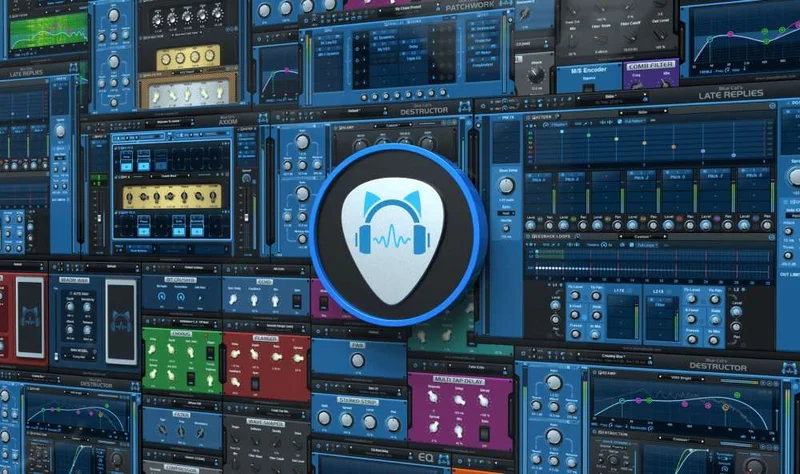
The Axe Pack bundles Axiom (the flagship amp sim and multi-effects host), PatchWork (a plugin chaining and DAW-format bridge), Late Replies (a modular delay), and six supporting plugins covering EQ, dynamics, analysis, and metering. The list price has a discount tier that brings it down only slightly.
This is built for guitar and bass players who want to build their entire signal chain inside a DAW without juggling five different developers' licenses, copy protection schemes, or format incompatibilities.
Does It Actually Deliver on the "All-in-One" Promise?
Blue Cat Audio has been making plugins since 2003. They're not a boutique amp sim startup chasing Neural DSP's press. Their tools show up in professional studios specifically because they solve workflow problems other developers ignore.
Axiom is the engine here. It runs two independent amp channels, each with its own pre and post effects racks, and lets you load third-party VST/VST3 plugins inside those racks. That's the part that matters. You're not locked into Blue Cat's 40 built-in effects. You can slot in your favourite IR loader, a third-party modulation pedal, or any compatible plugin you already own.
We put a Telecaster through Axiom's Channel A set to a clean Fender-style model, then ran Channel B with a high-gain British stack model, blended them at 60/40, and the result sat in a dense rock mix without fighting for space. No frequency stacking issues. No phase problems between the two channels. That's not luck, it's a thought-out architecture.
It delivers. The all-in-one promise holds up.
Where the Axe Pack Earns Its Price
Axiom's third-party plugin hosting is the standout feature. We loaded a third-party IR loader into the cabinet slot, replaced Blue Cat's stock IR with a custom impulse response, and the whole thing stayed inside one Axiom instance. No separate plugin slot in the DAW. No routing headache. One instance, one window.
PatchWork is something we've started using outside guitar sessions entirely. It hosts VST2 and VST3 plugins inside an AAX session in Pro Tools, bridging a format gap that drives engineers up the wall. We used it to chain a VST3 mid-side EQ and a VST3 dynamic processor on a drum bus in a Pro Tools session that had no business running either of those plugins natively. Clean. No crashes. Satisfying.
Late Replies is underrated. It's a multi-tap delay with up to 16 delay lines, and each tap can host an internal effects chain. We built a dotted-eighth slapback into tap one, a longer regenerating tail into tap two with slight pitch modulation on the feedback, and blended both against a dry guitar with no pre-delay. It does things a simple stereo delay won't. Real producers building ambient or post-rock textures will love this plugin on its own merits.
All formats are covered: VST, VST3, AU, and AAX. Mac and Windows. That's not always a given at this price.
Where It Falls Short
Axiom's interface takes time. The dual-channel signal flow, with pre-effects, amp, cabinet, and post-effects stages on each channel, is powerful but non-obvious at first. We spent an embarrassing amount of time looking for the output mixer the first session.
The stock presets are functional but uninspiring. They'll demonstrate what the architecture does, not what it sounds like in a real mix. You'll need to build your own patches or find a third-party preset pack.
CPU usage is the other honest criticism. A fully loaded Axiom instance with two active channels, six effects per chain, and a third-party IR loader running inside it will eat CPU in a way that Neural DSP's single-purpose sims won't. On a 2020 M1 MacBook Pro, we saw Axiom peaking around 18-22% CPU in Logic with a single instance at 128-sample buffer. That's not catastrophic, but it's heavier than we expected.
The minimum spec requirement (Intel Core 2 Duo, 4GB RAM) feels like marketing copy from a decade ago. Don't take it as a sign the plugin runs light.
How It Stacks Up Against the Competition
Neural DSP's Archetype series is the obvious comparison. A single Neural DSP plugin costs well under half the price of this bundle, sounds brilliant for the style it targets, and runs light. But it does one thing. You can't chain effects inside it, host third-party plugins, or bridge DAW format gaps. It's a specialist tool, not an ecosystem.
Waves GTR3 is older and cheaper, but the amp quality hasn't aged well and PatchWork alone leaves it behind for studio workflow flexibility.
If you want the best amp tone for one specific genre, buy a Neural DSP plugin. If you want a complete, extensible, format-agnostic ITB guitar production environment, the Axe Pack wins that comparison. It's not even close on breadth.
For a different perspective on deep, modular synthesis approaches to sound design, see our Rob Papen Blue III review, a similarly ambitious plugin that asks a lot from the user before it gives anything back.
Is $399 a Fair Price?
At $399, you are paying a small fraction of the total per plugin across the nine in the bundle. PatchWork alone sells for a significant amount as a standalone purchase. Late Replies also carries a substantial standalone price. Axiom carries the highest standalone price of the three main tools. If you needed those three on their own, you would spend nearly the full bundle price before touching the rest of the bundle. The math works.
At the discount price, it is a straightforward yes if you need the full package. It's a hard no if you only want Axiom and you already own a plugin chainer.
Check the Blue Cat Audio site and Plugin Boutique for current pricing, as discounts appear regularly.
Score Breakdown
| Category | Score | Notes |
|---|---|---|
| Sound Quality | 4.0/5 | Dual-channel amp architecture sounds convincing; stock IRs are average, third-party IRs fix that quickly |
| Value for Money | 4.0/5 | Bundle math is honest; you'd spend more buying the top three plugins separately |
| Ease of Use | 3.0/5 | Axiom's signal flow depth is a real learning curve; not plug-and-play |
| Features | 4.5/5 | Third-party plugin hosting inside Axiom, DAW format bridging via PatchWork, 16-tap delay in Late Replies |
| CPU Efficiency | 3.0/5 | Heavier than single-purpose amp sims under full load; budget your buffer size accordingly |
| Overall | 4.1/5 | A genuinely capable ecosystem that earns its price if you need what all nine plugins do |
Alternatives to Consider
Neural DSP Archetype: Gojira (or any Archetype title), priced well below this bundle. Lighter CPU, more realistic high-gain character out of the box, and a much shorter learning curve. Buy it if you want one great amp, not an ecosystem. We'd love to see Neural DSP build PatchWork-style routing, but they haven't.
IK Multimedia AmpliTube 5 MAX, More amp models, a similarly deep effects chain, and a large preset library. It's more approachable than Axiom for new users. But it doesn't bridge DAW formats, and the plugin-hosting inside the chain isn't as open. See our best amp sim plugins roundup for a full breakdown.
Positive Grid BIAS FX 2 Elite, Deep amp and effects customisation, good preset community, and a hardware integration story that Axe Pack doesn't have. If you play live through a hardware controller, BIAS FX 2 is the better answer. For pure ITB production, the Axe Pack's routing flexibility wins. Check our BIAS FX 2 review for specifics.
For broader context on effects plugin bundles worth your money this year, see our best plugin bundles for producers guide.
If you want the deepest possible control over a single, heavily modulated sound rather than a guitar signal chain, the Rob Papen Blue III review covers a plugin that takes a comparably ambitious approach to synthesis.
Blue Cat's Axe Pack is the right buy for one specific producer: someone building guitar and bass production entirely ITB who needs format flexibility, open plugin hosting, and a serious delay that goes beyond the obvious. If that's not you, it's a frustrating amount of software to learn for features you won't use.
At $399, skip it if you already own Axiom, PatchWork, or Late Replies individually. Buy it if you own none of the above and need all three.
Frequently Asked Questions
Does Blue Cat's Axe Pack work in Pro Tools?
Yes. All nine plugins ship in AAX format alongside VST, VST3, and AU. PatchWork also lets you host VST and VST3 plugins inside a Pro Tools session, which is one of its most practical features for engineers working across mixed DAW environments.
Can you use third-party amp IRs inside Axiom?
Yes, and that's one of the best reasons to choose it over a closed amp sim. Axiom lets you load a third-party IR loader plugin into its cabinet slot, so you're not stuck with Blue Cat's stock impulse responses. You can also load any compatible VST/VST3 effect anywhere in the pre or post effects chain within each amp channel.
Is there a free trial of the Axe Pack before buying?
Blue Cat Audio offers demo versions of their individual plugins on their website, including Axiom. The demos are functional but will output periodic noise to prevent commercial use. It's worth running the demo for a week before committing $399 to confirm Axiom's workflow fits yours.
How does Blue Cat's Axe Pack compare to buying Axiom alone?
Axiom alone carries a substantial list price on its own. The Axe Pack adds PatchWork, Late Replies, and six additional utility plugins, with a combined standalone cost that nearly matches the bundle price of $399. If you need PatchWork for DAW format bridging or Late Replies for complex delay work, the bundle price makes sense. If you just want the amp sim, buy Axiom on its own.